

Running an independent pharmacy in 2026 is a balancing act you know all too well. You are part healthcare provider, part small business owner, and part financial acrobat, keeping the lights on while reimbursements shrink and shelf costs climb. In the middle of all that sits a line item most owners barely think about until it hurts: pharmacy payment processing. Every prescription rung up, every FSA card tapped, every copay collected runs through a system that quietly takes a cut. And when your gross margin is thinner than it has been in years, that quiet cut gets very loud.
Here is the number that should stop you cold. According to the National Community Pharmacists Association, independent pharmacy gross profit margins fell to 19.7 percent in 2023, the lowest point in the NCPA Digest’s ten-year lookback. Meanwhile, the count of independent community pharmacies dropped to 18,984 locations in mid-2024, a loss of more than one pharmacy per day. When margins are that tight and the pressure is that real, the way you accept and process payments stops being a back-office detail. It becomes a survival strategy.
The good news is that this is one cost you can actually control. Unlike drug acquisition prices or PBM reimbursement rates, your payment setup is something you get to choose. And choosing well can hand a meaningful chunk of profit back to your pharmacy every single month.
Why Pharmacy Payment Processing Is Different
Most payment articles treat every business the same, but a pharmacy is not a coffee shop. You handle a mix of payment types, compliance expectations, and transaction patterns that a generic merchant account was never built to handle gracefully.
FSA and HSA cards are not optional
A huge share of what your customers buy is eligible for flexible spending and health savings accounts. Those FSA and HSA cards run on special networks that require proper merchant category coding and inventory information reporting to auto-approve eligible items at the register. Get the setup wrong and eligible purchases get declined, customers get frustrated, and your team burns time on manual overrides. A processor that understands pharmacy payment processing configures this correctly from day one so approved items sail through and your line keeps moving. It is worth remembering that FSA and HSA spending spikes at year-end as customers rush to use funds before they expire, so a setup that handles these cards flawlessly directly protects some of your busiest, highest-value days of the year.
High volume, razor-thin margins
The average independent pharmacy fills nearly 60,000 prescriptions a year. That is a torrent of transactions, and each one carries a processing fee. On a 19.7 percent margin, a processing rate that is even half a percent too high is not a rounding error, it is real money walking out the door. High transaction counts mean small rate differences compound fast, which is exactly why pharmacies have more to gain from optimizing fees than almost any other retail business.
Insurance copays and split payments
Your register does not just take one clean swipe. A single patient might split a purchase across an insurance copay, an FSA card for eligible items, and a personal card for the shampoo and greeting card up front. Your point-of-sale system needs to handle that gracefully without slowing the line or confusing your staff. Clunky hardware turns a 30-second checkout into a two-minute traffic jam, and in a busy pharmacy that adds up to lost patience and lost sales.

The Hidden Costs Quietly Draining Your Pharmacy
Ask most pharmacy owners what they pay to process a card and you will get a shrug or a vague guess. That is the problem. Processing statements are famous for being deliberately confusing, layering interchange, assessments, markups, and junk fees into a single blended rate that hides what is really going on. If you have never had someone walk you through it line by line, you are almost certainly overpaying.
The three biggest leaks we see in pharmacy statements are inflated markup over interchange, mystery monthly fees for things like statements and PCI “non-compliance,” and downgrade fees caused by mismatched hardware that cannot capture the data cards need to qualify for the lowest rates. Individually they look small. Stacked across 60,000 transactions a year, they can quietly cost a mid-size pharmacy thousands of dollars annually. That is money that could be paying a technician, stocking a shelf, or simply staying in your pocket. A clear-eyed look at your credit card processing fees is often the fastest profit improvement available to you, and it does not require selling a single extra bottle of anything.
How Smarter Pharmacy Payment Processing Cuts Costs
Once you can see the leaks, better pharmacy payment processing makes plugging them refreshingly straightforward. There are two big levers, and independent pharmacies can pull both, and together they define smart pharmacy payment processing.
Zero Fee Processing keeps the margin you earned
The single most powerful option available today is Zero Fee Processing, a program that offsets card processing costs at checkout so the fee no longer eats into your margin. Customers who pay by card cover the small processing cost, while those who pay cash get a discount, and the pricing is displayed clearly and compliantly at the point of sale. For a pharmacy running tens of thousands of card transactions on a sub-20 percent margin, shifting that cost off your books can be the difference between a good month and a break-even one. Learn how Zero Fee Processing works and you may never look at your processing bill the same way again.
The right hardware pays for itself
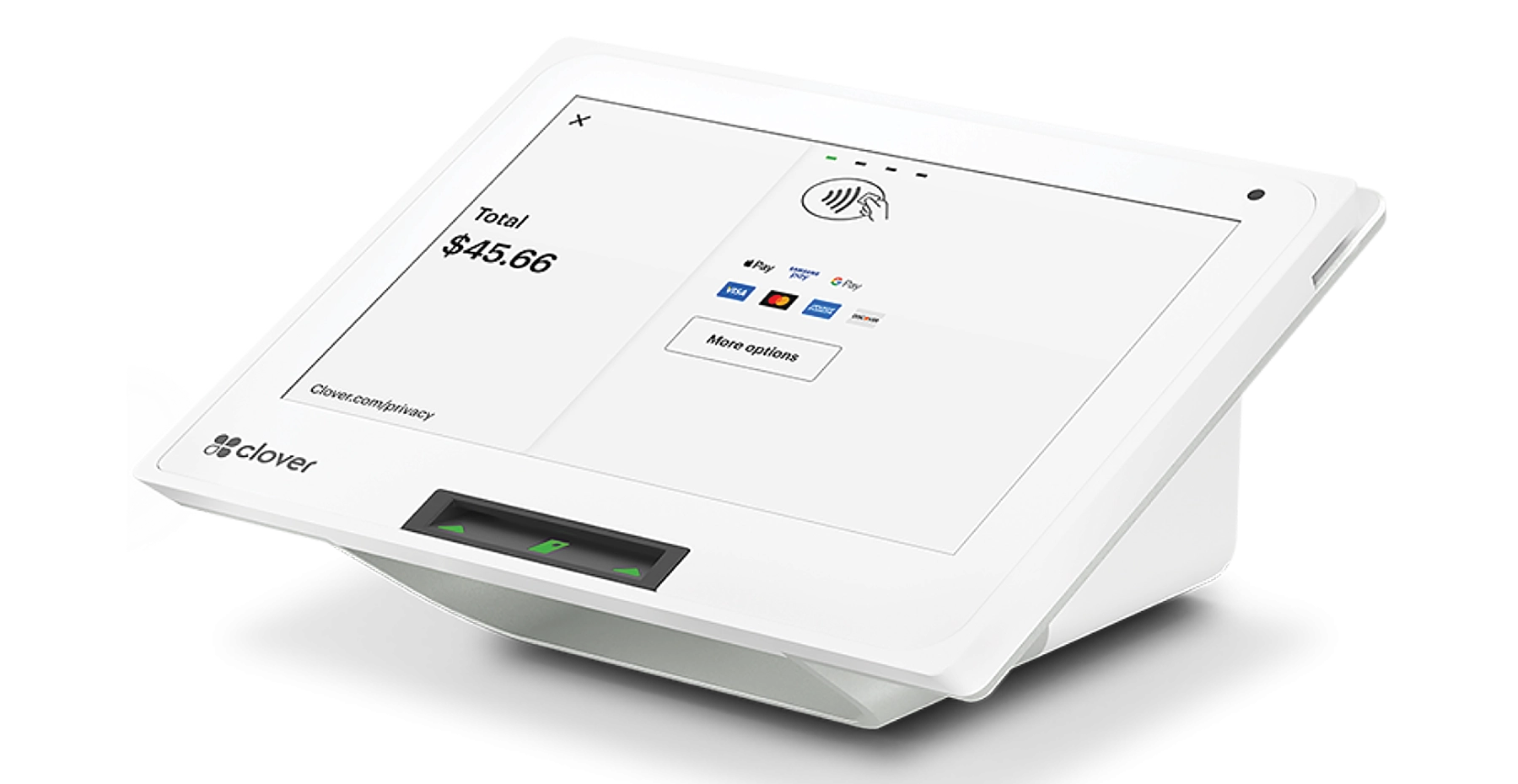
Modern payment terminals are not just prettier, they are cheaper to run because they capture the exact data cards need to qualify for the best rates and they accept everything your customers reach for, from tap-to-pay phones to chip cards to FSA cards. A compact countertop unit like the Clover Mini fits neatly at the pharmacy register, while a handheld Clover Flex lets you check patients out at the consultation window or curbside during a rush. Pairing the right device with the right processor is how you stop paying downgrade fees you never knew existed. Browse the full lineup of POS devices for small businesses to see what fits your counter.
Ready to stop overpaying on pharmacy payment processing?
VMS sets up clean FSA/HSA acceptance, transparent pricing, and fast funding built for the way your pharmacy actually runs.
Or call our team: 888-902-6227
Security and PCI Compliance Without the Headache
Pharmacies sit on a goldmine of sensitive data, which makes you a target and puts payment security squarely on your shoulders. Every card you accept has to move through a PCI-compliant environment, and a breach is not just a fine, it is a gut-punch to the community trust you have spent years building. Yet most owners find PCI compliance baffling, and plenty are quietly paying monthly non-compliance penalties simply because no one ever helped them finish the questionnaire.
Good pharmacy payment processing takes this weight off your back. Modern terminals encrypt and tokenize card data the instant it is entered, so raw card numbers never live on your systems. The right partner also walks you through PCI validation once a year in plain language, keeps your hardware patched, and makes sure you are never paying a penalty for a box you did not know you needed to check. The result is stronger protection for your patients and one less compliance worry keeping you up at night. Security done right is invisible to your customers and quietly reassuring to you.

Speed, Cash Flow, and Working Capital
Cutting fees is only half of what great pharmacy payment processing delivers. The other half is how fast the money you have earned actually reaches your bank account, because a pharmacy lives and dies by cash flow. You pay wholesalers on tight terms while you wait on insurance reimbursements that can lag for weeks. When your card deposits also drag, the squeeze gets serious.
The right processing partner gets your funds to you quickly and predictably, so you are not floating your inventory on a credit line while you wait. And when a big opportunity or a lean stretch shows up, dedicated pharmacy-friendly working capital can bridge the gap without the runaround of a traditional bank loan. Whether it is stocking up ahead of flu season, covering a slow reimbursement cycle, or investing in a new compounding station, having fast access to capital tied to your actual card volume keeps you moving instead of stuck.
Think of it this way: lower fees put more money in the pot, faster funding gets it to you sooner, and flexible capital lets you act on it. Together they turn payment processing from a cost center into a genuine competitive edge over the chain down the street. Picture a neighborhood pharmacy doing roughly 55,000 card transactions a year at an average ticket of 40 dollars. Shave the effective processing rate by even three-quarters of a percent, add Zero Fee Processing on the qualifying sales, and speed up funding from three days to next day, and the owner is suddenly looking at thousands of dollars a year in recovered margin plus a healthier cash cushion. None of that required a single new customer or a price increase on a single product.
Choosing a Pharmacy Payment Processing Partner
Not every processor deserves your business, and the sign-up-online giants are rarely the right fit for a pharmacy. First, look for real pharmacy and healthcare experience, especially clean FSA and HSA setup, because that is where generic processors stumble. Second, demand transparent pricing with no long-term traps, so you can read your statement and understand every line. Third, insist on genuine local support, a real human who answers the phone when your terminal acts up at 4 p.m. on the busiest day of the month, not a ticket queue in another time zone. Fourth, make sure they offer modern, secure hardware and the compliance guidance to keep you protected. If you want a plain-English rundown of the basics, the merchant services FAQ is a good place to start, and the same fundamentals that help a retail shop apply to your front-of-store sales too.
Be especially wary of the flat-rate aggregators that let you sign up online in minutes. They are wonderfully easy to start with and frequently more expensive over time, and worse, they can freeze a pharmacy’s funds without warning when your volume or ticket sizes trip an automated risk flag. For a business that depends on predictable daily deposits to pay wholesalers, that kind of surprise hold is exactly the risk you cannot afford. A dedicated merchant account with a processor who actually knows your business is steadier, more transparent, and far more forgiving of the way a real pharmacy operates.
This is exactly where VMS fits. Velocity Merchant Services has helped small businesses accept payments since 1998, and our team builds pharmacy setups around your real workflow, not a one-size-fits-all template. We handle the FSA and HSA configuration, put transparent pricing in front of you, get you modern Clover hardware, and stay on the line long after the sale. For an independent pharmacy fighting for every point of margin, that combination is not a nice-to-have. It is how you stay open and stay profitable.
The Bottom Line for Your Pharmacy
You cannot control what a PBM reimburses or what a wholesaler charges, but you can absolutely control how you accept payments. With margins at a decade low and independent pharmacies closing at a rate of more than one a day, smart pharmacy payment processing is one of the few levers that reliably puts money back in your business. Trim the fees, speed up your funding, and lean on a partner who actually understands your world. Your margin, your staff, and your patients will all feel the difference. When you are ready to see exactly how much your pharmacy could save, VMS is ready to show you.
Have questions about pharmacy payment processing?
Fill out the form below and a VMS payment specialist will contact you shortly.