

Debunking the Top 5 Myths About Cash Discount Programs
Cash discount programs are gaining traction as a smart way for businesses to cut operating costs and boost profits. By encouraging cash payments, businesses can save money on processing costs and enhance customer satisfaction by giving customers more payment options. These programs incentivize cash transactions by offering discounts to customers who pay with cash, while also ensuring regulatory compliance to avoid legal pitfalls.
Despite their benefits, misconceptions and myths often hold business owners back from taking the leap. Let’s set the record straight on the top five myths about cash discount programs and why they might be the best choice for your business.
Understanding Cash Discounts and Surcharges
A cash discount program is a modern payment processing model that allows businesses to offer customers a discount when they pay with cash, while card-paying customers simply pay the standard price. This approach is designed to help businesses reduce their payment processing costs, especially the credit card processing fees that can eat into profit margins. By encouraging cash payments, businesses can save money on processing costs and enhance customer satisfaction by giving customers more payment options.
One of the most common concerns business owners worry about is how customers will react to a new pricing model. In reality, when a cash discount program is implemented correctly and communicated clearly, most customers appreciate the opportunity to save money by paying with cash. Proper signage and transparent communication at the point of sale are key to ensuring customers understand the benefits and the reason behind the program.
It’s important to understand the difference between cash discounts and credit card surcharges. Cash discounts reward customers for paying with cash by offering a lower price, while surcharges add an extra fee to card transactions. Unlike surcharges, which are subject to more restrictions and are even prohibited in some states, cash discount programs are fully compliant with federal regulations and can be used by retail stores, restaurants, and many other businesses nationwide. Gas stations have been using this pricing structure for years, offering lower prices for cash payments and standard prices for card payments.
Many payment processors now offer cash discount programs that are easy to integrate with existing point-of-sale systems, making it simple for businesses to start saving on processing fees. By shifting to a cash discount program to cut processing fees, businesses can achieve higher profit margins, offer competitive pricing, and see significant savings—especially those with high transaction volumes. Most customers are familiar with dual pricing models and appreciate the transparency, especially when they see the opportunity to save money.
To successfully implement a cash discount program, businesses should partner with a reputable payment processor that provides a fully compliant solution. The processor should offer guidance on how to effectively communicate the program to customers, including the use of proper signage and staff training. Ensuring your POS system is compatible and your team is prepared to answer questions will help make the transition smooth and maintain customer satisfaction.
In summary, a cash discount program is a straightforward and fully compliant way for businesses to reduce payment processing costs, increase profit margins, and offer customers a chance to save money while lowering credit card processing fees. With the right support and clear communication, businesses can implement this pricing model to improve their bottom line and stay competitive in today’s market.
Myth #1: “I’ll Lose Customers If I Implement a Cash Discount Program”
Cash discount programs are often misunderstood as a deterrent to customer loyalty, but in reality, they offer a modern solution to a common business challenge. Passing credit card fees to customers can seem risky, but when communicated properly, reducing the impact of high credit card processing fees can enhance the customer experience for cash payers.
The Concern: Many business owners worry that passing credit card fees to customers will make their business look unfriendly or drive customers to competitors who don’t charge these fees. Some also worry about the impact on their customer base, but evidence shows that a well-structured cash discount program can maintain or even strengthen the customer base while improving profitability.
The Reality: Today’s consumers are more aware of fees than ever. Convenience fees for online shopping or service charges at restaurants are part of everyday life. Most customers do not react negatively when the program is communicated clearly and the benefits are explained. When done transparently, a cash discount program can actually benefit cash-paying customers by offering them a reward for their payment method.
How to Address It:
-
Be Transparent: Explain why the program exists and how it benefits both the business and customers.
-
Educate: Most customers don’t realize that credit card companies charge businesses a fee for every transaction. A little education goes a long way.
-
Show Examples: Share success stories from other businesses that implemented cash discount programs without losing customers.
-
Use Signage: Display clear, friendly signage in your store to ensure customers are fully aware of the program. Signs can explain the discount for cash payments and help set expectations upfront.
Myth #2: “Implementing a Cash Discount Program Is Too Complicated”
Transitioning to a cash discount program might sound daunting, but technological advancements have made it easier than ever. Many businesses are surprised by how simple the process can be with the right tools and guidance.
The Concern: Business owners fear they’ll need to overhaul their point-of-sale (POS) system or deal with complicated processes.
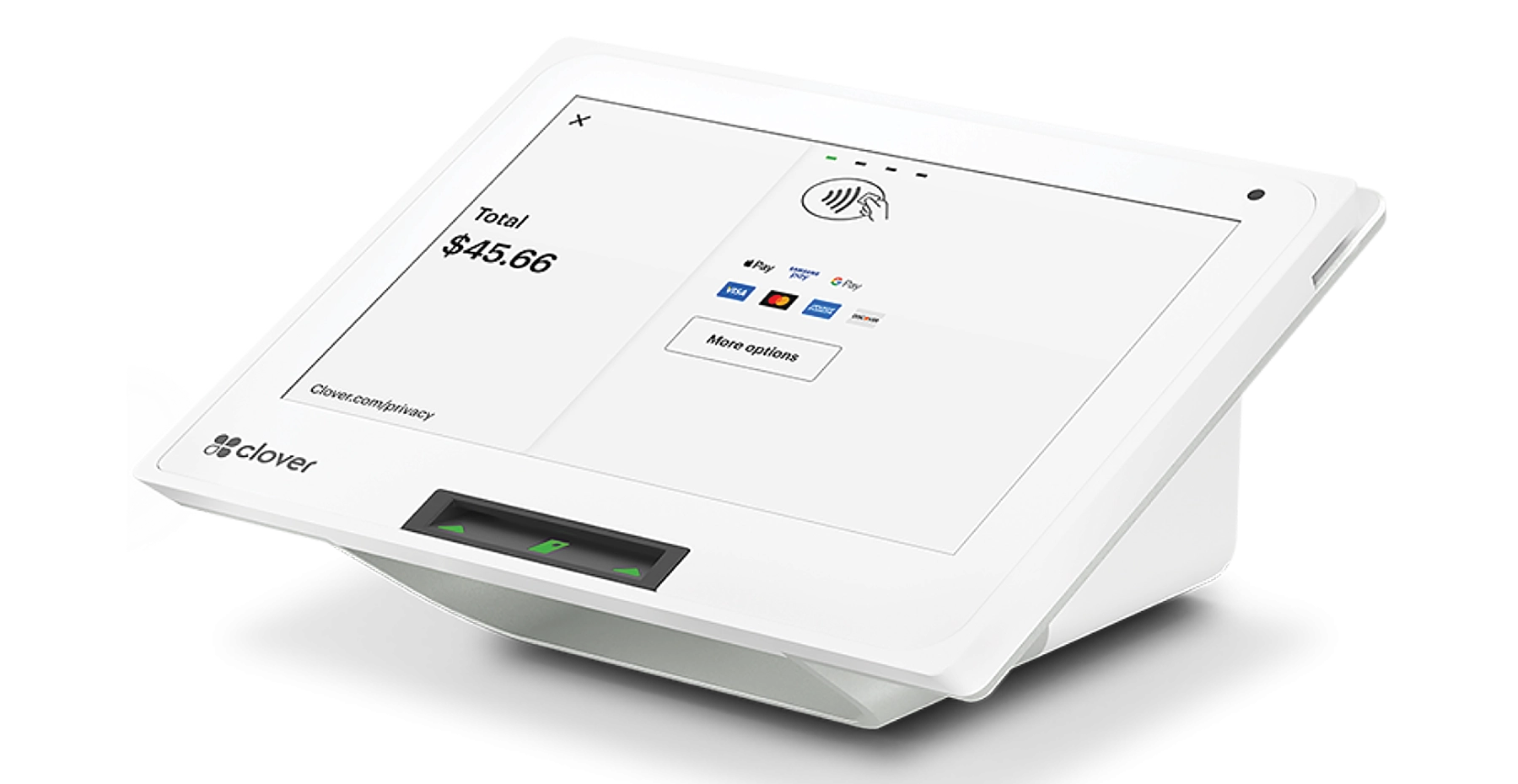
The Reality: Modern technology has made cash discount programs simple to set up. Most POS systems, like Clover and Dejavoo, already have features that support these programs. The process is straightforward and causes minimal disruption. When it comes to transactions made with a debit card, cash discount or dual pricing models typically treat debit card payments differently from credit cards, often not applying surcharges or offering reduced prices. It’s important to clearly communicate to customers how debit card payments are handled to avoid confusion.
How to Address It:
-
Highlight Simplicity: Many cash discount programs require nothing more than adjusting how prices are displayed.
-
Use User-Friendly Tech: POS systems like Clover Mini or Flex are designed to make this transition seamless.
-
Get Support: Work with a payment processor experienced in cash discount programs to guide you through the setup.
Myth #3: “Cash Discount Programs Are Illegal or Non-Compliant”
Compliance concerns can be intimidating, but cash discount programs are entirely legal when implemented properly. Educating yourself on the distinctions between cash discounts and surcharges can help eliminate any confusion.
The Concern: The legality of passing credit card fees to customers is a common fear, especially with varying state and industry regulations.
The Reality: Cash discount programs are legal in all 50 states when implemented correctly. They comply with the Durbin Amendment of the Dodd-Frank Act, as they simply offer discounts to cash-paying customers rather than adding fees for credit card users. This is different from surcharging, which has stricter requirements.
How to Address It:
-
Stay Compliant: Partner with a processor knowledgeable about state-specific regulations.
-
Educate on Definitions: Clearly explain the difference between cash discounts and surcharging to avoid confusion.
-
Follow Best Practices: Stay updated on legal changes and use proven methods to ensure compliance.
Myth #4: “It Will Harm My Business’s Reputation”
Reputation is everything in business, and it’s understandable to worry about how changes might affect customer perception. However, when framed as a customer benefit, cash discount programs can actually enhance your brand image.
The Concern: Some business owners worry that customers will view their business as greedy or profit-focused if they adopt a cash discount program.
The Reality: When framed correctly, a cash discount program adds transparency to your pricing. Customers appreciate knowing where their money goes, and offering discounts for cash payments can enhance your reputation as a business that rewards loyalty.
How to Address It:
-
Focus on Positivity: Emphasize that it’s a reward for cash payments, not a penalty for card users.
-
Communicate Effectively: Use clear, friendly signage at checkout to explain the program.
-
Show the Value: Highlight how the savings help you reinvest in better products or services for your customers.
Tired of unpredictable processing fees?
VMS offers cash discount and dual pricing programs that can bring your effective rate close to zero, plus a free statement review.
Or call our team: 888-902-6227
Myth #5: “The Cost of Equipment Is Too High”
The cost of upgrading equipment is often perceived as a barrier, but the long-term savings from reduced processing fees make it a worthwhile investment. Plus, there are often affordable solutions available.
The Concern: Upgrading to a cash discount-compatible POS system or terminal seems like an expensive investment.
The Reality: Many payment processors, including Velocity Merchant Services, offer affordable options—or even free upgrades—for businesses adopting cash discount programs. Additionally, the savings from reduced processing fees quickly offset the cost of equipment.
How to Address It:
-
Affordable Solutions: Highlight cost-effective devices like the Dejavoo QD4 or Clover Mini, ideal for small businesses.
-
Incentives: Look for promotional deals or free upgrades from payment processors.
-
Analyze ROI: Calculate how much you’ll save on processing fees to see how quickly you’ll recover the equipment cost.
Why Cash Discount Programs Are Worth Considering
Adopting a cash discount program isn’t just about cutting costs—it’s about preparing your business for the future. Here are some benefits to keep in mind:
-
Cost Savings: Reduce or eliminate credit card processing fees (2-4% per transaction).
-
Increased Profit Margins: Lower costs mean more money to reinvest in your business.
-
Customer Loyalty: Offering cash discounts can incentivize repeat business.
Tips for Success
-
Choose the Right Partner: Work with a payment processor experienced in cash discount programs to ensure smooth implementation.
-
Train Your Team: Make sure your staff understands the program and can explain it to customers.
-
Communicate Clearly: Use signage, receipts, and direct communication to ensure customers understand the program.
-
Gather Feedback: Listen to customers and make adjustments as needed.
-
Leverage Technology: Use a modern POS system to simplify the process and track results.
Conclusion: Busting Myths, Embracing the Future
Don’t let misconceptions hold your business back. Cash discount programs are a proven way to save money, increase profits, and build customer loyalty. With the right partner and a solid plan, you can implement this cost-saving strategy without alienating customers or complicating operations.
Ready to take the next step? Contact Velocity Merchant Services today to see how a cash discount program can help your business thrive!
Myth #6: “Cash Discount and Surcharging Are the Same Thing”
They are not, and conflating them is how businesses end up on the wrong side of a card network rule. The distinction is in how the price is presented.
A cash discount posts one price for every item, and customers paying with cash receive a reduction at the register. A surcharge posts a base price and adds a fee on top for card payers.
The practical difference matters because surcharging carries obligations a cash discount does not: registration with the card networks in advance, caps on the percentage you may add, a prohibition on surcharging debit and prepaid cards at all, and disclosure at the entrance as well as at the point of sale. Surcharging is also restricted or prohibited in a handful of states, while a properly implemented cash discount is broadly permitted.
If someone offers you a program and cannot clearly say which of the two it is, that is the moment to slow down. Our comparison of cash discount versus surcharge lays out the trade-offs in full.
Myth #7: “A Cash Discount Program Will Cause Chargebacks and Complaints”
The fear is reasonable and the data does not support it, provided the program is implemented correctly. Disputes on these programs cluster around one root cause: the customer was surprised at the register.
Surprise is an implementation failure, not a feature of the model. Three things eliminate nearly all of it:
- Signage the customer sees before they choose. At the entrance and at the counter, not only on the receipt after the fact.
- A receipt that shows both prices. When the customer can see the card price and the cash price on the same slip, there is nothing left to dispute.
- Staff who can explain it in one sentence. Most complaints are resolved at the counter by a clerk who understands the program. Complaints escalate when staff cannot answer.
The businesses that struggle are usually the ones that switched on the program overnight with no signage and no staff briefing. The businesses that succeed treat it as a small change-management project lasting about a week.
What Actually Determines Whether a Cash Discount Program Works
Rather than another myth, this is the honest answer to the question underneath all of them: will it work for my business?
Your average ticket size
On a small ticket, the difference between the cash and card price is measured in cents and almost nobody changes behavior or objects. On a large ticket it becomes a real number that some customers will notice and a few will push back on. Higher-ticket businesses tend to need better signage and better-briefed staff, not a different program.
Your customer mix
A convenience store, laundromat, or quick-serve restaurant with meaningful existing cash traffic adapts almost invisibly. A business whose customers pay by card essentially without exception should expect the program to function mostly as a cost recovery mechanism rather than a genuine behavior shift, which is still a legitimate reason to run it.
Your competition on the same street
If every comparable business nearby posts one price and absorbs processing, being the only one with a dual price can feel exposed. In markets where the practice is already common, it is unremarkable. Worth an afternoon of walking the block before deciding.
Your state
Rules differ by state and they have changed in recent years. Confirm the current position where you operate before you launch, and re-check if you open a location in another state.
Cash Discount Questions We Get Most Often
Do I have to change my price tags?
Your posted prices become the card prices, and the discount is applied at the register for cash. In practice most businesses adjust shelf pricing once at launch and then leave it alone.
What happens with returns?
Refund the amount the customer actually paid, in the tender they used. Set this rule explicitly in your POS and brief staff on it, because inconsistency here is a genuine source of complaints.
Can I run it at some locations and not others?
Yes, and multi-location operators frequently do, particularly when one site sits in a state with different rules or serves a very different customer base.
Does it work with EBT and SNAP?
SNAP purchases have their own rules and cannot be treated like ordinary card transactions for this purpose. If you accept EBT, configure the program to exclude those transactions. See our guide to accepting EBT.
What if I want to stop?
You can reverse it. The cost is the signage and a price reset, not a contractual trap, provided your agreement does not tie you to a long equipment lease. Ask about exit terms before you sign, as with any processing arrangement.
Have questions about processing fees?
Fill out the form below and a VMS payment specialist will contact you shortly.