

You wrapped the job an hour ago. The homeowner is thrilled, the crew’s already loaded up, and now you’re standing in the driveway asking for a check — again. Maybe it comes today. Maybe it “gets mailed.” Maybe you’re sending a reminder text next Tuesday. For a lot of trades, that awkward driveway moment is quietly the most expensive part of the whole project. The good news is that better payment processing for contractors makes it almost disappear.
Getting paid in the trades is its own animal. You’re not ringing up a coffee at a counter — you’re collecting hundreds or thousands of dollars, often on-site, sometimes before the work even starts, and almost always while juggling materials, labor, and the next three jobs on your calendar. Get it right and cash lands in your account fast. Get it wrong and you’re financing your customers for free while your own bills pile up. Let’s fix that.
Why Payment Processing for Contractors Isn’t One-Size-Fits-All
Retailers have it easy: a customer walks in, taps a card, and it’s done. Contractors live in a messier world, and the payment tools built for a boutique or a café rarely fit the way you actually work. If you’ve ever tried to run a five-figure invoice through a system designed for $15 tickets, you already know the pain.
Here’s what makes contractor payments genuinely different:
The tickets are big. A $9,000 bathroom remodel or a $6,500 HVAC install is not a $12 latte. Large transactions mean processing fees hit harder, and a declined card at that size is a real problem you have to solve on the spot — not shrug off.
Your “register” is a truck. Your point of sale is wherever the customer is: a kitchen, a rooftop, a job trailer, a muddy back yard. You need to take a card in the field, not tell people to “call the office Monday.” Every hour a payment waits is an hour it might not happen.
Deposits come first. Materials cost money long before you earn a dime. Collecting 30–50% up front is standard practice in the trades, and you need a clean, professional way to do it that doesn’t feel like you’re begging.
The customer mix is unpredictable. One week it’s a homeowner paying by phone; the next it’s a property manager cutting a business check for a dozen units. Residential and commercial jobs simply don’t pay the same way, and your setup has to flex for both.
The takeaway: generic, counter-first payment tools leave money and time on the table for trades. What you want is a system built around mobility, big tickets, and getting funded quickly — the same philosophy behind our full lineup of POS devices for small businesses, tuned for the way service pros actually operate.
The Real Cost of Getting Paid Slowly
It’s tempting to treat “I’ll get paid eventually” as good enough. But slow payment quietly bleeds trade businesses dry, and the numbers back it up.
Chasing checks is a second job you didn’t ask for
Every unpaid invoice is a phone call, a text, a follow-up email, and a nagging worry in the back of your head at 11 p.m. That’s time you’re not spending bidding new work or actually running jobs. And the longer a balance sits, the harder it is to collect — memories fade, home budgets get spent elsewhere, and “I’ll pay you Friday” quietly becomes next month. Collections is nobody’s favorite job, yet it’s the one too many owners end up doing every week. Worse, it can quietly sour a relationship with an otherwise happy customer — the person who raved about your work now associates your name with an awkward money conversation instead of the great job you did.
Thin buffers meet big material bills
Cash flow, not lack of profit, is what actually sinks small businesses. According to the JPMorgan Chase Institute, the median small business holds just 27 days of cash buffer — under a month of expenses in the bank if the money stops coming in. That’s the whole cushion between you and a missed payroll.
Now layer the trades on top. Industry payment reports find that construction payment cycles stretch to an average of roughly 90 days, and more than 80% of contractors say they regularly wait over 30 days to get paid. When you’re floating thousands in lumber, copper, or equipment while waiting on a check, that 27-day buffer evaporates fast. One slow-paying customer can be the reason you can’t make payroll or say yes to the next job. Faster payment processing for contractors isn’t a nice-to-have — it’s the difference between growing and stalling.
And the strain isn’t only financial. Owners who live invoice-to-invoice tend to make worse calls — taking underpriced work just to keep cash moving, putting off equipment maintenance, or delaying a hire they badly need. Tightening the gap between finishing a job and actually seeing the money does more than pad your bank balance; it protects your judgment, your sleep, and your ability to run the business you set out to build in the first place.

How to Take Payments Anywhere the Job Is
The fix isn’t hounding customers harder — it’s making it effortless for them to pay you the moment the work is done. Modern payment processing for contractors puts a full checkout in your pocket, so the money moves when the motivation is highest.
Swipe, dip, and tap right on-site
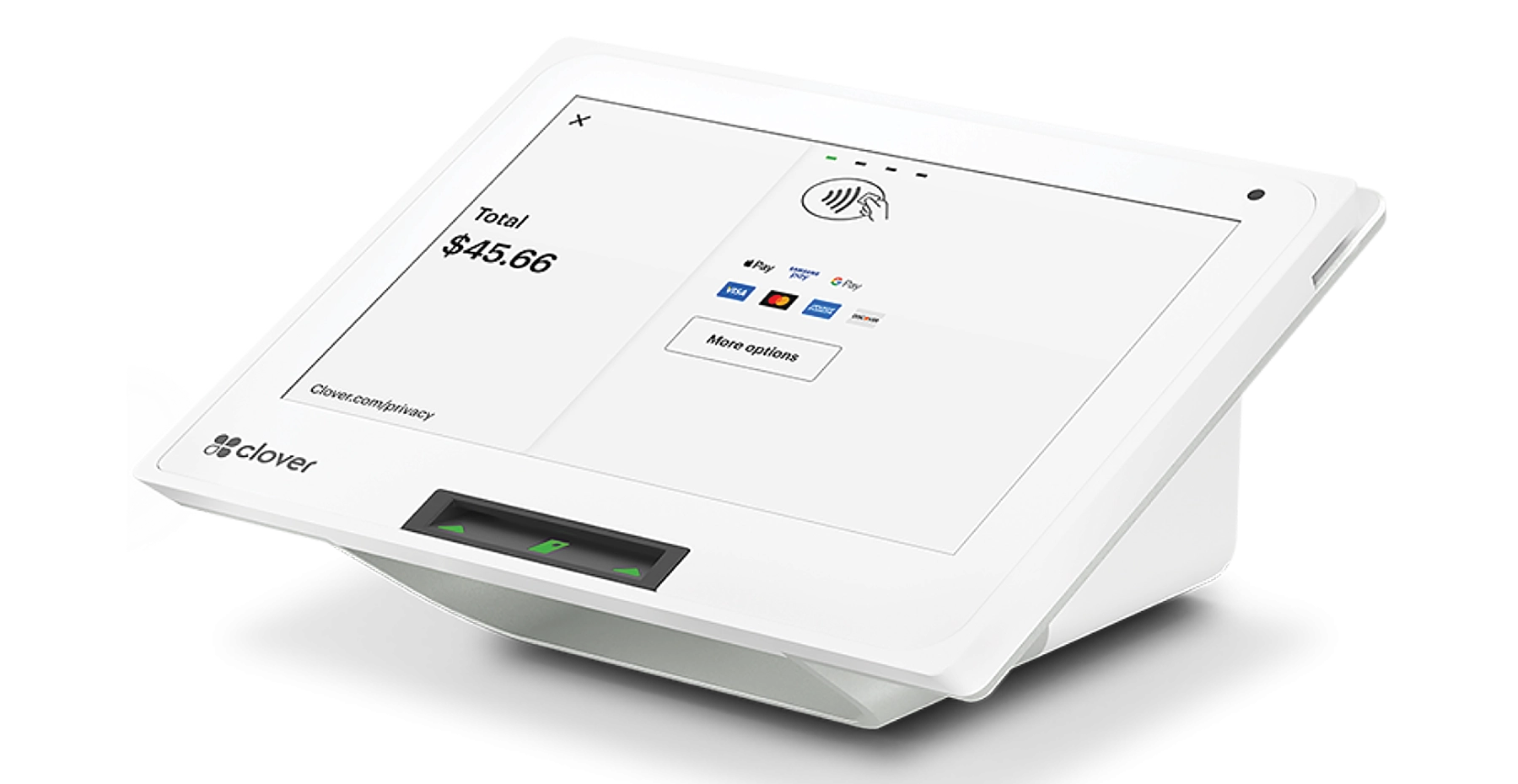
A handheld reader like the Clover Flex lets you accept chip cards, contactless taps, and mobile wallets like Apple Pay and Google Pay right from the customer’s doorstep. It prints or texts a receipt, captures a signature for the file, and runs on Wi-Fi or cellular — so you’re covered whether you’re in a downtown condo or a rural crawlspace with one bar of signal. The card gets run while you’re still standing there, which is exactly when people are happiest to pay.
Text a secure payment link
Not every job ends with the customer standing in front of you. For remote or after-hours invoices, text-to-pay lets you send a secure payment link straight to their phone — they tap it, enter a card, and you get an instant notification that you’ve been paid. No stamps, no “the check’s in the mail,” no waiting for someone to remember. It’s the same approach that helps the service pros on our payment processing for professionals side shrink their outstanding balances dramatically.
Collect deposits before the first nail
Because you can take a card anywhere, you can take one up front. Requiring a deposit to lock in the job protects you from material costs and last-minute no-shows, and customers are completely used to it. A quick tap at the kitchen table or a texted link the moment the contract is signed means you start the work already partly paid — and you’re spending the customer’s money on materials, not your own.
Put maintenance plans on autopilot
If you offer service agreements — seasonal HVAC tune-ups, quarterly pest control, monthly lawn care — recurring billing charges the card automatically on schedule. That’s predictable revenue with zero chasing. You set the amount and cadence with the customer’s approval once, and it simply runs in the background while you focus on the work.
Give customers the options they already expect
Homeowners financing a $15,000 roof don’t always want to drop the whole thing on one card, and commercial clients often prefer to pay large invoices by bank transfer. Offering a few payment paths — all major cards and mobile wallets, ACH for big commercial jobs, and consumer financing on high-ticket residential work — quietly removes the last excuse a customer has to delay. The easier you make it to say yes, the faster the money moves, and the more likely a $15,000 estimate turns into a signed job instead of a “let me think about it.” Meeting customers where they are is one of the most underrated ways to keep a trade business paid on time.
Ready to get paid the day the job wraps?
VMS sets contractors up with field-ready terminals, Zero Fee Processing, and next-day funding — often in about a day.
Or call our team: 888-902-6227
Stop Letting Fees Eat Your Best Jobs
Here’s the quiet math that stings: on a $12,000 remodel, a 3% processing fee is $360 gone — straight off the top of a job you already sweated over. Do a few of those a month and you’re quietly handing a processor several thousand dollars a year that could have gone toward a new truck, a hire, or your own paycheck. Compare that to a coffee shop losing a few cents on a latte and it’s clear why a payment setup designed for tiny tickets quietly punishes big-ticket trades.
This is where Zero Fee Processing changes the game. Instead of absorbing card fees on every big ticket, a compliant program passes the processing cost to customers who choose to pay by card, while cash and check payers simply pay the listed price. Your margin on that $12,000 job stays yours. Done right — clearly signed and fully compliant — customers barely blink, because they already see it everywhere from the gas station to the county clerk’s office.
Just as important is transparent pricing. Contractor-friendly processing means no surprise “statement fees,” no mystery markups buried three pages into your bill, and no three-year contract with an early-termination landmine waiting for you. You should be able to open your statement and know exactly what you paid and why. If you can’t, that’s a red flag — and it’s one of the most common reasons trades finally switch processors.
What to Look For in Payment Processing for Contractors
Not every merchant account is built for the field. When you’re comparing options, judge them against how you actually work — not how a retail store works. A few things worth insisting on:
- Mobile-first hardware. You need a reader that goes where you go. A lightweight option like the Clover Go pairs with your phone for solo operators and smaller tickets, while a handheld terminal handles full crews and bigger jobs.
- Fast funding. Ask exactly when money hits your bank — and what the daily cut-off time is. Next business day should be the expectation, not a premium upsell.
- Honest, readable pricing. Flat, transparent rates or a compliant Zero Fee program beat a “teaser” rate that balloons on your third statement.
- Big-ticket and commercial support. If you do B2B or government work, level 2 and level 3 processing can lower your rates on commercial cards — a real saver on large invoices.
- Real human support. When a terminal hiccups on a Saturday install, you want a person on the phone, not a ticket number and a chatbot.
Hold any processor to that list and the field narrows quickly. The right partner should make the money side of your business feel invisible — so you can spend your energy on the work, not the workaround.
Fund the Next Job Without the Wait

Even with lightning-fast checkout, there’s always a gap between spending on materials and getting paid. Great payment processing for contractors helps you close that gap from both ends.
First, next-day funding gets card payments into your bank account fast — often the very next business day — instead of leaving you waiting the better part of a week. When you batch out matters here, so a processor with a sensible cut-off time can be the literal difference between making Friday’s supplier run or pushing the job to Monday.
Second, when a big opportunity lands before the cash does, merchant working capital can bridge it. Say a property manager offers you a 20-unit re-pipe, but you need $18,000 in materials just to start. Funding tied to your card sales lets you say yes now and pay it back automatically as the revenue comes in — no rigid bank loan application, no maxing out a personal credit card, no watching the job go to a competitor because your cash was tied up elsewhere.
Picture a two-truck HVAC shop we’ll call Summit Air. Solid reputation, great reviews, but cash-strapped every single spring — the exact moment install season and supplier bills both spike. By taking cards right in the field, texting deposit links the day contracts were signed, and using working capital to pre-buy equipment ahead of the rush, they stopped turning down installs for lack of upfront cash. Their average time-to-payment dropped from weeks to the same week, and spring went from their most stressful season to their most profitable one. Nothing about their trade changed — only the plumbing behind their payments.
Get Paid Like a Modern Contractor
You didn’t get into the trades to moonlight as a collections agent. The right setup means you finish the job, get paid on the spot or with a quick text, keep more of every hard-earned dollar, and never stall out waiting on money you’ve already earned. That’s what smart payment processing for contractors actually looks like — built around the truck, the job site, and the way you really run your days.
VMS has been helping small businesses get paid since 1998, with field-ready Clover devices, Zero Fee Processing, next-day funding, and merchant working capital all under one roof — plus real humans who answer the phone when you need them. If you’re tired of chasing checks and tired of fees nibbling away at your best jobs, let’s build a payment setup that fits your trade. Still weighing your options? Our merchant services FAQs are a good place to start, or reach out today and get paid faster.
Have questions about payment processing for contractors?
Fill out the form below and a VMS payment specialist will contact you shortly.