

It’s 7:15 on a Saturday morning. The line at your counter snakes past the pastry case, someone’s debating between the almond croissant and the morning bun, and every second your card reader takes to wake up is a second the person at the back of the line spends rethinking their life choices. If that scene feels familiar, this one’s for you — because bakery payment processing is one of those things nobody dreams about when they open a bakery, but it quietly decides how fast your line moves, how much of each sale you actually keep, and whether that $4.50 latte-and-scone combo is making you money or just making you busy.
Here’s the uncomfortable truth: bakeries get hit harder by payment costs than almost any other business. Your tickets are small, your volume is high, and your margins were already thin before flour prices did whatever flour prices have been doing lately. A processing setup built for a furniture store — a few big transactions a day — will quietly bleed a bakery dry, one $3.75 muffin at a time.
The good news? Fixing it isn’t complicated. Let’s walk through what makes bakery payment processing different, where the money leaks out, and how to set up a counter that keeps your line moving and your margins intact.
Why Bakery Payment Processing Isn’t Like Other Retail
Every industry likes to think it’s special. Bakeries actually are — at least where payments are concerned. Three things set you apart.
Small tickets, big volume
Your average sale is probably somewhere between $4 and $15. That matters because most processing fee structures include a flat per-transaction fee — often 10 to 30 cents — on top of a percentage. On a $500 furniture sale, a 25-cent fee is a rounding error. On a $4 croissant, it’s more than 6% of the ticket before the percentage fee even enters the chat. Small-ticket businesses feel fees in a way big-ticket businesses simply don’t.
The morning rush is everything
Most bakeries do a huge share of daily revenue in a two-to-three-hour window. That means checkout speed isn’t a nice-to-have; it’s a revenue lever. A card reader that takes four extra seconds per transaction, multiplied by 200 morning transactions, is 13 minutes of pure line friction — and some of those people at the back simply leave. Payments and throughput are the same conversation.
You sell in more ways than you think
Walk-in counter sales, custom cake orders with deposits, wedding and event catering, wholesale accounts with the café down the street, maybe an online ordering page for holiday pies. Each of those is a different payment moment, and most bakery setups only handle the first one well. The rest get patched together with phone calls, paper invoices, and hope.
Once you see those three things clearly, the rest of this gets easy — because every decision about bakery payment processing flows from them.

The Small-Ticket Fee Trap (And How to Escape It)
Let’s do some quick and slightly painful math. Say your bakery runs $40,000 a month in card sales at an average ticket of $8 — that’s 5,000 transactions. At a typical blended rate of 2.6% plus 10 cents, you’re paying $1,040 in percentage fees plus another $500 in per-transaction fees. That’s about $1,540 a month, or nearly $18,500 a year, just for the privilege of accepting cards.
And accepting cards isn’t optional anymore. The Federal Reserve’s Diary of Consumer Payment Choice puts cash at just 16% of U.S. payments — which means roughly five out of six customers expect to tap, dip, or swipe. The card-accepting ship has sailed. The only question is who pays for the voyage.
Option one: optimize the rate
A processor that understands small-ticket businesses can structure your pricing so those flat fees don’t eat you alive. This is worth a conversation all by itself — many bakeries have been on the same rate plan since they opened, and repricing a high-volume, small-ticket account is often the fastest four-figure raise you’ll ever get.
Option two: Zero Fee Processing
The more dramatic fix is Zero Fee Processing, where a small, clearly disclosed amount is added for card payments and customers who pay cash pay the listed price. Your processing costs drop to effectively zero, and that $18,500 a year goes back into your business — that’s a new oven, a part-time hire, or a very nice cushion for the slow season. Thousands of small businesses have made this switch, and bakeries, with their small tickets and loyal regulars, are one of the best fits for it. Done right, with clean signage and honest communication, most customers don’t blink.
First, actually read your statement
Before you change anything, pull your last processing statement and find three numbers: your total card volume, your total fees, and your transaction count. Divide fees by volume — that’s your effective rate, and for small-ticket bakeries it’s often shockingly higher than the rate you think you signed up for. A bakery quoted “2.3%” can easily be paying an effective 3.5% or more once per-transaction fees, monthly fees, statement fees, and the mysterious “regulatory compliance fee” pile on. You can’t fix a leak you haven’t measured, and this five-minute exercise is the single most valuable thing you’ll do all week.
Either way, the worst move is the one most bakeries make: nothing. Every month you keep a processing plan designed for someone else’s business, you’re donating margin you didn’t need to give up.
The Right Counter Setup for a Busy Bakery
Hardware won’t fix a bad rate plan, but the wrong hardware will absolutely sabotage a good one. Here’s what a modern bakery counter looks like.
A POS that keeps the line moving
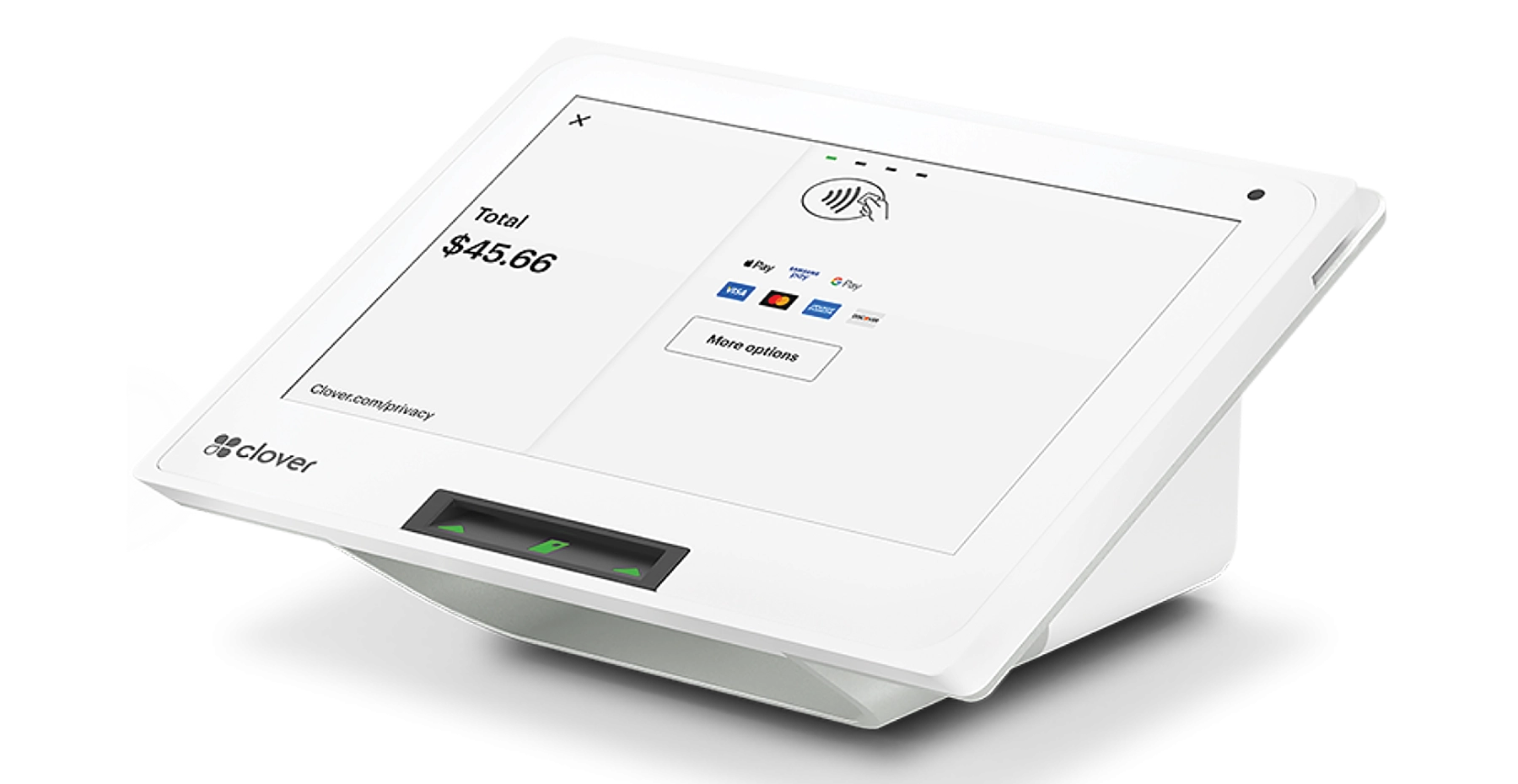
A system like the Clover Duo gives you a full register on your side and a customer-facing screen on theirs — so people can tap, add a tip, and be gone while you’re already greeting the next person in line. Tap-to-pay is the speed king here: contactless transactions consistently shave seconds off every sale, and in your morning rush, seconds are money.
If your rush regularly outruns your staff, a Clover Kiosk lets customers who know exactly what they want order and pay without waiting for a human — perfect for the regular who gets the same two items every day and would happily skip the small talk before coffee.
Online ordering that runs itself
Holiday pies, birthday cakes, Saturday pre-orders — an online ordering page takes payment up front, syncs with your POS, and turns “can I place an order for pickup?” phone calls into tickets that print themselves. Prepaid orders also kill the classic bakery heartbreak: the custom cake nobody comes to collect.
Loyalty that brings the regulars back
Bakeries live on repeat customers, and a digital loyalty program built into your POS beats the coffee-stained punch card in every way — customers rack up rewards automatically at checkout, and you get real data on who’s coming back and what they’re buying. Your quick-serve neighbors already know this; there’s a reason quick-service restaurants lean so hard on loyalty. It works.
One more thing most bakeries miss: EBT
If you sell cold items to go — whole loaves, packaged cookies, take-home pastries — you may be eligible to accept EBT/SNAP payments. Hot prepared foods generally don’t qualify, but plenty of core bakery items do, and it opens your door to customers your competitors are turning away.
Ready to stop overpaying on every croissant?
VMS sets up bakery payment processing with Zero Fee Processing, Clover POS, and next-day funding — usually within days, not weeks.
Or call our team: 888-902-6227
Custom Cakes, Catering, and Getting Deposits Right

Counter sales are the heartbeat, but custom work is often where a bakery’s best margins live — and it’s also where payments get messy.
The classic failure mode goes like this: a customer orders a three-tier wedding cake over the phone, you scribble the details on a notepad, they promise to “swing by with the deposit,” and three weeks later you’re calling a stranger about money while their cake ingredients sit in your walk-in. Not fun for anyone.
A better system costs nothing but setup time. Take deposits by card the moment the order is placed — over the phone through a virtual terminal or via a payment link texted straight to the customer. Send a real invoice for the balance, due before pickup, that they can pay from their phone. For wholesale accounts, put recurring invoices on autopilot so the café down the street gets billed every Friday without you thinking about it.
Every one of those payment moments runs through the same merchant account as your counter sales, lands in the same deposit, and shows up in the same reporting. No more sticky notes, no more awkward chase-down calls, and no more baking a $400 cake on a verbal promise.
Set a deposit policy and put it in writing
While you’re at it, write down a simple deposit policy and post it wherever custom orders happen: 50% due at order, balance due 48 hours before pickup, deposits non-refundable inside one week of the event. It feels formal the first time you say it out loud, but customers ordering a wedding cake are used to deposits — florists, venues, and photographers all require them. The bakers who feel awkward about asking are almost always the ones who’ve eaten the cost of an abandoned sheet cake. A clear policy plus card-on-file payment tools means you never have to be the bad guy; the system just does its thing.
Cash Flow: Because Flour Doesn’t Buy Itself
Payments aren’t just about taking money in — they’re about how fast that money becomes usable.
Faster funding, fewer white knuckles
If your processor takes two or three business days to deposit your card sales, your busiest weekend doesn’t actually help you until midweek. Look for next-day funding so Saturday’s rush is in your account before Monday’s flour delivery. When you’re timing supplier payments against deposits, a single day matters more than people think.
Capital for the big swings
Bakeries are seasonal creatures — wedding season, the holiday gauntlet, that one week before Valentine’s Day when everything is heart-shaped. When you need a second oven or a bigger walk-in before the busy season (not after), merchant working capital lets you borrow against your future card sales and repay automatically as a small slice of daily volume. Busy day, you pay a bit more; slow Tuesday, a bit less. It flexes with the same rhythm your bakery already lives by, without the paperwork marathon of a traditional bank loan.
Reports that tell you what to bake
Good bakery payment processing also pays you back in information. Modern POS reporting shows you exactly what sold, when, and to whom — which means you can stop guessing how many morning buns to bake on a rainy Tuesday. Item-level sales data, hour-by-hour trends, and repeat-customer insights turn end-of-day gut feelings into actual decisions: bake fewer of the thing that always gets marked down, more of the thing that sells out by 9 a.m., and staff your counter to match the real shape of your rush. Less waste and shorter lines, courtesy of the same system that takes the payments.
The Bottom Line: Keep More of Every Bake
Here’s the whole post in one paragraph: your bakery’s small tickets make you unusually vulnerable to processing fees, your morning rush makes checkout speed a direct revenue lever, and your custom-order side needs real payment tools instead of sticky notes. Solve those three things and bakery payment processing stops being a silent tax and starts being a quiet advantage.
This is exactly the kind of setup Velocity Merchant Services has been building for small businesses since 1998. VMS pairs Clover POS systems tuned for high-volume counters with Zero Fee Processing that can take your card fees to effectively zero, plus online ordering, loyalty, invoicing, and working capital — all from one team that answers the phone when you call. No 45-minute hold music, no mystery fees buried on page six of a statement.
You already make something people line up for. Make sure the last ten seconds of that experience — the payment — is as good as the first bite. Talk to VMS, get a free statement review, and find out exactly how much dough you’ve been leaving on the table.
Have questions about bakery payment processing?
Fill out the form below and a VMS payment specialist will contact you shortly.