

Retail in 2026 is basically a competition to see who can deliver the best experience with the least friction. Customers want speed, value, and convenience. Retailers want better margins, fewer returns, lower shrink, and fewer moments where someone mutters, “Why is the register frozen again?”
Spending hasn’t fallen off a cliff, but it’s not flying either. Moody’s projects real consumer spending growth around 1.5% in 2026, which means retailers can’t rely on rising demand to cover sloppy execution. Every sale has to be earned the hard way—by running cleaner systems and removing friction wherever possible.
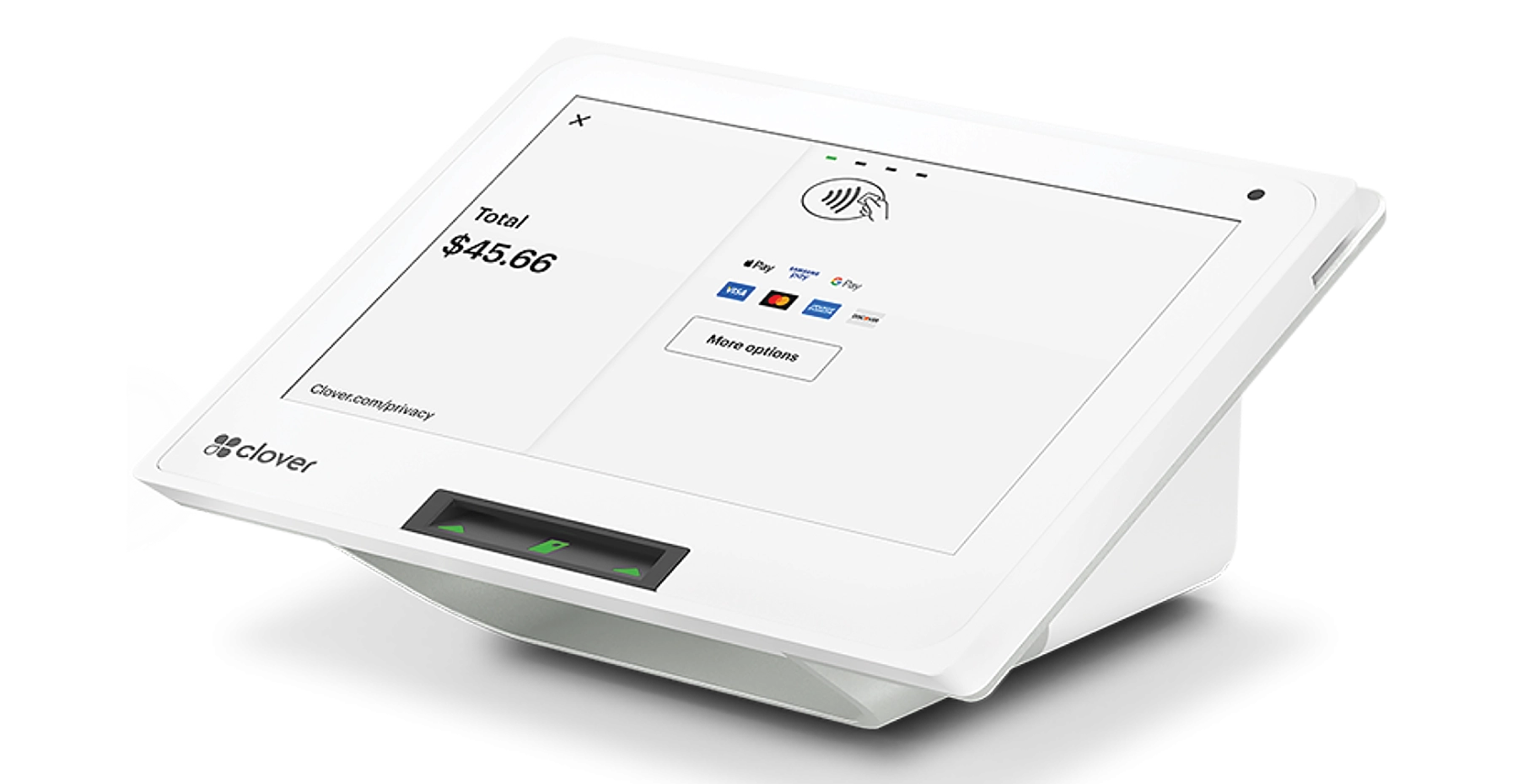
That’s why systems matter more than ever in 2026, especially payments and POS. Slow checkout, messy inventory, chaotic returns, or a loyalty program that lives on a dusty punch card all translate into lost revenue. This is exactly where modern setups like VMS + Clover matter: fast checkout, modern payments, inventory visibility, gift cards, loyalty, and reporting—without duct-taping five tools together.
The 2026 Retail Outlook: What’s Pressuring Stores Right Now
Many of the most important retail trends in 2026 are driven by forces retailers don’t control—but absolutely have to respond to. Deloitte’s 2026 retail outlook highlights tariff-related inflation risks, reduced consumer purchasing power, and ongoing labor constraints, even as AI investment continues to accelerate.
In plain English, that means customers are picky, costs can spike unexpectedly, and “good enough” operations get exposed fast. At the same time, automation and AI are no longer optional extras—they’re becoming competitive necessities. Retailers who adapt will hold ground or grow. Retailers who coast will feel it quickly.
Retail Trend #1: AI Stops Being a Buzzword and Starts Doing Work
One of the biggest retail trends in 2026 is the shift from talking about AI to actually using it. NRF has been blunt that AI’s impact will snowball, with smarter consumer agents and more autonomous supply chains becoming more common. Salesforce’s 2026 predictions also emphasize retailers using AI to improve customer experiences and loyalty.
In real retail life, AI isn’t sci-fi. It shows up as better demand forecasting, fewer stockouts, less overbuying, more personalized offers, and smarter scheduling that cuts busywork. The catch? AI only works if the data underneath it is clean.
That’s where modern POS systems matter. Clover doesn’t magically run your store by itself, but it does give you reliable sales data, product performance insights, and customer engagement information. And “AI with messy data” is just an expensive vibe, not a solution.
Retail Trend #2: Unified Commerce Replaces “Omnichannel”
Another defining retail trend in 2026 is the move away from loosely connected channels toward unified commerce. Retailers are done with systems that don’t talk to each other. Inventory, customers, orders, returns, and payments need to live in one connected view.
Customers don’t think in channels. They think: Do you have my size? Can I buy online and pick up quickly? Can I return this without a 45-minute side quest? Retailers who can’t answer “yes” smoothly lose patience—and sales.
Clover’s retail POS emphasizes inventory management, sales reporting, and customer engagement as core features. For retailers selling both in-store and online, Clover integrations like SKU IQ help sync inventory and orders across channels so stock levels don’t turn into a guessing game. With VMS guiding setup, retailers can avoid paying for features they don’t need while still covering the essentials.
Retail Trend #3: Value Becomes the Differentiator (Even for Premium Stores)
Value is one of the most powerful retail trends in 2026, and it doesn’t mean cheap. With slower spending growth and affordability pressure, customers care about clear pricing, consistent quality, and convenience that saves time.
Retailers who win communicate value intentionally. They bundle smartly, push high-margin add-ons, and use loyalty offers strategically. Retailers who lose rely on random discounts that train customers to wait for sales.
Modern reporting makes this easier. With Clover, retailers can actually see what sells, what doesn’t, and what deserves more shelf space. Pair that with gift cards and loyalty tools, and you can drive repeat visits without slashing prices.
Retail Trend #4: Shrink and Theft Stay Front and Center
This is one of the ugliest but most unavoidable retail trends in 2026. NRF research shows retailers reported a 93% increase in shoplifting incidents in 2023 compared to 2019, with a 90% increase in dollar losses over the same period. Associate and customer safety is also a growing concern, with heightened aggression and violence reported across the industry.
NRF’s 2026 expert commentary specifically highlights expanding theft and fraud risks, along with the dual use of AI by both criminals and retailers. This isn’t fading away.
Retailers need tighter in-store procedures, better transaction visibility, and smarter return policies. Clover supports EMV chip and contactless payments, which reduce certain fraud risks compared to magstripe, and VMS can help merchants configure reporting so suspicious patterns don’t go unnoticed. Payments alone won’t solve shrink—but clean data is part of the defense.
Retail Trend #5: Returns Turn Into a Profit Problem
Returns are no longer just customer service issues—they’re a margin problem. NRF and Happy Returns (UPS) projected total retail returns hitting $890 billion, with roughly 16.9% of annual sales returned. At the same time, fraud and exploitative return behavior continue to rise.
Reuters has reported on UPS-owned Happy Returns deploying AI to spot fake returns, underscoring how serious the issue has become: return fraud costs retailers billions each year.
In 2026, retailers need return strategies that balance ease for good customers with friction for abusers. Tracking return reasons, tightening policies, and offering store credit when appropriate all help protect margins. Clover gift cards can support store credit workflows, keeping dollars in your ecosystem instead of handing them back.
Retail Trend #6: Payment Modernization Is Mandatory
Checkout remains the moment of truth. One of the most obvious retail trends in 2026 is that customers expect fast, modern payment experiences everywhere.
Visa has reported 200% year-over-year growth in Tap to Phone adoption globally, with strong momentum in the U.S. Retailers who lag here feel it immediately through slower lines and abandoned purchases.
Customers expect tap-to-pay, mobile wallets, fast digital receipts, and fewer “insert chip, remove chip, try again” rituals. Clover systems support contactless and chip payments as standard, and VMS ensures merchants are set up correctly with hardware and workflows that fit their business.
Retail Trend #7: Loyalty and Gift Cards Come Back Strong
Customer acquisition keeps getting more expensive. Loyalty, by contrast, is predictable.
That’s why gift cards and loyalty programs are resurfacing as important retail trends in 2026. When done right, they drive repeat visits and keep cash in the business. The key is simplicity—easy redemption, clear rewards, and incentives tied to margin-friendly behavior like bundles or slow-moving inventory.
Clover’s gift card and loyalty tools are built to integrate directly at checkout, making them usable rather than forgettable.
What Retail Stores Actually Need in 2026
Retail success in 2026 comes down to execution. Stores need a POS that doesn’t slow sales, inventory they can trust, a returns strategy that protects margin, modern payment acceptance, retention tools that work, and constant awareness around shrink and fraud.
Clover retail POS supports inventory management, sales reporting, customer engagement, and modern payment acceptance. When paired with VMS, retailers get a setup tailored to small and mid-sized businesses—not enterprise bloat or DIY chaos.
More details on retail payment setups can be found here:
https://www.getvms.com/credit-card-processing-for-retail-stores/
A Simple 30-Day Retail Action Plan for 2026
In the first week, fix checkout. Make sure tap, chip, and mobile wallets work flawlessly, and speed-test your line during peak hours. If the system lags, customers notice.
In week two, clean inventory. Identify top sellers, frequent stockouts, and dead weight. If you sell online, prioritize syncing inventory so you’re not overselling or underselling.
Week three is about returns and shrink. Review return reasons, tighten policies where needed, and retrain staff on consistent procedures.
In week four, launch retention. Turn on gift cards and a simple loyalty program, and create one bounce-back offer that encourages a second visit within two weeks.
Bottom Line
Retail in 2026 isn’t dead—but lazy retail is. The stores that win will be the ones that remove friction, modernize payments, control inventory, manage returns intelligently, and give customers a reason to come back.
If you’re building that foundation, VMS + Clover gives you a clean, scalable setup: retail POS, modern payments, loyalty, gift cards, and reporting you can actually use—without turning your store into a tech experiment.