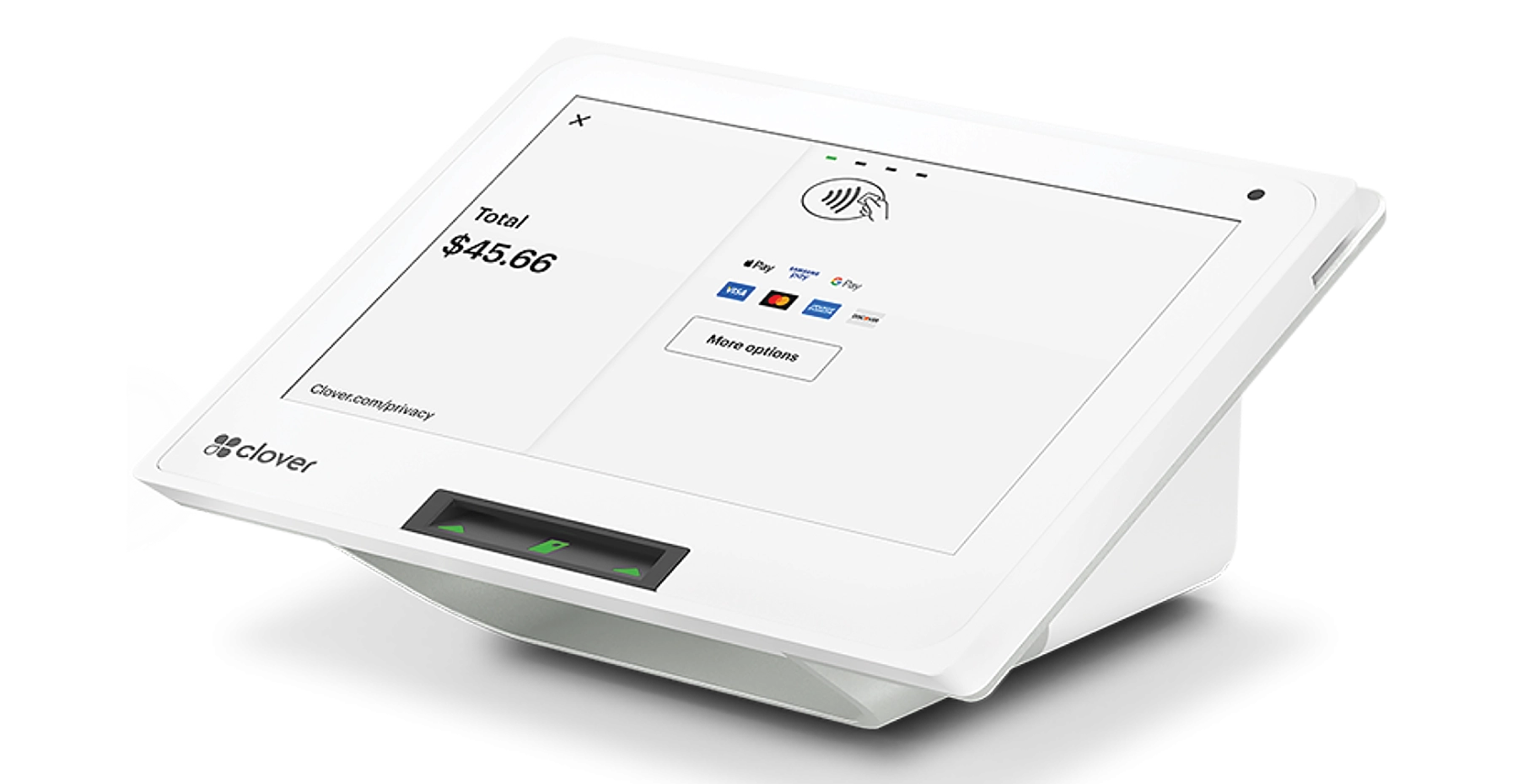


Mobile payment processing for small business is no longer a nice-to-have — it is the difference between making the sale and watching a customer walk away empty-handed. Whether you run a food stall at a farmers market, a booth at a craft fair, a service business that visits clients at home, or a retail shop whose staff roams the floor, your ability to accept payments wherever you work directly affects your bottom line.
According to the Federal Reserve’s Diary of Consumer Payment Choice, cash now accounts for just 16% of all U.S. consumer payments — a dramatic decline over the past decade. Your customers are carrying less cash and expecting to pay by card, phone, or tap. If you cannot meet them where they are, you are leaving money on the table with every transaction.
This guide covers everything you need to set up mobile payment processing for your small business the right way: how it works, which options are worth it, what fees to expect, and how to choose a solution that actually fits your business.
What Is Mobile Payment Processing for Small Business?
Mobile payment processing lets you accept credit cards, debit cards, and contactless payments — including Apple Pay and Google Pay — from a smartphone, tablet, or handheld device rather than a fixed countertop terminal.
The setup is simple: a compact card reader pairs wirelessly with your phone or tablet via Bluetooth. When a customer swipes, dips, or taps their card, the transaction is processed in real time over your cellular or Wi-Fi connection. Funds are deposited into your bank account on the normal schedule, and the customer gets a digital or printed receipt.
Modern mobile payment systems support far more than basic card swipes. Today’s solutions include:
- Chip (EMV) and tap (NFC/contactless) cards, as required by card network standards
- Digital wallets — Apple Pay, Google Pay, Samsung Pay
- Split payments and partial payment collection
- Inventory management so you can sell items by SKU directly from your phone
- Tipping prompts on the reader screen — important for service businesses
- Email and text receipts that reduce paper waste
- Real-time sales reports accessible from any device, any location
The best mobile payment platforms tie directly into a full point-of-sale ecosystem, meaning your mobile sales, countertop sales, and online sales all report to one dashboard. That is the difference between a basic card reader and a true mobile POS system — and that difference matters as your business grows.
Why Mobile Payment Processing for Small Business Is No Longer Optional
Ten years ago, you could post a “cash only” sign and most customers would shrug and find an ATM. Those days are gone.
Cash’s share of U.S. consumer payments has fallen by nearly half over the past decade. Meanwhile, tap-to-pay and digital wallet transactions continue to surge. Contactless payments now represent over a third of all in-person card transactions in the United States, and that number keeps climbing. The customers walking through your door — or calling you for a home visit — are carrying cards and phones, not bills.
Here is what that means for your business if you cannot accept mobile payments:
You lose sales at the worst moments. Pop-up events, catering gigs, trade shows, farmers markets, on-site consultations — these are all high-margin, high-visibility opportunities. If you cannot take a card on the spot, you cannot close the deal.
You look less professional. Customers associate card acceptance with legitimacy. A business that only takes cash can feel like a red flag, especially to first-time buyers who do not yet know you.
You miss out on larger transaction sizes. Customers consistently spend more when paying by card than by cash. Research from payment networks shows card transactions average 12–18% higher than equivalent cash purchases for small businesses. That is real money, every single day.
You create unnecessary friction. Every time a customer cannot pay their preferred way, you add a speed bump to the buying experience. In competitive local markets, friction costs you customers and repeat business.
The Best Mobile Payment Solutions for Small Business
Not all mobile payment solutions are built the same. The right choice depends on how often you sell away from your main location, how much volume you process, and what features your business actually needs day to day.

Clover Go: The Lightweight Champion
For small business owners who primarily work on the go, the Clover Go is one of the strongest options available. It is a compact Bluetooth card reader that pairs with the Clover Go app on your iPhone or Android, supporting chip, swipe, and tap-to-pay transactions — everything your customers expect.
What sets Clover Go apart from the generic card-reader crowd is the full Clover ecosystem behind it. Your Clover Go syncs items, inventory, employees, and reports across all your Clover devices. Sell at a trade show Friday, and your countertop register at the shop knows about it Saturday morning. That kind of seamless integration is hard to put a price on when you are running a real business.
Clover Flex: Mobile Meets Power
If you need more capability in a handheld unit — a built-in receipt printer, a larger touchscreen, or a standalone device that does not depend on your phone — the Clover Flex delivers. It handles all payment types, prints physical receipts on the spot, and runs the full Clover app suite from a single battery-powered device.
Restaurants handling tableside ordering, service businesses doing home visits, and market vendors who want one device that does everything have all found the Clover Flex to be the sweet spot between mobility and full functionality.
When to Consider a Full POS System
If your mobile sales are growing into a real operation — or you are planning a brick-and-mortar location — it makes sense to choose a mobile payment setup that is part of a broader POS system for small businesses from day one. That way you build on a scalable platform rather than outgrowing a standalone reader in six months and starting over with all-new hardware and a messy data migration.
Mobile Payment Processing Fees: What You Actually Pay
Fees are the part most small businesses do not think carefully about until they see their first processing statement — and by then, they are already locked in. Here is how mobile payment processing fees typically break down so you know what to look for before you sign anything.
Standard Rate Structures
Flat-rate processing: One rate for all transactions, regardless of card type (for example, 2.6% + $0.10 per swipe). Simple to understand, but often more expensive for businesses processing more than a few thousand dollars per month.
Interchange-plus pricing: You pay the actual interchange cost set by Visa and Mastercard, plus a small fixed markup. More transparent and typically cheaper for mid-to-high-volume businesses.
Subscription pricing: A flat monthly fee plus very low per-transaction rates. Works well for high-volume businesses where the monthly fee is smaller than what you would pay in rate markups.
The Hidden Costs to Watch
Beyond the per-transaction rate, watch for:
- Monthly minimum fees (you pay them even in a slow month)
- PCI compliance fees — legitimate but sometimes buried in the statement
- Chargeback fees, typically $15–$25 per dispute
- Early termination fees if you sign a multi-year contract
- Hardware leases that cost more than simply purchasing the device outright
Zero Fee Processing: Eliminating the Cost Entirely
One option growing fast among small businesses is Zero Fee Processing, which passes the processing cost to card-paying customers through a small service fee. Cash customers pay the listed price; card customers pay a slightly higher amount that covers the processing fee. You keep 100% of every sale.
This is legal in all 50 states and, when communicated clearly at the point of sale, is well-accepted by most customers. Many small business owners processing $10,000 to $50,000 per month save several hundred to several thousand dollars every month this way — money that goes straight back into the business.
Ready to take payments anywhere your business goes?
VMS sets up your mobile payment system fast — with no hidden fees and real human support.
Or call our team: 888-902-6227

How to Choose the Right Mobile Payment Processing for Your Small Business
With Square, PayPal Zettle, Stripe, Clover, and a dozen other options competing for your attention, the choice can feel overwhelming. A simple framework cuts through the noise.
Ask: How Much Do You Process Per Month?
Under $3,000/month: Flat-rate processors with no monthly fee can work fine. You will not process enough volume to justify more complex pricing structures.
$3,000–$15,000/month: Start comparing interchange-plus or subscription pricing. The savings versus flat-rate can be material — sometimes $50 to $150 per month.
Over $15,000/month: At this level, processor choice and pricing structure matter significantly. Negotiate rates. Explore Zero Fee Processing. The right setup can save you thousands annually.
Ask: Do You Need Mobile and Fixed in the Same System?
If you sell both at events and from a physical location, choose a system where the mobile and countertop devices share the same platform. Clover handles this natively — every device talks to the same account. Many cheaper solutions do not, leaving you with two separate reports, two separate settlement timelines, and two separate customer support lines when something breaks.
Ask: What Does Your Industry Actually Need?
Retail businesses have different needs from service businesses. A retailer at a pop-up market needs inventory sync, barcode scanning, and a printer. A plumber doing home visits just needs a reliable card reader that works on cell data without drama. Match the solution to your actual workflow. A feature-heavy system that slows down your checkout is not a feature — it is a problem.
Ask: What Kind of Support Do You Expect?
Large national processors like Square offer mostly self-service support: good documentation, limited live help. A local merchant services provider like VMS offers an actual human being when your card reader stops working on a Saturday morning at a market. That difference sounds small until it happens to you, and then it feels enormous.
The Right Partner Makes All the Difference
Mobile payment processing for small business is not just about the hardware in your hand — it is about the relationship behind it. VMS has been helping small businesses accept payments since 1998. Today, VMS offers the full Clover mobile lineup alongside transparent pricing, real human support, and the option to add Zero Fee Processing so card fees never come out of your pocket again.
Whether you are just getting your first mobile card reader or you have outgrown your current setup and need something more powerful, VMS will match you with the right solution for your business size, industry, and volume — with no pressure and no one-size-fits-all packages. Read our Merchant Services FAQs to learn more about how VMS works, or fill out the form below and a specialist will reach out within one business day.
Mobile payment processing for small business done right means never missing a sale — no matter where business takes you.
Questions about mobile payment processing?
Fill out the form below and a VMS payment specialist will contact you shortly.