

Introduction to Apple Pay
Apple Pay is Apple’s digital wallet service that lets customers pay quickly and securely using their Apple devices—like iPhones, Apple Watches, and iPads. By leveraging near field communication (NFC) technology, Apple Pay enables contactless payments both in-store and online, making checkout as simple as a tap. For businesses, accepting Apple Pay is straightforward: you’ll need a payment terminal that supports contactless payments and a payment processor that can handle Apple Pay transactions. If you run an online store, integrating Apple Pay as a payment option can streamline the checkout process and encourage customers to complete their purchases. With a merchant account and the right setup, you can accept Apple Pay and offer your customers a fast, secure, and modern way to pay—helping boost sales and enhance the overall payment experience.
Are you interested in learning about Apple Pay but can’t find the time to read all of those in-depth articles with complicated terminology? Well here’s an alternative: Apple Pay for business the quick and dirty way. Everything you need to know to understand the technology and use it at your business…and nothing you don’t.
So, what are we waiting for? Let’s jump into some frequently asked questions.
Accept Apple Pay FAQs
Q: How do I accept Apple Pay at my business?
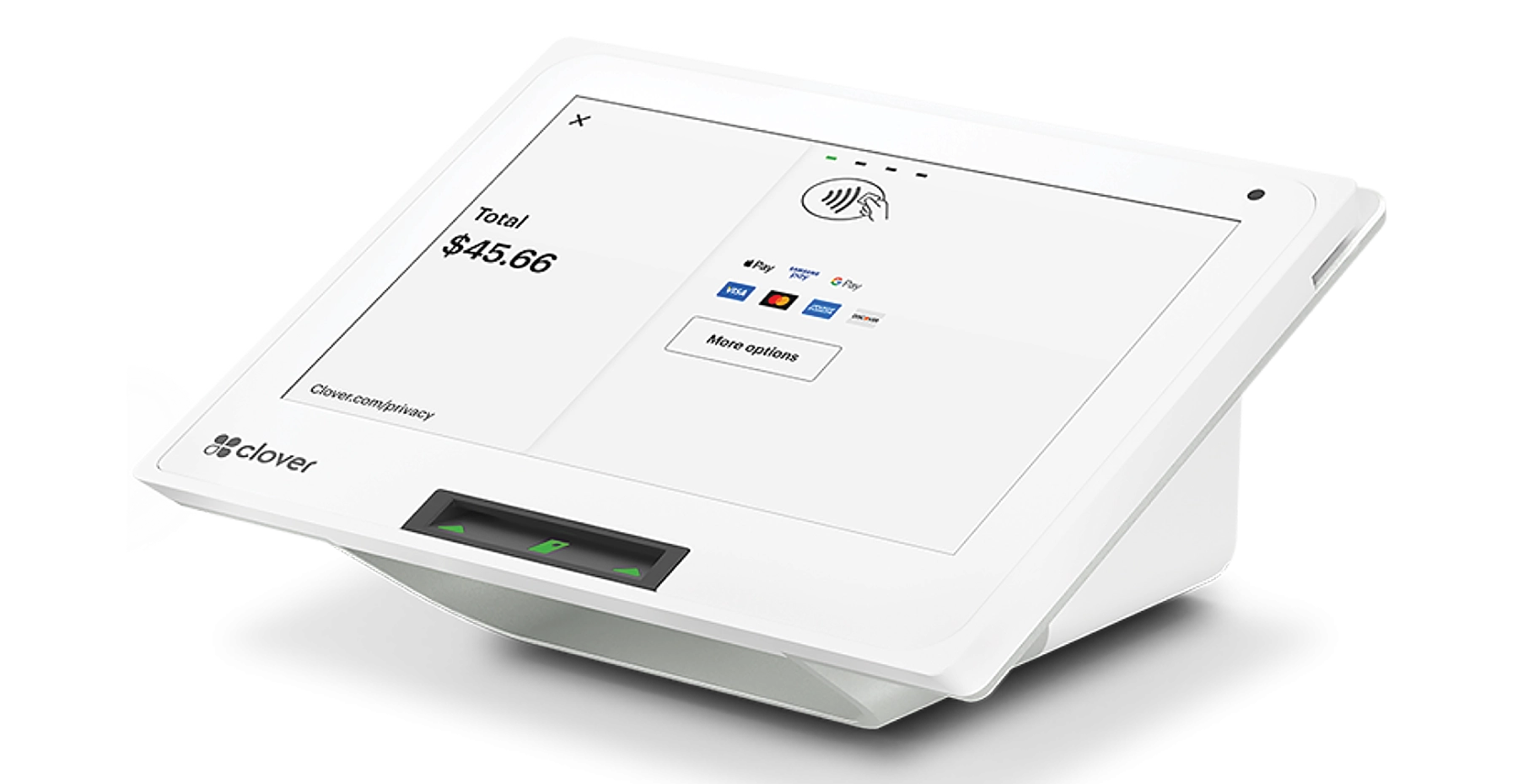
A: It’s all about the technology. You want to look for a contactless or NFC-ready point of sale terminal (also known as a POS system), such as a Clover Mini smart terminal, the new Square reader, or if you are a traditionalist, the VeriFone VX520 Contactless. Most NFC enabled terminals and contactless payment capable POS systems can accept Apple Pay and other digital wallets. Once you have the right equipment, you don’t need to sign up for anything through Apple; you’ll be ready to go. However, business owners should check with their payment service provider to confirm support for Apple Pay and other digital wallets. Integrating with a payment gateway is necessary to process Apple Pay and other digital wallet transactions. Apple Pay works with MasterCard, Visa, and American Express cards and current payment providers, who may also support other digital wallets.
Q: What are the benefits of Apple Pay?
A: There are three main benefits: Convenience: Customers no longer have to fish around for the right card buried in a wallet, they can select their card from their Apple Pay ready device or other digital wallets. Purchases can be completed with just a tap, making the process quick and seamless. Apple Pay and other digital wallets are especially popular among tech savvy customers who value speed and innovation. Security: Because the card is stored as a transaction code, your payment systems do not receive any secure information—card numbers and customer data are all protected from theft. All transactions are also verified with a thumbprint, and you can still require a signature or PIN, if applicable. Positive Experience: Showing your customers that you are concerned about their wellbeing and security means a lot. It also shows that your business is current and savvy, which doesn’t hurt either! Digital wallets like Apple Pay are widely accepted and enhance the customer experience by offering secure and modern payment options, while strategies to lower overall credit card processing fees can further improve your bottom line.
Q: Does an Apple Pay transaction count as a Card Present (CP) or No Card Present (NCP) transaction?
A: An in-person Apple Pay transaction is considered a Card Present (CP) transaction (also known as a card present transaction) and will be treated as such by your payment processor. Apple Pay uses secure transaction processes, including tokenization and device authentication, to protect transaction information during card present transactions. In the event of fraud, liability may shift to the card issuer when secure authentication methods like Apple Pay are used.
Q: Can I accept Apple Pay right away if my terminal is already NFC/contactless payment-ready?
A: If you currently accept NFC/contactless transactions, you already accept contactless payments, including Apple Pay, without changing a thing. If you have an NFC ready terminal that has not been activated for contactless payments, check with your payment service provider to ensure your terminal supports contactless payments and that it is enabled. In some cases, you may need to purchase additional hardware to support contactless payments like Apple Pay.
Q: Will my customers still have to sign or enter a PIN?
A: Apple Pay does not change the requirements for signatures and PIN numbers. If the card transaction would have required a signature to confirm normally, then it will still require a signature. Similarly, a debit card with a PIN will still require the code.
Security Measures
Security is at the heart of Apple Pay. When a customer adds a credit or debit card to Apple Pay, the actual card number is never stored on the device or Apple’s servers. Instead, Apple Pay assigns a unique device account number, keeping sensitive data safe. Every payment requires authentication—either through Face ID, Touch ID, or a secure passcode—so only the authorized user can approve payments. Apple Pay also uses tokenization, replacing real card details with a one-time-use token for each transaction, making it extremely difficult for hackers to access card information. Plus, Apple Pay complies with industry standards like PCI-DSS, ensuring that all payments are processed securely and confidentially. This robust security framework gives both businesses and customers peace of mind with every transaction.
Costs and Fees
One of the advantages of accepting Apple Pay is that there are no extra fees just for using it. Businesses pay the same credit card rates for Apple Pay transactions as they do for traditional card payments—there’s no Apple Pay surcharge. However, your payment processor may have its own fee structure, such as a standard rate of 2.9% + $0.30 per transaction, so it’s important to check with your provider for details. There may also be some additional costs if you need to upgrade your payment terminal or software to support Apple Pay. Overall, accepting Apple Pay is cost-effective, with no hidden monthly fees or setup costs from Apple itself, making it easy for businesses to offer this popular payment method, especially when paired with payment processing tailored for small businesses.
How to Run an Apple Pay Transaction in Four Steps
Apple Pay works by allowing customers to use their mobile device, such as an iPhone, iPad, or Apple Watch, to make secure payments through the Apple Wallet or Wallet app, which stores their payment cards and digital cash. Choosing a reliable, transparent POS system to pair with Apple Pay ensures those payments are processed smoothly at the point of sale.
Step 1: Customer makes a purchase and sees an Apple Pay/NFC-ready terminal. Instead of grabbing their wallet, they use their iPhone or iPad and wave it near the PIN pad or terminal with a contactless symbol. Customers can also pay on iPhone, Apple Watch, or other Apple devices for added convenience. For online stores, adding an Apple Pay button to the checkout page allows customers to pay online quickly and securely using their preferred device.
Step 2: The customer is given the choice to use their default card (securely stored in their phone) or to change to another card. Customers can select from cards stored in their Apple Wallet, including Apple Card and Apple Cash, for seamless payments. They seamlessly authorize the transaction with a thumbprint confirmation.
Step 3: Apple Pay technology uses a tokenization process to relay the information in a single-use transaction to the financial institution for authorization. The transaction process uses secure tokenization and device authentication, such as Face ID, fingerprint, or passcode, to protect transaction information and ensure privacy. No personal data is exposed.
Step 4: Within seconds, the payment is confirmed from the financial institution and the transaction is complete. Businesses can use real-time transaction data from Apple Pay to help manage inventory, track sales, and power receipt marketing campaigns directly on customer receipts.
Apple Device Compatibility
Apple Pay works across a wide range of Apple devices, including iPhones, Apple Watches, iPads, and Macs. As long as your customers have a compatible Apple device—running iOS 8.1 or later, watchOS 1.0 or later, or macOS Sierra or later—they can use Apple Pay to make purchases. Businesses can accept Apple Pay payments in store with a contactless payment terminal, or online by integrating Apple Pay into their checkout page. This flexibility means you can accept Apple Pay payments from customers whether they’re shopping in person, making online purchases, or paying through an app. By supporting Apple Pay and partnering with merchant services designed for small businesses, your business can cater to tech-savvy Apple users and provide a seamless, contactless payment option that enhances the customer experience.
Paying too much to accept cards?
VMS reviews your current statement free and shows you exactly what you are being charged — most merchants are surprised by what they find.
Or call our team: 888-902-6227
Apple Pay Resources for Your Business
One thing Apple does right is marketing and creating buzz. Apple Pay is already accepted at hundreds of thousands of stores, as well as in apps, and many businesses accept Apple Pay and other widely accepted digital wallets such as Google Pay. (Click for a list of businesses currently accepting Apple Pay.) Once you do get ready for NFC and Apple Pay, you’ll need an Apple Pay sticker to show that you do accept Apple Pay. If you click the link, you can sign up to get one from Apple, free.
Apple Pay is free for consumers, but business owners and small businesses should be aware that there may be transaction or processing fees from their payment providers. Apple Business also offers other services and resources for organizations looking to integrate Apple Pay securely and efficiently, and some retailers may also benefit from adding EBT and SNAP payment acceptance alongside Apple Pay to serve more customers.
Have questions about payment processing?
Fill out the form below and a VMS payment specialist will contact you shortly.