

Choosing how your business accepts payments is not just a technical decision—it’s a structural one. One of the most common (and most misunderstood) comparisons business owners face is merchant account vs payment aggregator.
At first glance, both options allow you to accept credit and debit cards. But beneath the surface, they operate very differently. The traditional method of accepting payments involved setting up an individual merchant account, which was often more complex and costly for small businesses compared to modern payment aggregators. Those differences affect your risk exposure, pricing stability, cash flow, account control, and long-term scalability.
This guide explains the merchant account vs payment aggregator decision in plain language, outlines how each model works, and helps you determine which is appropriate for your business today—and as you grow.
Why This Decision Matters More Than Most Businesses Realize
Many businesses start with a payment aggregator because it’s fast and easy. Others are pushed toward a merchant account without fully understanding why.
Most merchants initially choose a payment aggregator for its simplicity and quick setup, but may not realize the main difference in control, risk, and scalability compared to a merchant account.
The problem is not choosing one or the other—the problem is choosing without understanding the tradeoffs.
The wrong model can lead to:
-
frozen funds
-
sudden account termination
-
pricing that changes without notice
-
limited dispute support
-
restricted business models
Payment aggregators may also involve higher fees as your transaction volume increases, which can impact long-term growth and profitability.
Understanding merchant account vs payment aggregator upfront prevents painful surprises later.
A payment aggregator (also called a “third-party processor”) allows multiple businesses to process payments under one master merchant account owned by the aggregator.
Popular examples include:
-
Square
-
Stripe
-
PayPal
-
Shopify Payments
When you use an aggregator:
-
You are a sub-merchant, not the merchant of record
-
The aggregator controls underwriting, risk, and payouts
-
Your transactions are grouped with thousands of other businesses
How Payment Aggregators Work
Aggregators are designed for simplicity and speed, not customization or risk tolerance. Payment aggregators are particularly beneficial for small businesses or startups that need quick access to payment processing, and can be a cost-effective solution for businesses with a large volume of smaller transactions. Payment aggregators handle compliance and security centrally. They also ensure secure transfer of funds from customers to merchants, using robust backend systems to protect transactions and reduce fraud. Payment aggregators can provide advanced customization and faster access to funds (often within 1-2 business days) directly to the business bank account.
Pros of Payment Aggregators
Payment aggregators can be a good fit for certain businesses. As a streamlined payment solution, payment aggregators are especially beneficial for small businesses and startups looking for an easy and secure way to accept and process various online payments without the complexity of setting up a traditional merchant account.
Advantages
-
Fast setup
-
No long application process
-
No monthly minimums
-
Simple flat-rate pricing
-
Easy integrations for e-commerce
-
Cost-effective for businesses with a large volume of smaller transactions
This makes aggregators appealing for:
-
startups
-
hobby businesses
-
very low transaction volume
-
short-term projects
However, these benefits come with important limitations.
Cons of Payment Aggregators
In a merchant account vs payment aggregator comparison, the aggregator drawbacks are often discovered too late. An aggregator account typically comes with lower transaction limits than a dedicated merchant account, which can be a problem for businesses processing a large volume of payments.
Key Risks:
-
Payment aggregators can hold funds for a longer period than merchant account providers, which may impact cash flow.
-
Businesses using payment aggregators may face account holds due to irregular activity, disrupting sales.
Additionally, businesses that use an aggregator account have less control over their payment processing compared to those with a merchant account.
Key Risks
-
Funds can be held or frozen without warning
-
Accounts can be terminated with little notice
-
Limited appeal or review process
-
Restricted business types
-
Less control over chargebacks
Because the aggregator assumes risk across thousands of sub-merchants, it may shut down or pause accounts automatically—even if your business is legitimate.
This is not personal. It is structural.
What Is a Merchant Account?
A merchant account is a dedicated account issued directly to your business through an acquiring bank and processor.
When you have a merchant account:
-
Your business is the merchant of record
-
You are underwritten individually
-
Pricing is customized
-
Risk is assessed based on your activity, not others’
Having your own merchant account or a separate merchant account allows you to accept card payments directly, giving your business more control and even full control over payment processing, settlement, and customization.
The underwriting process for a merchant account evaluates your business model and risk profile to determine approval and tailor account features.
Merchant accounts are the traditional payment model used by established retail, restaurant, service, and B2B businesses.
Merchant accounts provide businesses with more control over their payment processing compared to payment aggregators.
How Merchant Accounts Work
The merchant account process includes:
-
Business underwriting
-
Review of industry, volume, and risk
-
Assignment of a unique merchant ID (MID)
-
Direct relationship with a payment processor and bank
After these steps, the onboarding process for merchant accounts is typically more in-depth and time consuming than with payment aggregators. This process involves detailed verification of your business history and risk exposure to ensure compliance and reduce fraud.
During transaction processing, when a customer makes a payment, the payment processor transmits the payment details and transaction information to the acquiring bank. The acquirer sends this information to the card network, which then communicates with the issuing bank for approval. The card network relays the approval or denial back through the chain, completing the transaction.
Merchant accounts also allow businesses to set rules for payment processing, such as customizing transaction workflows, managing chargebacks, and tailoring payment parameters to specific industry needs.
This structure allows for:
-
stable processing
-
negotiated pricing
-
clearer dispute handling
-
better long-term support
Pros of Merchant Accounts
When comparing merchant account vs payment aggregator, merchant accounts offer advantages that become critical as a business grows. Merchant accounts provide more stability, lower costs over time, and are ideal for businesses seeking long term scalability.
-
Merchant accounts offer lower costs over time and better risk control, making them suitable for businesses seeking to reduce expenses as they scale.
Advantages
-
Dedicated account
-
Greater control over funds
-
Lower effective processing rates over time
-
Better chargeback support
-
Fewer surprise shutdowns
-
Ability to support advanced pricing models (dual pricing, subscriptions, etc.)
Merchant accounts are built for operating businesses, not just accepting payments.
Cons of Merchant Accounts
Merchant accounts are not perfect—and they are not necessary for every business.
Considerations
-
Longer setup process
-
Underwriting required
-
Possible monthly fees
-
Contracts may apply
-
More documentation upfront
For businesses processing very little volume, this may feel like overkill.
Merchant Account vs Payment Aggregator: Side-by-Side Comparison
|
Feature |
Merchant Account |
Payment Aggregator |
|---|---|---|
|
Merchant of record |
Your business |
Aggregator |
|
Underwriting |
Individual |
Automated |
|
Account stability |
High |
Variable |
|
Risk shared with others |
No |
Yes |
|
Pricing |
Custom |
Flat-rate |
|
Fund holds |
Rare (with cause) |
Common |
|
Chargeback support |
Strong |
Limited |
|
Best for growth |
Yes |
Limited |
|
This table captures the core of the merchant account vs payment aggregator decision. |
|
|
Pricing Differences Explained
Payment Aggregator Pricing
-
Flat-rate pricing
-
Simple but often more expensive at scale
-
Limited transparency into interchange
Merchant Account Pricing
-
Interchange-plus or tiered pricing
-
More transparent cost structure
-
Lower effective rates at higher volume
For businesses processing over a certain threshold, merchant accounts often cost less overall, even if they appear more complex.
Risk and Account Stability
Risk is the most overlooked difference in merchant account vs payment aggregator.
Most aggregators are less suitable for high risk industries, which may require dedicated merchant accounts for better risk management. High risk businesses, such as auto repair shops that need secure, flexible payment processing, benefit from the individualized risk assessment and stability that merchant accounts provide.
Aggregators
-
Monitor behavior algorithmically
-
Freeze funds preemptively
-
Shut down accounts quickly to protect the platform
Merchant Accounts
-
Assess risk individually
-
Investigate before action
-
Offer human review and remediation
If uninterrupted cash flow matters, account stability should be a priority.
Chargebacks and Dispute Handling
Chargebacks are handled very differently. With a merchant account, businesses have the ability to set rules for chargeback management and dispute workflows, giving them more control over how these processes are managed. In contrast, payment aggregators typically handle chargebacks according to their own standardized procedures, which may offer less flexibility for individual business needs.
Payment Aggregators
-
Limited documentation support
-
Automated decisions
-
Funds often held during disputes
Merchant Accounts
-
Direct dispute management
-
Clear timelines
-
Greater ability to fight invalid chargebacks
For businesses with higher ticket sizes or recurring billing, this difference is significant.
Which Businesses Should Use a Payment Aggregator
A payment aggregator may be appropriate if you:
-
are just starting out
-
process low monthly volume
-
sell low-risk products
-
need immediate setup
-
don’t rely heavily on cash flow
Payment aggregators act as a payment service provider, allowing businesses to accept credit card payments quickly and easily without the need for a dedicated merchant account.
Examples:
-
side projects
-
pop-up shops
-
early-stage e-commerce, including coffee shops that need simple POS and payment tools
-
test concepts
Which Businesses Should Use a Merchant Account
A merchant account is typically better if you:
-
process consistent monthly volume
-
operate a retail or restaurant location
-
run subscriptions or memberships
-
offer dual pricing or cash discount programs
-
need predictable deposits
-
plan to scale
Businesses with high volume benefit from the ability to accept card payments directly through a dedicated merchant account, which provides more control over transactions and typically results in lower fees.
Examples:
-
brick-and-mortar stores
-
service businesses
-
multi-location operators
-
B2B companies
-
established e-commerce brands
For these businesses, a merchant account is not a luxury—it’s infrastructure.
How POS Systems Fit Into the Decision
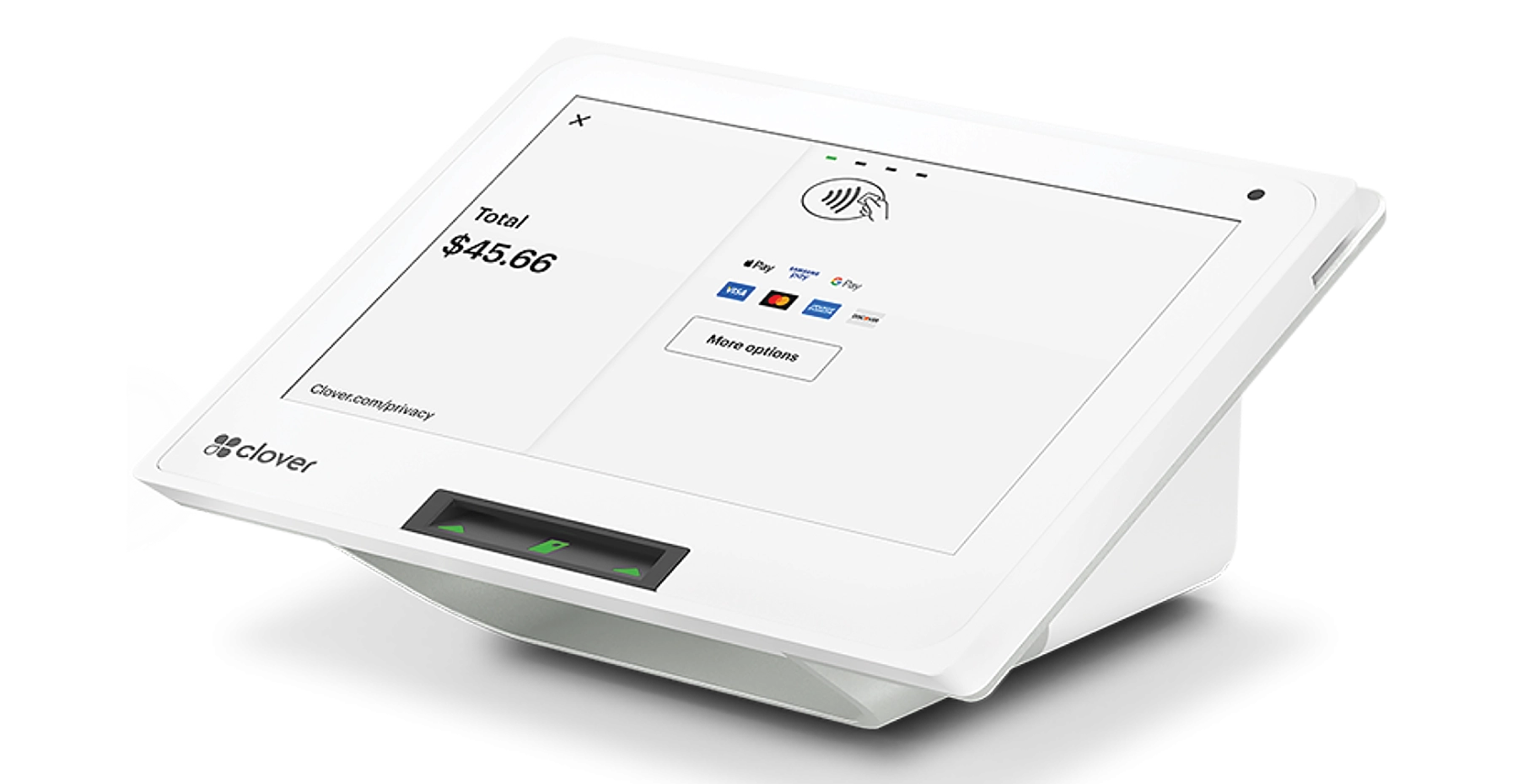
POS systems like Clover are designed to work with merchant accounts, not aggregator-style risk pooling, and the best POS devices for small businesses in 2025 are built around that dedicated-merchant model.
This allows—with modern cloud-based POS systems in particular—:
-
stable pricing programs
-
better reporting
-
advanced features like subscriptions, text-to-pay, and high-volume dual-screen checkouts with systems like Clover Duo
-
cleaner accounting
Common Myths About Merchant Account vs Payment Aggregator
Myth 1: Aggregators are safer
In reality, aggregators protect the platform, not your business.
Myth 2: Merchant accounts are only for big companies
Many small businesses qualify and benefit.
Myth 3: Aggregators are cheaper
Flat rates often cost more at scale.
Myth 4: You can’t switch later
You can—but switching during a freeze is painful.
How VMS Helps Businesses Choose the Right Model
VMS works with businesses to evaluate (and our merchant services FAQs for small businesses answer many of the common questions about this process):
-
transaction volume
-
industry risk
-
growth plans
-
pricing needs
-
POS requirements, including whether newer Clover POS devices launching in 2026 make sense for your roadmap
Rather than defaulting to one model, the goal is to match the processing structure to how your business actually operates.
Paying too much to accept cards?
VMS reviews your current statement free and shows you exactly what you are being charged — most merchants are surprised by what they find.
Or call our team: 888-902-6227
Final Thoughts: The Right Choice Depends on How You Operate
The merchant account vs payment aggregator decision is not about which option is “better” universally—it’s about which is appropriate for your business.
-
Aggregators prioritize speed and simplicity
-
Merchant accounts prioritize stability and control
If payments are central to your operation, your processing structure should be built for longevity—not convenience alone.
If you want help evaluating your options or transitioning from an aggregator to a merchant account, VMS can walk you through the process step by step.
Have questions about payment processing?
Fill out the form below and a VMS payment specialist will contact you shortly.