

If you’ve been running a brick-and-mortar business for years, you already know: bringing in more customers isn’t always realistic. Rent, payroll, and supply costs don’t care how hard you work. So one of the cleanest ways to grow revenue—without adding hours, staff, or stress—is to increase average ticket size.
Average ticket size is simply the average amount a customer spends per visit, usually calculated as total sales divided by the number of transactions (or customer visits with purchases).
The good news: you can raise average ticket size in a way that feels like good service, not pressure.
What average ticket size really tells you
Think of average ticket size as your “how much do we ring per sale” number.
If you’re doing the same steady traffic you’ve always had, even a small bump in average ticket size can make a real difference over a month.
Example:
If you run 100 transactions a day and your average ticket size goes from $20 to $23, that’s $300 more per day—without needing one extra customer.
The rule that keeps it from getting awkward
Customers don’t mind spending more. They mind feeling sold.
So the goal isn’t to “upsell everything.” The goal is to make the next best option feel normal:
-
a bundle that makes sense
-
a simple upgrade
-
the obvious companion item
When it’s logical and quick, it doesn’t feel pushy. It feels helpful.
Step 1: Pick two add-ons that make sense every time
Most businesses hurt their average ticket size by offering too many random extras. Keep it simple.
Choose two add-ons that are:
-
easy for customers to understand
-
high-margin for you
-
quick for staff to offer
Here are the ones that consistently raise average ticket size in established storefronts:
Bundles and packages
Bundles work because customers understand value immediately.
Examples:
-
deli: sandwich + chips + drink
-
salon: cut + treatment package
-
auto: oil change + wipers + cabin filter
-
retail: buy 2 basics, save a little
Bundles increase average ticket size without adding awkward conversation.
Simple upgrades
Upgrades are easy because the customer is already buying—you’re just offering a better version.
Examples:
-
“Regular or large?”
-
“Standard or premium?”
-
“Do you want the heavy-duty option? It lasts longer.”
Step 2: Use “choice language,” not “sales language”
This is where a lot of staff get uncomfortable. Fix it with phrasing that sounds like normal customer service.
Instead of: “Do you want to add ___?”
Use: “Would you like ___ or ___?”
Examples:
-
“Would you like fries or a side salad?”
-
“Regular or large?”
-
“Do you want the basic package or the full package?”
This raises average ticket size because it turns the add-on into a simple decision, not a pitch.
Step 3: Program it into the register so it happens consistently
If growing average ticket size depends on employees remembering to ask, it will be inconsistent—especially during rushes.
This is where a modern POS setup helps a lot.
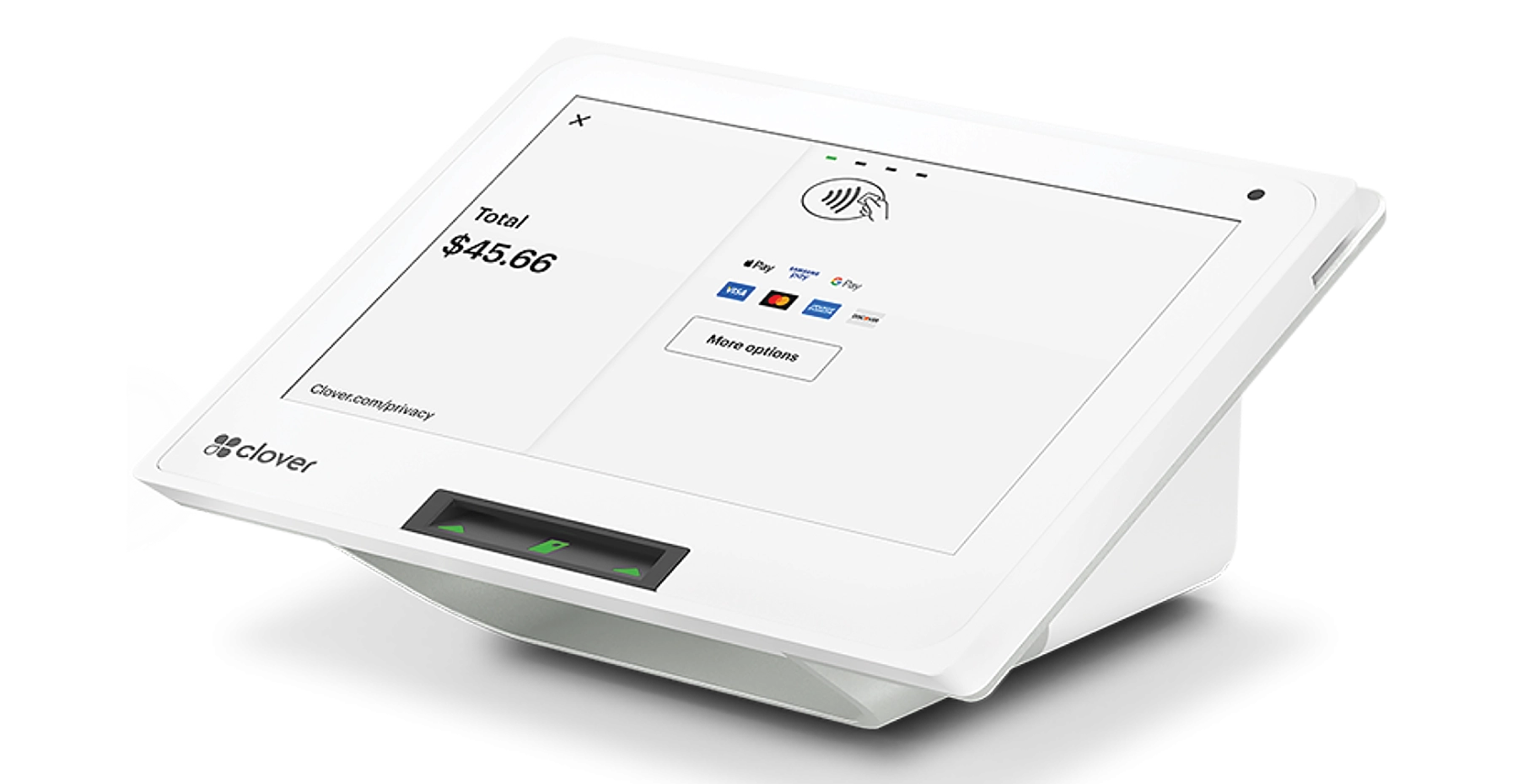
With a system like Clover, you can build these offers into the checkout flow:
-
modifier prompts (add-ons appear automatically)
-
bundles as actual buttons/items
-
upgrades as clear options
-
online ordering prompts (customers select add-ons themselves)
When the register prompts it, your staff isn’t “selling.” They’re simply following the normal checkout steps. That consistency is what raises average ticket size week after week.
Step 4: Track the one number that matters (and one that protects you)
If you want to improve average ticket size, track it weekly—not once a quarter.
Also keep an eye on refunds/voids. If your staff starts ringing things incorrectly, you might see ticket size rise while profits get messy.
A good POS report makes this easy: you can watch average ticket size, see which bundles are selling, and identify what’s working (and what’s being ignored).
The most common mistake
Trying to do too much.
If customers get hit with five questions at checkout, it slows the line down and irritates people. Then your staff stops offering anything, and average ticket size goes right back down.
Pick two offers, make them part of the flow, and keep it consistent.
A simple plan you can implement this week
-
Pick 1 bundle and 1 upgrade that make sense for your business
-
Put them directly on the register/checkout screen (so staff can’t “forget”)
-
Train staff on one sentence per offer
-
Track average ticket size weekly
-
Adjust based on what sells—not what you wish would sell
Need a POS built for your type of business?
VMS configures your system around how your industry actually operates — menus, inventory, appointments, whatever you run on.
Or call our team: 888-902-6227
Want help setting this up in Clover?
VMS helps established brick-and-mortar businesses set up Clover in a way that improves speed at the counter and grows average ticket size through clean, consistent checkout prompts—without making your staff feel pushy.
Have questions about a POS for your business?
Fill out the form below and a VMS payment specialist will contact you shortly.