

Key Takeaways
-
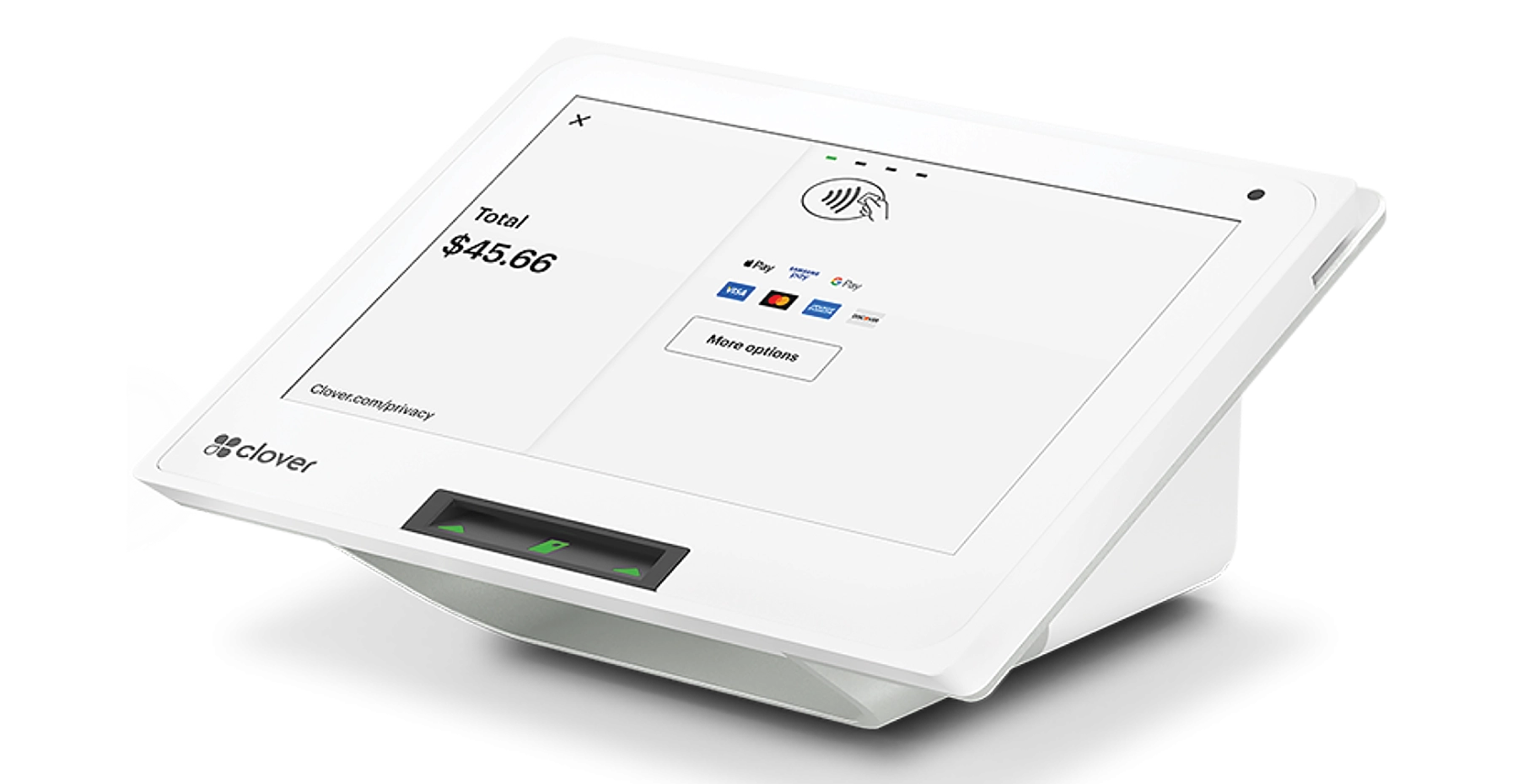
Clover Mini is a compact, countertop point of sale system that accepts chip, swipe, and contactless payments including Apple Pay and Google Pay, making it ideal for small to mid-sized businesses with limited counter space. See full specs, accessories and EBT support on our Clover Mini POS system page.
-
The retail price for the Clover Mini typically starts around $400, with some providers offering financing around $45/month—but total cost depends heavily on processing rates and software plan selections.
-
Core features include an 8” touch screen, built in receipt printer, front-facing camera for barcode scanning, inventory management tools, and real-time reporting via the Clover dashboard.
-
Clover Mini can operate as a standalone POS or function as a customer facing display when tethered to a Clover Station 2018, providing flexibility for different business setups.
-
Security features include end-to-end encryption and tokenization, with the Clover Security plan ($9.95–$19.95/month) adding vulnerability scanning and breach protection—choosing the right processor and pricing model is essential for long-term savings.
Introduction to the Clover Mini
The Clover Mini has carved out a distinct position in the point of sale market as a small footprint terminal that delivers full functionality without dominating your counter space. As of 2026, this compact device serves retail shops, quick service restaurants, salons, and professional offices that need more than a simple card reader but don’t require the larger footprint of a full station setup.
Within the Clover devices family, the Mini sits between the portable Clover Flex (handheld) and the more robust Clover Station. This positioning makes it something of a sweet spot—powerful enough for complete inventory management, payment processing, and reporting, yet compact enough for tight checkout areas or wall-mounted installations.
The device combines card payments acceptance with cloud based software that syncs your business data across locations and devices. It can be integrated with merchant services into a streamlined workflow, connecting via wi fi, Ethernet, or LTE depending on your model selection. Throughout this guide, we’ll cover features, use cases, costs, processing options, and how Clover Mini stacks up against alternatives like Square Terminal.
The Clover Mini in the Clover Device Family
Understanding where Clover Mini fits helps you make the right hardware choice. The Clover Go serves as the simplest entry point—a mobile device card reader for basic transactions. The Clover Flex offers handheld mobility with a built in printer for tableside service. The Clover Station and Clover Station Solo provide larger screens and more processing power for high-volume environments.
Clover Mini occupies the fixed countertop role with a compact profile that still allows wall or pole mounting when floor space is at a premium. When used standalone, this sale system manages your entire checkout flow: building orders, accepting payments, printing receipts, and syncing data to the cloud.
An important capability often overlooked: the Mini can be tethered to a Clover Station 2018 to function as a customer facing display. In this customer facing mode, it mirrors orders for customer review while handling card insertion, tap, and PIN entry—freeing your staff to focus on the next transaction.
Businesses that typically choose Mini over Station or Flex include boutiques with limited checkout space, quick service cafés prioritizing speed, salons with detailed service menus, and small professional offices handling payments alongside consultations.
Clover Mini Hardware & Core Features
The physical design of Clover Mini prioritizes durability and everyday usability. The Clover Mini features a 7-inch antimicrobial Corning Gorilla glass display with a resolution of 1280 x 800, making it user-friendly and durable for continuous customer interactions. The current Mini generation runs on a hardened Android operating system with a Qualcomm Snapdragon octa-core processor, 2 GB RAM, and 16 GB flash storage.
The device measures approximately 6.5 inches high by 8 inches wide by under 4 inches deep, weighing less than 3 pounds. This makes it genuinely suitable for crowded counters, kiosks, and small checkout stands where larger terminals simply won’t fit.
Connectivity options include wi fi (802.11 a/b/g/n or newer), Ethernet, and LTE for cellular models. Wired Ethernet and LTE connectivity remains the recommendation for busy environments where dropped connections cost sales.
Key hardware highlights:
-
LCD color touch screen optimized for staff and customer use
-
Internal thermal receipt printer with paper roll access from back/underside
-
Front-facing camera for barcode scanner functionality (1D/2D codes)
-
Integrated card reader supporting EMV chip cards, magstripe, and NFC
-
Hub port with four USB device ports and one RJ12 cash drawer port
The Clover Mini is equipped with a built-in thermal receipt printer, allowing businesses to print receipts quickly without needing external hardware—though you can still connect an external printer if needed for kitchen tickets or duplicate receipts.
Payment Acceptance on Clover Mini
The Mini supports virtually all mainstream payment types used in North America as of 2026. The Clover Mini supports a variety of payment methods, including EMV chip cards, magnetic stripe cards, and contactless payments like Apple Pay and Google Pay.
With the Clover Mini, customers can pay by swiping, dipping, or tapping their cards—this swipe dip or tap flexibility extends to Samsung Pay and contactless-enabled bank cards. The Clover Mini accepts various payment methods including magstripe cards, EMV chip cards, contactless payments like Apple Pay, PIN debit, and EBT cards where processor-enabled.
The Clover Mini is the only Clover device that allows for PIN entry, making it suitable for businesses that require customers to enter PINs for debit transactions. This makes it particularly valuable for operations accepting significant volumes of credit and debit cards through PIN debit programs.
Supported tender types include:
-
Credit card (Visa, Mastercard, Amex, Discover)
-
Debit cards with PIN entry
-
Contactless payments like Apple Pay Google Pay and Samsung Pay
-
Gift cards and loyalty programs
-
Cash and checks (with appropriate tracking)
-
EBT (where processor-enabled)
Features like splitting checks by item or evenly, adding tip prompts, and capturing signatures on-screen or printed receipts streamline transactions. An active internet connection is required for real-time authorization—limited offline mode queues transactions for later sync, but this carries decline and chargeback risks.
Inventory & Order Management
Clover Mini extends well beyond card processing into complete inventory management territory. The Clover Mini allows users to add individual items to their inventory, which staff can use to ring in orders quickly during rush periods.
Users can create categories to group individual items together in the Clover Mini, facilitating faster entry by narrowing down the inventory list. A coffee shop might organize items under “Espresso,” “Cold Drinks,” “Pastries,” and “Retail”—allowing staff to tap through menus efficiently rather than scrolling endlessly.
The Clover Mini supports modifiers and variants, enabling businesses to customize items based on customer preferences without creating separate entries for each variation. Think “extra shot,” “oat milk,” or “no onions” for restaurants, or size/color variants for retail products. These modifiers and variants keep your catalog clean while capturing exactly what customers want.
All inventory counts and sales data sync to the cloud in real-time. The Clover Mini offers real-time access to sales data and inventory levels via a cloud-based dashboard, so you can monitor top-selling items, low stock alerts, and sales trends from anywhere using the web portal or mobile app.
Built‑In Scanning, Receipts, and Customer Experience
The Mini streamlines customer interactions through integrated scanning and flexible receipt options. The front-facing camera handles 1D barcodes and QR codes directly from products or customer phones—useful for scanning loyalty IDs or promotional coupons without additional hardware.
The internal thermal receipt printer operates quietly and quickly, with the paper roll compartment accessible from the back or underside. Beyond printed receipts, you can offer email or SMS digital receipts, supporting greener operations while building your customer contact database for repeat business marketing.
Customer experience touchpoints you can configure:
-
On-screen tip prompts (percentage or custom amount)
-
Digital signature capture
-
Printed or emailed receipts based on customer preference
-
Loyalty program integration via barcode scanner
-
Order review before payment confirmation
Note that printing and scanning features require AC power—if you’re using a battery-equipped model, full functionality depends on being plugged in.
Using Clover Mini with Other Clover Devices
Clover devices are designed to work together across the Clover network, and Mini plays well in multi-device environments. When connected via USB port to a Clover Station 2018 and configured with the USB Pay Display app, Mini transforms into a dedicated customer facing screen.
In this tethered mode, the device mirrors the checkout flow: customers review their order, insert or tap their card, enter PINs, and sign—while staff controls the transaction from the Station. The Mini doesn’t manage inventory or orders independently in this configuration.
Detaching Mini and returning it to standalone mode may require processor assistance or a factory reset, which can affect activation codes and require re-provisioning. Plan your setup thoughtfully before committing to tethered operation.
Multi-device setups work seamlessly under one Clover account. A restaurant might run one Station at the host stand, two Minis at the bar, and several Flex units for tableside—all sharing inventory, customer data, and reporting through the same merchant account.
Security & Compliance
Clover Mini meets PCI compliance standards and incorporates multiple layers of protection for payment solutions. The device uses point-to-point encryption and tokenization to secure cardholder data, minimizing your business’s exposure to raw card numbers that could be compromised.
The Clover Security plan (formerly TransArmor) adds another protection layer. The Clover Mini requires a Clover Security plan, which typically costs between $9.95 and $19.95 per month, providing enhanced security features for transactions including vulnerability scanning and limited financial protection against certain breach-related costs.
Best practices beyond the built-in security:
-
Create unique employee logins (avoid shared passwords)
-
Keep software updated through automatic Clover updates
-
Segregate POS wi fi from public guest networks
-
Review transaction reports regularly for anomalies
Clover Mini Specifications (2026 Snapshot)
This practical overview helps owners compare hardware options without diving into technical datasheets.
Current Mini specifications:
-
Display: 8” color touch screen (1280×800 resolution), durable glass
-
Processor: Qualcomm Snapdragon octa-core
-
Memory: 2 GB RAM, 16 GB flash storage
-
Connectivity: Wi fi (802.11 a/b/g/n), Ethernet, LTE (select models)
-
Printer: Built in thermal dot receipt printer
-
Camera: Front-facing for 1D/2D barcode and QR scanning
-
Card Reader: EMV chip dip or tap, magstripe swipe, NFC contactless
-
Ports: 4 USB device ports, 1 RJ12 for cash drawer
-
Dimensions: Approximately 6.5” H x 8” W x 3.7” D
-
Weight: Under 3 lbs
The compact dimensions make Mini suitable for crowded counters, kiosks, and small checkout stands where space is premium.
Software Plans, Apps, and Customization
Clover Mini capabilities depend significantly on your selected software plan and add-ons from the Clover App Market. The Clover App Market allows businesses to customize functionality with additional apps for specific needs—from accounting integrations to appointment scheduling.
Typical plan tiers as of mid-2020s:
|
Plan Level |
Features |
Typical Monthly Cost |
|---|---|---|
|
Basic/Payments |
Simple card acceptance, basic reporting |
$0–$14.95 |
|
Mid-Tier |
Inventory, order management, employees |
$49.95–$69.95 |
|
Premium |
Table mapping, time-based discounts, advanced permissions |
$89.95+ |
Clover Mini users must purchase a software plan, which varies in cost depending on the features included, such as inventory management and customer engagement tools. More advanced plans unlock detailed item modifiers, employee management with schedule tracking, and marketing tools.
Popular integrations include QuickBooks for accounting sync, BigCommerce for ecommerce, and Homebase for HR/scheduling. Businesses can track employee shifts and manage payroll through the Clover Mini using these tools. Note that many apps carry separate monthly fees beyond your core Clover pos plan.
Clover Mini Pricing, Processing, and Total Cost of Ownership
Hardware price represents only one piece of the total cost puzzle. Processing fees and software subscriptions typically dominate long-term expenses—understanding this before signing prevents surprises.
The retail price for the Clover Mini typically starts around $400, which is comparable to other small footprint and tablet-based terminals. Some resellers advertise prices up to $849, while others offer monthly financing around $45/month over 36 months. “Free” hardware promotions are typically offset by higher processing rates or long-term contracts.
The Clover Mini typically requires a merchant account through a compatible processor on the Fiserv platform. This semi-proprietary approach means Clover locks users into a specific merchant processor, which limits the ability to switch processors without replacing the hardware. Understanding this before purchase prevents frustration later.
Processing pricing models you’ll encounter:
-
Flat rate: Example 2.6% + 10¢ per transaction (simple, predictable)
-
Tiered pricing: Different rates for “qualified” vs “non-qualified” transactions (less transparent)
-
Interchange-plus: Actual card network cost plus fixed markup (typically best for volume)
Calculate your 3–5 year total cost including hardware, software plans ($0–$89.95/month), Clover Security ($9.95–$19.95/month), app subscriptions, and processing markups before committing. Fiserv operates as the underlying platform for many Clover processors, though trade names referenced in marketing materials vary by reseller.
Clover Rapid Deposit and Cash Flow Tools
Clover Rapid Deposit lets merchants access card sales funds instantly or same-day rather than waiting for standard settlement timing. This proves useful when unexpected expenses arise or inventory opportunities require immediate cash.
The typical fee runs approximately 1% of the deposit amount, available 24/7 including weekends and holidays through the Clover dashboard or mobile app. Note that Rapid Deposit often excludes unsettled tips and requires a linked debit card or bank account for payouts.
Use rapid funding strategically for occasional cash crunches rather than daily habit—that 1% adds up quickly on regular use. Clover Capital offers working capital advances repaid from future card sales, but evaluate it carefully like any financing product before committing.
Clover Mini vs. Square Terminal and Other Compact POS Systems
Both Clover Mini and Square Terminal address the compact countertop pos system market, but their approaches differ significantly.
|
Factor |
Clover Mini |
Square Terminal |
|---|---|---|
|
Processing |
Multiple Fiserv processors |
Square only |
|
Onboarding |
Merchant account underwriting (days) |
Instant self-signup |
|
Pricing flexibility |
Negotiable, interchange-plus available |
Flat rate only |
|
App ecosystem |
Clover App Market (extensive) |
Square App Marketplace |
|
Multi-device expansion |
Full Clover ecosystem |
Square ecosystem |
|
Support |
24/7 phone via processor (quality varies) |
Self-service focused |
Clover users have access to 24/7 customer support through Fiserv, which is the platform many Clover processors operate on. However, the quality of customer service for Clover Mini users can vary depending on the processor they choose, as Clover is offered by multiple companies. Clover-compatible processors may offer different levels of customer service, so it’s advisable for users to select a processor known for good support to enhance their experience.
Square emphasizes simplicity with instant onboarding, but may hold funds or terminate accounts if risk flags trigger. Clover’s dedicated merchant accounts provide more stable underwriting and potentially lower rates at volume through interchange-plus pricing. Businesses with higher transaction volumes or complex needs should weigh Clover’s flexibility against Square’s predictability.
Best-Fit Use Cases for Clover Mini
Clover Mini shines for specific business profiles where compact design meets full-featured needs. Quick service restaurants and cafés benefit from the fast checkout flow, with modifiers handling customization requests without slowing the line.
Ideal business types include:
-
Boutique retailers with limited counter space needing managing inventory capabilities
-
Salons and spas requiring detailed service menus with add-ons
-
Food trucks or pop-ups wanting compact yet full-featured POS (especially LTE models)
-
Small professional offices handling payments alongside consultations
-
Mixed-service businesses combining retail and recurring payments or invoicing
The Clover Mini is compatible with a variety of accessories, including barcode scanners, cash drawers, and receipt printers, which can be connected either wirelessly or via USB. Businesses can enhance their Clover Mini setup with optional accessories like scales for selling products by weight scale, such as produce or frozen yogurt. The Clover Mini can be used with a swivel stand to allow for customer-facing transactions, providing flexibility in how it is positioned during use.
Very large restaurants or enterprises might prefer Clover Station for primary terminals, using Mini as secondary or customer facing stations. The Clover name, along with related service marks and registered trademarks, belongs to the Fiserv family—trade names you’ll see across various reseller marketing.
How to Get Started with Clover Mini
Getting your Clover Mini operational involves several steps, each requiring some planning.
Typical onboarding process:
-
Select a processor/reseller: Compare pricing models, contract terms, and support reputation
-
Choose your model: Wi fi/Ethernet for stable locations, LTE for mobile or backup needs
-
Select software plan tier: Match features to your actual needs—don’t overbuy
-
Complete merchant application: Underwriting typically takes a few business days
-
Receive and activate hardware: Use provided activation code to provision device
-
Configure settings: Set up tax rates, items, categories, receipt formats, tipping preferences
-
Train staff: Cover take payments procedures, refunds, closing batches, basic troubleshooting
Before going live, test transactions with real cards, verify receipt formats, integrate any third-party apps, and confirm reports display correctly. Accept payments from a test customer (yourself or staff) to catch any configuration issues before your first real sale.
Businesses using Clover can streamline operations across locations—if you plan to expand, discuss multi-location configuration with your processor upfront to ensure compliance and accurate reporting.
Still running an outdated register?
VMS sets up a modern Clover POS matched to how your business actually runs — installed, configured, and supported by a team that answers the phone.
Or call our team: 888-902-6227
FAQ
Can I use my existing merchant account with a new Clover Mini?
Clover Mini is generally locked to the processor that provisions it on the Fiserv platform. You typically cannot take a Mini purchased from one provider and reprogram it freely to work with another. In rare cases where processors share the same parent platform and policies permit, reprovisioning might be possible—but don’t count on it. If you’re planning to switch processors, assume you’ll need new Clover hardware or a different POS system entirely.
Does Clover Mini work without internet?
Clover Mini is designed as a cloud-connected device requiring internet for full functionality, real-time payment authorization, and data syncing. Some configurations allow limited offline mode where transactions queue and process when connection resumes—but this carries risk of declines and potential chargebacks if cards are later declined. Use reliable primary internet plus Ethernet where possible, and consider LTE models or mobile hotspot backup to minimize downtime.
Can I move my Clover Mini between locations?
Technically, you can relocate the physical device and connect to a new network. However, your merchant account and tax settings are tied to the business profile on file. If you operate multiple legal entities or locations, you may need separate Clover merchant IDs or location profiles to keep reporting, taxes, and deposits accurate. Discuss multi-location configuration with your processor before relocating devices to ensure compliance with card-brand and tax requirements.
What happens if my Clover Mini freezes or locks up?
Start with basic troubleshooting: check power and network connections, perform a soft reboot from device settings, or unplug and replug power if completely unresponsive. Older Clover Minis occasionally had issues with certain thick metal EMV chip cards—newer hardware and software updates have largely resolved this, but contact support if you see repeat errors. Persistent problems may require processor technical support or, rarely, a factory reset or hardware replacement. Never attempt resets without confirming implications for data and activation.
Is Clover Mini a good option for seasonal or part-time businesses?
Clover Mini can work for seasonal operations, especially with LTE models, but economics depend on contract terms and monthly software/security fees that continue regardless of volume. Very short-term or low-volume operations may prefer fully month-to-month, no-commitment mobile payment solutions. Recurring seasonal businesses with meaningful volume during active periods can benefit from Clover’s richer features for repeat business building. Ask providers specifically about minimums, contract length, and off-season fee structures before committing.
Have questions about POS systems?
Fill out the form below and a VMS payment specialist will contact you shortly.