

Churches today operate in a very different financial environment than they did even ten years ago. Congregations are more mobile, fewer people carry cash or checks, and donors increasingly expect to give online, by card, or through recurring digital methods. As a result, credit card processing for churches has shifted from a “nice-to-have” option to a core part of sustainable ministry operations.
However, churches face unique considerations when accepting card payments. From nonprofit status and donor trust to fee management and financial transparency, the approach must be thoughtful, compliant, and aligned with the mission of the organization. Churches often benefit from specialized solutions like a church merchant account and church merchant services designed for nonprofit organizations, which address their specific needs for secure donations, recurring payments, and compliance.
This guide explains how credit card processing works for churches, what to look for in a provider, how to manage fees responsibly, and how modern tools can support both in-person and digital giving—without compromising integrity or stewardship.
Why Credit Card Processing Matters for Churches Today
Giving habits have changed. While many congregants still value traditional offerings, a growing portion of donations now come from:
-
credit and debit cards
-
online giving portals
-
recurring monthly donations
-
mobile giving during or after services
-
special event or campaign donations
-
in person donations
-
online donations
Without modern payment options, churches risk unintentionally creating barriers to generosity.
Church credit card processing allows donors to give:
-
when they feel called to give
-
even if they don’t have cash or checks
-
from anywhere, not just during services
For churches focused on long-term sustainability, accessible giving options are essential. These options also play a crucial role in supporting ongoing fundraising efforts.

At a basic level, credit card processing for churches functions similarly to processing for other organizations—but with nonprofit-specific considerations.
The Core Components
-
Merchant account or payment platform: allows the church to accept card payments
-
Payment gateway: securely transmits card data
-
POS system or online giving page: where donations are entered
-
Settlement and reporting tools: track funds and reconcile donations
Churches may accept payments:
-
in person (kiosks, tablets, card readers)
-
online (donation pages, text-to-give links)
-
on mobile devices (such as a mobile phone)
-
via virtual terminal
-
through recurring billing systems
Many churches use a dedicated donation platform to streamline these processes.
The goal is flexibility without complexity.
Nonprofit Status and Credit Card Processing
One common question is whether churches receive special processing rates because they are nonprofits.
While some payment processors do offer discounted rates for 501(c)(3) organizations, not all do, so it’s important to ask about nonprofit pricing when comparing options. When choosing a provider, look for merchant account providers and merchant services that specialize in nonprofit organizations, as they often offer tailored solutions, competitive rates, and integration with donation and fundraising platforms to better support churches’ unique needs.
The reality
-
Card networks do not automatically waive fees for nonprofits
-
Some processors offer nonprofit-friendly pricing
-
Some platforms may charge platform fees or additional fees (such as setup charges or hidden costs), so it’s important to consider these when comparing options
-
Transparency and consistency matter more than “special deals”
While churches may qualify for certain reduced costs, the most important factor is choosing a provider that understands nonprofit operations and reporting requirements.
Fee Management and Stewardship Concerns
Church leaders often hesitate to accept card payments because of processing fees. This concern is valid and deserves careful consideration. Churches should be aware of credit card processing fees, transaction fees, and annual fees that may apply, as these can impact the total cost of accepting donations.
Understanding the fees
Processing fees typically include:
-
interchange (set by card networks)
-
assessments
-
processor markup (set by credit card processors and may vary between providers)
For churches, this raises an important stewardship question: Should the church absorb fees, or should donors cover them?
Common approaches
-
Church absorbs fees as an operating cost
-
Donors are given an option to cover fees voluntarily
-
Fees are budgeted into annual planning
Many churches choose transparency—clearly explaining how digital giving works and how fees impact ministry operations.
In-Person Giving Options for Churches
Modern credit card processing for churches includes several in-person options designed to collect donations beyond the traditional offering plate. These solutions make it easy for churches to facilitate in person donations using a variety of tools and technologies.
-
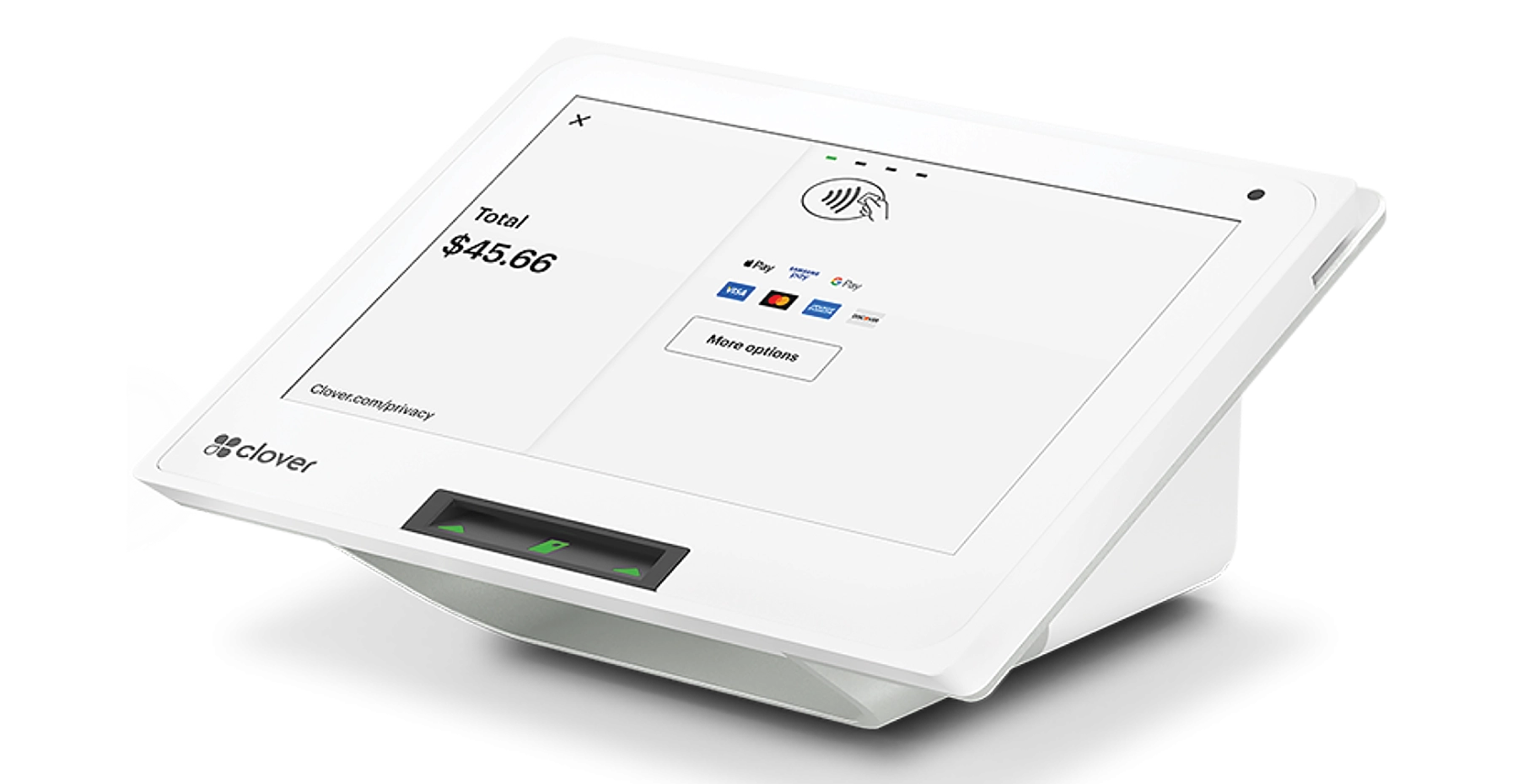
Giving kiosks: Self-service stations where donors can swipe, dip, or tap their cards to give. Many kiosks also support Apple Pay and Google Pay for quick, contactless in person donations.
-
Mobile card readers: Portable devices that connect to smartphones or tablets, allowing staff or volunteers to collect donations anywhere on church property.
-
Point-of-sale (POS) systems: Full-featured terminals for processing in person donations, often used at events or church cafes.
Giving kiosks
-
Touchscreen stations in lobbies or foyers
-
Accept cards and digital wallets
-
Allow donors to give discreetly
Mobile card readers
-
Used by ushers or staff
-
Ideal for events or special services
Tablets or POS terminals
-
Simple donation entry
-
Receipts sent via email
These options support congregants who prefer to give digitally while still attending in person.
Online Giving and Church Websites
A well-designed online giving page is now a standard expectation. Having a prominent donate button on your church website is crucial, as it makes it easy for members and visitors to contribute online gifts quickly and securely. This not only streamlines the process for online donations but also encourages more consistent giving through a user-friendly donation platform.
Benefits of integrating online giving with your church website include:
-
Increased convenience for donors, allowing them to give anytime, anywhere.
-
Enhanced security for processing online donations.
-
Ability to set up recurring gifts for ongoing support.
-
Access to detailed giving reports and donor management tools.
-
Online giving platforms often include fundraising tools, such as customizable donation forms, campaign management, and peer-to-peer fundraising, to support your church’s fundraising efforts and boost donor engagement.
Benefits of online giving
-
Donors can give anytime
-
Supports out-of-town members
-
Ideal for special campaigns
-
Reduces manual processing
-
Online donations are transferred directly to the nonprofit’s bank account
-
Choose a secure donation platform
When setting up online credit card processing for churches, it’s important to ensure:
-
secure, PCI-compliant checkout
-
clear donation categories (tithes, offerings, missions, building funds)
-
confirmation emails for donors
-
easy recurring donation setup
Online giving should feel simple, secure, and respectful.
Recurring Donations and Financial Stability
Recurring giving is one of the most impactful features of modern credit card processing for churches. Recurring donations are key to donor retention and maintaining the church’s financial health, as they provide predictable income and foster long-term relationships with supporters.
By enabling members to set up automatic, scheduled contributions, churches can ensure a steady stream of funds to cover operational costs and plan for future initiatives. Consistent giving supports the church’s mission year-round, allowing ministries to thrive and outreach efforts to continue regardless of season or attendance fluctuations.
Why recurring donations matter
-
Provides predictable monthly income
-
Reduces reliance on weekly attendance
-
Helps with budgeting and planning
-
Encourages consistent stewardship
Donors can set:
-
monthly tithes
-
quarterly gifts
-
annual pledges
From an administrative perspective, recurring donations reduce variability and manual follow-up.
Text-to-Give and Mobile Giving
Text-based giving is increasingly popular, especially among younger congregants.
With text-to-give, donors can quickly pay for events or make donations using their mobile devices. This method is fast, convenient, and secure, making it easy for supporters to contribute anytime, anywhere.
Common use cases for text-to-give include tithes, special offerings, mission trips, and event ticketing. By offering multiple ways to pay, including text-to-give, churches can increase participation and streamline fundraising efforts.
How it works
-
Donor sends a keyword or receives a link via text
-
Secure payment page opens
-
Donation completed in seconds
Text-to-give works well for:
-
special appeals
-
disaster relief
-
youth services
-
spontaneous moments during sermons
As part of credit card processing for churches, text-to-give adds immediacy without pressure.
Integrating Payment Processing with Your Church’s Systems
Integrating your payment processing system with your church’s existing tools is essential for smooth and secure financial operations. When your payment processor works seamlessly with your accounting software, donor management platform, and church website, it becomes much easier to accept donations, manage recurring payments, and keep track of every transaction.
A well-integrated payment processing system allows you to automatically sync donation data with your donor management tools, ensuring that every gift—whether it’s a one-time online donation or a recurring payment—is accurately recorded. This not only saves your team valuable time but also reduces the risk of manual entry errors and helps protect against fraudulent transactions.
Integration also streamlines your financial reporting. With donation and payment data flowing directly into your accounting system, you can generate up-to-date reports for leadership, finance committees, and auditors with just a few clicks. This level of automation supports better decision-making and strengthens your church’s financial operations.
When evaluating payment processors, look for solutions that offer easy integration with the platforms your church already uses. Many church-focused payment processors provide direct connections to popular nonprofit software, donor management systems, and website builders. Choosing a processor with strong integration capabilities will help your church accept donations more efficiently, manage recurring payments with confidence, and maintain accurate, transparent records—freeing up more time and resources to focus on your mission.
Transparency, Reporting, and Accountability
Churches must maintain a high level of financial transparency.
Modern payment systems should provide:
-
detailed donation reports
-
category-based tracking
-
exportable data for accounting
-
reconciliation tools
-
audit-friendly records
Clear reporting helps:
-
finance committees
-
church boards
-
auditors
-
leadership teams
-
track the results of fundraising events
Transparency builds trust—both internally and with the congregation.
Security and Donor Trust
Donor trust is non-negotiable.
Robust fraud protection and secure handling of payment information are essential for maintaining donor trust. Any system used for credit card processing for churches must meet strict security standards.
Security essentials
-
PCI-compliant processing
-
tokenization of card data
-
encrypted transmission
-
no storage of raw card numbers
-
secure user access controls
Churches should never handle card numbers manually or store sensitive data themselves.
Choosing the Right Provider for Credit Card Processing for Churches
Not all payment providers are a good fit for churches. Some providers specialize in church payment processing, while other processors may not serve this niche or may consider religious organizations too risky.
When choosing the best credit card processing for churches, consider key factors such as transaction fees, ease of use, integration with donation management tools, and customer support. Many platforms, such as Bloomerang Payments, offer features tailored for churches, including multiple payment methods, flexible fee options, and seamless integration with fundraising tools.
Key factors to evaluate
-
Experience with nonprofit or church clients
-
Transparent pricing
-
Reliable customer support
-
Recurring donation support
-
Multiple giving channels
-
Clear reporting tools
-
No aggressive contract terms
Churches should avoid providers that:
-
lock them into long contracts without flexibility
-
provide unclear fee structures
-
lack nonprofit reporting capabilities
Common Mistakes Churches Make
1. Relying on only one giving method
This limits accessibility.
2. Not promoting digital giving
Many congregants don’t know it’s available.
3. Ignoring recurring donation options
This reduces financial stability.
4. Failing to explain fees transparently
This creates confusion or mistrust.
5. Not reviewing reports regularly
This can lead to accounting issues.
Avoiding these mistakes makes credit card processing for churches more effective and aligned with ministry goals.
How Credit Card Processing Supports Church Growth
When implemented thoughtfully, modern payment systems help churches:
-
expand outreach
-
fund missions consistently
-
respond quickly to needs
-
engage younger donors
-
reduce administrative burden
Technology does not replace faith—it supports the practical work of ministry.
Balancing Technology and Tradition
Some church leaders worry that digital giving may feel impersonal. In practice, offering multiple giving options respects different preferences.
The goal of credit card processing for churches is not to change the meaning of giving—but to remove unnecessary obstacles.
Cash, checks, and digital gifts can coexist.
Still running an outdated register?
VMS sets up a modern Clover POS matched to how your business actually runs — installed, configured, and supported by a team that answers the phone.
Or call our team: 888-902-6227
Final Thoughts: Credit Card Processing for Churches Is About Access and Stewardship
Credit card processing for churches is not about convenience alone—it’s about meeting congregants where they are, managing resources responsibly, and ensuring the church can carry out its mission effectively.
With the right setup, churches can:
-
make giving accessible
-
maintain transparency
-
protect donor information
-
plan confidently for the future
Modern giving tools, when used responsibly, strengthen—not replace—the foundations of church stewardship.
If you want next:
-
a comparison of church-friendly payment providers
-
a guide to setting up recurring giving
-
a fee-transparency communication template
-
or a checklist for launching digital giving
just let me know.
Have questions about POS systems?
Fill out the form below and a VMS payment specialist will contact you shortly.