

Picture your business as a bucket. Every ad you run, every sign you hang, every hour you spend on social media pours new customers in at the top. It feels like progress. But if there are holes in the bottom of that bucket — regulars who quietly drift away, first-timers who never come back — you’re refilling it forever and never getting ahead. That’s the trap most owners fall into, and it’s exactly why customer retention for small business is the growth lever hiding in plain sight.
Here’s the part nobody puts on a motivational poster: chasing brand-new customers is expensive, slow, and only half the game. The people who already know you, already trust you, and already handed you their card once are your cheapest, warmest, most profitable source of revenue. And most small businesses barely lift a finger to keep them.
Let’s fix the holes in the bucket. This guide walks through why keeping customers beats endlessly hunting for new ones, how the tools already sitting on your counter can turn one-time buyers into regulars, and the practical moves that make people choose you again — and again after that.
Why Customer Retention for Small Business Beats Chasing Strangers
New customers are exciting. They’re also the hardest, priciest sale you’ll ever make. You have to earn attention, build trust, overcome inertia, and beat every competitor — all before you make a dime. A returning customer skips every one of those steps.
The numbers are hard to argue with. Research by Fred Reichheld of Bain & Company, published in the Harvard Business Review, found that increasing customer retention rates by just 5% increases profits anywhere from 25% to 95%, depending on the industry. Read that again. A tiny bump in the share of customers who come back can nearly double your profit. Meanwhile, widely cited estimates peg the cost of winning a brand-new customer at roughly five times the cost of keeping one you already have.
The math that quietly runs your business
Say you run a shop with 1,000 regulars who each spend $500 a year. That’s $500,000. Now nudge your retention up so that 5% more of them stick around and keep buying. You haven’t run a single new ad. You haven’t discounted a thing. You’ve simply stopped the leak — and that flows almost straight to the bottom line, because you already paid to acquire those people the first time.
Repeat customers do more than come back, too. They spend more per visit as trust grows, they try your new products first, and they tell their friends. Loyal regulars become an unpaid marketing team that no ad budget can buy. That compounding effect is the whole reason customer retention for small business punches so far above its weight.
Retention is a system, not a vibe
Plenty of owners “believe in” great service and assume that’s enough. Service matters, but hope is not a strategy. The businesses that actually keep customers build retention into how they operate — into the checkout, the follow-up, the perks, and the data. The good news is that you probably already own most of the tools you need. You’re just not using them yet.
Your POS Knows Your Regulars Better Than You Do
Every time someone taps a card at your counter, your point-of-sale system quietly records a small story: what they bought, when they came in, how much they spent, whether they’ve been here before. Multiply that across a month and you’re sitting on a goldmine of customer insight — most of it completely ignored.

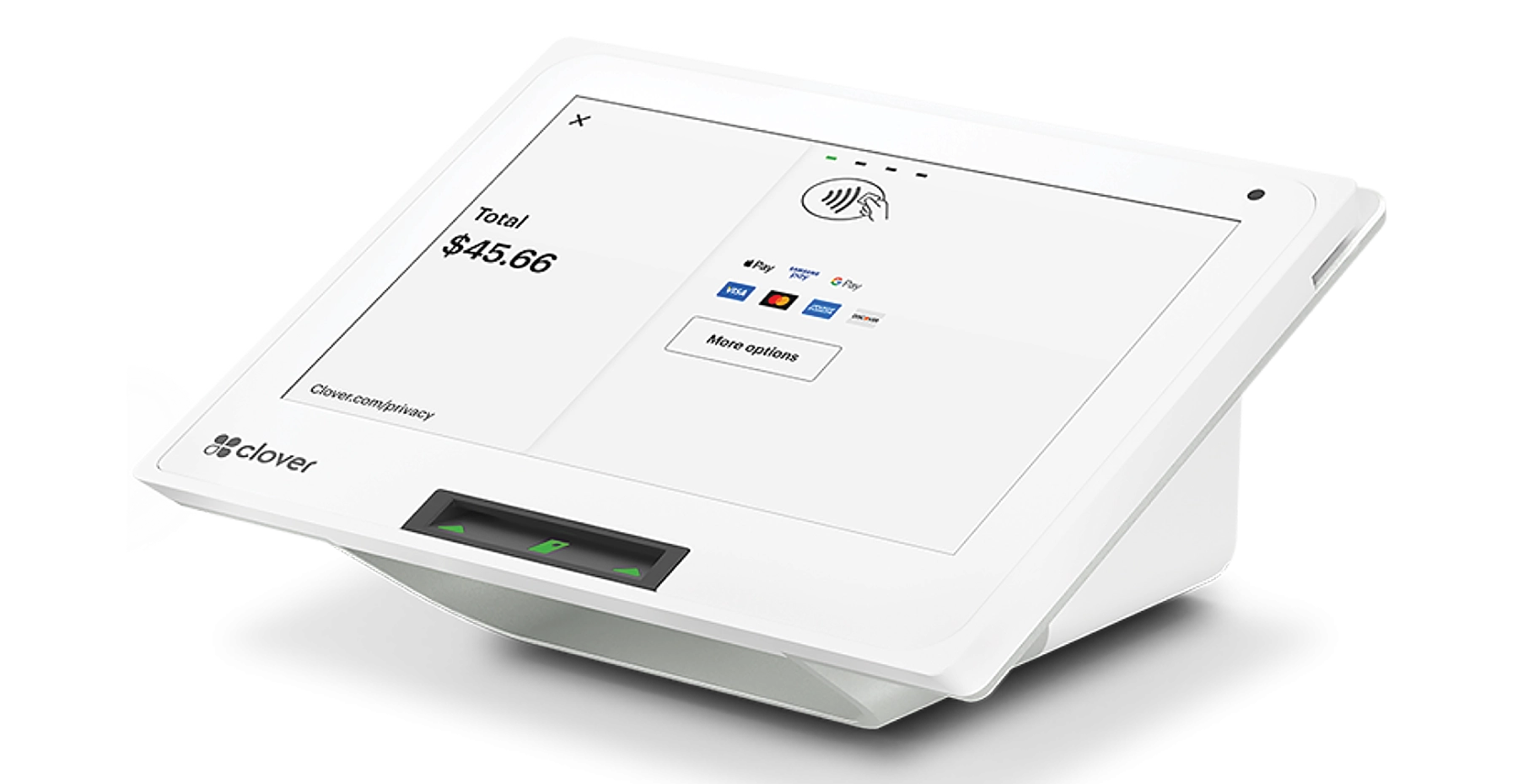
A modern system like the Clover Mini on your counter, or a handheld Clover Flex for tableside and curbside sales, does far more than move money. It builds a picture of who your customers actually are. Which items pull people back in. What your best customers have in common. When your quiet hours hit so you can win them back with a well-timed offer.
Turn transactions into relationships
The shift is simple but powerful: stop treating each sale as a one-off and start treating it as the beginning of a relationship. When your POS captures a customer profile at checkout — even just a phone number or email tied to a loyalty account — you gain the ability to reach back out. A thank-you the first time. A “we miss you” after a gap. A heads-up when the thing they always buy is back in stock.
That’s not creepy corporate surveillance; it’s the digital version of what great corner-store owners have always done — remembering your name and your usual order. Your POS devices just let you do it at scale, without relying on memory or the one employee who knows everybody.
Not every customer deserves the same effort
Your regulars aren’t a single blob, and treating them that way leaves money on the table. The customer who comes in weekly and spends big deserves a different touch than the one who wandered in once last spring. When your POS lets you see those groups separately, you can pour your energy where it actually pays off: a VIP perk for your top spenders, a gentle nudge for the ones slipping away, and a warm welcome-back for first-timers you don’t want to lose. Segmenting even loosely beats blasting everyone with the same generic coupon and hoping something sticks.
Build a Retention Engine, Not a Punch Card
The paper punch card in a shoebox by the register was a start, but it leaks value everywhere — cards get lost, forgotten, or handed to a friend. A real retention engine runs quietly in the background of every sale. Here’s what to bolt onto it.
Loyalty that people actually use
A points-based loyalty program built right into your POS means no apps to download, no cards to lose, and no manual tracking for your staff. Customers earn as they spend and redeem without friction, and the register does the remembering. The trick is keeping rewards reachable — a perk people can hit in a few visits beats a distant prize nobody chases. Reachable rewards create a habit, and habits are retention.
Gift cards that bring someone new and bring them back
Gift cards are a double win: a current customer buys one, hands it to someone new, and now you’ve got a fresh face who’s essentially pre-sold on your business. Better yet, gift card holders famously spend more than the card’s value and come back to use up the balance. A gift card program turns your regulars into a referral channel and your first-timers into repeat visitors, all from a single sale.
Follow up without being annoying
The gap between a happy customer and a repeat customer is often just a reminder. Digital receipts open the door to a soft touch — a quick thank-you, a birthday reward, a nudge about a seasonal favorite. If you sell anything people order again, an online ordering setup makes the second purchase effortless: they reorder from their couch in thirty seconds instead of driving over and hoping you’re open. Effortless is the whole point. Every bit of friction you remove is a reason to come back.
Ready to turn one-time buyers into loyal regulars?
VMS wires loyalty, gift cards, and low-cost processing right into your Clover checkout — usually live in days, not months.
Or call our team: 888-902-6227
Make the Payment Itself a Reason to Come Back
Nobody returns to a business because the checkout was slow and clunky. But plenty of people quietly stop coming because it was. The payment moment is the last thing a customer experiences before they leave — make it fast and forgettable in the best way, and you protect every retention move upstream.
A frictionless checkout is a retention tool
Long lines kill repeat visits. So does a terminal that makes people dip, wait, and sign when they expected to tap and go. Contactless and mobile-wallet payments clear in a second or two, which keeps your line moving on a busy Friday and leaves customers with a clean, modern last impression. When paying you is the easiest part of someone’s day, coming back feels easy too. And the reverse is brutally true: one frustrating, fumbling checkout can undo a dozen great interactions. People rarely complain about it — they just don’t come back, and you never find out why. Protecting the payment experience is one of the quietest, highest-return retention decisions you can make.

Fund your loyalty perks with lower fees
Here’s a move most owners miss. Every percentage point you hand to a card processor is a percentage point you can’t spend on the perks that keep customers loyal. With Zero Fee Processing, your card-processing costs drop toward zero, freeing up real money you can redirect into rewards, better products, or lower prices. Retention and margin aren’t enemies — done right, cutting your fees pays for the very program that keeps people coming back. If those processor charges have always felt like a mystery, our breakdown of credit card processing fees shows exactly where the money goes.
Measure What Keeps Them Coming Back
You can’t grow what you don’t track. The beauty of running payments and retention through one connected system is that the scoreboard builds itself — no spreadsheets required.
Watch a few numbers and you’ll know whether your retention engine is actually humming. Your repeat-purchase rate tells you what share of customers come back at all. Average visits per customer shows whether regulars are getting more or less frequent. And your best-customer list — the top slice who drive most of your revenue — deserves your closest attention, because losing even a few of them stings far more than losing a handful of one-timers.
Catch customers before they slip away
The most valuable retention move is often a rescue. When your reporting flags a regular who hasn’t been in for a while, that’s your cue — a quick, personal offer at the right moment can pull someone back before they quietly become a former customer. Winning back a lapsing regular is almost always cheaper than replacing them from scratch, and most people genuinely appreciate being noticed. A little attention at the edge of the churn cliff protects the revenue base you’ve spent years building.
Your POS reporting surfaces all of this the moment you close out the day. Sales by hour tell you when to staff up and when to run a slow-day promotion. Sales by product tell you which items create loyal fans worth building around. Managing your team around those patterns is easier when employee management tools live in the same system, so your best people are on the floor exactly when your best customers walk in.
And when the data points to a clear opportunity — a second location, a bigger space, a product line your regulars keep asking for — merchant working capital lets you move on it fast, with funding based on the card sales you’re already making. Retention gives you a stable base of revenue; capital lets you build on it.
Win the Second Sale
The first sale proves someone will buy from you. The second sale proves you built a business. Everything in between — the loyalty points, the gift cards, the fast tap-to-pay checkout, the well-timed follow-up — exists to bridge that gap and turn a stranger into a regular.
Customer retention for small business isn’t a marketing gimmick or a nice-to-have you’ll get to someday. It’s the cheapest, most reliable growth you’ll ever find, and the tools to do it are probably already sitting on your counter waiting to be switched on. Plug the holes in the bucket, and every new customer you earn actually starts to add up.
VMS has helped independent businesses do exactly that since 1998 — connecting Clover POS, loyalty, gift cards, and low-cost processing into one setup that quietly turns first-timers into regulars. Curious what that looks like for your shop? Our merchant services FAQs cover the basics, or you can just call the team and ask the awkward questions directly.
Stop refilling the bucket. Start keeping what you pour in.
Have questions about keeping your customers coming back?
Fill out the form below and a VMS payment specialist will contact you shortly.