

You opened a gym to help people get stronger, not to spend Tuesday mornings untangling payment fees. But if you’re like most fitness studio owners, you’ve probably looked at your monthly merchant statement and thought, “Wait — how much am I actually keeping from each membership?” That’s the gym payment processing question nobody wants to face — but every gym owner eventually has to.
Gym payment processing is one of those topics that sounds simple but gets complicated fast. You’ve got recurring memberships, walk-in class passes, personal training sessions, protein shakes at the front desk, and the occasional online purchase — all flowing through different payment types at different rates. Meanwhile, your processor quietly skims a percentage off every single transaction.
The good news? With the right setup, gyms and fitness studios can dramatically reduce what they hand over to payment processors — and in many cases, bring that number to zero. Whether you’re just starting out or you’ve been accepting cards for years, here’s everything you need to know to take back control of your margins.
📊 By The Numbers
- Gyms processing $30K/mo pay $750–$1,050/mo in gym payment processing fees on flat-rate plans
- Switching to interchange-plus saves most studios 20–30% on processing costs
- Zero Fee Processing can reduce effective gym payment processing costs to $0
- Over 60% of small businesses now use some form of fee-passing program
Why Gym Payment Processing Is More Complex Than Most Businesses
Ask a restaurant owner about payment processing and they’ll shrug — swipe a card, take payment, done. But gym owners deal with a genuinely more complicated payment environment than almost any other small business. According to IHRSA, the fitness industry generates tens of billions in membership and ancillary revenue annually — and the cost of processing that revenue is one of the biggest hidden margin leaks in the business. Most gym owners don’t realize how much gym payment processing is actually costing them until they sit down and do the math.
Multiple Revenue Streams, Multiple Rate Categories
On any given day, your gym might process a recurring monthly membership auto-payment, a retail sale (supplement, gear, branded water bottle), a drop-in class fee, and a personal training package — all in the same afternoon. Each transaction type carries a different interchange rate depending on how it’s processed. Card-present vs. card-not-present, debit vs. credit, rewards cards vs. basic Visa — they all land at different costs.
If you’re on a flat-rate plan like Square or Stripe, you’re paying the same rate on everything. That sounds convenient, but you’re almost certainly overpaying on your simpler transactions and subsidizing the expensive ones. Gyms with even modest volume — say, $20,000 a month — are often leaving $200–$400 on the table every month just by being on the wrong pricing model. Over a year, that’s real money sitting in your processor’s pocket instead of yours.
Chargebacks Are a Bigger Risk in Fitness
Here’s a hard truth: gyms have higher-than-average chargeback rates compared to most industries. The number one trigger? Membership cancellations. A member decides they don’t feel like going anymore, can’t find the cancellation clause in their contract, and disputes the charge with their bank instead of calling you. The result is a chargeback — which costs you the transaction amount plus a $15–$25 dispute fee, and if you accumulate too many, your processor will raise your rates or terminate your account entirely.
Managing chargebacks well requires a gym payment processing partner who actually understands the fitness industry — one who provides solid dispute documentation tools, and gives you a stable merchant account that doesn’t get frozen the moment something unusual happens.
Recurring Billing Adds a Layer of Complexity
Membership businesses live and die by recurring billing. When a card declines on the 1st of the month, you need automated retry logic, clear decline notifications, and a smooth card-update process. If your gym payment processing setup doesn’t handle recurring billing well, you’re losing revenue every single month — and the frustrated members you chase down are the ones most likely to cancel.
How to Read Your Gym Payment Processing Statement
Most gym owners glance at their total fees and move on. That’s exactly what processors are counting on. Here’s how to actually read what you’re being charged — and where to find the savings.
Three Pricing Models You’ll Encounter
Flat-rate pricing (Square, Stripe, PayPal) charges one rate regardless of card type — typically 2.6%–2.9% plus a per-transaction fee. It’s simple and predictable, but you pay a premium for that simplicity. Every basic debit card transaction costs you the same as an expensive rewards card, which means you’re constantly subsidizing the gap.
Tiered pricing is arguably worse. Your processor categorizes transactions into “qualified,” “mid-qualified,” and “non-qualified” buckets at rates they define — and only they know the actual cost to them. Most transactions quietly fall into the more expensive mid- or non-qualified tiers. You have almost no ability to audit it, which is exactly why processors love this model.
Interchange-plus pricing is the transparent alternative. You’re charged the actual wholesale rate set by Visa or Mastercard for each transaction, plus a fixed markup from your processor. Every line on your statement is visible and verifiable. For gyms doing meaningful volume, interchange-plus consistently saves 20–30% compared to flat-rate or tiered plans.
Red Flags on Your Monthly Statement
When you receive your monthly gym payment processing statement, check for these warning signs: unexplained “non-qualified” surcharges (often 1%–2% added on top), per-transaction fees that vary without explanation, and monthly fees for services you never signed up for — PCI compliance fees, statement fees, batch fees. These add up fast and many are negotiable or eliminatable entirely with the right processor.
What Gyms Are Actually Paying in Processing Fees
If you’re processing $30,000 a month on a typical flat-rate or tiered plan, you’re probably paying somewhere between 2.5% and 3.5% in gym payment processing fees — that’s $750 to $1,050 every single month going straight to your processor. Over a year, that’s up to $12,600.
For a small fitness studio running lean, $12,600 a year isn’t a rounding error. That’s a piece of equipment. That’s two months of a part-time employee. That’s your entire marketing budget.

Interchange-Plus: The Transparent Alternative
Interchange-plus is the gold standard for gym payment processing transparency. You see the actual Visa/Mastercard wholesale rate for every transaction, plus a flat markup from your processor — nothing hidden, nothing bundled. For gyms processing $20,000–$100,000 a month, switching from flat-rate to interchange-plus typically saves 20–30% on total fees. The key is finding a processor who offers it and is willing to show you exactly what the markup is before you sign.
| Monthly Volume | Flat-Rate (2.9%) | Interchange-Plus (2.1%) | Annual Savings |
|---|---|---|---|
| $20,000 | $580/mo | $420/mo | $1,920/yr |
| $30,000 | $870/mo | $630/mo | $2,880/yr |
| $40,000 | $1,160/mo | $840/mo | $3,840/yr |
How Gyms Are Eliminating Gym Payment Processing Fees Entirely
Here’s the approach quietly becoming standard across small business America: pass the processing fee to the customer, legally and transparently, so your effective gym payment processing cost drops to zero. As of 2026, more than 60% of small and mid-sized businesses have implemented some form of fee-passing program — and fitness studios are catching on fast. Done right, it’s seamless for members and transformative for your margins.
Zero Fee Processing: The Cleanest Option for Gyms
VMS’s Zero Fee Processing program works by building the cost of card acceptance into your posted prices, then offering a small discount to customers who pay with cash or ACH. Your listed membership rate already includes the processing margin — the end result is you stop paying interchange fees on the vast majority of your revenue.
Unlike surcharging — which requires 30-day advance notice to card networks and has a patchwork of state regulations — Zero Fee Processing is legal in all 50 states and requires minimal compliance overhead. Your terminals come pre-programmed, signage is provided, and the entire setup is done for you. No DIY configuration, no compliance guesswork.
For a gym processing $40,000 a month, eliminating gym payment processing fees saves roughly $1,000–$1,400 per month. Over a full year, that’s $12,000–$16,800 back in your pocket — money that can fund new equipment, a marketing campaign, or simply a much healthier bottom line.

💡 Pro Tip
When evaluating any Zero Fee Processing setup, ask your rep to show you a sample statement. You should see transparent interchange rates, a fixed processor markup, and nothing else. If the numbers aren’t clear, the pricing isn’t fair.
Choosing the Right POS System for Your Gym
Your POS system is the front line of your gym payment processing operation. A gym’s needs are meaningfully different from a coffee shop’s — you need a system that handles memberships, tracks retail inventory, processes check-ins, and integrates with your scheduling or member management software. Getting this wrong costs you operationally, not just financially.
What to Look for in a Gym POS
Recurring billing support — Your POS should handle automated monthly charges with retry logic for failed payments and easy card-update requests. Without this, you’re manually chasing members every month and losing the ones too embarrassed to update their card.
Retail inventory management — If you sell supplements, gear, or branded merchandise, your system should track stock in real time and alert you when items run low. A gym payment processing setup that can’t handle retail inventory forces you to manage two separate systems.
Mobile and contactless payments — Trainers on the floor, bootcamp instructors selling class passes by the pool, staff at pop-up events — your payment solution needs to work away from a fixed terminal. Tap-to-pay from a handheld device is now a standard expectation, not a premium feature.
Why Clover Works Well for Fitness Studios
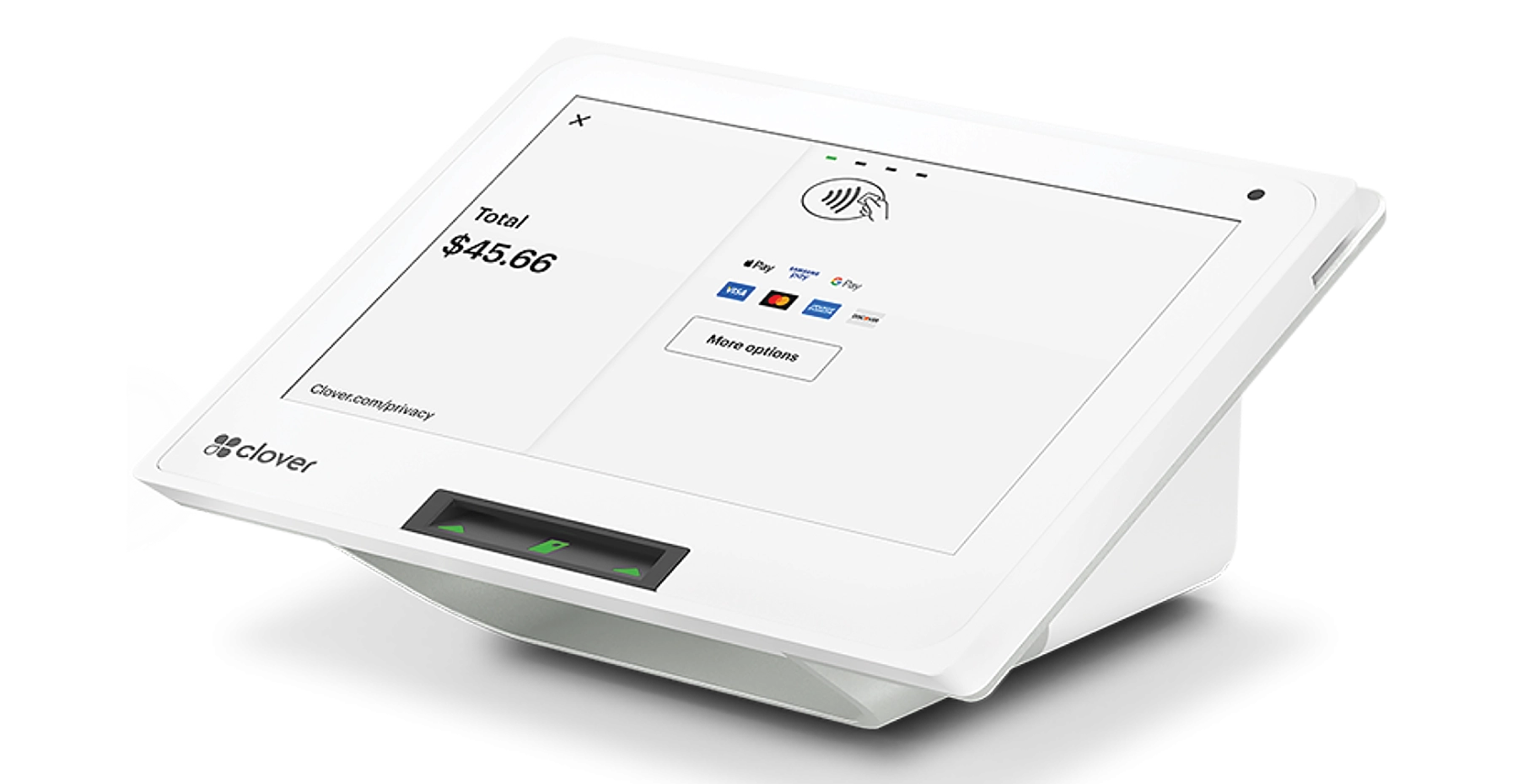
Clover POS is built around flexibility, which makes it a natural fit for the varied demands of gym payment processing. The Clover Station handles front-desk operations — member check-in, retail sales, session bookings — while the Clover Flex or Clover Go gives your staff a portable payment option anywhere in the facility. Clover’s App Market includes integrations for scheduling, loyalty, and member communication, so you configure it around how your gym actually operates.
Because Clover is processed through a true merchant account (not a payment facilitator like Square or PayPal), your account is stable. Payment facilitators are notorious for freezing accounts when transaction patterns change unexpectedly — exactly the disruption that membership businesses cannot afford.
Protecting Your Gym from Chargebacks
Chargebacks are an unavoidable part of gym payment processing — but they’re far more manageable than most gym owners realize. The key is building systems that make disputes easy to win, not just easy to file.
Clear cancellation policies in writing. Your membership agreement should spell out the cancellation process, notice period, and any fees. Get a signed copy — digital signatures count — from every member, and store it somewhere you can retrieve within 24 hours if a dispute comes in.
Use your receipt as evidence. Every signed receipt is documentation. Contactless payments and digital signatures through a modern POS system create an automatic paper trail that’s far stronger than a handwritten log.
Respond to every dispute. Even if you’re confident you’ll win, always respond with documentation. Processors and banks treat engaged merchants significantly better than those who ignore disputes — and your response history affects your long-term processing rates.
Flag recurring declines early. A good gym payment processing setup sends automated dunning emails so members update their card info before a membership lapses — reducing both failed payments and the frustration that leads to disputes in the first place.
VMS provides dedicated chargeback support to help merchants respond with the right documentation. For fitness studios that face higher dispute rates than most business types, this hands-on help is worth more than most gym owners expect.
Working Capital for Gym Growth
One often-overlooked benefit of gym payment processing through VMS is access to working capital based on your monthly credit card volume. Need new equipment, a space renovation, a second location, or just a bridge through a slow January? A merchant cash advance lets you access capital quickly — often within 72 hours — without the traditional bank application process, credit checks, or collateral requirements.
Repayment scales with your business: a slow month means a smaller repayment, a strong month means you pay it off faster. There’s no fixed monthly payment and no personal guarantee required. For gyms with seasonal traffic patterns — which is basically every gym — this flexibility is almost always a better fit than a traditional small business loan with fixed monthly payments that don’t care whether January was slow.
5 Questions to Ask Before Picking a Gym Payment Processor
Before you sign any gym payment processing agreement, here are five questions every gym owner should ask — and the answers that should give you confidence:
- Is this a merchant account or a payment facilitator? A true merchant account means a stable, dedicated processing relationship. A payment facilitator (Square, Stripe, PayPal) means your account lives inside a massive pooled account and can be frozen or closed with minimal notice.
- What’s your chargeback support process? You want a processor who helps you fight disputes with documentation and advocacy — not one who debits your account and tells you to handle it yourself.
- Do you offer interchange-plus or a Zero Fee Processing program? If the only option is flat rate, you’re leaving money on the table. Any serious gym payment processing provider should offer at least one of these.
- Can you handle recurring membership billing? Ask specifically about retry logic for failed payments, how members update cards, and what happens when a card expires mid-subscription.
- What does the contract look like? Month-to-month agreements are the gold standard. Long-term contracts with large early termination fees are a red flag — unless the rates and terms are genuinely exceptional.
🏆 Bottom Line
Gym payment processing doesn’t have to be something you just accept as a cost of doing business. With the right processor, the right pricing model, and the right POS system, most fitness studios can cut their effective processing costs by 20–100% — money that goes straight back to your margins, not your processor’s bottom line.
Need a POS built for your type of business?
VMS configures your system around how your industry actually operates — menus, inventory, appointments, whatever you run on.
Or call our team: 888-902-6227
Make Your Gym’s Money Work Harder
At VMS, we’ve been helping small businesses take control of their gym payment processing costs since 1998. We set up fitness studios with Clover POS systems, Zero Fee Processing programs, interchange-plus pricing, and the kind of stable merchant account you can actually rely on month after month. No surprises on your statement, no frozen accounts, no mystery tier charges.
Have questions about a POS for your business?
Fill out the form below and a VMS payment specialist will contact you shortly.
Smarter gym payment processing starts with a conversation. Talk to VMS today and we’ll show you exactly what you’re paying now — and what you don’t have to.