
Starting a business requires a lot of work. Entrepreneurs have a lot on their plate and the different things that need to be done when opening a business can get confusing. Incorporating your business is an important step that many business owners try and prioritize. Many business owners don’t know how to incorporate their business or if they even should. Deciding whether to incorporate is a significant business decision with legal, operational, and financial implications that can influence your company’s future success and stability. There are many benefits to incorporating your business.
-
Limited Liability: Incorporation provides personal liability protection by shielding business owners’ personal assets from business debts and legal responsibilities. A corporation is a legal entity separate from its owners, so the owners are typically not personally liable for paying any debts or legal obligations the company may have. Small business entrepreneurs who may have few personal assets need this protection more than anyone.
-
Credibility: Small business incorporation can enhance credibility and recognition for a new business, helping it draw clients, investors, and staff members by appearing more established and professional.
-
Permanent Existence: A corporation can continue to exist independently of its owners, providing durability and continuity even after ownership changes. This means that even if one or more owners decide to quit the company or pass away, it will still be able to run and carry out its commitments.
-
Tax Advantages: Companies may have the ability to benefit from tax advantages including deducting expenses and delaying paying taxes on profits.
-
Access to Capital: By issuing stock or other instruments that may be sold to investors, incorporating can make it simpler for businesses to raise finance. Incorporation allows businesses to raise capital through the sale of stock, which is not typically available to sole proprietorships or partnerships.
Choosing the right business structure, such as an LLC, C corp, or S corp, is a crucial business decision that impacts liability, taxation, and operational flexibility. The choice between these structures can significantly affect your business’s tax obligations and personal liability.
To make the process simpler for people interested in incorporating their business, we’ve listed out 5 steps on how to incorporate your small business.
Steps on how to Incorporate a Business
1. Select and Reserve a Business Name
Now that you’ve decided that you want to incorporate your small business, the next step is picking a name for your business entity. This is an important step. You want to choose a name that accurately represents the kind of business you have. Simple yet creative names will stand out and be easy to remember. There are a few things to keep in mind while choosing your business name. You want to consider internet searches, website domain and social media handle availability and similarity to other businesses near you.
Once you’ve decided on a name, you want to preform a business name search through the Secretary of State, Division of Corporations, Department of State or a similar Government agency in your state that preforms business name searches. The reason this is an important step is because you need to make sure that the name you want isn’t already being used. If everything checks out, the Secretary of State will usually hold your intended corporate name for about 120 days if you pay a fee.
2.2 **2. Decide on a Business Structure or Corporate Entity**
There are a few different corporate entities to choose from, and selecting the right business structure is crucial for determining your liability, taxation, and operational flexibility. For example, a sole proprietorship is the simplest structure, easy to set up, but it does not provide liability protection for the owner. If your business has multiple owners, you may need to consider structures like partnerships or corporations to clearly define responsibilities and profit-sharing arrangements. Private companies, which are typically small businesses not publicly traded, differ from public corporations and nonprofits in their legal structure and ownership. Carefully consider whether an LLC, C corp, or S corp best fits your needs, as your choice can significantly influence your business’s liability, tax obligations, and how you operate. This will alter how to incorporate your business.
Limited Liability Companies
These are known as LLCs. Many small businesses choose these to start out as. An LLC is a mix between a partnership and a corporation. The LLC is run and managed by members who hold 100% of the stakes. LLCs provide flexibility in taxation, including the option for pass-through taxation, which can lead to potential savings on self-employment taxes. Additionally, LLCs protect personal assets from business debts by establishing the business as a separate legal entity, shielding owners from personal liability for business obligations. It’s a well-liked option for small businesses since it’s simple to set up and manage while still offering legal protection for the owner’s personal assets.
Corporations
Another route you can take is a traditional corporation. These are the businesses you see Inc. next to. A corporation is a legal entity separate from its owners, meaning it can incur debts and be held liable independently of its shareholders. Shareholders own it and are only partially liable for the corporation’s obligations and deeds. A board of directors oversees the overall strategy of the business and appoints officers to manage day-to-day operations.
When considering corp status, it’s important to distinguish between C corp and S corp classifications. A C corporation (C corp) is a separate tax entity ideal for high-growth businesses seeking venture capital. C corporations are subject to double taxation, meaning profits are taxed at the corporate level and again when distributed to shareholders as dividends. In contrast, an S corporation (S corp) avoids double taxation by allowing profits and losses to pass through directly to shareholders’ personal income. The choice of corp status affects both legal structure and tax obligations.
Corporations allow businesses to raise money by issuing stocks and can continue to exist despite changing stockholders. They contain the strongest liability protection for shareholders despite having greater legal constraints.
Additionally, there are both for-profit and nonprofit corporations. Nonprofit corporations are primarily charities with a designated charitable purpose, and profits are reinvested to support the organization’s mission instead of being distributed to shareholders. Nonprofit corporations can obtain tax exempt status, such as 501(c)(3), if they meet certain requirements, allowing them to reinvest more funds into their mission.
Partnerships
These are another popular option for small businesses. A partnership is a type of business arrangement where two or more people or organizations agree to split a company’s gains and losses. The partners are jointly liable for the debts and obligations of the business. Partners also share responsibility for the business activities, operations, and compliance requirements of the partnership. A formal agreement can be used to create a partnership, but they can also develop informally from an understanding between the parties.
Nonprofit/501(c)(3)
The process of creating a nonprofit organization that is exempt from federal income tax under section 501(c)(3) of the Internal Revenue Code is known as 501(c)(3) incorporation or nonprofits. An organization must have a charitable, educational, religious, scientific, or literary purpose in order to be eligible for nonprofit status. It must also adhere to other guidelines, such as being exclusively organized and operated for those purposes and refraining from engaging in political or lobbying activities.
3. Start Filing
Once you figure out what route of incorporation you want to take, it’s time to start filing the paperwork. This is the most crucial part of incorporating your business. The primary legal document required to officially form a corporation is the articles of incorporation. These must be filed with the secretary of state. The articles of incorporation typically include the name of your corporation, names and addresses of founders, the address where you’ll be conducting your business, the legal purpose for forming the corporation, and the signatures of directors and founders. Filing the articles of incorporation establishes your business as a separate legal entity.
You must also designate a registered agent who is authorized to receive official legal and tax correspondence on behalf of your business.
Each state has slight differences with the process and required forms, so it’s important to make sure you research before you start filing.
If you’re looking for more information about what you’re going to need and how to incorporate your business, Legal Zoom has a lot of great blogs for each state.
After you get what you need in order, you’ll go to the IRS website to get your Employer Identification Number (EIN). This is essentially your business’s Social Security Number.
Finally, you must comply with regulatory requirements, which may include obtaining the necessary business licenses and permits specific to your industry, location, and business activities.
Obtain an Employer Identification Number (EIN)
Obtaining an Employer Identification Number (EIN) from the Internal Revenue Service is a vital step in establishing your business as a separate legal entity. The EIN acts as your business’s federal tax identification number, much like a Social Security Number does for individuals. It’s required for all corporations—including C corporations and S corporations—as well as for limited liability companies (LLCs) that choose to be taxed as corporations.
You’ll need an EIN to open a business bank account, file federal and state tax returns, and hire employees. Applying for an EIN is straightforward: you can complete the process online through the IRS website, or submit your application by phone or mail. Be prepared to provide basic business information, such as your business name, address, and the type of business structure you’ve chosen.
Having an EIN is essential for maintaining the limited liability protection that comes with incorporation. It ensures your business entity is recognized as distinct from your personal finances, which is crucial for liability protection and for keeping your personal assets safe. Remember, every legal entity must have its own EIN, so don’t skip this step when incorporating your small business.
Create Corporate Bylaws
Corporate bylaws are the internal rulebook for your corporation, setting out how your business will be governed and operated as a distinct legal entity. These legal documents define the roles and responsibilities of shareholders, directors, and corporate officers, and establish procedures for holding meetings, electing the board of directors, and making major corporate decisions.
Drafting comprehensive corporate bylaws is essential for ensuring smooth day-to-day operations and preventing misunderstandings among stakeholders. Your bylaws should address key issues such as how shareholder meetings are called, how directors are elected or removed, the powers and duties of officers, and how conflicts are resolved. It’s important to tailor your bylaws to your corporation’s unique needs and to comply with the requirements of the state where your business is incorporated.
By having clear, well-structured bylaws, you help protect your business’s status as a legal entity and provide a solid foundation for growth. All parties involved in the corporation—whether shareholders, directors, or officers—must adhere to these bylaws to maintain good standing and avoid internal disputes.
Hold a Board of Directors Meeting and Issue Stock
Once your corporation is officially formed, it’s time to hold your first board of directors meeting. This initial meeting is a key milestone in establishing your business as a separate legal entity. During the meeting, the board will formally adopt the corporate bylaws, elect corporate officers, and authorize the issuance of stock to the initial shareholders.
Issuing stock is a critical step, as it represents ownership in the corporation and determines each shareholder’s rights and responsibilities. The type and amount of stock issued will depend on your corporate structure. For example, a C corporation may issue multiple classes of stock, while an S corporation is limited to one class. The board of directors must ensure that all stock issuances comply with state and federal securities laws, and that accurate records are kept of all ownership interests.
This meeting also sets the tone for how your corporation will be governed moving forward. By following proper procedures and maintaining detailed corporate records, you reinforce your business’s status as a legal entity and help protect the limited liability of your shareholders.
4. Get a Corporate Bank Account
Once you have your EIN and corporation’s name, you need to set up a separate corporate bank account for your business expenses. Opening a dedicated account helps safeguard business assets and ensures that personal and business finances remain separate, which is essential for maintaining liability protection. This separation displays legal distinction between owners and the business, further protects against liability, and makes tax season and accounting much easier.
You should also get an accountant to make sure your finances are in check at all times and figure out the best route for your business in regards to taxation.
5. Finalize Licenses and Permits
There are different regulations for each state and business type when it comes to specific business licenses and permits. Obtaining the appropriate business licenses and permits is a necessary regulatory requirement before starting operations. Common permits and licenses are things like food handler permits, health department permits, sales tax ID numbers, etc. Make sure you have the right licenses and permits before you officially open your doors to ensure legal compliance.
Special Considerations When Incorporating
When incorporating your business, it’s important to carefully consider which business structure best fits your goals. Each option—whether a corporation, limited liability company (LLC), or partnership—offers unique benefits and potential drawbacks. For example, a C corporation is often preferred by businesses planning to raise capital through public or private stock offerings, thanks to its ability to issue multiple classes of stock and attract investors. However, C corporations are subject to double taxation, where both the corporation and its shareholders pay taxes on corporate profits.
On the other hand, an S corporation provides tax advantages by allowing profits and losses to pass through directly to the owners’ personal tax returns, avoiding double taxation. LLCs offer flexibility in management and taxation, along with limited liability protection for owners. Regardless of the structure you choose, maintaining limited liability protection requires ongoing compliance, such as holding annual meetings, keeping accurate records, and designating a registered agent.
By weighing these factors and understanding the implications of each business structure, you can make informed decisions that maximize your liability protection, tax advantages, and ability to raise capital as your business grows.
Tax Implications of Incorporation
Understanding the tax implications of incorporation is essential for small business owners. The way your business is structured will determine how you pay taxes and what tax benefits you can access. C corporations are taxed as separate entities, which means they pay corporate taxes on profits, and shareholders pay taxes again on dividends—this is known as double taxation. However, C corporations may benefit from lower corporate tax rates and can deduct a wide range of business expenses.
S corporations, by contrast, offer pass-through taxation, where profits and losses are reported on the owners’ personal tax returns, helping many small business owners avoid double taxation. Limited liability companies (LLCs) can choose how they are taxed—either as a corporation or as a partnership—giving them flexibility to optimize their tax situation.
The tax structure you choose can also impact your ability to raise capital, as some investors may prefer the corporate form despite the potential for double taxation. Consulting with a tax professional is highly recommended to ensure you’re taking advantage of all available tax benefits, minimizing your tax liability, and maintaining your limited liability protection. By understanding these tax implications, you can make strategic decisions that support your business’s long-term success.
After you’ve Incorporated your Small Business
So now that you know how to incorporate your business now you need to make sure your business is set up to take payments. While incorporating your business creates legitimacy, having an updated POS system also exhibits your readiness for customers.
VMS can get you set to accept all forms of payments, help you create a website and assist with marketing efforts. We have a wide variety of POS systems, including access to the top Clover App Market integrations for small businesses, and will make sure you’re getting a system that’s right for your business.
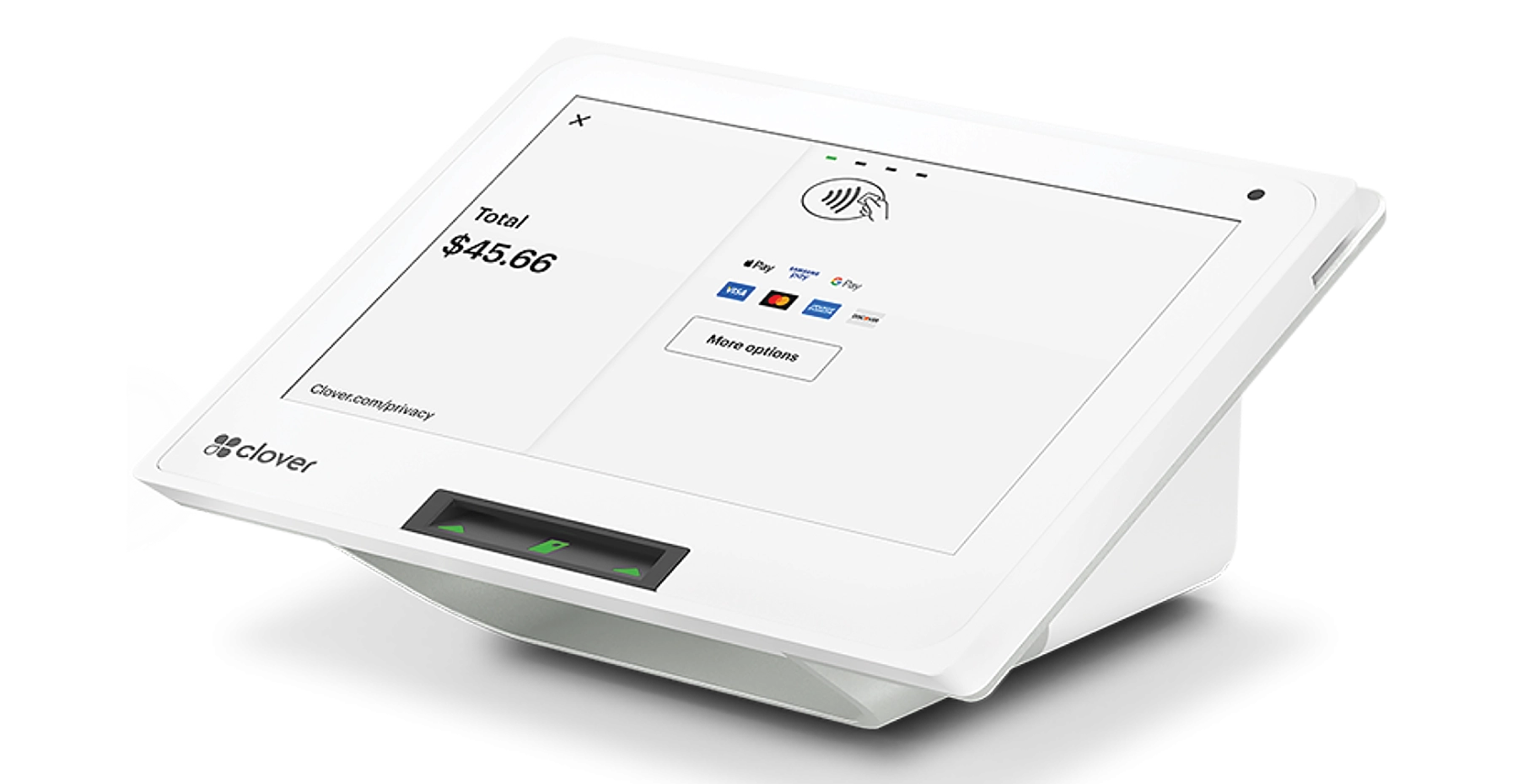
We partner with Clover so you can get a POS system that’s customized perfectly for your business since Clover offers a variety of apps to download and multiple Clover POS software plans tailored for different business types. There are systems for stores, restaurants, and even mobile systems for businesses that are on the go.
If you’re just starting out and don’t need all the apps or features of the Clover devices we also offer traditional payment processors that just do the basics. We also offer all the different POS hardware that your business might need.
If you’re interested in getting your business set up to accept payment visit us at www.getvms.com or fill out the form below!