

There’s a moment every small business owner dreads. You’re staring at your supplier invoices, your rent renewal, your payroll numbers — and the math is telling you something you don’t want to hear. Your prices have to go up.
Then the fear kicks in. What if your regulars walk? What if that one-star review shows up: “Used to love this place, but the prices…”? So you wait. And absorb the costs. And watch your margin shrink another quarter.
Here’s the good news: you can raise prices without losing customers. Businesses do it every day — quietly, confidently, and without a single angry post on the neighborhood Facebook group. The difference between a price increase that works and one that backfires almost never comes down to the number itself. It comes down to how, when, and why you do it.
In this guide, we’ll walk through the playbook: the psychology behind why customers accept (or reject) higher prices, the ground rules for rolling out an increase, tactics that soften the jump, and — this is the part most pricing advice skips — the costs you should cut before you ask customers to pay more.
Why Raising Prices Feels Risky (and Why It Usually Isn’t)
Let’s start with the fear, because it’s real but mostly misplaced.
Owners tend to assume customers are hyper-aware of prices. In reality, most of your regulars couldn’t tell you what they paid for their last haircut, sandwich, or oil change within a dollar or two. What they remember is the experience: was it good, was it easy, did they feel taken care of?
Think about your own habits. When your favorite coffee shop bumped a latte from $4.75 to $5.25, did you switch shops? Probably not — because the coffee is good, the barista knows your order, and finding a new favorite is work. That’s called switching cost, and your business has it too.
The math is heavily in your favor
Here’s the part that should give you courage: a price increase drops straight to your bottom line. If your business runs a 10% profit margin, a 5% price increase — with no other changes — can boost profits dramatically, because your costs stay flat while revenue climbs.
Now flip it around. To get that same profit bump by selling more, you’d need to increase volume significantly — more inventory, more labor, more hours, more stress. Raising prices is the only growth lever that doesn’t cost anything to pull.
And the downside is smaller than you think. Even if a small percentage of price-sensitive customers trims their visits, the increased revenue from everyone else almost always more than covers it. The customers you might lose over a modest increase tend to be your most price-sensitive, lowest-margin ones anyway.
There’s also a quiet cost to not raising prices: resentment. When your margin gets thin enough, it shows — in cut corners, tired staff, and an owner who starts dreading the busy season instead of loving it. Customers can feel that too. Healthy pricing isn’t greedy; it’s what keeps the business they love open next year.

How to Raise Prices Without Losing Customers: The Ground Rules
Fear says “hide it and hope.” The playbook says the opposite. Here’s how to raise prices without losing customers in practice — four rules that do most of the heavy lifting.
Rule 1: Time it right
The best time to raise prices is when your value is most visible. Just added a new service? Renovated the shop? Heading into your busy season, when demand is high and your product is front-of-mind? That’s your window.
The worst time is when service has slipped or right after a bad customer experience. Fix the experience first, then adjust the price. And avoid stacking pain: don’t raise prices the same week you shorten hours or drop a popular item.
Rule 2: Tell your regulars like the neighbors they are
For meaningful increases, a short, honest heads-up beats a silent menu swap. Something like: “Starting next month, our prices are going up slightly so we can keep paying our team well and using the ingredients you love. Thanks for supporting a local business.”
Notice what that message does. It gives a reason, it ties the increase to things customers care about, and it doesn’t apologize. Customers respect honesty; what they punish is feeling tricked. No fake “supply surcharges,” no shrinking portions and hoping nobody notices. Shrinkflation gets spotted — and it burns more goodwill than any honest price change ever will.
Rule 3: Frame the value, not the cost
Your announcement should spend one sentence on the increase and several on the value. Remind customers what they get: the quality, the convenience, the people. If you’ve added anything lately — online ordering, a loyalty program, faster checkout — this is the moment to mention it. A price increase paired with a visible improvement barely registers as an increase at all.
Rule 4: Prep your team before the first question lands
Your staff will hear about the new prices before you do — at the register, mid-rush, from a regular with an eyebrow raised. If their answer is a shrug, you’ve got a problem. If it’s a confident, friendly one-liner, the moment passes in three seconds.
Give everyone the same simple script: what changed, why it changed, and one thing customers still get (“Yep, prices went up a little this month — costs finally caught up with us. Same portions, same team, and your punch card still works.”). Practice it once at a staff meeting. A team that sounds relaxed about the change signals to customers that it’s no big deal — because it isn’t.
Pricing Tactics That Soften the Jump
Beyond the ground rules, a few tactical moves make higher prices feel smaller — or invisible.
Go small and regular, not big and rare
A 3–4% bump every year goes down far easier than a 15% correction after five years of frozen prices. Small, regular adjustments train customers to expect gentle movement, and they keep you from falling so far behind your costs that you need a scary number to catch up. Put a pricing review on your calendar twice a year, right next to your other back-office checkups like reviewing your processing statement.
Use tiers so customers choose their price
Instead of one price going up, offer a good-better-best structure. Keep an entry option near the old price, and let the middle and premium tiers carry the increase. Customers who feel in control of what they spend don’t experience the change as a price hike — they experience it as options. Restaurants do this with build-your-own combos; service businesses do it with packages; retailers do it with product lines.
Re-anchor with a premium option
Here’s a quirk of pricing psychology: adding a premium item makes everything below it look reasonable. The $58 tasting flight exists partly to make the $34 entrée feel sensible. If you raise your core prices and introduce a higher-end option at the same time, the core increase reads as modest by comparison.
Bundle the increase into new value
Pair the new price with something customers can see: a punch-card reward, a small add-on included, priority scheduling for members. A well-run loyalty program is the classic move here — it gives your regulars a reason to feel like insiders exactly when you need their goodwill most. If you don’t have one, VMS can set up loyalty programs that run right through your POS.
Want more margin without touching your menu board?
VMS helps you recover the 2–4% you lose to card fees with Zero Fee Processing — free statement review, honest numbers, fast setup.
Or call our team: 888-902-6227
Before You Raise Prices, Cut the Cost Hiding in Plain Sight

Now for the section most pricing guides skip entirely — and the one that might save you from needing a big increase at all.
Every card sale you take quietly hands 2–4% to processors and card networks. Across the U.S., merchants paid a record $187.2 billion in card processing fees in 2024, according to Nilson Report data cited by the Merchants Payments Coalition. For a typical small business, that’s thousands of dollars a year — often more than the entire profit gain you’d get from a modest price increase.
Here’s the thing: your customers never see that money. Raising your prices 4% to cover processing fees means asking loyal customers to fund a cost they don’t even know exists.
There’s a cleaner way. With Zero Fee Processing, card-paying customers cover a small program fee while cash prices stay exactly where they are — and the 2–4% you’ve been losing on every swipe goes back into your pocket. For many businesses, that recovers as much margin as a full price increase would, without touching the menu board.
Start with a ten-minute audit: pull your last processing statement and see what you’re actually paying. Most owners are shocked. If you’re not sure how to decode it, our guide to reading your credit card processing statement walks you through it line by line — or a VMS specialist will review it with you for free.
And if rising supplier costs are squeezing you right now — before any price change can catch up — merchant working capital can bridge the gap without the paperwork marathon of a bank loan.
Let Your POS Data Do the Pricing Homework
The last piece of the playbook: stop guessing. Your point of sale already knows which items customers love, which they abandon, and what your true best-sellers earn. That data should drive every pricing decision you make.
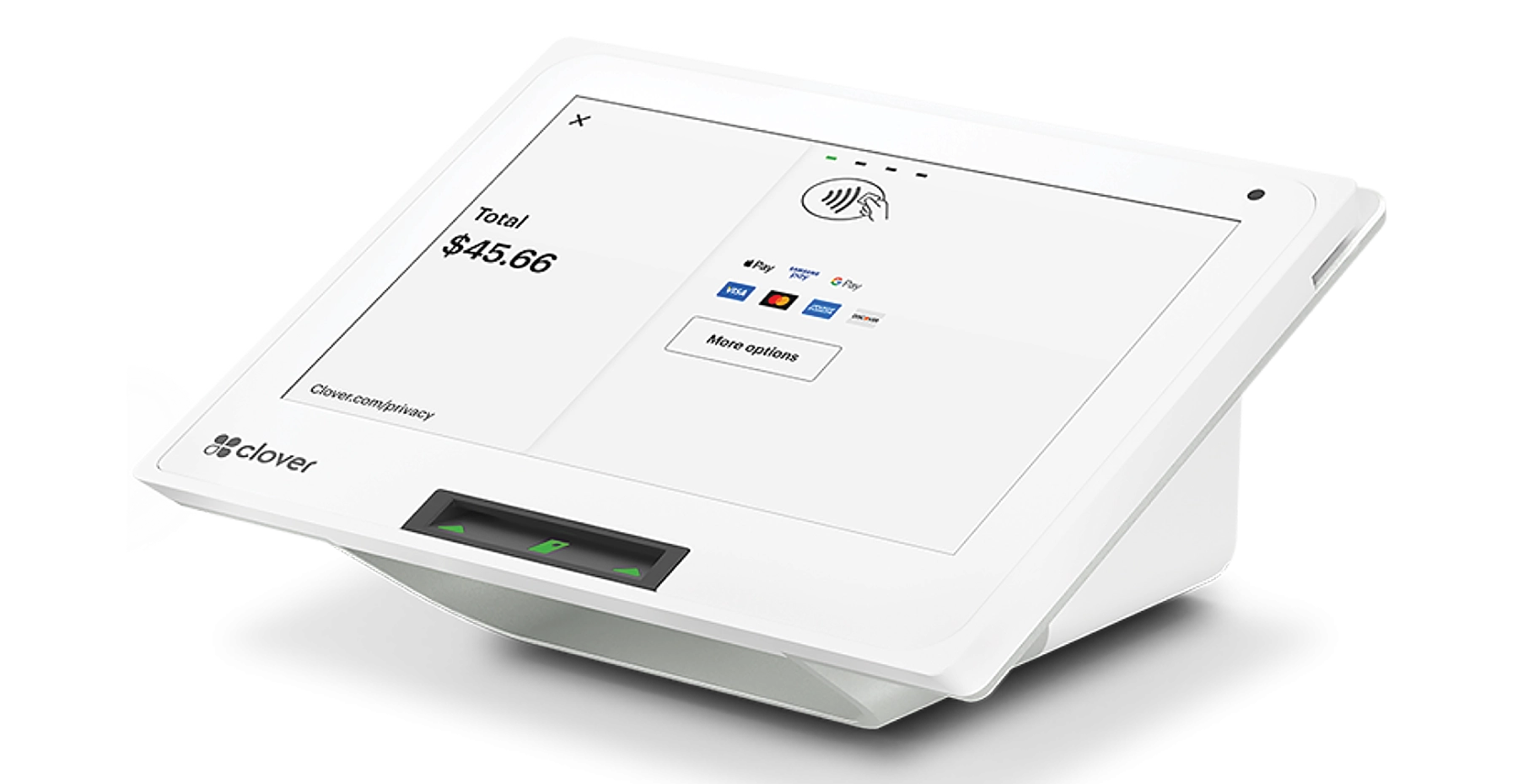
Modern POS systems like Clover give you item-level sales reports, so you can see exactly where you have pricing power. Your top seller with a line out the door? It can absorb 50 cents easily. The slow mover you’re already discounting? Leave it alone — or cut it entirely.
A few plays your reports make possible:
Raise selectively, not across the board. Increase prices on your highest-demand, most distinctive items — the things customers can’t easily compare elsewhere. Keep prices steady on “reference items” customers know by heart, like a basic coffee or a standard service call. One warning, though: raise prices on too many familiar items at once and even loyal customers notice the pattern. Spread meaningful changes across two or three visits’ worth of time instead of one dramatic reprint of the whole menu.
Test before you commit. Try the new price for three or four weeks and watch units sold. If volume holds, the increase worked. If it dips more than the price gain covers, adjust. With real numbers in front of you, pricing stops being an emotional decision and becomes a business one.
Watch your average ticket, not just item prices. Sometimes the answer isn’t a higher price — it’s a better attach rate. If your average sale climbs because checkout suggests a pastry with the latte, you’ve grown revenue without changing a single price tag.
Owners who track cash flow closely already know this rhythm: measure, adjust, measure again. Pricing works exactly the same way.
The Bottom Line: Confidence Is the Strategy
Customers don’t leave over fair price increases. They leave over surprises, sloppiness, and feeling nickel-and-dimed. Time your increase well, communicate it honestly, frame the value, soften it with smart structure — and your regulars will keep being regulars.
But before you touch your prices, remember the money already leaking out the back door. Between processing fees, clunky checkout, and missed loyalty opportunities, most small businesses can recover serious margin without asking customers for a dime more.
That’s where VMS comes in. Since 1998, Velocity Merchant Services has helped small businesses keep more of every sale — with Zero Fee Processing that eliminates card fees, Clover POS systems that turn sales data into pricing intelligence, and real humans in Downers Grove who answer the phone. Have a question about your options? Talk to a VMS specialist, get a free statement review, and find out how much margin you can win back before your next price change.
Your prices should reflect your value. Your fees shouldn’t eat it.
Have questions about pricing and protecting your margins?
Fill out the form below and a VMS payment specialist will contact you shortly.