

Trade shows! These conventions bring a huge amount of businesses in the same industry and customers together every year. Trade shows allow businesses to showcase products and services to potential customers, competition, and complementary businesses. A strong trade show presence is about making a measurable impact and standing out among competitors. Creating a memorable brand experience at trade shows is essential for leaving a lasting impression on attendees.
Going to a trade show can be a great networking opportunity for businesses. Trade show marketing is a form of event marketing that requires careful planning, storytelling, and measurable tactics to generate ROI and turn interactions into leads. If you do it right, your businesses can walk away from a show with new connections and more money.
Before heading to something like this, you should have an idea of how to go about trade show marketing. Identifying your target audience before attending is crucial to tailor your messaging and maximize engagement. In this blog we’ll go over the basics on how to do a trade show right!
Trade show marketing is a strategic approach that ensures exhibitors achieve measurable business results from their trade show presence. A well-defined trade show marketing strategy gives structure, direction, and commercial intent to your participation. Trade shows bring together buyers, decision-makers, and partners with active needs and defined budgets, making them a valuable opportunity for business growth.
Set Goals
Before spending the time, energy and money going to a trade show, you should think about the purpose of your business attending. Yes, they can be fun just walking around and meet people, but you should have a game plan and a list of goals you want to accomplish while you’re there. The purpose of these events is to give companies a chance to market their brand, generate leads, network with other professionals in the field, engage with decision-makers and target accounts, and remain current on emerging industry trends and advancements.
If you’re going to a trade show for the first time it can be a little overwhelming. Depending on which one you’re going to, there might be thousands of people. It’s easy to get distracted and not accomplish what you went there to do. Here are some easily attainable goals to meet while you and your team are at the show.
-
Meet other Vendors.
-
Boost Sales.
-
Collect Emails for Mailing List.
-
Hand out Business Cards.
-
Generate New Leads.
-
Secure qualified leads.
SMART goals in tradeshow marketing should include securing specific numbers of qualified leads or conducting live demos to measure your success.
If you’re going with a team, have a little huddle before heading to the show and go over your goals. It might be easier to delegate tasks to each team member so nothing gets missed. Use a clear trade show marketing strategy to attract the right people to your booth by targeting ideal customer profiles, active opportunities, and identifying potential partners such as resellers, distributors, technology providers, or industry associations. Staying current with industry trends will also help your team remain competitive and relevant at trade shows.
Attend the Right Show
There are a lot of different trade shows to choose from. You want to make sure you’re choosing the right one. You don’t want to go to one where your products and services don’t fit. Go to one that’s either for your specific industry, will have your ideal customers attending, or is complementary to your business. When selecting shows, prioritize those that align with your target audience and provide access to key decision makers, as this will maximize your tradeshow marketing ROI. Think about which show will generate the most leads or give you the most networking opportunities. If your industry is super saturated, choosing to go to one that complements your business may give you better results. You should also plan to go to trade shows around the time of new product launches. Staying up to date with industry trends can help you choose the most relevant shows for your business. 92% of tradeshow attendees say their main reason for attending tradeshows is to see new products being featured**.**
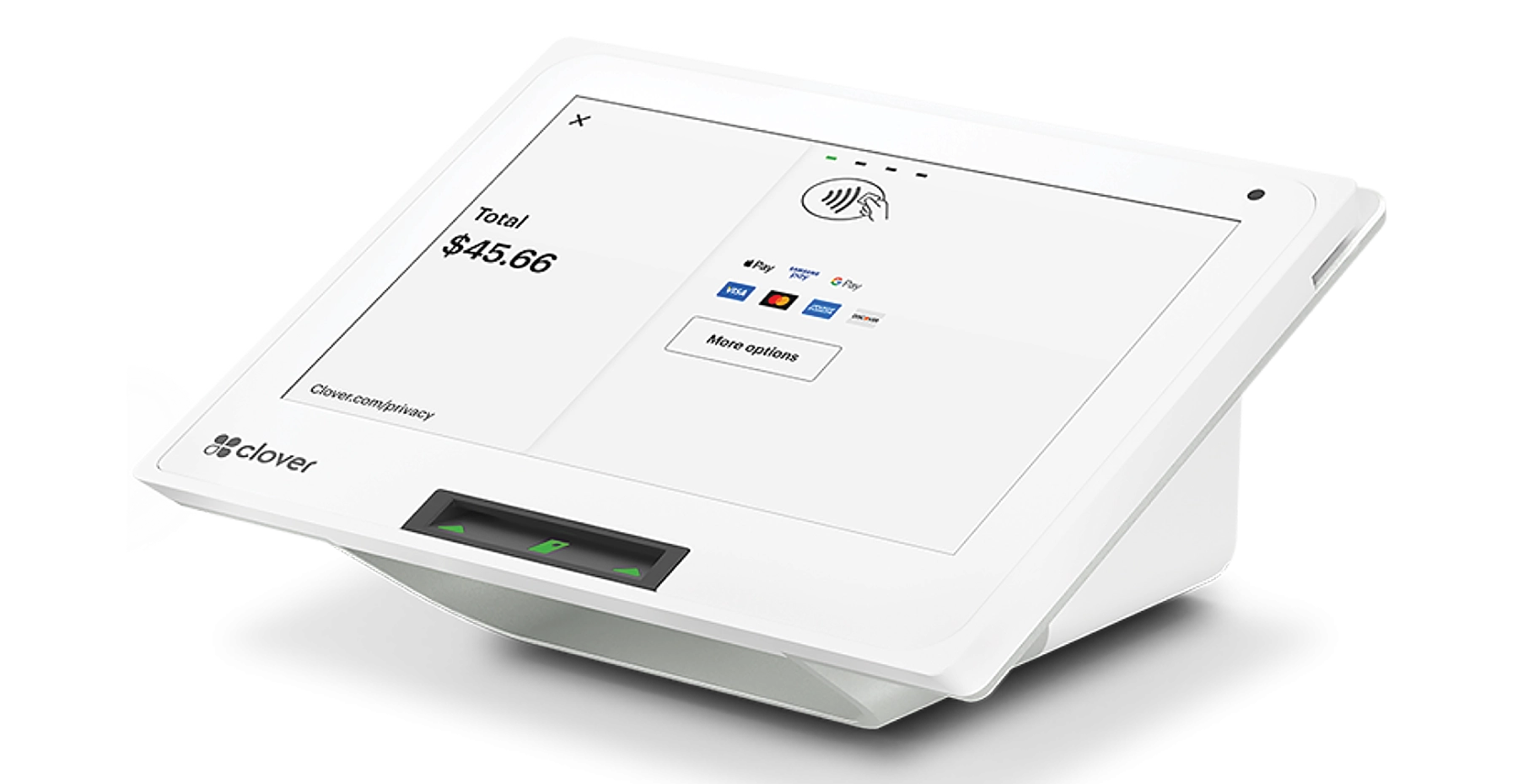
For example, VMS is going to The National Restaurant Association show this year. Our company is obviously not a restaurant, but we sell POS systems that can be very beneficial to restaurants. We also just came out with the new Clover Kiosk, which is made specifically for restaurants. Our main goals for going, is to showcase our new product and generate new leads with potential restaurants. Seeking out shows like these is a great idea. Not only will a payment processor stand out among all the different restaurants, but its also showcasing new products to ideal customers. Trade shows bring together buyers, decision-makers, and partners with active needs and defined budgets, making them a prime opportunity for business growth. Every business needs to be able to accept all forms of payment. 67% of all attendees represent a new prospect and potential customer for exhibiting companies. So choosing the right one can give your business a serious boost.
Get the Right Trade Show Marketing Materials
Marketing your business correctly at the trade show should be at the top of your priority list. To do this, you want to create a strong marketing strategy. If you already have your goals set up and you’ve chosen the right trade show to go to, you’re already on the right track. The next step is to get together your trade show marketing materials. You want to be prepared. Remember no one plans to fail, we just fail to plan. Have a check list of everything you’re bringing and do not wait until the day before to start getting everything together. Here are some staple items you should be bringing to a trade show.
-
Business Cards (and a system for collecting business cards from attendees strategically for lead generation)
-
Free Merch
-
Posters or Boards the Display your Company, your Products and your Message
-
Products you want to Display and Demonstrate
-
Leaflets or Brochures
-
Ways that People can Connect with you and your Business
Make sure all your marketing materials, such as brochures and business cards, include a clear call to action to direct potential customers to your website or encourage further engagement.
Direct mail can also be an effective pre-show marketing tactic. By sending targeted direct mail to specific attendees or mailing lists before the event, you can drive more qualified traffic to your booth and increase your chances of connecting with the right audience.
These are just the basics that you should bring. You may also need a table or two, lighting, matching attire for your team, outlets. You want to make your booth stand out from the rest. Having one plain table with brochures on it will not cut it. Ensure your marketing materials instantly communicate who you are, what you offer, and how your solution applies to your audience. Here’s a great case study that goes into how one business doubled their booth traffic and increased qualified trade show leads by 400 percent. It goes over how they transformed their booth and came up with innovative ways to showcase their products.
Booth Design and Layout
A standout trade show booth is your ticket to drawing in trade show attendees and making a strong impression on the show floor. Your booth design should not only reflect your company’s brand identity but also clearly communicate your value proposition to everyone passing by. Here’s how to create a booth that gets noticed and keeps attendees engaged:
-
Lighting: Good lighting can make your booth pop in a crowded exhibit hall. Use a mix of overhead lights, spotlights, and even colorful LED accents to highlight your products and create a welcoming atmosphere that draws people in.
-
Graphics: Invest in high-quality graphics—think banners, posters, and digital displays—that showcase your products or services. Make sure your messaging is bold, clear, and easy to read from across the trade show floor, so attendees know exactly what you offer at a glance.
-
Furniture: Choose furniture that’s both comfortable and on-brand. Modular pieces can be rearranged for product demos, meetings, or casual conversations, making your booth flexible for different activities throughout the event.
-
Technology: Incorporate interactive technology like touchscreens, virtual reality demos, or social media walls to engage attendees and create a memorable experience. These elements not only attract attention but also encourage visitors to spend more time at your booth.
-
Storage: Keep your booth organized and clutter-free by planning for storage. Use shelves, cabinets, or hidden compartments to store marketing materials, giveaways, and personal items, so your space always looks professional.
A well-thought-out booth design doesn’t just look good—it helps you stand out, communicate your message, and create a space where attendees want to stop, explore, and connect with your brand.
Trade Show Marketing Budgeting and ROI
A successful trade show marketing strategy starts with a clear budget and a plan to measure your results. Setting a realistic trade show marketing budget ensures you get the most out of your investment and can prove the value of your trade show participation. Here’s how to approach budgeting and ROI:
-
Set Clear Objectives: Before you spend a dime, define what you want to achieve—whether it’s generating leads, boosting brand awareness, or launching a new product. Clear objectives will guide your spending and help you focus your efforts.
-
Allocate Budget: Break down your budget by category, including booth design, marketing materials, staffing, travel, and technology. This helps you prioritize what matters most for your trade show marketing plan.
-
Track Expenses: Keep a close eye on your spending throughout the planning process. Use spreadsheets or budgeting tools to monitor costs and avoid surprises.
-
Measure ROI: After the event, evaluate your trade show performance using key performance indicators (KPIs) like the number of leads generated, sales conversions, and social media engagement. Compare these results to your initial objectives to determine your return on investment.
By planning your trade show marketing budget and tracking your ROI, you’ll be able to make smarter decisions for future events and demonstrate the impact of your trade show marketing efforts.
While You’re at the Show
Trade shows are supposed to be fun. Yes, you’re going there for a purpose but remember to relax, be friendly and have fun. Make sure you’re talking to as many people as you can, and connecting with all the different attendees.
Focus on creating an interactive experience at your booth, using engaging activities or gamification to attract and retain attendee interest. Prioritize relationship building by networking, attending meetings, and fostering connections that can lead to long-term collaborations beyond the event.
Staff training is crucial—your booth staff represents your brand, so they should be well-prepared, engaging, and able to ask qualified questions and demonstrate solutions effectively. Offering high-quality giveaways or exclusive promotions can incentivize immediate engagement and draw more visitors to your booth.
Guide visitors through a clear flow—attract, engage, convert—without making them feel like they’re trapped in a sales pitch. Design your booth to create an immersive brand experience, using interactive displays and staff involvement to stand out and leave a lasting impression, rather than relying on static displays.
Networking
Trade shows are the easiest way to network. All of your industry peers will be there. If you’re a new business owner or a seasoned one, you want to make connections with other fellow business owners. Relationship building at trade shows is crucial for long-term business success, as it helps establish strategic partnerships and fosters ongoing collaboration. Making friends can be beneficial to both parties. Learn things from each other and link up with complementary business owners. Networking opportunities at trade shows can also lead to new partnerships and potential supplier contacts. Additionally, partnering with industry influencers at trade shows can amplify your message and attract a relevant audience. Here are some ways to get the most out of your networking efforts:
-
Target decision makers to ensure your connections are valuable and can lead to measurable business outcomes.
1. Research other Attendees
Take some time to research who will be going to the show, especially focusing on identifying your target accounts—those high-value clients that align with your Ideal Customer Profile (ICP). Prioritize scheduling meetings with these target accounts to maximize your tradeshow marketing impact. Use digital tools with meeting scheduling features, such as lead capture and CRM integration, to efficiently organize and manage appointments with key prospects. Figure out who the main players are, and who you should approach. Also, see if anyone you want to meet is going to participate in any special events at the show. Sometimes there will be presentations or demonstrations to attend. Additionally, use targeted outreach through email campaigns to invite current customers and prospects, offering incentives like free entry passes or special gifts to encourage attendance. If you figure out who will be attending and plan on going as well, it’s a great way to make sure you’ll run into them during all the commotion of the show.
2. Focus on Social Media
We live in a world where social media is everything. While meeting people, follow or add their social media profiles. This is a very easy way to make sure you have some way of getting back in touch with them after the show. Adding each other on social media doubles the chances of them remembering you and also gives an opportunity to help market each other on social media in the future.
To generate more visibility for your booth, use event-specific or unique hashtags in your posts and stories. Start promoting your attendance at trade shows 2-3 months in advance to maximize engagement and reach. Include a clear call to action in your social media posts, such as inviting attendees to visit your booth or scan a QR code for more information. Creating a trade show-specific landing page and linking to it from your social media and email campaigns can help direct traffic to relevant information about your exhibit.
Another tip for this is having a QR code on your business card that takes people right to your social media profile. This can be much easier than typing in usernames.
3. Set Enough Time Aside
Again, trade shows can become very overwhelming. It’s not uncommon to have the idea in your head of visiting the entire show and ending up not having enough time to network. You may run into issues, or unexpected tasks that end up keeping you stuck at your booth. This is why going with a team, having a game plan, and delegating tasks is important while you’re planning everything. Pre-schedule your activities, meal times and transportation time so you have enough time to walk around and network. Effective tradeshow marketing strategies should ideally start 3 to 6 months before the event, so be sure to incorporate pre trade planning and early promotion to build excitement and attract attendees. After the event, gather feedback from staff, attendees, and clients to see what you can improve for your next trade show. If you’re not the best at planning and staying organized, here’s a great blog about how to successfully manage trade shows.
4. Listen and Break out of Your Typical Network Pool
Successful networking at trade shows happens when you’re friendly and not overbearing or intrusive. At the booths, people tend to have a more aggressive business mentality. There may be more opportunities to build connections in a more relaxed setting like activities organized by the trade show like conferences or meal times. Keep an open mindset and be prepared to listen and ask questions. When you display genuine interest in them, they will show more interested in you. Get out of your shell and talk to people you may not typically talk to.
5. Don’t Forget about your Competition
Making new connections and potential business partners is important, yes. But, also make sure to scope out your competition. Check out what they are doing and see if you’re up to par with your direct competition. Get as much information as possible from their booths and see what areas you may be lacking in and what your business can improve on to surpass the competition. See what products they’re offering, how they’re marketing themselves and how they have their booth set up. Observing industry trends at trade shows not only helps you stay current and competitive, but also allows you to gather valuable competitive intelligence. You can learn a lot from your competition, especially if your business is new. Walking around and visiting competition can be a great task to delegate to one of your team members.
Lead Capture and Management
Turning trade show attendees into customers starts with effective lead capture and management. Here’s how to make sure you’re collecting and following up with the right prospects:
-
Use Lead Capture Apps: Equip your team with digital lead capture apps to quickly gather attendee information and notes about each interaction.
-
Qualify Leads: Not all leads are created equal. Use a simple qualification process to identify high value prospects who are most likely to become customers, so you can focus your follow-up efforts where they’ll have the biggest impact.
-
Segment Leads: Organize your leads based on interests, buying stage, or other relevant criteria. Segmenting leads allows you to tailor your follow-up and marketing messages for better results.
-
Follow Up: Don’t let your leads go cold. Send personalized follow-up emails or messages within a week of the trade show, referencing your conversation or offering additional information to keep the relationship moving forward.
-
Integrate with CRM: Sync your lead capture system with your CRM to streamline lead management, track interactions, and ensure no opportunity is missed.
With a solid lead capture and management process, you’ll maximize the value of every connection you make on the trade show floor and set your sales team up for success.
Creating a Memorable Experience
Making a lasting impression on trade show attendees is key to trade show success. Here are some creative ways to ensure your booth is the one everyone remembers:
-
Host Events: Organize special events at your booth, such as product launches, live demos, or hands-on workshops. These activities draw crowds and give attendees a reason to stop and engage with your team.
-
Offer Incentives: Give attendees a reason to visit your booth by offering exclusive demos, discounts, free trials, or fun giveaways. Incentives can boost booth traffic and help you connect with more potential customers.
-
Interactive Experiences: Incorporate gamification, quizzes, or virtual reality experiences to make your booth fun and interactive. The more engaged attendees are, the more likely they are to remember your brand.
-
Personalized Interactions: Take the time to offer one-on-one demos or consultations tailored to each attendee’s needs. Personalized attention helps build relationships and shows you value each visitor.
-
Follow Up: After the show, send personalized follow-up messages thanking attendees for stopping by and providing additional information or offers. This extra touch helps reinforce your brand and keeps the conversation going.
By focusing on creating a memorable experience, you’ll leave a lasting impression on trade show attendees and increase your chances of turning connections into loyal customers.
After the Show
After the show, you’re left with a lot of information. Post-show can feel just as overwhelming as pre-show because now you need to make sure you collect leads and prioritize post show follow up to convert interest into real business opportunities. Effective post-show follow-up is essential for trade show marketing success, as it is the main reason trade shows fail to deliver ROI when neglected. Fast follow-up with leads, ideally within 48 hours, greatly increases conversion rates through personalized communication and prevents competitor interference by maintaining momentum after the event. Segment leads by their interests and engagement at the show to tailor your follow-up communications to their specific needs. Tracking the sales cycle and maintaining momentum after the event ensures that leads are nurtured and moved efficiently toward a sale. Review metrics like booth traffic, engagement rates, and lead quality to measure your trade show performance—remember, quality over quantity is key for strong results. To prove ROI, calculate the number of deals closed post-event divided by your total investment in tradeshow marketing; on average, companies report a return of $4 for every $1 spent. A structured trade show marketing process ensures all promising conversations are routed to the right team member, with actions that reflect the buyer’s needs.
Do not let post-show efforts fall to the bottom of your priority list. Reaching out through social media to people you connected with for networking purposes can wait a little longer than potential leads. A few days after the trade show ends, send an email to all the new contacts you gained. This is why creating an email list at the show is important. Express that it was nice to meet them and if you can remember, include something you discussed with them. This will help them remember your business and the reason they connected with you. You may think you gave a good enough sales pitch or product demo that you don’t need to follow up. But this is not the way you should be thinking, following up should definitely be a part of your trade show marketing strategy. Here’s another great blog that give 10 tips for following up after a trade show.
Setting your Business up for a Trade Show
Every trade show is different, some are just for network and potential lead generation. Others give opportunities to sell products right there at the show. Innovative trade show marketing ideas, such as hybrid events that combine in-person and digital engagement, and sustainable booth design using modular booths and digital handouts, are becoming increasingly important for attracting attendees and making a memorable impression. Tracking trade show performance is essential to evaluate the effectiveness of your participation and refine your strategies for future events. Additionally, meeting a prospect at a trade show is cost-effective, averaging about $142 per meeting compared to $250 for an in-office meeting.
If your business is trying to figure out a way to accept payments at a trade show, visit us at getvms.com. We offer a variety of mobile POS systems and Clover POS solutions that replace multiple devices to allow your business to accept payments no matter where you are. Having a POS system that allows you to take all forms of payments at a trade show can be a great tool and will set you apart from businesses only accepting cash. If you’re going to a trade show soon, have fun and good luck!
Turning shoppers into repeat customers?
VMS builds loyalty, gift cards, and digital receipts right into your POS, so your marketing runs from the same system that takes payments.
Or call our team: 888-902-6227
Effective Use of Technology
Leveraging technology at trade shows can set your booth apart and create a more engaging experience for trade show attendees. Here are some ways to use technology to your advantage:
-
Lead Capture Apps: Ditch the stack of business cards and use lead capture apps to quickly and accurately collect attendee information. These apps make it easy to capture leads on the spot and ensure no valuable contact slips through the cracks.
-
Virtual Reality Experiences: Give attendees a hands-on look at your products or services with immersive virtual reality demos. This interactive approach can help your brand stand out and create buzz on the trade show floor.
-
Social Media Walls: Display live social media feeds at your booth and encourage attendees to share their experiences using your event hashtag. This not only increases your online visibility but also draws more people to your booth.
-
Interactive Displays: Use touchscreens, games, or quizzes to engage attendees and make learning about your products fun and memorable.
-
Data Analytics: Track attendee interactions and preferences using analytics tools. This data can help you understand what resonates with your audience and refine your trade show marketing strategy for future events.
By integrating technology into your trade show experience, you’ll capture more leads, engage attendees, and create a buzz that lasts long after the event ends.
Have questions about marketing your business?
Fill out the form below and a VMS payment specialist will contact you shortly.