

If it feels like the world of credit card machine options exploded overnight, you’re not wrong. What used to be a single countertop terminal has become a full lineup of sleek readers, portable units, and app-based tools. The upside? You now have more flexibility than ever to accept payments anywhere—at the counter, in the field, or entirely online.
The challenge is finding the right mix of reliability, affordability, and scalability without getting trapped in equipment that limits growth. This 2025 guide breaks down the leading payment hardware and software options, explains their pros and cons, and shows how to stay secure and PCI compliant while keeping costs under control.

The Four Main Credit Card Machine Options
1. Standalone Countertop Terminals
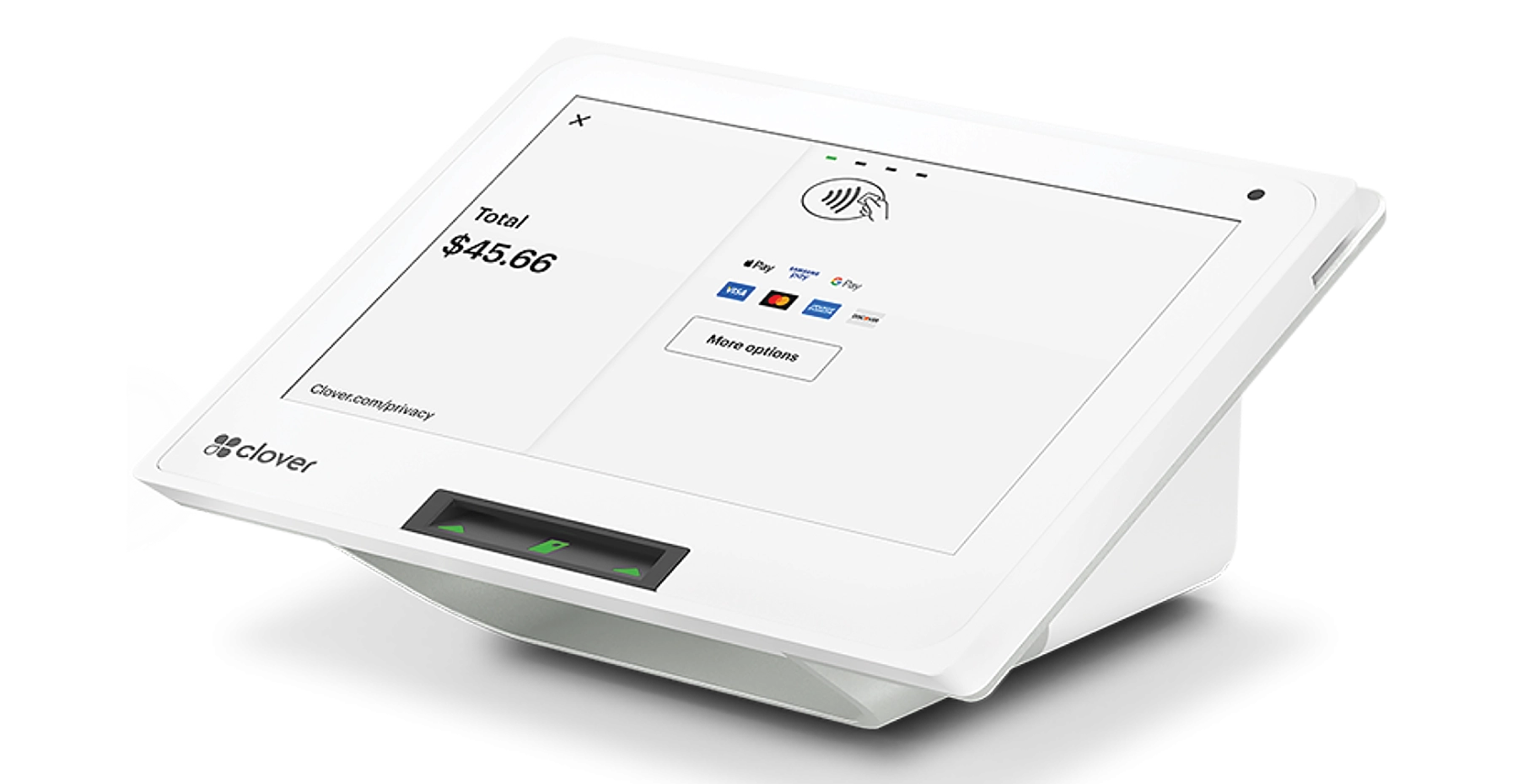
Countertop terminals are the classic credit card machine option: a compact device with a screen, keypad, chip reader, and sometimes a built-in printer. They’re dependable and ideal for quick, in-person sales at the register.
Modern countertop systems support EMV chips and tap-to-pay (NFC) transactions, which generate unique one-time codes for each purchase to prevent fraud. Swiping a chip card instead of inserting or tapping can trigger liability under EMV rules, so always use the chip or contactless option.
Best for: Retail counters, coffee shops, and quick-serve restaurants.
Drawbacks: Fixed placement. If you handle curbside or tableside orders, you’ll need a portable companion device.
2. Wireless Portable Terminals
Wireless card machines combine the power of countertop devices with full mobility. They connect via Wi-Fi or cellular networks so you can take payments at the table, the curb, or an outdoor event. Many models now feature offline mode so you can keep selling even if your connection drops, syncing transactions later.
Wireless terminals are one of the most versatile credit card machine options for restaurants, delivery operations, and mobile services. While the hardware costs slightly more, you gain speed, flexibility, and a smoother customer experience.
Best for: Full-service restaurants, pop-ups, and mobile professionals.
Drawbacks: You’ll need to manage battery life and charging docks, but the convenience outweighs the maintenance.
3. Virtual Terminals
A virtual terminal turns any computer or tablet into a secure payment hub—no physical hardware required. It’s perfect for businesses that take payments by phone or invoice. You log into a web dashboard, enter the customer’s card information, and process the payment in seconds.
Because these transactions are card-not-present, they come with higher risk. Protect yourself by enabling tokenization, address verification, and CVV checks.
Best for: Professional services, deposits, recurring billing, or remote teams.
Drawbacks: Typing card details manually is slower than a tap, and processing fees can be slightly higher.
4. Mobile POS and Tap-to-Pay Systems
Mobile point-of-sale (mPOS) readers and tap-to-pay technology are redefining how small businesses accept cards. You can pair a small reader with your phone or use Tap to Pay on iPhone or Android with no extra hardware.
These mobile credit card machine options are perfect for contractors, event vendors, and startups. Contactless payments are skyrocketing: U.S. digital wallet usage jumped from 19% in 2019 to 28% in 2024, and customers increasingly expect to tap instead of swipe.
Best for: Markets, home services, and mobile operations.
Drawbacks: You’ll rely on your phone’s battery and app connectivity, so plan for charging and test coverage before events.
What to Look for in 2026
Every small business should expect a few non-negotiables from their credit card machine options.
EMV and NFC Capability
Chip and tap support are essential for both speed and security. These payment types reduce fraud and make checkout faster, giving customers confidence in your business.
PCI Compliance
The Payment Card Industry Data Security Standard (PCI DSS) outlines strict requirements for businesses that store or process card data. Choose technology that encrypts transactions and limits how much sensitive information ever touches your systems. The less data you handle, the lower your risk.
Integration and Scalability
Your payment equipment should work seamlessly with your POS software, accounting tools, and inventory management. Avoid piecing together unrelated systems that require manual data entry. Scalable platforms let you add new devices or features without starting over.
Matching the Right Option to Your Business
Retail and Counter Service
Start with a countertop terminal for your main checkout lane and add a mobile reader for events or overflow traffic. This combo delivers reliability and flexibility.
(Internal link opportunity: link to “POS systems for retail.”)
Restaurants and Food Service
Pair a main POS station for order entry with wireless handhelds for tableside payment. It speeds up service, improves accuracy, and increases tips.
(Internal link opportunity: link to “restaurant POS options.”)
Contractors and Mobile Businesses
For on-the-go service providers, wireless or mobile tap-to-pay setups are ideal. You’ll collect payment immediately and cut down on billing delays.
(Internal link opportunity: link to “mobile payment tools for small business.”)
Office or Remote Billing
Virtual terminals allow teams to take secure phone orders or process recurring payments without hardware. Combine with recurring billing features for memberships or retainers.
(Internal link opportunity: link to “virtual terminal guide.”)
Omnichannel Sellers
Businesses that sell in-store and online should use one system that connects both worlds. Unified platforms ensure accurate reporting and reduce reconciliation errors.
(Internal link opportunity: link to “integrated payment solutions for small businesses.”)
Understanding Payment Costs
The type of credit card machine you use affects your total cost of acceptance, but how you run transactions matters most.
-
Interchange and assessments: Network-set fees that are non-negotiable.
-
Processor markup: The portion you can negotiate.
-
Transaction method: Card-present EMV and tap transactions cost less than keyed ones.
Train employees to insert or tap chip cards instead of swiping. It’s faster, safer, and helps avoid higher fees or liability for fraud.
Keeping Payments Secure
Security isn’t optional. PCI compliance is ongoing, not a one-time checkbox. The best credit card machine options handle encryption automatically and regularly update software to block new threats.
Educate your staff about secure card handling and the dangers of manually storing card data. Use tools that tokenize and encrypt every transaction so your systems never store raw card numbers.
Buying Smart: The 2026 Checklist
Before committing to any device or platform, review this quick list.
Must-haves:
-
EMV, NFC, and magstripe acceptance
-
PCI-compliant encryption and tokenization
-
Cloud-based reporting accessible from any device
Nice-to-haves:
-
Offline mode for unreliable internet
-
Customer profiles and loyalty integrations
-
Built-in invoicing and inventory tools
Future-proof features:
-
Tap to Pay on smartphones
-
Easy scaling to add or remove devices seasonally
(Internal link opportunity: link to “features of modern POS systems.”)
Common Mistakes to Avoid
A single countertop terminal may seem fine at first, but as your business grows, you’ll need more flexibility. Choose equipment that supports expansion without forcing a complete upgrade later.
Another mistake is ignoring customer expectations. Contactless payments are mainstream, and not supporting them can slow lines and frustrate buyers. Finally, never treat PCI compliance as “set it and forget it.” Stay current, retrain staff, and review your provider’s compliance updates regularly.
Still running an outdated register?
VMS sets up a modern Clover POS matched to how your business actually runs — installed, configured, and supported by a team that answers the phone.
Or call our team: 888-902-6227
The Bottom Line
Selecting the right credit card machine options is about more than hardware—it’s about building a payment experience that’s fast, secure, and ready for the future.
Most small businesses find success with a combination of one countertop terminal, one wireless or mobile device, and a virtual terminal for remote orders. This mix lets you serve customers anywhere while maintaining PCI compliance and controlling costs.
Have questions about POS systems?
Fill out the form below and a VMS payment specialist will contact you shortly.