

Walk through any farmers market, craft fair, or neighborhood shop this summer and you’ll spot it: a laminated QR code taped next to the register. Venmo for business has quietly become the default payment plan for thousands of small operations — and honestly, it’s easy to see why. Your customers already have the app, setup takes about ten minutes, and there’s no terminal to buy.
But here’s the part nobody puts on the laminated sign. The same simplicity that makes Venmo perfect for splitting a pizza can get expensive, slow, and occasionally hair-raising once real revenue starts flowing through it. Funds get held. Disputes land on your side of the table. And the moment a line forms at your counter, a phone-and-QR-code setup starts costing you sales you never see.
So let’s give Venmo a fair hearing. In this guide, we’ll break down what Venmo for business actually costs in 2026, where it legitimately shines, where it quietly bleeds margin, and how to know when your business has outgrown it — plus what graduating to real payment processing looks like when that day comes.
What Venmo for Business Actually Means
First, a quick definition, because there’s an important line here. “Venmo for business” doesn’t mean taking payments to your personal Venmo account. It means setting up a business profile — a separate identity attached to your personal account that’s built (and priced) for commerce.
Personal account vs. business profile
Venmo’s terms are clear: if you’re selling goods or services, those payments belong on a business profile. Route sales through your personal account and you’re violating the user agreement, which is exactly the kind of thing that gets accounts frozen during a risk review. Payments tagged as goods and services also carry purchase protection, which shields buyers — and puts the burden of proof on you, the seller.
A business profile gets you a searchable presence in the app, basic transaction records, and the ability to accept payments from any Venmo user. What it does not get you is a merchant account, a dedicated support rep, or most of the machinery real businesses eventually lean on.
What the fees look like in 2026
Here’s the current math, straight from Venmo’s own fee schedule:
- Standard business profile payments: 1.9% + $0.10 per transaction
- Tap to Pay (in-person card taps through the app): 2.9% + $0.09 per transaction
- Instant transfer to your bank: 1.75% of the amount (minimum $0.25, maximum $25)
- Monthly fee: none
On paper, 1.9% + $0.10 looks downright reasonable. And for a $40 sale here and there, it is. The trouble is that the sticker rate is rarely the rate you actually live with — more on that shortly.
If you do stay on Venmo, do it properly
A quick word of practical advice, because we’d rather see you safe than sorry. Use an actual business profile, not your personal account. Make sure customers tag payments as goods and services, even when it costs you the fee — untagged “friend” payments have zero protection and muddy your books. Connect a dedicated business bank account, not your personal checking. And export your transaction history monthly, while it’s still easy to match payments to sales. Ten minutes of hygiene now saves an ugly archaeology project at tax time.

Why So Many Small Businesses Start With Venmo
Let’s give credit where it’s due, because Venmo earned its spot on the counter.
It’s fast to start. No application, no underwriting, no hardware order. You can set up a business profile on a Tuesday morning and take your first payment before lunch.
Your customers already trust it. Venmo has tens of millions of active users. For a hair stylist, a tutor, a food stand, or a weekend market vendor, “just Venmo me” removes every ounce of friction from getting paid.
The social feed is free marketing. When a customer pays your business profile, that transaction can appear in their friends’ feeds. It’s a tiny billboard you didn’t pay for — and for local businesses, word of mouth is still the whole ballgame.
There’s no monthly commitment. Slow season? You pay nothing. That flexibility is genuinely valuable for seasonal and side-hustle businesses.
And your customers live on their phones. The Federal Reserve’s payments research has tracked mobile payments climbing year after year while cash keeps sliding — by 2024, Americans averaged eleven mobile payments a month, nearly triple what they made in 2018. Meeting customers inside an app they already open daily is not a gimmick; it’s where checkout has been heading for a decade.
For a business doing a handful of transactions a week, this is a perfectly rational setup. If that’s you, carry on with our blessing. Venmo fits beautifully for weekend market vendors, solo service pros who invoice a few clients, sports leagues and clubs collecting dues, and side hustles still deciding whether they’re businesses at all. The problems start when “a handful a week” becomes “a busy Saturday.”
The Hidden Costs of Running Your Business on Venmo
Here’s where the laminated QR code starts writing checks your margin has to cash.
The instant transfer tax
Venmo’s standard bank transfer takes one to three business days. If you need today’s sales to buy tomorrow’s inventory — and most small businesses do — you’ll pay 1.75% for an instant transfer, up to $25 a pop. Stack that on the 1.9% seller fee and your effective cost for same-day money is pushing 3.6% before you’ve bought a single coffee lid. Suddenly that “cheap” option costs more than most full-service processors, without any of the service.
Frozen funds, with no one to call
Ask around any vendor community and you’ll hear the horror story: a spike in sales triggers an automated risk review, and the account — with days of revenue in it — is locked while an algorithm thinks it over. There’s no account rep, no local office, no human who knows your business. For a payment platform built on a peer-to-peer chassis, you are one unusual weekend away from a cash flow emergency. We covered a close cousin of this problem in our piece on Zelle business account scams, and the lesson is the same: P2P rails were not designed to protect sellers.
Disputes tilt toward the buyer
When a customer files a purchase protection claim, Venmo investigates and decides. You’ll submit screenshots and hope. There’s no chargeback team fighting your corner, no representment process with real evidence rules, and no processor relationship where a human walks you through it. Professional payment processing comes with dispute infrastructure; a P2P app comes with a form.
Everything a POS does that a QR code can’t
Run your counter on Venmo and you’re also running without inventory tracking, employee logins and permissions, itemized receipts, tip management, loyalty tools, or reporting you can hand your accountant. Every one of those gaps becomes manual work — which is to say, your evenings.
Your checkout is part of your brand
One more cost that never shows up on a fee schedule: how paying you feels. A crisp itemized receipt, a tip prompt that doesn’t require anyone to do mental math out loud, a card tap that takes two seconds — these little moments tell customers they’re dealing with a real business. Asking a first-time customer to type your handle into their phone and spell out the payment amount is charming at a craft fair. At a busy counter, it reads as improvised — and improvised is not what you want associated with the place that’s holding their money.
And about taxes: under the One Big Beautiful Bill Act, the IRS confirmed the 1099-K reporting threshold reverted to $20,000 and 200 transactions, so smaller sellers may not receive the form. Your income is still fully taxable either way — and without real transaction reporting, reconstructing a year of sales from a scrolling app feed is nobody’s idea of a fun January.
Outgrowing Venmo at your counter?
VMS sets up transparent processing, real Clover hardware, and next-day funding — most businesses are live within days.
Or call our team: 888-902-6227
When Venmo Stops Being Enough

There’s no official graduation ceremony, but the signs are hard to miss:
A line is forming. One phone, one QR code, one transaction at a time. When three customers are waiting, you don’t have a payment method — you have a bottleneck.
You’ve hired someone. Handing an employee your personal phone with your Venmo logged in is a control nightmare. Real POS devices for small businesses give each employee their own login, permissions, and accountability.
The fee math flipped. Let’s run an honest month. Say you do $10,000 across 400 transactions. The seller fee alone is $230 (1.9% plus $0.10 a pop). Transfer that revenue out instantly across the month — because inventory won’t buy itself — and you’re handing over up to another $120 or so in transfer fees. Call it $350, or 3.5% of everything you earned, for a payment setup with no hardware, no support line, and no dispute defense. A transparent merchant account routinely beats that number — and with Zero Fee Processing, qualifying businesses can offset nearly all of their processing costs and keep the revenue they actually earned.
Cash flow needs certainty. Professional processing comes with predictable next-day funding, so deposits hit your account on a schedule you can build around — no 1.75% toll for the privilege.
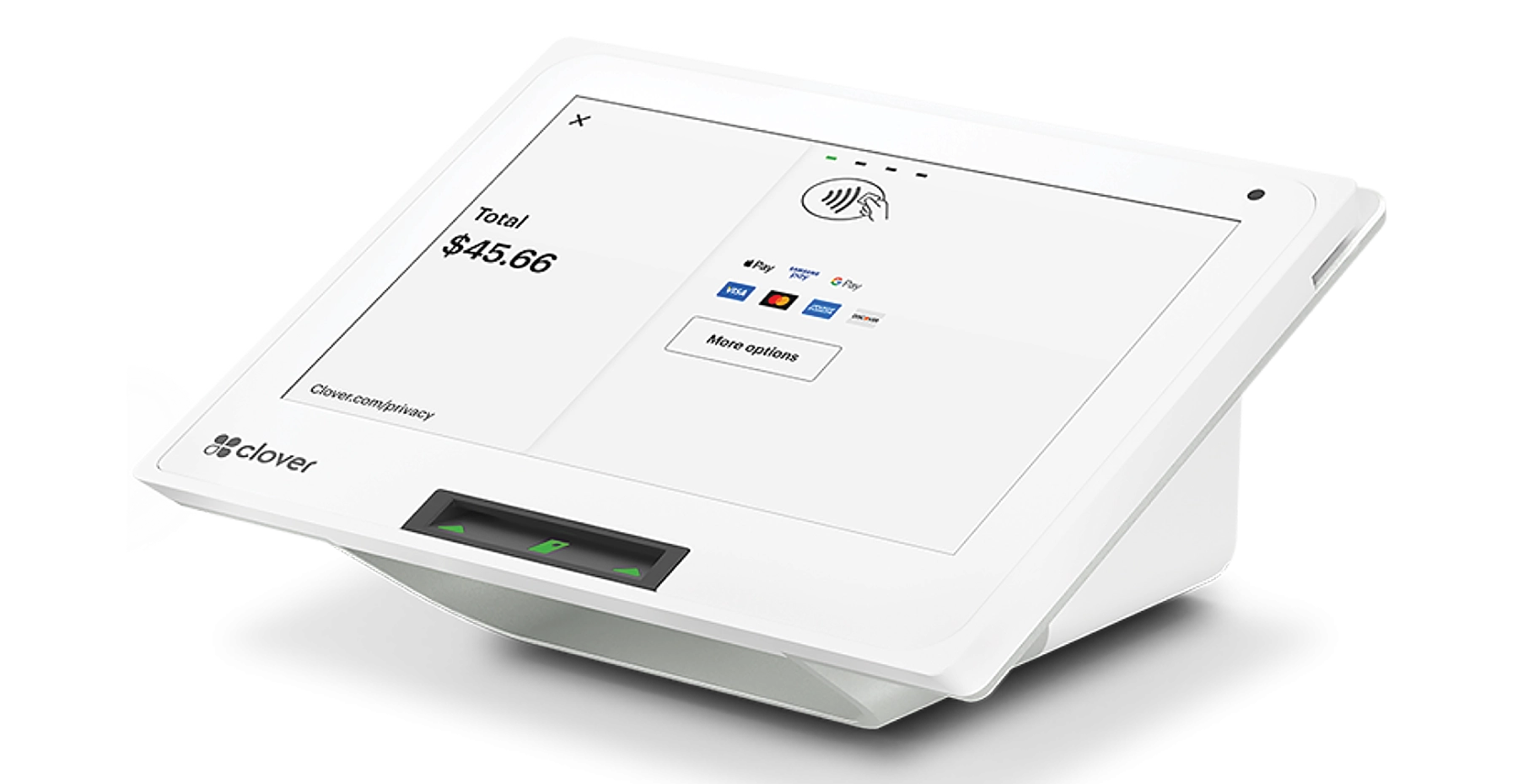
You want the counter to work harder. Modern terminals are small businesses’ quiet workhorses. A handheld Clover Flex takes taps, chips, and swipes anywhere in the shop, prints receipts, and tracks inventory in the background. A pocket-sized Clover Go pairs with your phone and costs less than a decent espresso machine. Both fund next-day and both come with humans who answer the phone.
If two or more of those sound familiar, you’re not being disloyal to the app — you’ve simply outgrown it. That’s a good problem. It means the thing you built found its customers, and now it deserves infrastructure that grows with it instead of infrastructure it has to grow around.
A Smarter Setup That Keeps the Easy Part
Here’s the piece most “ditch Venmo” articles miss: this doesn’t have to be an either-or. Plenty of VMS merchants keep a Venmo business profile for the odd invoice or market-stall weekend, while the counter — where the real volume lives — runs on professional rails.
What does graduating actually look like? With VMS, it’s less dramatic than you’d think. You talk to a real person (we’ve been doing this since 1998 from Downers Grove, Illinois), pick the right-sized hardware, and most businesses are taking payments within days. You get transparent statements instead of mystery math, mobile payment processing that meets customers wherever they’re standing, and if a growth push needs fuel, working capital tied to your actual sales — no bank song-and-dance.
And if you’re the research-everything type (respect), our merchant services FAQs answer the questions owners actually ask, in plain English.
The point isn’t that Venmo for business is bad. It’s that it’s a starter tool — brilliant at mile one, wobbly at mile ten. The businesses that thrive treat payments like the revenue engine it is, not an app they borrowed from their group chat.
The Bottom Line
Venmo for business is a legitimate way to get paid on day one: free to start, familiar to customers, and priced fairly for tiny volume. But between the instant-transfer toll, seller-unfriendly disputes, freeze-happy risk reviews, and everything a QR code can’t do — inventory, employees, tips, reporting, EBT — it was never built to be the permanent engine of a growing business.
If your counter is getting busier, that’s your cue. Since 1998, Velocity Merchant Services has helped small businesses graduate from “good enough” to genuinely great payment setups — with transparent pricing, Zero Fee Processing options, next-day funding, and Clover hardware that pulls its weight. Call 888-902-6227 or drop your info below, and a VMS payment specialist will show you exactly what your current setup costs you — and how quickly the right one pays for itself.
Have questions about accepting payments beyond Venmo?
Fill out the form below and a VMS payment specialist will contact you shortly.