

by Jackie Navarrete
If you’re running a clothing store in 2026, there’s one thing that will keep your racks stocked, your customers happy, and your cash flow healthy—and it’s not a new trend forecast. It’s your POS system. So every clothing store needs a POS?
Long gone are the days of clunky cash registers and handwritten inventory logs. Today’s retailers are expected to operate with digital precision. That means tracking sales in real time, managing dozens (or hundreds) of SKUs with ease, offering multiple payment options, and keeping customers coming back with loyalty perks and seamless returns. To do all of this and keep your sanity? You need the best POS for clothing store operations.
As customers increasingly shop across physical and digital platforms, your ability to provide a unified shopping experience can make or break your business. A modern POS allows you to offer in-store pickup for online orders, create seamless return policies, and generate data-backed insights on customer behavior—something that’s impossible to do manually.

What is a POS System and Why It Matters in Retail Fashion
Let’s start with the basics: POS stands for “Point of Sale.” It’s the system used to complete a retail transaction. When a customer makes a purchase, your POS records the sale, processes the payment, updates your inventory, and stores the data for reporting.
Think of it as your store’s mission control. But today’s POS systems go way beyond just handling payments. They can manage your product catalog, track customer behavior, handle employee permissions, offer digital receipts, and integrate with your e-commerce platform. It’s not just a tool—it’s a full operational solution that supports every aspect of your retail business.
POS systems also centralize your entire operation. Whether you’re selling on Instagram, in a physical boutique, or through a weekend pop-up, all your sales data, inventory levels, and customer profiles are housed in one place. That kind of control is essential for clothing store owners juggling multiple selling points.
If you’re running a clothing store, the need for a good POS system is even greater. Apparel retail involves a lot of moving parts—different sizes, colors, styles, and seasonal shifts. Trying to manage that with spreadsheets or handwritten notes is a recipe for chaos and missed sales opportunities.
Challenges Clothing Stores Face Without a POS System
Imagine a customer walks in looking for a specific pair of jeans in a medium, light-wash. Without a POS system that tracks real-time inventory, your team has to hunt through the back or call other store locations. If you can’t deliver the right product quickly, the customer walks—and possibly never returns.
One of the biggest struggles for fashion retailers is inventory management. You might have hundreds of products in different variants, and keeping track manually is exhausting. Mistakes lead to overstocking, understocking, and even double-selling items that are no longer available.
Without accurate inventory tracking, you also lose valuable time. Employees spend hours manually checking racks, reconciling stock, or searching for missing SKUs. That’s time that could be spent helping customers or analyzing sales trends.
Another major pain point is reporting. Without accurate data, you can’t see which items are performing well and which are sitting unsold. You can’t evaluate employee performance or optimize your store layout. You’re essentially running blind.
And let’s not forget the checkout process. If it’s slow or clunky, customers get frustrated. In a world where people are used to lightning-fast mobile payments and personalized service, having a slow, outdated system puts you at a serious disadvantage.
Key Features That Make a POS Ideal for Clothing Stores
Not every POS system is built for apparel businesses. The best POS for clothing store needs will have specific features that simplify the complexity of running a fashion retail operation.
First, inventory matrix capabilities. Clothing retailers deal with a high number of product variants. You need a POS that lets you track every size, color, and style combination of an item without entering each one manually. A good POS should allow you to build product grids so you can see, for example, how many small red t-shirts you have left compared to large blue ones.
This is especially important when you’re running seasonal promotions or transitioning between collections. The ability to instantly analyze which variants are selling ensures you stock what your customers actually want and avoid tying up cash in slow-moving inventory.
Next, consider how returns and exchanges are handled. In clothing retail, they’re inevitable. Your POS should make these transactions easy for staff and seamless for customers. It should automatically update inventory, process refunds or store credits, and log customer history for future reference.
Without this, you risk not only frustrating your shoppers but also throwing off your inventory numbers—which leads to inaccurate reporting and ordering decisions.
Integration with your e-commerce platform is another must-have. Many clothing store owners are selling both in-person and online. If your systems don’t talk to each other, you risk overselling or confusing your customers. A unified POS keeps your inventory synchronized across all channels.
For example, if you sell the last size 8 dress online, your POS should instantly reflect that in-store so you don’t sell something you don’t actually have. This reduces customer service issues and keeps your brand looking professional.
Customer relationship management (CRM) features are also critical. A powerful POS will store data about your customers—what they bought, when they bought it, and even what promotions worked on them. This lets you create targeted marketing campaigns, loyalty programs, and a personalized shopping experience.
With this kind of insight, you can automatically send reminders when it’s time for a seasonal wardrobe refresh, or offer VIP discounts to your most loyal shoppers.
And don’t overlook employee management. You want to control access levels, track shifts, calculate commissions, and monitor individual performance. A POS system should give you that visibility without extra software.
How the Best POS for Clothing Store Growth Pays for Itself
Yes, a POS system is an investment. But it’s one that quickly returns value. For starters, it saves time. Automated processes for inventory, reporting, and customer management mean fewer hours spent on admin and more time focusing on growth.
It also reduces costly errors. Fewer mistakes with stock, pricing, and refunds means better margins and fewer customer complaints.
You’ll also make better decisions. A smart POS provides detailed analytics so you can identify trends, stock your bestsellers, and avoid dead weight inventory. You can spot your top employees and reward them accordingly.
With real-time data at your fingertips, you can stop guessing and start planning. Know exactly when to run markdowns, reorder products, or shift your merchandising strategy based on performance.
And perhaps most importantly, it helps you scale. Whether you want to open a second location or expand into online sales, a POS system grows with you. It supports multiple registers, stores, and users. You’re no longer limited by the tools you use.
Why Modern Retail Demands a Smarter Checkout System
Customers today expect more. They want speed, flexibility, and convenience. They want to tap to pay, use digital wallets, get emailed receipts, and earn loyalty points. A POS system delivers all of that.
It’s not just about meeting expectations—it’s about exceeding them. When your checkout process is smooth and your staff has tools to provide personalized service, you create memorable experiences. That’s what builds loyal customers and drives referrals.
A modern POS can also help you manage wait times, offer contactless options, and process split payments—features that are especially useful during high-traffic seasons or promotional events.
Your competition is already using these tools. To stay relevant and competitive, your clothing store needs to keep up. The best POS for clothing store owners isn’t just a tool—it’s your ticket to running a modern, data-driven business.
Why We Recommend Clover POS for Clothing Stores
At Velocity Merchant Services, we work with small businesses every day, and we’ve seen firsthand how the right POS system can transform a retail operation. That’s why we often recommend Clover.
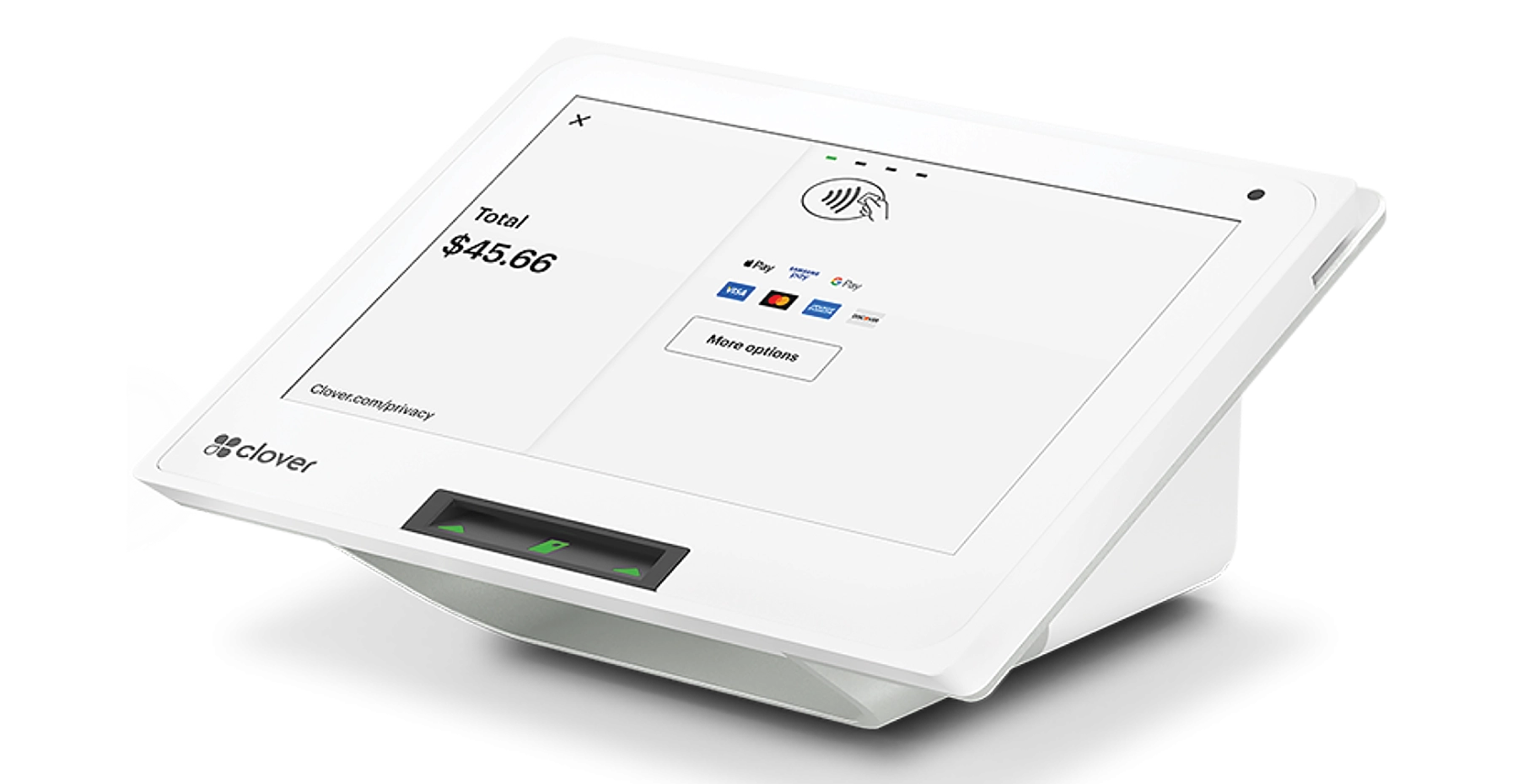
Clover is an all-in-one solution that’s sleek, user-friendly, and designed to grow with your business. Its hardware options like the Clover Mini, Flex, and Duo suit any retail environment—whether you’re a boutique with one register or a growing chain with multiple checkout stations.
The software is where Clover really shines. You can manage inventory down to the variant, offer custom promotions, run detailed sales reports, and connect to hundreds of apps for marketing, accounting, and e-commerce.
Clover also supports the Cash Discount Program, which helps business owners eliminate processing fees by offering a small discount for cash payments. That means more profit stays in your pocket—a huge win for any retailer.
Plus, our team at VMS makes sure your Clover POS is fully set up and ready to use the moment it arrives. We train your staff, help you customize your system, and provide ongoing support whenever you need it.
With Clover, you’re not just getting a tool—you’re getting a partner in your retail success.
Invest in the Best POS for Clothing Store Success
The future of retail is fast, digital, and customer-focused. To compete in 2025 and beyond, clothing store owners need more than racks of great products—they need a system that ties it all together.
The best POS for clothing store success is the one that simplifies your operations, delights your customers, and helps you grow. Clover delivers on all fronts.
If you’re ready to ditch the spreadsheets and streamline your fashion business with a POS system that actually works for you, get in touch with us at Velocity Merchant Services. We’ll help you find the perfect setup for your store and walk with you every step of the way.
Because we believe in small business. And we believe you deserve a POS system that works as hard as you do.
For more insights like this, keep up with the VMS blog—where small business meets big tech without the fluff.