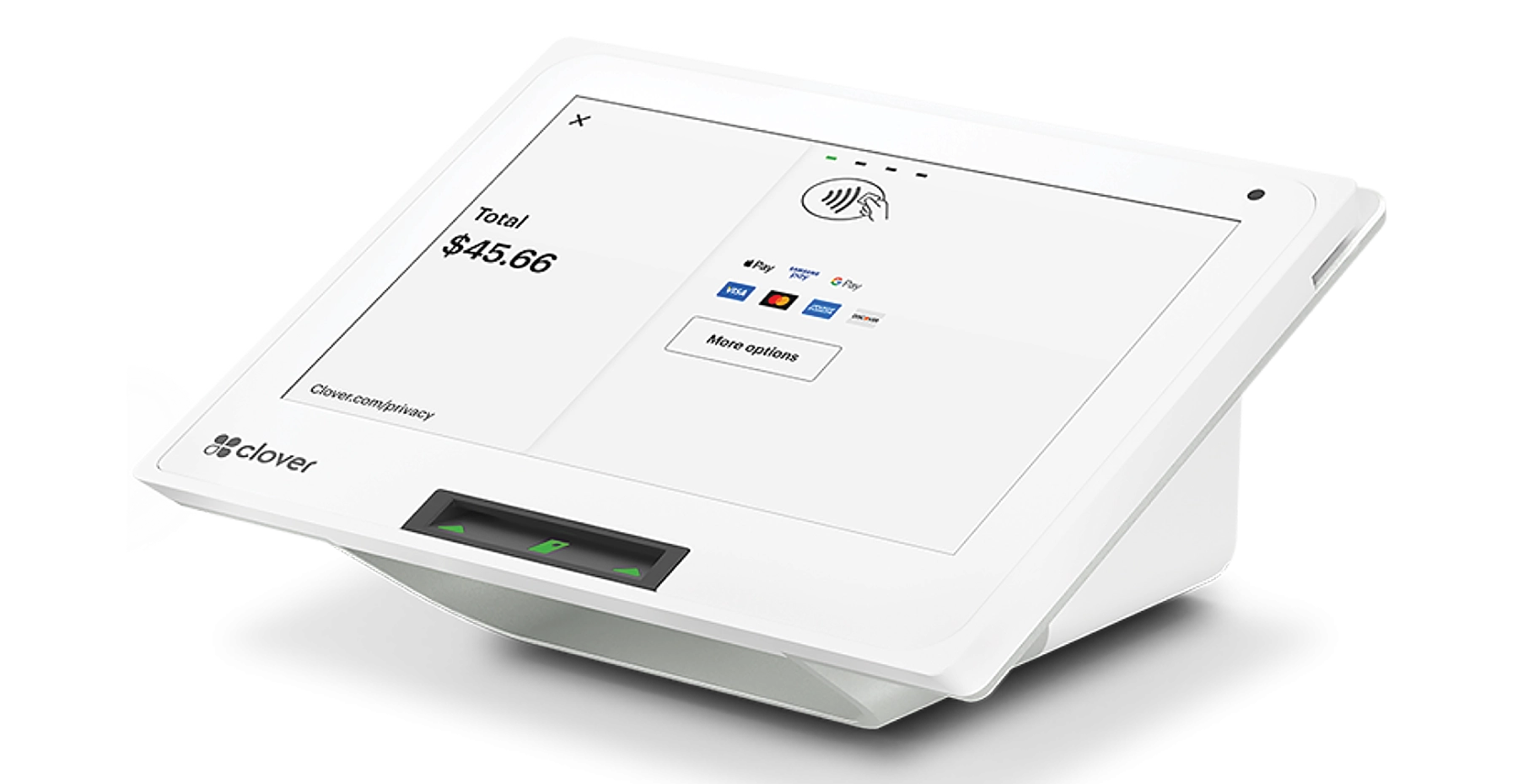

Running a restaurant in 2026 means accepting credit cards, debit cards, and mobile wallets like Apple Pay and Google Pay on nearly every transaction. Yet most restaurant owners have only a vague understanding of the fees they pay and whether they’re getting a fair deal. This guide breaks down exactly how restaurant credit card processing works, what you should expect to pay, and how to choose a payment processor that fits your concept.
Key Takeaways
-
Card processing fees typically run between 2.2% and 4% of card sales for most U.S. restaurants as of 2026, with your effective rate depending heavily on card mix and pricing model.
-
The pricing model you choose—flat rate, interchange plus, or tiered—often matters more than the brand name on your terminal when it comes to total costs.
-
Integration with your restaurant POS for tableside payments, online ordering, delivery, and kiosks can save 10-20 hours of labor weekly.
-
Negotiating terms like month-to-month contracts, clear fee schedules, and fast funding can cut thousands of dollars per year in processing costs.
-
Swipe fees for credit card transactions have increased by 50% since the pandemic, totaling $224 billion in 2023 according to the Merchant Payments Coalition.
What Is Restaurant Credit Card Processing?
Restaurant credit card processing is the specialized service that enables your business to accept payments via credit cards, debit cards, and digital wallets. In 2026, this includes EMV chip insertion, contactless NFC taps, magnetic stripe swipes, QR code scans for online checkouts, and keyed-in details for phone or catering orders.
Restaurant payment processors differ from generic retail processors in critical ways. They’re designed to handle unique needs such as tipping, splitting checks, scheduled orders, and online ordering—all essential for enhancing customer experience. Unlike simple one-and-done retail transactions, restaurant payment processing requires adjustable tip prompts after authorization, split bill functionality for group dining, and open-ended bar tab authorizations.
The distinction between card present and card not present transactions matters significantly. Card-present payments happen when the guest is physically at your table, counter, or kiosk—these carry lower fraud risk due to chip verification or tokenization. Card-not-present payments include online ordering, delivery apps, and emailed catering invoices, which typically cost 0.5% to 1.5% more due to elevated fraud exposure.
Ensuring PCI compliance is vital for protecting customer data and preventing fraud in credit card transactions. Core security requirements include EMV chip transactions, PCI DSS certification, point-to-point encryption, and tokenization as standard expectations for any payment processing solution.
Who Is Involved in a Restaurant Card Transaction?
Every credit card transaction in your restaurant involves at least five parties working invisibly behind that simple tap or swipe. Understanding these players helps you grasp where your fees actually go.
Cardholder: The guest paying via chip, tap, or digital wallet. Their tokenized credentials from their issuing bank are captured instantaneously, initiating the payment chain.
Merchant (Restaurant): You run the point of sale system, batch transactions daily, manage refunds, handle tip adjustments, and defend against chargebacks with digital receipts or signed slips.
Payment Processor: The credit card processor provides your merchant account or payment facilitation service and moves transaction data securely between all parties. This merchant services provider supplies gateway software, risk underwriting, and secure data transport.
Card Networks: Visa (52% U.S. market share), Mastercard (26%), American Express (15%), and Discover (7%) dictate interchange rates, enforce security rules, and mediate disputes through standardized chargeback frameworks.
Issuing Bank: The customer’s bank that performs real-time checks on available credit, applies rewards multipliers, and ultimately bills the cardholder’s account—declining 2-5% of authorization requests for velocity or fraud patterns.
Acquiring Bank: Your merchant account provider deposits net funds into your business account minus interchange, processor markup, and network assessments, typically on T+1 or T+2 schedules.
How Restaurant Credit Card Processing Works Step by Step
Here’s what happens from tap to deposit during a typical Friday dinner transaction at a U.S. full-service restaurant, mirroring the broader flow of how credit card processing works across most card-present environments.
Authorization: Guest taps their card or mobile wallet on your tableside terminal. The terminal encrypts the card data via point-to-point encryption and relays it through your processor to the card network, which queries the issuing bank for funds and fraud checks. Approval comes back in 1-3 seconds—95% of payments process in under 2 seconds.
Tip Adjustment: Unlike retail, restaurants often change the final amount after the guest adds a tip. The initial authorization holds the base check amount, then the server adds the tip post-departure. Restaurant credit card processors handle this offline increment (typically up to 20-30% above the original) without re-presenting the card.
Batching and Clearing: The batching of transactions typically occurs at the end of the day—say 1:00 a.m.—consolidating sales for processing and fund transfer. Your POS auto-submits hundreds of transactions as a file to your processor. Restaurant credit card processing involves a secure flow where a POS system transmits card data, leading to a batch settlement for funds deposit.
Settlement and Deposit: Funds minus fees land in your bank within 1-2 business days. Some providers now offer same-day or instant deposit for an additional 1-1.5% fee via RTP networks.
Chargebacks and Disputes: When a guest disputes a charge, your processor fronts provisional credit while networks adjudicate via evidence portals. Restaurants win 60-70% of disputes with proper documentation like photo receipts or GPS-tracked deliveries, but lose $25-100 per incident in fees.
Restaurant Credit Card Pricing Models and Fees
Understanding pricing models is the fastest way to lower credit card processing fees without changing providers, especially when you grasp credit card processing pricing beyond the restaurant context. There are three primary types of restaurant payment processing pricing structures: Flat Rate, Interchange Plus, and Tiered Rate, each with its own advantages and disadvantages.
Flat-Rate Pricing
Flat rate pricing is popular due to its clarity and simplicity, allowing restaurants to know exactly what rate they will pay for card processing fees, but understanding interchange plus vs flat rate is crucial before locking in a plan. Typical rates run around 2.6% + $0.10-$0.15 for card-present transactions and 2.9% + $0.30 for online orders. This model works best for new or low-volume restaurants where administrative simplicity trumps optimization.
Interchange-Plus Pricing
Interchange Plus pricing is recommended for its transparency, as it separates the payment processing provider’s fees from the underlying debit and credit card fees. Structure looks like raw interchange (averaging 1.95% + $0.10 for restaurants) plus a fixed markup (0.18-0.30% + $0.07-$0.15). This often benefits restaurants processing above $500,000 annually.
Tiered Pricing
Tiered pricing structures bundle interchange rates into different tiers—qualified, mid qualified, and non-qualified—which can lead to confusion and potentially higher costs for restaurants if they do not meet the criteria for the lowest rates. Many transactions fall into higher-cost tiers due to tips or partial authorizations.
Fee Categories
Credit card processing fees can be categorized into three main types: transactional fees, flat fees, and incidental fees, which together comprise the total cost of a merchant account.
|
Fee Type |
Examples |
Typical Range |
|---|---|---|
|
Transactional |
Percentage + per-item |
1.5-3.5% + $0.10-$0.30 |
|
Monthly/Flat |
Statement, PCI, gateway |
$10-$50/month |
|
Incidental |
Chargeback, retrieval, early termination |
$15-$500+ per incident |
|
Hidden fees in credit card processing can significantly inflate overall costs, often including charges for services that don’t provide clear benefits, such as statement fees or PCI compliance penalties. Rates for restaurant credit card processing typically range from $0 to $150+ monthly, with per-transaction fees varying from flat rates of 2.4% to 2.9%. |
|
|
Example calculation: A $50 dinner with 20% tip on interchange-plus pricing: 1.95% + $0.10 interchange + 0.20% + $0.10 markup = approximately $1.45 total (2.4% effective). The same transaction on flat rate at 2.6% + $0.15 = $1.71 (2.9% effective).
Restaurant-Specific Features and Hardware to Look For
The right payment solution connects seamlessly to your operations, whether you run quick-service, full-service, food trucks, or ghost kitchens. Restaurant POS systems must incorporate features like tipping, table management, and menu management, distinct from retail needs, while still handling the fundamentals of credit card processing for merchants such as authorization flows, fee structures, and security.
Tableside Payment: Using handheld terminals for tableside payments enhances security and speeds up the payment process. Devices like Clover Flex reduce walkouts by 50% and speed up table turns by 15%, keeping cards in guest view per PCI best practices.
Tip Flows: Support for tip suggestions (15/18/20% or custom), pooled versus individual tips, service charges, and automatic gratuity for large parties. Tips should export accurately to payroll via API integrations.
Split Checks and Bar Tabs: Splitting by item or amount, authorizing bar tabs securely with pre-auth amounts for high-volume bars—these features are critical for beverage businesses.
Online Ordering and Delivery: Integration with web ordering, QR-code menus, and major delivery partners provides unified reporting for both on-premise and off-premise sales. Many modern restaurant payment processors offer features such as mobile and contactless payments capabilities, offline mode for processing during internet outages, and 24/7 customer support.
Kiosks and Self-Service: Counter-service or fast casual operations using kiosks handle 200+ orders per hour, reducing lines by 40% while the customer pays directly.
Hardware Durability: Restaurant-grade equipment with spill-resistant terminals, kitchen-rated printers, and Gorilla Glass touchscreens withstands heat, grease, and heavy daily use.
Connectivity: Wi-Fi, Ethernet, and cellular backup options plus offline mode storing 1,000+ authorizations ensure service continues during internet outages—critical since 15% of restaurants face daily connectivity disruptions.
How Much Are Restaurants Really Paying in Card Fees in 2026?
U.S. restaurants pay an effective 2.2-4% of card volume in 2026, with rates varying significantly depending on concept and pricing model, largely driven by underlying swipe fees set by the card networks. Credit card processing for restaurants in 2026 relies on service models that cater to diverse restaurant needs and transaction volumes.
Average Ticket Size Impact: Cafes with many small tickets often see effective rates around 3.2% on $15 averages due to high fixed-fee drag, while fine dining with $120 averages typically pays 2.4% effective.
Card Mix: Premium rewards credit cards carry higher interchange than basic debit cards. Debit accounts for roughly 30% of volume at 1.2% effective, while rewards credit (50% of volume) runs 2.7% effective. Corporate cards push even higher at 3.1%.
Service Model: Fast-casual operations with rapid counter turnover average 2.5% effective (high debit, low tips), while full-service restaurants with tabs and multiple courses run 2.9% effective.
Fraud and Chargeback Exposure: Online-heavy restaurants (delivery, catering prepayments) may see chargeback rates of 1.5% versus 0.8% for dine-in, requiring additional risk controls.
Calculating Your Effective Rate: Divide total payment processing fees paid monthly by total card sales. Target benchmarks: QSR under 2.5%, full-service 2.5-3.2%.
How to Choose the Best Restaurant Credit Card Processor for Your Concept
Top restaurant credit card processors include specialized and versatile POS systems with varied fee structures. The “best” processor depends on your restaurant’s size, service style, and growth plans rather than a one-size-fits-all brand, so it helps to walk through key questions to choose a credit card processor before you sign a long-term deal.
Align with Service Model: When choosing a credit card processor for your restaurant, consider how well the processor supports your service model and point of sale needs. Food trucks prioritize portable cellular terminals with instant funding. Multi-location fine dining needs interchange-plus pricing with QuickBooks sync. High-volume bars favor processors with robust tab pre-authorization. Ghost kitchens require API connections to delivery platforms.
Integration with POS and Back Office: Integrating payment processing with point-of-sale systems allows for seamless transaction processing, order management, and reporting. Integrated POS systems should enable seamless connectivity to payment processors to reduce manual errors. Look for real-time sync with menu items, inventory, employee timekeeping, and accounting platforms.
Contract Terms: Look for month-to-month agreements where possible and apply the same rigor you would when shopping for merchant services in general. Carefully review early termination fees and equipment leases when longer terms are required—long term contracts can lock you into unfavorable rates.
Funding Speed: Compare standard 1-2 business day deposits with same-day and instant funding options. Most processors charge an additional 1-2% for instant deposits via Visa Direct.
Support Quality: Prioritize 24/7 restaurant-experienced support, especially for late-night operations. Selecting the right restaurant payment processor requires careful consideration of factors such as transaction speed, customer support availability, and the ability to handle both card-present and card-not-present transactions.
Scalability: Growing groups should consider multi-location management, centralized reporting, and volume-based discounts that kick in past certain annual thresholds.
Security and Compliance: Ensure PCI support, EMV compliance, and built-in fraud tools like AVS for online orders and 3D Secure where applicable.
Optimizing and Negotiating Your Restaurant’s Processing Costs
Most established restaurants can reduce effective fees by 20-40% without sacrificing uptime or guest experience. A well-integrated POS and payment processing system can help restaurants eliminate the back and forth between vendors, reduce costs, and streamline payment processing across various sales channels like curbside pick-up and delivery.
Audit Current Statements: Learn to read your monthly statement by identifying interchange on Line 1, processor markup on Line 2, and miscellaneous additional fees throughout. Hidden costs often lurk in vague line items.
Benchmark Rates: Compare your effective rate against industry norms for similar restaurant types and volumes before negotiating.
Negotiate Markup and Fees: Most processors will negotiate their markup, monthly fees, and payment gateway fees. Interchange rates set by card brands are largely fixed.
Consider Surcharge or Cash-Discount Programs: In the 27 states where compliant surcharging is allowed (capped at 4%), restaurants can recover 2-3% of processing costs. However, this risks 5-10% customer backlash, so you should weigh whether to pass processing fees to customers or absorb them as part of your pricing strategy.
Reduce Keyed and Card-Not-Present Transactions: Use secure payment links or QR ordering via a virtual terminal to lower risk and transaction fees compared to manually keyed entries at 3.5%+.
Monitor Chargebacks: Build internal procedures for receipts, signed slips, and digital order records. Proper documentation increases your win rate to 75%, saving $50+ per incident.
Re-Evaluate Annually: Review processing costs at least once per year or when sales volume changes significantly—rates fall roughly 0.1% yearly with competition.
Restaurant Deposit Timing and Cash Flow Management
Deposit timing is critical for paying suppliers, payroll, and rent when 60% of restaurants run less than 30-day payroll cycles. Restaurants should look for processors that offer transparent and competitive fees, fast settlement, and seamless integration with their POS systems to enhance customer experience and operational efficiency.
Standard Settlement Timelines: Batches closed before midnight local time typically fund by the next business day (T+1). Some merchant services providers use T+2 schedules.
Weekend and Holiday Deposits: Friday and Saturday batches often land Monday. Some providers now support weekend or holiday deposits for additional fees.
Instant and Same-Day Funding: Instant deposit options work via RTP networks, delivering funds in under 30 minutes for 1-1.5% of the deposit amount. This makes financial sense for high-volume days exceeding $50,000.
Reconciliation and Reporting: Match POS sales against processor portal data and bank CSV exports daily, flagging 1-2% variances from tips, discounts, or refunds.
Catering and Large Events: For prepayments, authorize 50% upfront and settle post-event. These appear as card-not-present in your processing reports.
FAQs
Can a new restaurant get approved for credit card processing with limited credit history?
Most processors can underwrite brand-new restaurants by reviewing personal credit (650+ FICO typically required), projected sales volume ($5K/month minimum), and business documentation including EIN, bank account, and lease or incorporation documents. Higher-risk concepts like late-night bars or hookah lounges may face stricter underwriting or rolling reserves of 5-10%, but 90% of applicants receive approval with proper documentation.
Is it cheaper for restaurants to accept debit cards than credit cards?
Regulated debit cards in the U.S. carry significantly lower interchange—around 0.5% + $0.21 under the Durbin Amendment cap—compared to 2-3% for rewards credit cards. However, many flat-rate processors blend both card types into a single price, eliminating the savings. Restaurants on interchange-plus pricing benefit more directly from low-cost debit transactions, especially small businesses with quick-service or café models seeing large debit usage.
Do I need a separate payment gateway for online ordering and catering payments?
A payment gateway handles the secure transmission of card data for card-not-present transactions. Some restaurant-focused platforms bundle gateway functionality directly into their POS software or online ordering system at no additional cost. Using a single processor for in-person and online orders simplifies reporting and reconciliation, though some restaurants maintain a dedicated gateway for specialized catering workflows requiring different payment options.
How can restaurants handle tips with contactless payments and mobile wallets?
Modern terminals, QR-code menus, and online ordering flows present tip options after the guest taps or scans, similar to traditional receipt-based tipping. Restaurants should configure suggested tip percentages appropriate to their concept and local expectations (commonly 18-22% in major markets). Ensure tips export accurately to payroll via built-in tools or API integrations with payroll providers.
What happens to my payment processing if the internet goes down during service?
Many restaurant-grade processors offer offline mode that securely stores transactions locally and submits them once connectivity is restored. This typically covers 500-2,000 transactions within a 48-hour window, risk-capped at $500 per transaction. Confirm offline capabilities with your processor in advance and consider cellular backup or failover options—particularly critical for peak hours when a minimum amount of downtime costs significant revenue.