

Artificial intelligence is reshaping how small businesses operate—impacting customer experience, staffing, and efficiency. Artificial intelligence (AI), as an advanced technology, has emerged as a transformative force for small businesses, making advanced capabilities more accessible. AI is democratizing access to advanced capabilities that were previously only available to larger organizations, helping to level the playing field and enhance competitiveness.
“Listen and understand, it can’t be bargained with. It can’t be reasoned with. It doesn’t feel pity, or remorse, or fear. And it absolutely will not stop, ever, until you’re dead.” This is a line from the movie The Terminator. I feel like when people think of artificial intelligence they’re imagining blood thirsty robots terrorizing humans. The concept of robots is pretty terrifying in my opinion, but movies like Ex-Machina, I Robot, 2001: A Space Oddity really give artificial intelligence (A.I.) a bad rep. We’re in the year 2023. The make believe concept of A.I. is not so make believe anymore. The phenomenon of ChatGPT has put the idea of A.I. at the front of everyone’s mind. The number of small businesses using AI has significantly increased, indicating a trend towards democratized AI adoption.
Artificial Intelligence Today
A common fear that people have is that certain jobs will become automated, causing many people to be out of work. The reality of the situation is that there are certain jobs that will soon be passed off to the robots. But the whole motive behind technology is to assist humans, not to replace them. Ray Kurzweil, Google’s Director of Engineering, has been making claims that we are nearing singularity. This is when A.I. becomes smarter than humans. According to movies, this is usually the part where a robot overlord comes on screen and starts taking over the world. Kurzweil says that humanity should not fear this, we should embrace it. We should realize that these advancements are to our advantage.
Small businesses can adopt AI to improve efficiency, streamline operations, and stay competitive in their markets. Implementing AI can help business owners save time and achieve increased efficiency by automating repetitive tasks and supporting better decision-making. However, small businesses often face resource constraints, such as limited finances, technical expertise, and concerns about data privacy, which can make it challenging to implement AI solutions. Many small businesses still cite cost and insufficient understanding of AI’s benefits as significant barriers to AI adoption.
So what does this mean for people and especially small businesses? Is the average joe going to soon find himself out of a job and are our favorite mom and pop shops nearing the end? I’m here to tell you no. ChatGPT has quickly proven to be an excellent tool for many businesses. After researching this topic and using ChatGPT myself, I’ve gathered different ways that this technology can help your small business.
What is ChatGPT?
Before I tell you all the ways ChatGPT can help your small business, I should probably tell you what it is. ChatGPT is a natural language processing tool. This A.I. lets you have human-like conversations with a chatbot. But it can do much more than just have a conversation with you. ChatGPT can answer questions, assist with tasks like composing emails, code and even essays. As an automation tool, ChatGPT can help small businesses handle routine tasks such as customer support, invoicing, and data entry, easing the burden on staff and freeing up time for more strategic work.
Cloud computing has made AI tools like ChatGPT more accessible and affordable for small businesses, allowing them to streamline operations and boost productivity without heavy investments in infrastructure. These advancements are leveling the playing field against larger corporations, giving small businesses the opportunity to compete more effectively.
Many people have already implemented this technology. In just 5 days after it’s launch, ChatGPT had 1 million users. To put that into perspective, it took Twitter 2 years to get to 1 million users. ChatGPT is now classified as the fastest growing app of all time. To use it, all you need to do is go to chat.openai.com and create an account. If you’d like to learn more about how to use ChatGPT here’s a great blog all about it.
How You Can Use ChatGPT at Your Business
ChatGPT is incredibly easy to use. This is great because you don’t need to be a tech wiz to be able to leverage this technology to your businesses advantage. Here are the top 5 ways you can use ChatGPT in your business.
There are many ways AI can impact small businesses, such as streamlining everyday tasks, saving time, and enabling smarter decision-making. AI is opening doors for small businesses by automating tedious day-to-day tasks, allowing owners to focus on growth, especially when they adopt AI tools designed for small business productivity. Additionally, AI can help businesses identify and eliminate pain points and inefficiencies that drain resources.
1. Customer Service
Since ChatGPT uses text to analyze inputs and provide personalized responses, it is ideal for helping businesses react to frequently asked questions from clients or point them in the direction of helpful information. You can integrate this technology with a broad range of applications including chatbots, SMS, and email, among many others. AI-powered virtual assistants can further automate customer service by handling FAQs, scheduling appointments, and assisting with sales inquiries, providing immediate value and improving response times.
This can make your customer service more accurate and efficient. Instead of customers and your employees spending time transferring calls or going back and forth making sure questions are being answered by the right person, ChatGPT can either answer their commonly asked question right away or get them straight to the person who can. AI can assist small businesses in handling customer inquiries 24/7 through chatbots, improving customer satisfaction and engagement through automated follow-ups and personalized recommendations.
Additionally, customer relationship management (CRM) platforms with AI features can help personalize interactions and build stronger relationships with your customers, allowing small businesses to compete more effectively with larger corporations.
2. Generating Reports and Writing Code
Organization, evaluation, and analysis of data by teams of analysts are often needed by businesses to provide management-useful KPI measurements and reports. ChatGPT can speed up the procedure by analyzing a large amount of data, often from multiple systems and transforming it into summaries or reports that give business owners insightful information. AI tools use real data to help small businesses make better business decisions, providing data-driven insights that reduce reliance on gut feelings. AI can help small businesses analyze customer behavior, forecast demand, and optimize inventory, leading to more informed and strategic choices. By leveraging AI for data-driven decisions, small businesses can also optimize pricing strategies and resource allocation. The benefit is that ChatGPT can finish this task faster than the majority of human workers. If you’re in a profession where code needs to be written, using ChatGPT can be a great asset. Not only can it write code, it can also identify what is wrong with an already written code. Saving a lot of time.
3. Content Creation
Another great way to use ChatGPT as a tool for your business is content creation. It is vital for businesses to create content since having an internet presence is so important now a days. Social media posts, blog content, and good copy on your website can really amplify your businesses success. ChatGPT can be used to aid in content creation. Generative AI tools can quickly draft high-quality blog posts, social media captions, and ad copy, making it easier for small businesses to maintain a consistent online presence. Additionally, AI-powered tools from platforms like Meta can help small businesses target their ideal customers more effectively and maximize their marketing ROI. There is some limitations with this though. While you can ask it “Write me a 500 word blog about A.I. and small businesses”, and it will give you exactly what you want. You should never be directly copying and pasting the content. Since ChatGPT gets it’s information from the internet, the responses are seen as plagiarism. Also, if you’re creating SEO content, copying the content directly and posting it will destroy your ranking. Google is able to recognize A.I. generated content and will rank it accordingly.
It is a great tool for brainstorming ideas and helping you research. Not to mention, even though this A.I. is advanced it still doesn’t have that human touch that you get when you read something written by a real person. It can be great for creating short captions for social media posts and ensuring you’re highlighting main points of a certain topic in your content.
4. Sales and Marketing
Now a days, customers seek highly customized solutions. ChatGPT can create emails, sales texts and marketing campaigns that are specifically catered to your customers’ needs. Your sales and marketing teams will have more time to devote to generating more leads and closing more deals.
By automating repetitive tasks such as data entry, scheduling, and customer engagement, automation tools can help small businesses streamline sales and marketing operations. AI can also automate customer service tasks, allowing small businesses to scale efficiently without large teams. Additionally, AI tools can help analyze customer behavior and optimize marketing strategies, enhancing customer engagement.
You can ask it to create emails and campaigns as broad or specific as you want. An example of this is “Write me a short marketing email to my clients who have purchased insert sales data here” or “Write me a sales script for insert specifications about your client here” and it will give you exactly what you’re looking for. You can also input your sales data and it will be able to identify trends, this can be helpful for rolling out new product or maybe getting rid of something that isn’t preforming well.
5. Language Translation
The internet and globalization have made it possible for businesses to connect with clients almost anywhere on the planet. The language barrier is frequently the biggest difficulty. For businesses trying to expand into new areas, translating their websites, product labels, instruction manuals, and other marketing materials into other languages takes a lot of time and effort. In just a few seconds, ChatGPT can translate a text accurately and quickly.
ChatGPT and Technology at your Business
Overall, how ChatGPT is implemented and used determines how it affects small businesses. ChatGPT and AI are becoming a small business ally and a strategic partner, much like a co-founder, by enhancing human capabilities and enabling small businesses to operate at the same level as larger corporations. AI helps small businesses reduce operational costs, maximize profits, and compete with big companies despite having fewer resources and not needing large teams. Today, AI tools are accessible and affordable, leveling the playing field against large corporations and reducing the high costs that once limited small business adoption. AI is also making it easier for entrepreneurs to start small businesses by reducing barriers to market entry. As AI becomes the standard for modern small businesses, it drives efficiencies and powers smarter decisions across all functions, helping small businesses stay competitive even in times of mounting inflation. However, adopting AI also brings challenges and risks, including data privacy, cybersecurity, and workforce readiness, which small businesses must consider.
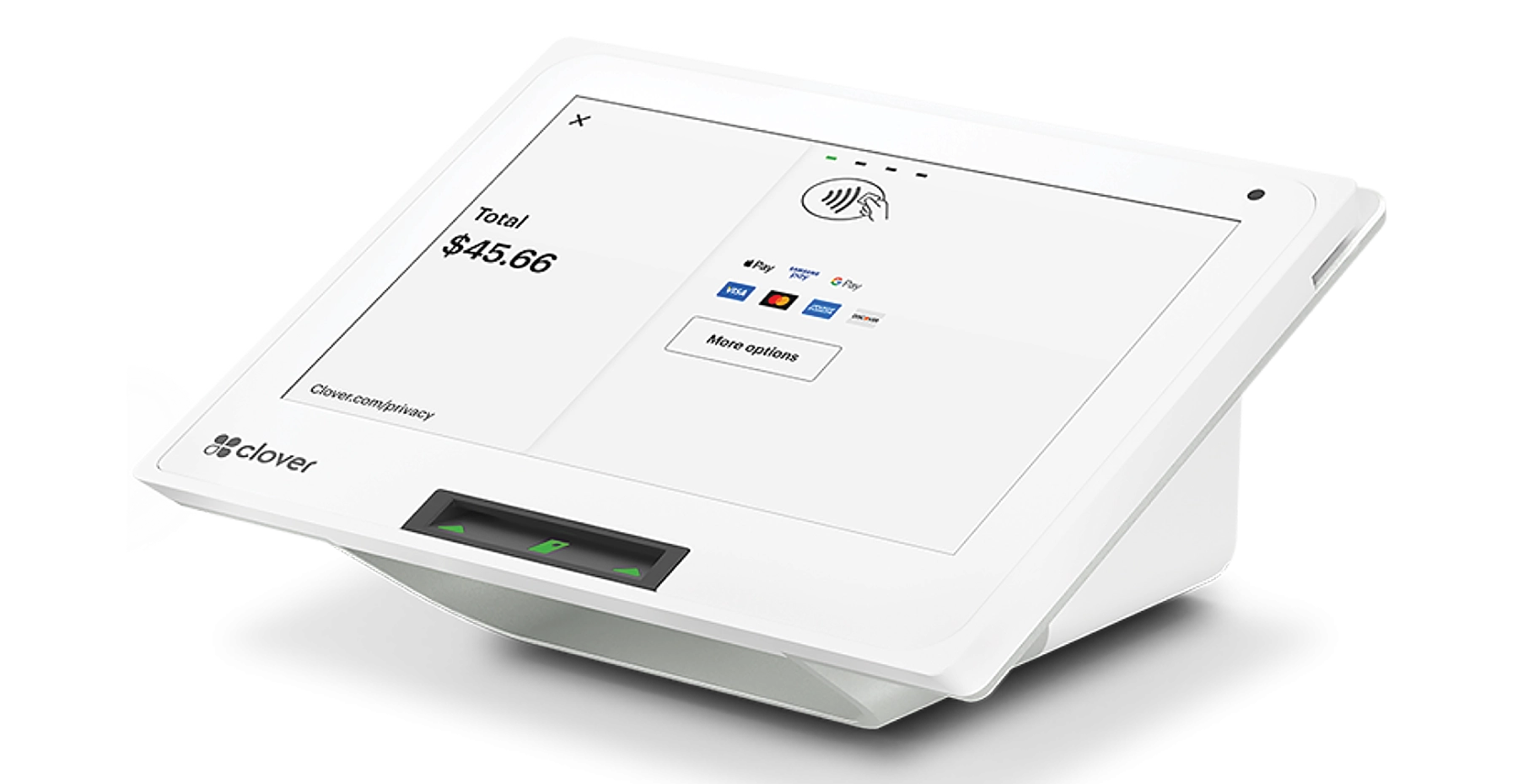
The one thing ChatGPT can’t do is set your business up with the best POS systems. VMS will ensure your business has the most sophisticated business management POS software and POS systems that will benefit any business, while also helping you avoid expensive, outdated card processing setups. Lets be honest, the most important part of owning a business is being able to accept all forms of payment. If you’re interested in getting a POS system that will keep up with all the other technological advancements happening. Or, learning about other products and services we offer, head to getvms.com, fill out the form below or call us at (888) 902-6227.
Decision Making with AI
Artificial intelligence is transforming the way small businesses approach decision making. By leveraging AI tools, small business owners can tap into a wealth of data that was previously difficult or time-consuming to analyze. AI-powered analytics can reveal patterns in customer behavior, highlight market trends, and pinpoint areas where resources can be optimized. This means business owners can make more informed, data-driven decisions that directly impact their bottom line.
For example, AI can sift through sales data to identify which products are resonating with customers, or analyze feedback to suggest improvements in customer engagement strategies. By automating the analysis of complex data sets, AI frees up valuable time, allowing business owners to focus on strategic decisions rather than getting bogged down in manual tasks. Embracing AI not only helps reduce operational costs but also gives small businesses a competitive edge, enabling them to respond quickly to market changes and customer needs. Ultimately, artificial intelligence empowers small businesses to make smarter choices, drive growth, and stay ahead in an ever-evolving marketplace.
AI for Small Businesses: Opportunities and Challenges
The rise of AI technology brings a broad range of opportunities for small businesses, but it also introduces some unique challenges. On the opportunity side, AI tools can automate complex tasks that once required significant time and effort, such as managing customer relationships, analyzing marketing campaigns, and even creating engaging social media posts. AI-powered chatbots can handle customer questions around the clock, improving customer experience and freeing up small teams to focus on core operations. Machine learning can help fine-tune marketing efforts, ensuring that campaigns reach the right audience and deliver better results.
However, adopting AI isn’t without its hurdles. Many small businesses face data privacy concerns, as handling customer information responsibly is more important than ever. Ethical concerns also come into play, especially when it comes to transparency and fairness in AI-driven decision making. Additionally, implementing AI solutions often requires technical expertise that smaller organizations may lack, and the initial investment in AI tools can be a barrier for those with limited resources. Despite these challenges, small businesses that take a thoughtful approach to AI adoption—by prioritizing data privacy, seeking out user-friendly solutions, and investing in staff training—can overcome these obstacles. By doing so, they can harness the power of AI to reduce operational costs, improve efficiency, and deliver a better customer experience.
Conclusion and Future Outlook
In conclusion, artificial intelligence is proving to be a powerful ally for small businesses looking to thrive in a competitive landscape. By embracing AI technology, small business owners can streamline their core operations, enhance customer engagement, and gain a real competitive edge—even when competing with larger companies. While challenges like data privacy concerns and the need for technical expertise remain, these can be addressed with the right strategies and resources.
Looking ahead, the future of AI for small businesses is bright. As AI technology continues to evolve, we can expect even more innovative solutions tailored to the unique needs of smaller organizations. AI will play an increasingly significant role in helping business owners make informed decisions, automate repetitive tasks, and improve the overall customer experience. By leveraging AI, small businesses can reduce operational costs, build customer trust, and unlock significant revenue opportunities. Ultimately, AI has the potential to level the playing field, empowering small businesses to compete with larger companies and paving the way for sustainable growth and success.