

Credit Card Processing Fees: 7 Ways to Cut Costs
You work hard to earn every sale. Your customer swipes their card — and then, quietly, a small slice of that payment disappears before it ever lands in your bank account.
Credit card processing fees are one of the most misunderstood costs in small business. Most owners know they’re paying something, but few know exactly what, why, or how much of it is actually avoidable. The average small business pays between 1.5% and 3.5% per transaction. For a business processing $500,000 per year in card sales, that’s up to $17,500 going to processors, card networks, and banks — every single year.
The good news? You have far more control over your credit card processing fees than you’ve probably been led to believe. This guide breaks down exactly what you’re paying, where those fees come from, and seven proven strategies you can use right now to keep more of what you earn.
What Are Credit Card Processing Fees?
Credit card processing fees are the charges collected each time a customer pays by credit or debit card. They’re not a single fee — they’re a layered stack of charges from multiple parties, bundled together and quietly deducted from each transaction before the remainder hits your account.
These fees exist because a card payment involves several moving parts: the customer’s bank (the card issuer), the card network (Visa, Mastercard, American Express, or Discover), and your payment processor. Each party provides a service, and each one takes a cut.
The Three Layers of Credit Card Processing Fees
Interchange fees are charged by the card-issuing bank — the financial institution that gave your customer their card. These are the largest component of what you pay, typically ranging from 1.15% to 2.5% per transaction. The rate varies based on the type of card used (premium rewards cards cost more than basic debit cards), how the transaction is processed (card-present in person is cheaper than card-not-present online), and even your industry type.
Assessment fees — sometimes called network fees — go directly to the card network (Visa, Mastercard, etc.). These are smaller, usually between 0.13% and 0.15%, and are essentially non-negotiable. Every processor passes them through.
Processor markup is the fee your payment processor adds on top of interchange and assessments. This is where there is the most variation between providers — and the most room for negotiation. Some processors charge a flat percentage, others add a per-transaction fee, and some do both.
Understanding this three-part structure is critical because most businesses only ever see the final blended number on their statement. Knowing which layer is which is the foundation for everything that follows.
The 7 Types of Credit Card Processing Fees on Your Statement
Beyond the core transaction percentage, there are several other charges that regularly appear in merchant statements — and many business owners don’t realize they’re there until they look closely.
1. Per-transaction fees — A flat fee charged on every transaction, often $0.10 to $0.30. These add up fast for businesses with high transaction volume or small average ticket sizes.
2. Monthly account fees — Many processors charge a flat monthly maintenance fee, typically $10–$30, simply for maintaining your account.
3. Statement fees — Some processors charge a fee each month just for generating your billing statement. This fee exists almost entirely to pad margins.
4. PCI compliance fees — The Payment Card Industry Data Security Standard (PCI DSS) requires merchants to maintain certain security practices. Processors often charge $50–$120 per year (or a monthly fee) for this; some inflate the cost significantly.
5. Batch fees — Charged when you settle your daily transactions. Usually small ($0.05–$0.10 per batch), but they accumulate over time.
6. Chargeback fees — When a customer disputes a transaction, you’re charged a chargeback fee of $20–$100, regardless of whether you ultimately win the dispute.
7. Early termination fees — If you try to leave your processor before your contract ends, many will charge $200–$500 or more. Always read the fine print before signing up.
Knowing these fees exist is step one. The next step is understanding which of them you’re actually paying — because some are legitimate, and some are simply unnecessary expenses that a better processor wouldn’t charge.
Understanding Pricing Models: Not All Structures Are Equal
Before you can meaningfully reduce your credit card processing fees, you need to know what pricing model your processor is using. The same underlying transaction costs can look very different depending on how they’re structured and presented.
Flat-Rate Pricing
Services like Square charge a flat rate — for example, 2.6% + $0.10 per swipe — regardless of what kind of card was used. It’s simple and predictable, which makes it attractive for new or very small businesses. The trade-off is that you’re often overpaying on transactions that would qualify for much lower interchange rates if you were on a different pricing model.
Tiered Pricing
Your processor groups transactions into “qualified,” “mid-qualified,” and “non-qualified” buckets with different rates for each. In theory this sounds logical. In practice, processors control which tier your transactions fall into, and they have a financial incentive to push more transactions into higher-cost buckets. Tiered pricing is widely regarded as the least transparent model in the industry.
Interchange-Plus Pricing
This is the model most recommended by payment experts for businesses with meaningful card volume. You pay the actual interchange rate — set by the card networks and the same for everyone — plus a fixed processor markup (for example, interchange + 0.25% + $0.10 per transaction). Nothing is hidden, nothing is manipulated. What you pay is directly tied to what the card networks actually charge.
If you’re not already on interchange-plus pricing, asking your processor for it is one of the single fastest ways to improve your cost structure.
7 Proven Ways to Cut Your Credit Card Processing Fees
Here are the seven strategies that actually move the needle for small businesses.
1. Switch to Zero Fee Processing
The most effective way to eliminate credit card processing fees is to stop paying them entirely. With Zero Fee Processing — also called surcharge or dual pricing — the processing cost is transparently passed to customers who choose to pay by credit card, while cash and debit users pay the standard price. The customer chooses their payment method; you keep 100% of every transaction.
Zero Fee Processing is legal in 48 states (not currently permitted in Connecticut or Massachusetts) and is growing rapidly across retail, food service, and service businesses of all types. VMS’s compliant Zero Fee Processing program includes automatic dual-price display, legal signage, and full processor integration — no guesswork on your end.
For a business paying $1,500/month in fees, switching to Zero Fee Processing is an immediate $18,000/year reclaim.
2. Negotiate or Renegotiate Your Processor Markup
The interchange and assessment layers of your credit card processing fees are largely fixed. The processor markup is not. If you’ve been with your current processor for 12 months or more, you have meaningful leverage.
Call them directly, tell them you’re reviewing your processing costs, and ask for a lower markup. Processors strongly prefer retaining a customer over losing one — especially if you’re processing significant volume. Even a 0.1% reduction on $500,000 annually is $500 back in your pocket.
3. Move to Interchange-Plus Pricing
If you’re currently on flat-rate or tiered pricing, ask your processor to switch you to interchange-plus. If they won’t, that’s actually useful information — it tells you they’re not interested in transparency, and you should start shopping.
At VMS, interchange-plus pricing is standard. There are no hidden tiers or manipulated buckets. You see exactly what the card networks charge and exactly what we add on top.
4. Reduce Chargebacks Proactively
Each chargeback costs you the disputed amount plus a $20–$100 fee, and a pattern of chargebacks can get your merchant account flagged or terminated.
Practical steps to reduce them: use a recognizable billing descriptor on card statements so customers don’t dispute charges they simply don’t recognize; keep records of all completed transactions and deliveries; respond to dispute notifications within the window; and if you process online orders, use address verification and basic fraud screening.
5. Batch Your Transactions Daily
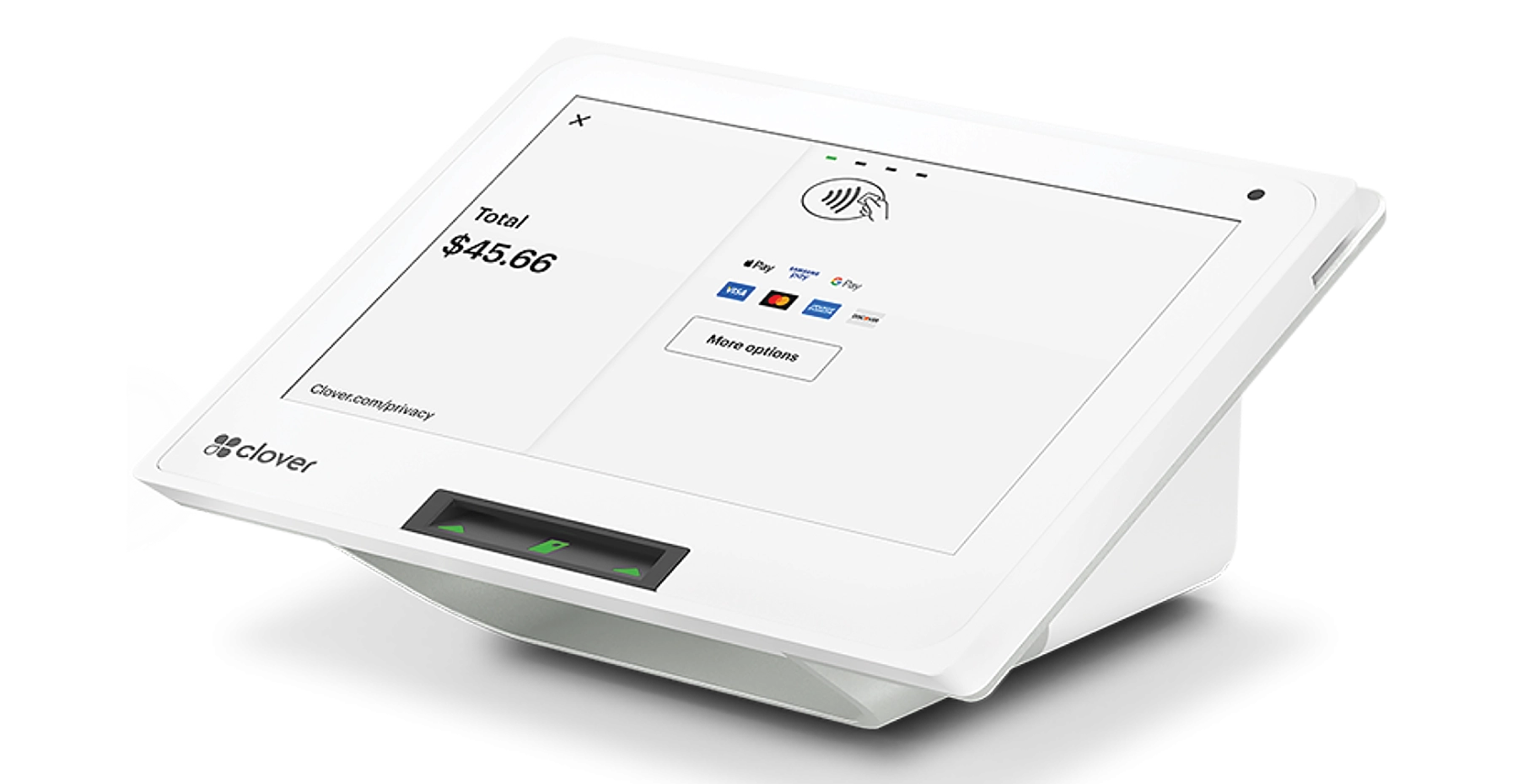
Transactions that sit unsettled for more than 24 hours are frequently downgraded to a higher interchange tier — meaning you pay more for the same sale. Most modern POS systems, including Clover, auto-batch at the end of each business day. If yours doesn’t, set it up to do so. It’s a simple setting change that can meaningfully reduce your effective rate.
6. Encourage Debit and Cash at the Point of Sale
Debit card transactions have lower interchange rates than credit cards. Cash has no processing cost at all. You don’t have to stop accepting credit cards — but a small, transparent incentive (like a cash price displayed next to the credit price, which is exactly what dual pricing does) shifts your payment mix in a direction that saves you money.
Even a modest shift — say, 15% of credit card transactions moving to debit or cash — can cut your total processing cost noticeably.
7. Review Your Monthly Statement Every Month
This one sounds obvious, and yet most business owners never do it. Pull last month’s statement and look for fees you don’t recognize, PCI compliance charges that seem inflated, monthly or annual fees you didn’t agree to, and transactions that were downgraded from qualified to non-qualified rates without explanation.
According to the U.S. Small Business Administration, actively reviewing your financial records helps identify unnecessary costs and improve cash flow. Processing fees are no exception. Many businesses discover they’re paying $30–$80/month in unnecessary fees simply by reading their statement carefully for the first time.
What Small Businesses Often Overlook
Two things consistently surprise business owners when they start digging into their credit card processing fees.
Premium rewards cards cost more. When a customer pays with a high-tier rewards card — Chase Sapphire Reserve, Delta SkyMiles Platinum, etc. — the interchange rate is higher because the card issuer is funding those rewards programs. You’re essentially subsidizing someone else’s airline miles. You can’t decline these cards, but Zero Fee Processing and dual pricing let you offset this cost transparently.
Card-not-present transactions are more expensive. If your business takes orders over the phone, online, or through manual card entry, you’ll pay a higher interchange rate than for a tap-to-pay in-person transaction. This is one of the practical reasons investing in modern contactless payment hardware isn’t just about customer experience — it directly affects your processing costs.
How VMS Helps You Keep More of Every Sale
Velocity Merchant Services has been helping small businesses manage and reduce their credit card processing fees since 1998. We’re not a tech platform that drops you in a dashboard — we’re a team of real people who review what you’re currently paying, explain it in plain language, and build a processing setup that actually works for your business.
Whether that means enrolling you in a Zero Fee Processing program that eliminates your fees entirely, migrating you to transparent interchange-plus pricing, or setting up a Clover POS system that keeps your batches on schedule and your chargebacks low — we come with real solutions, not sales pitches.
We serve restaurants, retailers, salons, specialty shops, food trucks, and service businesses of all sizes across Chicagoland and nationwide. If you’re not sure what you’re paying or whether it’s fair, the best first step is just to find out.
The Bottom Line
Credit card processing fees are an unavoidable part of doing business with cards — but they’re far more negotiable than most small business owners realize. The businesses paying the least aren’t necessarily the biggest or the most sophisticated. They’re the ones who took the time to understand what they were paying, asked the right questions, and made a few smart moves.
You don’t need to become an expert in interchange economics. You just need a processor who will be straight with you — and a few of the strategies above in your back pocket.
Contact VMS today for a free credit card processing fee review. We’ll show you exactly what you’re being charged, where the waste is, and what we can do to fix it.
Because every fraction of a percent you save goes straight back where it belongs: into your business.