

Every year, thousands of small business owners begin their search for a point-of-sale solution by typing one question into Google:
“Should I just use free pos systems instead of paying for a real POS?”
It’s a logical question. Free point-of-sale systems sound convenient, especially for new or low-volume businesses: zero upfront cost, simple onboarding, and hardware that arrives almost instantly. But like most “free” business tools, the long-term price tag tells a very different story.
Behind the appealing intro offers, free pos systems are typically the most expensive option once your business grows past its first few months. Higher processing fees, paid feature add-ons, weak integrations, hardware lock-in, and limited support all increase the true cost of ownership.
This guide gives you a clear, practical breakdown so you can decide whether free pos systems are truly useful for your business—or quietly draining thousands from your bottom line.
What Free POS Systems Actually Include
Most companies that promote free pos systems deliver one of two setups:
1. Free hardware, paid through higher processing fees
2. Free software, with pricey hardware + add-ons
Here’s what the major players actually include:
Square: The Most Popular of the Free POS Systems
Square built its brand on offering free pos systems to new entrepreneurs.
What you actually get:
-
Free magstripe reader (minimal functionality)
-
Free POS software
-
No monthly fee
-
Higher processing rates
-
Paid hardware upgrades
-
Paid add-on features
Square makes it easy to start but expensive to scale. For deeper payment insight, compare this to how credit card processing works before making your decision.
Clover: “Free” Hardware, But Only If You Sign a Contract
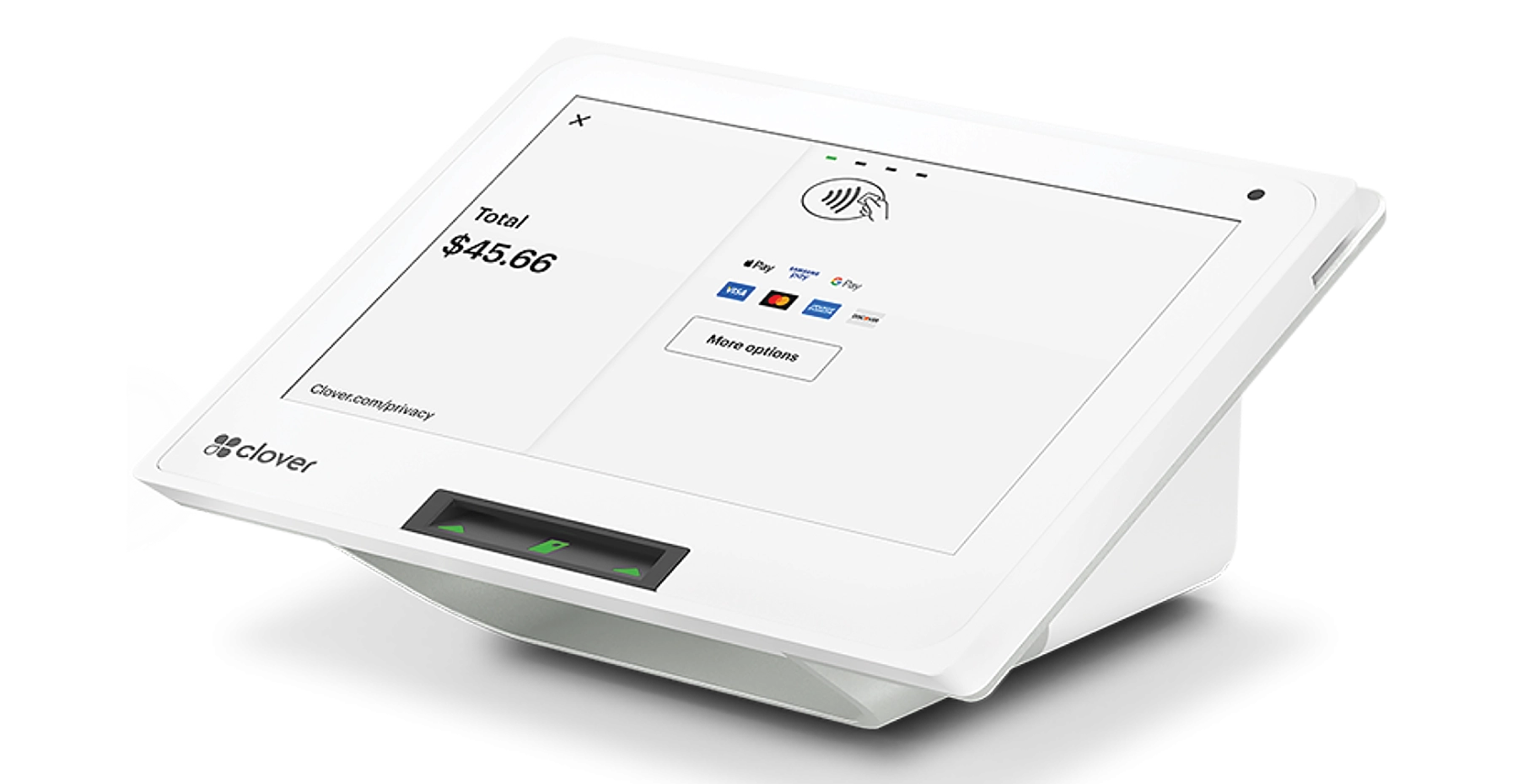
A number of resellers promote Clover as another one of the free point-of-sale systems—but the offer usually means:
-
Free hardware only if you sign a long-term processing agreement
-
Monthly software fees
-
Early termination fees
-
Limited negotiating power on rates
You “pay” for the hardware inside the long-term contract.
Toast: Free Hardware for Restaurants — With Strings Attached
Toast promotes free pos systems for restaurants, but eligibility requires:
-
Multi-year contract (often 3–4 years)
-
High proprietary processing rates
-
Early termination fees
-
Add-ons that quickly multiply costs
Restaurants with fast growth often outgrow these free pos systems—and struggle to exit the contract.
Hidden Cost #1: High Processing Rates
This is where free pos systems make their money back.
Square example
In-person rate: 2.6% + 10¢
Compared to typical interchange-plus rates: 1.7%–2.1% + 6–10¢
Monthly Volume Example
$10,000 in card sales per month:
| Provider | Rate | Annual Cost |
|---|---|---|
| Square (free pos systems) | 2.6% + 10¢ | ~$3,360 |
| Interchange-plus | ~2.0% | ~$2,520 |
You pay $3,120 more each year using free pos systems.
That’s nearly $10,000 lost in three years.
For an explanation of pricing structures, review cost-plus vs tiered processing.
Hidden Cost #2: Add-On Features Aren’t Free
Most free pos systems only include:
-
Basic payments
-
Simple inventory
-
Basic reporting
Every real business feature costs extra:
-
Employee management: +$40/mo
-
Advanced inventory: +$70/mo
-
Marketing automation: +$45/mo
-
Loyalty programs: +$45/mo
-
Online ordering: +$50–$100/mo
Your “free” system quickly becomes $200–$300 monthly.
Hidden Cost #3: Hardware Limitations
Free hardware included with free pos systems is extremely limited.
The typical free magstripe reader:
-
Lacks chip + tap
-
Isn’t durable
-
Requires a phone
-
Isn’t meant for real retail or restaurant loads
When you need multiple terminals, barcode scanners, printers, or customer-facing screens, costs increase—and you’re locked into that ecosystem.
If you want to see better hardware options that avoid lock-in, explore POS hardware recommendations.
Hidden Cost #4: Weak Integrations
Free pos systems often restrict or upcharge integrations, including:
-
QuickBooks syncing
-
CRM platforms
-
Inventory management systems
-
E-commerce platforms
-
Mobile ordering
-
Customer loyalty software
Some providers also restrict data exports, making it difficult to migrate to a new system later.
Hidden Cost #5: Limited Support
Free pos systems come with limited support options because support is expensive.
Common support issues include:
-
Chat-only support
-
Slow email response
-
No dedicated account manager
-
No chargeback guidance
-
No setup or migration support
Downtime costs you money—and free pos systems often leave businesses waiting.
Hidden Cost #6: Contract Traps
Even “free” hardware often comes with:
-
Long-term contracts
-
Early termination fees
-
Automatic renewals
-
Rate increases after promotional periods
-
Hardware leases disguised as free upgrades
If you need to leave, you’ll often pay more than the hardware was ever worth.
When Free POS Systems Actually Make Sense
Despite the drawbacks, free pos systems can be useful for:
1. Very Low-Volume Businesses (<$3,000/mo)
Hobby sellers, side hustles, and micro-vendors.
2. Temporary or Seasonal Setups
Pop-ups, farmers markets, holiday booths.
3. Mobile-Only Sellers
Contractors, event vendors, and small service businesses.
In these situations, free pos systems minimize risk.
When Free POS Systems Cost You More
Growing businesses quickly outgrow free pos systems.
They become costly when:
-
You process over $10,000 per month
-
You need more than one terminal
-
You need advanced features (inventory, loyalty, staff management)
-
You require integrations (CRM, accounting)
-
Support matters to your business
-
You need hardware flexibility
-
You want competitive processing rates
At this point, a paid POS saves more money long-term.
True Cost Comparisons by Business Volume
$25,000/month
-
Square (free pos systems): ~$8,400/year
-
Clover: ~$5,499/year
-
Interchange-plus: ~$3,000–$4,000/year
Square = nearly double.
$50,000/month
-
Square: ~$16,800/year
-
Clover: ~$9,699/year
-
Interchange-plus: ~$6,000–$7,500/year
Square = triple the cost.
$100,000/month
-
Square: ~$33,600/year
-
Clover: ~$18,199/year
-
Interchange-plus: ~$12,000–$15,000/year
Square quickly becomes the most expensive solution.
How to Calculate Your Real POS Costs
A structured formula for evaluating free pos systems:
**Processing Fees
-
Monthly Software Fees
-
Hardware Costs
-
Support Costs
-
Contract Fees
= Total Cost of Ownership**
Most business owners realize “free” costs them thousands after doing this simple calculation.
When Paying for a POS Is Cheaper
A paid POS is cheaper when:
-
Processing volume exceeds $10,000/mo
-
Your business is growing
-
You need multi-location support
-
You need advanced management tools
-
Support and reliability matter
-
You want hardware flexibility
In these cases, free pos systems become the most expensive long-term choice.
Questions to Ask Before Choosing Free POS Systems
Use these questions to evaluate options objectively:
-
What’s my true processing volume?
-
What features do I absolutely need?
-
How critical is support for my business?
-
What is my 3-year total cost?
-
Am I locked into a contract?
-
Who owns the hardware?
-
Can I negotiate my rates?
Clear answers prevent costly mistakes.
Final Thoughts
Free pos systems seem attractive—but they often cost far more than business owners expect. While they are useful for very small or temporary setups, growing businesses quickly outgrow them.
If you need advanced features, integrations, strong support, flexible hardware, or better processing rates, a paid POS system almost always saves money long-term.
Evaluate the total cost—not just the upfront cost—and you’ll make the right decision for your business.