

There is a specific kind of dread that shows up the week you finally admit you cannot do it all yourself. The line at the counter is longer than it used to be. You are answering emails at eleven at night. Something has to give — and suddenly you are trying to work out how to hire employees for small business operations that have never had a payroll before.
Here is the encouraging part. Owners who hire well are not better judges of character than you are. They simply run a process, know the real numbers before they post the job, and set the new person up on systems that make the first week obvious instead of chaotic. This guide covers all three.
You are also not behind. In July 2026, 36% of small business owners reported job openings they could not fill, according to the NFIB monthly jobs report. Hiring is hard everywhere right now. That is exactly why doing it deliberately pays off.
What a New Hire Actually Costs You
The most common hiring mistake has nothing to do with picking the wrong person. It is budgeting the wage and nothing else. A $20-an-hour employee does not cost you $20 an hour.
The Bureau of Labor Statistics tracks this precisely. In March 2026, total employer compensation costs for private industry workers averaged $46.60 per hour worked. Wages and salaries accounted for just $32.60 of that — 69.9%. Benefits, payroll taxes and insurance made up the remaining 30.1%, or $14.01 per hour.
Translate that into your own budget and the rule of thumb is simple: for every dollar you plan to pay in wages, plan on roughly $1.43 in total cost. Here is what that looks like for one part-time hire at 30 hours a week.
| Line item | Per hour | Per month (130 hrs) |
|---|---|---|
| Base wage | $20.00 | $2,600 |
| Employer taxes, insurance & benefits (30.1% of total comp) | $8.60 | $1,118 |
| True all-in cost | $28.60 | $3,718 |
Then there is the cost of the hire itself. SHRM benchmarking research puts the average cost per hire at $5,475 for non-executive roles. Most small shops land well under that figure — but well under is not the same as free.
The costs owners forget to count
- Training time, yours and theirs. Two weeks of half-productive shifts is real money leaving the business.
- Early turnover. A hire who leaves at 90 days means you pay the entire recruiting cost a second time.
- Learning-curve mistakes. Voided transactions, comped items, mis-rung orders and the quiet losses that show up as inventory shrink.
- Coverage while the role sits open. That is usually you, unpaid, after close.
None of this is an argument against hiring. It is an argument for knowing the number before you commit, so the decision becomes a plan rather than a hope.

How to Hire Employees for Small Business Without Guessing
Once you know the number, the process itself gets refreshingly boring — and boring is exactly what you want. Here is how to hire employees for small business roles in a way that repeats reliably, instead of depending on a good week and a lucky resume.
1. Define the outcome, not the job title
Do not write “seeking cashier.” Write down what has to be true ninety days from now. Something like: opens the store alone three mornings a week, closes the register accurately, and handles the morning rush without me. Outcomes tell candidates what winning looks like, and they tell you precisely what to screen for.
2. Post where your customers already are
Small businesses consistently do better through local, warm channels than through national job boards. A sign in the window, a note to your email list, a post on your shop social page, and a direct ask to your best regulars will usually out-perform a paid listing. People who already like your shop walk in wanting the job.
3. Screen with two questions, not twenty
Ask about a time something went wrong at work and what they did next. Then ask what they liked and disliked about their last manager. The first answer tells you how they behave under pressure. The second tells you how they will behave with you.
4. Run a paid working interview
Nothing predicts performance like watching someone do the actual work. Pay them for a two- or three-hour shift. Have them shadow the counter, greet real customers, and run a few transactions on your POS devices built for small businesses. You will learn more in three hours than in three interviews.
Two rules make this work. Pay them properly for the time — an unpaid working interview is a wage violation in most states, not a clever screening tactic. And watch how they treat the customer who is difficult, not the one who is easy. Anyone can be charming for twenty minutes; the tell is what happens when someone is rude about a return.
5. Check references properly
Two calls, five minutes each, and one question that matters: would you hire them again? The pause before the answer is usually the answer. Skip this step and you are trusting a resume written by the one person with the strongest incentive to flatter it.
Ready to free up the cash to make that hire?
VMS trims your processing costs and sets up POS tools a new employee can learn in a week — usually live in a few business days.
Or call our team: 888-902-6227
The Paperwork Nobody Warns You About
Going from zero employees to one is the single biggest compliance jump your business will ever make. It is not difficult, but it is unforgiving about deadlines, and almost none of it is optional. Work through this list before their first shift rather than after it.
- Get an EIN. You need a federal Employer Identification Number to run payroll. It is free from the IRS and takes about fifteen minutes online.
- Form I-9 within three business days. Every new hire must complete employment eligibility verification. Keep it on file separately from the personnel folder.
- Form W-4 on day one. This sets their federal withholding. Your state may have its own version too.
- Report the new hire to your state. Most states require this within twenty days of the start date.
- Workers’ compensation insurance. Required in nearly every state the moment you have your first employee, and the penalties for skipping it dwarf the premium.
- Register for state unemployment insurance. Usually handled through your state labor or revenue department.
- Post the required labor law notices. Free from the Department of Labor and your state; they go somewhere employees actually see them.
One mistake deserves its own paragraph: classification. Calling someone an independent contractor because it is simpler than payroll is the most expensive shortcut in small business. If you set their hours, direct how the work is done, and provide the equipment, they are almost certainly an employee. Back taxes, penalties and interest on a misclassified worker routinely run into five figures.
The SBA hiring guide walks through each federal requirement in plain language, and it is worth an hour of your time before you extend an offer. If your accountant or payroll provider handles some of this for you, confirm exactly which pieces — the gaps are where the penalties live.
Where the Money for a New Hire Actually Comes From
This is the part of hiring nobody writes about. You can find the perfect candidate and still not pull the trigger, because the cash is not obviously there. Usually it is — it is just tied up somewhere you have stopped looking.
Stop leaking it in processing fees
For most small businesses, card acceptance is one of the largest recurring expenses after rent and payroll, and it is one of the very few you can genuinely reduce this month. If you have not read a statement line by line lately, start there. Our breakdown of credit card processing fees shows exactly where the money disappears.
Zero Fee Processing is the bluntest version of this fix. It moves the cost of card acceptance to the transaction itself, so the percentage that used to vanish every month stays inside the business instead. For a shop running $40,000 a month in card volume, that is often the difference between “we cannot afford anyone” and “we can afford twenty hours a week.”
Bridge the gap while they ramp up
A new hire is a cost before they are a contributor. merchant working capital exists for exactly this shape of problem: funding based on your card volume and repaid as a small share of daily sales, so a slow week flexes with you rather than against you.
The point is not to borrow your way into a hire. It is to stop treating “I do not have the cash” as a permanent fact when it is very often just a timing problem. Any owner who has spent a season running short-staffed already knows how expensive waiting can be.

Make Their First Week Obvious
The fastest way to lose a good hire is to hand them an apron and walk away. The second fastest is to give them full access to everything on day one.
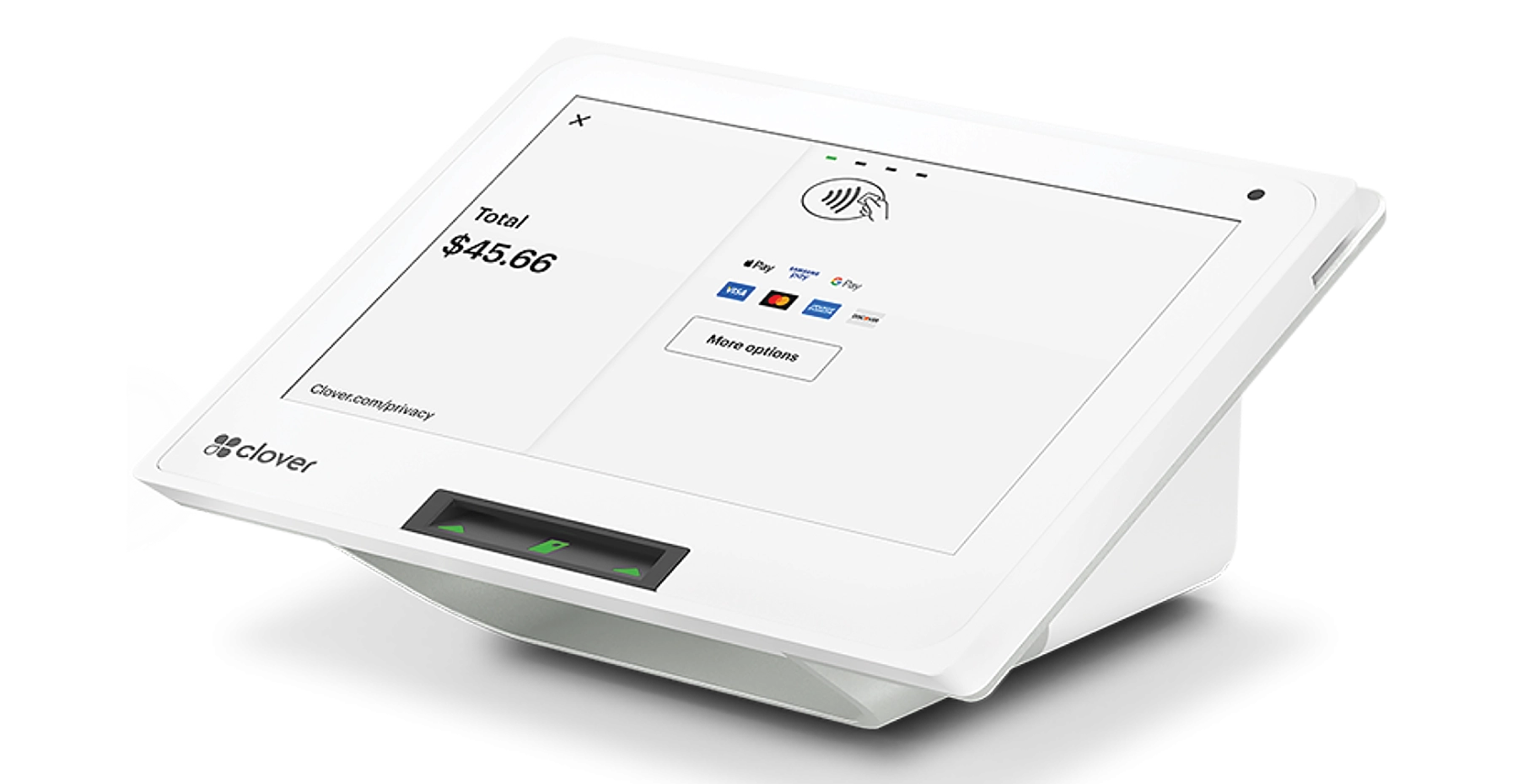
Your point of sale does more of this work than most owners realize. On a Clover Mini, every employee gets their own login and permission level. You decide who can issue a refund, who can void a line item, who can open the cash drawer, and who can see reporting.
That is not distrust — it is clarity. New employees relax when the boundaries are drawn, because they stop worrying about breaking something expensive. And you get a per-employee record of sales, voids and refunds, which turns “I think the Tuesday shift is slower” into something you can actually verify.
A simple five-day plan
- Day 1: shadow only. They watch, ask questions and learn names.
- Day 2: they run transactions with you standing behind them.
- Days 3 and 4: they run the counter while you stay in the building.
- Day 5: they close a shift alone, then you review the employee management tools report together.
Built-in time clock and scheduling features mean hours get captured at the terminal instead of on a notepad — which matters enormously the first time you have to answer a payroll question three weeks after the fact. The same reporting that protects profit margins in a restaurant works just as well behind a retail payment processing counter.
Keep the Person You Just Hired
Hiring well is only half the return. In July 2026, 51% of small business owners — 85% of those actively trying to hire — reported few or no qualified applicants for their open roles. Replacing someone in that market is slow and expensive. Keeping them is the cheaper strategy by a wide margin.
Three things move retention more reliably than pay alone:
- Predictable schedules. Posted two weeks out and honored. Erratic scheduling is one of the top reasons hourly employees quit.
- A visible path. Even in a three-person shop, “you will learn ordering next quarter” is a reason to stay.
- Real information. Show them the loyalty program numbers, the repeat-customer rate, the genuinely busy hours. People who can see the scoreboard play differently.
Pay attention to what the job feels like on a bad day, too. If your busiest hour turns into chaos because the counter equipment is slow or the line backs up past the door, that is a retention problem wearing an equipment costume. A second station or a handheld Clover Flex for line-busting solves more staffing complaints than a raise sometimes does.
Hire Once, Hire Well
Knowing how to hire employees for small business comes down to three unglamorous habits: know the true cost before you post the job, run the same process every single time, and set the new person up on systems that make good work the easy default. Do those three and hiring stops feeling like a coin flip.
VMS has been helping small businesses accept payments and run smarter counters since 1998. If a new hire is on your horizon, we can help you find the money to pay for one: lower processing costs, working capital when timing is tight, and POS tools that make training a new employee take days instead of weeks. Browse our merchant services FAQs or reach out to our support team to talk it through.
Ready to build a counter your next hire can actually learn in a week? Fill out the form below and a VMS payment specialist will walk you through it — no pressure, no jargon.
Have questions about hiring costs or payment processing?
Fill out the form below and a VMS payment specialist will contact you shortly.