

Cybersecurity threats have evolved rapidly over the last decade, and so has the risk to small businesses. Identity theft is no longer just a consumer issue—it’s a growing business problem. In 2025, identity theft schemes are more sophisticated, digital break-ins are faster, and small businesses are prime targets.
Whether you’re accepting payments, collecting emails, or managing employee records, your business handles sensitive data every day. If that information falls into the wrong hands, the damage can be devastating. We’re talking about financial loss, reputational damage, compliance violations, and in some cases, lawsuits.
It’s important to watch for warning signs that could indicate identity theft or fraud, such as unexpected account changes or suspicious transactions.
The good news? You can protect your business. This guide walks you through the modern landscape of identity theft and gives you actionable steps to defend your business and your customers. Identity theft occurs when criminals obtain and misuse personal information—such as names, Social Security numbers, or bank details—often resulting in financial loss and damage to credit reports. Personal information is a primary target for identity thieves, making its protection critical for every business.
Why Small Businesses Are a Target
Small businesses often assume hackers are after big corporations. But in reality, smaller companies are often the low-hanging fruit. Why? Because many lack the security infrastructure that larger companies have in place.
Cybercriminals don’t always want to attack the largest company—they want to attack the easiest one. That means if your business is storing customer information on outdated systems, lacking a cybersecurity policy, or using weak passwords, you might be exactly what they’re looking for. Criminals seek to steal personal or financial information, which they can then use to commit fraud.
Today, identity theft doesn’t just mean stolen credit card numbers. Hackers want email addresses, birthdays, phone numbers, bank routing data, tax ID numbers, and more. This kind of Personally Identifiable Information (PII) can be used by identity thieves to commit fraud, such as opening accounts or making unauthorized transactions.
Both businesses and individual consumers can become victims of identity theft. The stolen information is often used to open new credit accounts, make unauthorized purchases, or apply for government benefits in the victim’s name.
The Business Impact of a Data Breach
Let’s be clear—if your business suffers a data breach, it’s not just an IT problem. It becomes a legal, financial, and marketing crisis. In many jurisdictions, you are legally required to provide notification to every affected customer after a breach, often using official forms and processes.
You may be required to notify every affected customer, potentially offer free credit monitoring, face regulatory fines, and spend thousands investigating the breach. Identity theft resulting from a breach can impact your customers’ credit reports and credit scores, leading to financial loss and personal stress. Businesses may need to advise affected individuals to work with credit bureaus such as Equifax, Experian, and TransUnion to dispute fraudulent activity and protect their credit report. And even if you recover operationally, your brand reputation may take a hit you can’t afford.
In fact, according to IBM’s 2023 Cost of a Data Breach report, the average cost of a data breach for small businesses is over $3 million—and that’s not including the long-term damage to customer trust.
What Is PII and Why It Matters
PII stands for Personally Identifiable Information. It’s any information that can be used to distinguish or trace an individual’s identity, including both personal and financial information. When hackers piece together enough of this data, they can impersonate your customers—or even your business.
Types of PII include:
-
Full names
-
Social Security numbers
-
Dates of birth
-
Physical and email addresses
-
Driver’s license numbers
-
Bank account and credit card information
This personal information, especially financial information like bank account and credit card details, is often targeted in identity theft. To help prevent identity theft, always shred documents that contain personal information before disposing of them.
Even individually, some of this data is sensitive. But when combined, it becomes incredibly dangerous in the wrong hands.
Modern Threats to Watch in 2026
In today’s threat landscape, criminals use AI-powered tools to automate attacks. Identity theft can occur online, in person, or through physical forms, making it crucial to be vigilant across all platforms. Phishing emails are more realistic than ever, malware can be embedded in PDFs and social media links, and deepfake technology is starting to be used to impersonate business owners.
Here are a few major threats you should actively prepare for:
Phishing & Business Email Compromise (BEC): These attacks trick employees into clicking fake links or sending sensitive data. Phishing involves fraudulent emails, texts, or calls designed to trick a person into providing personal information. BEC scams alone caused over $2.7 billion in losses globally last year.
Data breaches: Hackers steal large amounts of personal data from company databases, which can then be used for identity theft or sold online.
Account takeover: Thieves gain control of a person’s existing bank or credit card accounts, often through stolen credentials or compromised online forms.
Medical identity theft: Criminals use someone’s information to obtain unauthorized medical services or medication, leading to unexpected bills or insurance issues.
Ransomware: Hackers lock you out of your systems and demand payment. Many small businesses never recover.
Insider threats: Not all threats are external. Employees can unintentionally or intentionally leak sensitive data.
Cloud vulnerabilities: Storing customer data in cloud apps is common, but it needs strong access control and regular audits.
Common methods of identity theft include phishing, data breaches, dumpster diving, and ATM skimming.
Essential Steps to Protect Your Business in 2026
So how do you protect your customers, employees, and business? It starts with awareness—but it must be backed by action. Prevention tips for identity theft can help reduce your risk and keep sensitive information secure. Businesses should also watch for warning signs and unusual activity as part of their security strategy.
If identity theft does occur, it is essential to follow additional steps and have a recovery plan in place to guide your response and recovery process.
1. Upgrade to EMV and Contactless Payment Systems
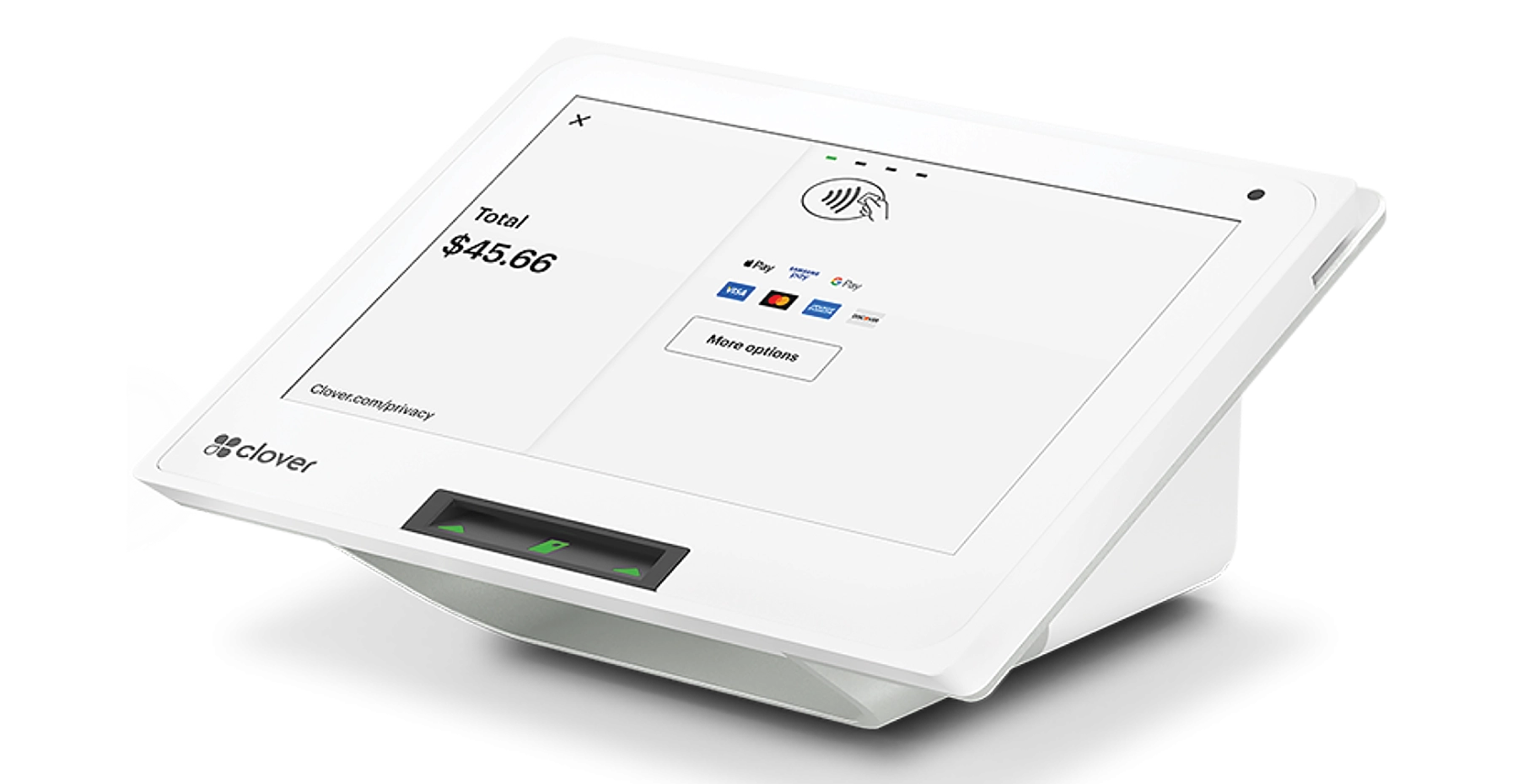
If you’re still using a magstripe card reader, you’re years behind. EMV (chip) readers and contactless payment options are standard now—and for good reason. Chip transactions are encrypted and harder to clone. Modern POS systems like Clover come with built-in security features and compliance support.
Upgrading to EMV devices helps protect your business and customers from unauthorized charges and fraudulent returns, which are common tactics in identity theft and payment fraud. Plus, using an EMV device can shift the liability of fraud away from your business. It’s one of the easiest upgrades you can make to reduce risk.
2. Use End-to-End Encryption and Tokenization
Make sure all customer payment data is encrypted from the moment it’s entered until it’s processed. Encryption should also be applied to digital and physical forms containing sensitive information to prevent unauthorized access. Better yet, work with payment providers that offer cloud-based payment tokenization and POS security, which replaces sensitive data with a unique digital identifier that can’t be reverse-engineered.
3. Implement Access Control and Role-Based Permissions
Don’t let everyone on your team access all data. Set role-based access permissions so employees can only view the info necessary for their job. Regularly verify employee access and permissions to ensure only authorized individuals have the appropriate level of access. This minimizes the risk of both internal mistakes and external attacks.
4. Require Strong Passwords and Two-Factor Authentication (2FA)
Weak passwords are still one of the most common entry points for hackers. Using strong, unique passwords for each of your accounts can significantly reduce the risk of identity theft. Require staff to use strong, unique passwords and enable two-factor authentication (2FA) for every system possible—from payroll apps to your CRM. Enabling 2FA adds an extra layer of security against identity theft.
Employees should also regularly review their bank statements and bills for unauthorized or unfamiliar charges, and monitor bank accounts weekly to quickly spot and address any potential fraudulent activity.
5. Keep Software and Devices Updated
Outdated software is like leaving your front door open. Always update your operating systems, antivirus tools, and POS software to the latest versions, and consider upgrading to the newest Clover POS devices for 2026 when your current hardware nears end of life. Many updates include critical security patches.
6. Train Employees on Cyber Hygiene
Your team is your first line of defense. Offer regular cybersecurity training to teach employees how to spot phishing attempts, avoid unsafe websites, and follow your internal data protection policies.
7. Use Secure Wi-Fi and Consider VPN Access
Public Wi-Fi networks are notorious for being unsafe. Always protect your business Wi-Fi with strong encryption and firewall settings. For remote workers or mobile checkouts using cloud-based POS systems, use VPNs to create secure data channels.
8. Limit Data Collection and Storage
Only collect the customer data you truly need, especially when it comes to personal information and financial information. The less personal and financial information you store, the less can be compromised. And don’t keep sensitive data longer than necessary.
9. Back Up Your Data Regularly
Keep daily or weekly backups of your business data and store them in secure, off-site locations (or encrypted cloud storage). This ensures you can recover if systems are compromised or locked.
10. Choose a Secure, Reliable POS System
Your point-of-sale system is a gateway for payments and customer data. Choose a provider that prioritizes security, updates regularly, and helps you stay PCI compliant. An all-in-one Clover POS system that replaces multiple devices can also simplify management and reduce the number of vulnerable endpoints in your environment. If you have any security concerns or need support, contact your POS provider immediately to report potential issues related to identity theft.
Why Clover POS Helps You Protect Your Business
Clover is one of the most secure POS platforms available today. Not only does it support EMV, NFC (tap-to-pay), and EBT transactions, but it also comes with end-to-end encryption and tokenization built in.
Clover devices automatically receive security updates and are built with hardware-level security in mind. You can set user permissions, track activity, manage devices remotely, and store customer data safely within your system—not in spreadsheets or exposed terminals.
At Velocity Merchant Services, we help small business owners implement Clover the right way. That means we configure security settings for you, provide training, and ensure that your data—and your customers’ data—stays protected. If you suspect identity theft, it’s crucial to report identity theft immediately and follow a recovery plan to guide you through the necessary steps. Contacting the fraud department of any involved companies and taking prompt action can significantly reduce the impact on your financial and personal life.
Confident you are PCI compliant?
VMS handles PCI compliance, end-to-end encryption, and chargeback support so your business and your customers card data stay protected.
Or call our team: 888-902-6227
Final Thoughts
In 2025, identity theft is no longer a seasonal threat or a headline for the big box stores. It’s an everyday reality that can impact even the smallest businesses. Receiving unexpected bills or statements for accounts you did not open, unexplained withdrawals from your bank account, or missing mail can be warning signs of identity theft. Watch for unusual activity with your tax and Social Security accounts, and be alert to charges on your credit card or bank statements that you do not recognize. Placing a credit freeze with major credit bureaus can prevent new accounts from being opened in your name, and you can place a fraud alert by calling one of the three credit bureaus for free for one year. Regularly monitoring your credit reports can help you detect signs of identity theft early. Be cautious when sharing personal information online, as scammers often use social media to gather data for identity theft.
If you believe you are a victim of identity theft, contact the Federal Trade Commission (FTC) to generate an FTC Identity Theft Report and receive a personal recovery plan. For tax-related identity theft, file Form 14039, Identity Theft Affidavit, to help invalidate fraudulent returns. Keep a record of all calls, letters, and actions taken during your recovery process. Reporting identity theft to the FTC is crucial—visit their website for resources and to file an identity theft report. The FTC enters these reports into Consumer Sentinel, a secure online database used by law enforcement to track trends and assist investigations. Identity theft can impact your employment and benefits, so it’s important to protect this information and file official forms and reports promptly.
Protecting your customers means protecting your business. With the right tools, smart policies, and a secure POS system, you can stay one step ahead of cybercriminals and focus on growing your business with confidence.
Need help choosing a secure, modern POS system? Let’s talk about how Clover can give your business the protection and performance it needs in today’s digital world.
Have questions about payment security?
Fill out the form below and a VMS payment specialist will contact you shortly.