
Most Americans own a credit card. That means a majority of the customers, clients, vendors and contractors vital to your business hold the power to pay with plastic. What’s more, credit and debit cards are by far the preferred payment method for over half of Americans today, relegating cash as the go-to practice for only 14%. All these figures point to a pressing business need — organizations today must be prepared for credit card transactions at all hours and in all retail spaces. It is crucial for businesses to be able to accept cards and continue accepting payments in any environment, even when connectivity is unreliable.
However, what happens when your power goes out, your internet acts up, or your industry requires continual remote or fieldwork? Connectivity issues, such as unreliable Wi-Fi or lack of internet access, are common challenges that can disrupt your ability to process transactions. How, then, do you meet today’s top customer preference? That’s where offline credit card (CC) processing comes in—an offline payment processing solution that ensures your business can continue operating and accepting payments even during connectivity disruptions.
How Does Offline Credit Card Processing Work?
Offline transaction processing allows businesses to accept credit card payments in real-time without an internet connection. It’s a contemporary and convenient solution made possible through a new encryption technology that stores and saves vital credit card information — while still keeping your business in compliance with the Payment Card Industry Data Security Standards (PCI DSS). Typically, a credit card transaction goes like this:
-
A cardholder swipes their credit or debit card through a payment machine, known as a terminal, which is also referred to as a point of sale (POS) system. A reliable POS system is essential for processing offline credit card transactions.
-
That machine uses a secure internet connection to submit the cardholder’s information through your acquiring or merchant bank.
-
Your merchant bank receives that information and forwards it to the cardholder’s credit card network, such as Visa, Mastercard, American Express or Discover. Card networks process and transmit transaction data, ensuring the payment reaches the correct destination.
-
The credit card network then accepts or denies the transaction via an authorization request, using a series of fraud protection tools and account verifications.
-
If approved, the cardholder’s issuing bank puts a hold on that individual’s card for the approved purchase amount.
-
Your business receives that approval or denial from the CC network, all in a matter of seconds. Your payment terminal then houses the day’s approved transactions, which most businesses typically process in a “batch” at the end of each day.
The payment processor plays a crucial role in both online and offline credit card transactions by encrypting, holding, and transmitting transaction data for approval.
Many POS systems and mobile devices, including mobile readers, can enable offline mode to continue processing payments when internet access is unavailable. This feature allows the device to automatically switch to offline operation and process offline credit card payments.
Without an internet connection, the credit card authorization and verification steps from above cannot take place. Your business has no way of communicating with a credit card network, and therefore has no way of processing or approving any card-based purchases. However, with an offline transaction terminal, real-time processing can be done. Customers swipe their cards as usual through your terminal. If an internet connection isn’t available at that moment, your device saves and encrypts all necessary cardholder information as stored offline payments — something a normal terminal cannot do. These offline credit card payments are securely stored until the device reconnects with the internet, at which point it sends the transaction information straight to the merchant bank and credit card network for approval.
It’s important to note that offline credit card transactions do not receive immediate authorization, meaning there are no real-time fraud checks or instant approval. This increases the risk of declined transactions or fraud, so businesses should set transaction limits and follow best practices to mitigate risk.
All offline credit card transactions are encrypted and protected to maintain PCI compliance, ensuring sensitive card data remains secure until processed.
When Is Offline Credit Card Processing Beneficial?
Offline card processing is vital across a range of situations, events, and industries, especially in remote locations where internet connectivity is unreliable or unavailable or where you rely on mobile payment solutions like Clover Go. This ensures that no sale is lost due to connectivity issues.
-
Internet and power outages at brick-and-mortar businesses: While rare and usually temporary, internet and power outages can wreak havoc on your business. Without any alternative to processing payments, internal operations must come to a grinding halt until accounts and card information can be confirmed.
-
Onsite-ticket venues: Keep event or raffle ticket sales flowing with offline credit card terminals set up wherever you’re selling tickets. With so many of today’s consumers carrying cards over cash, these devices are paramount to successful ticketed events, especially when those sales take place at the door.
-
Outdoor events: Festivals, open-air markets, and similar outdoor events often face connectivity challenges. Offline credit card processing ensures uninterrupted sales in these environments.
-
Trades work: Electricians, plumbers, and other skilled trades services perform the bulk of their work in customers’ homes and businesses. The ease of an offline transaction processing system means you don’t have to worry about setting up cumbersome payment plans over the phone or managing easy-to-lose paperwork between client sites and your office. Offline processing is also beneficial at trade shows, where internet access can be unreliable.
-
Landscaping: Landscaping and lawncare providers can quickly swipe a customer’s credit card immediately after wrapping up their latest service. That, too, means less paperwork, greater cash flow and increased business stability.
-
Construction: Streamline deliveries and vendor payments while on-site across commercial, residential or infrastructure projects. Offline credit card processing is also useful at trade shows related to construction, ensuring sales are captured even if connectivity is spotty.
-
Farmer’s markets: Set up shop confidently at local farmer’s markets, neighborhood celebrations, pop up events, and similar gatherings without having to rely on out-of-date cash transactions or worry about unreliable connectivity.
-
Food trucks: Take your dishes on the road, widening your brand awareness and customer pool while offering a convenient payment solution regardless of where you park, especially when paired with self-service ordering tools like Clover Kiosk.
With offline credit card processing, businesses operating in remote locations, outdoor events, pop up events, and trade shows can safeguard every sale, ensuring revenue is not lost due to connectivity issues.
Security and Risks of Offline Credit Card Processing
While offline credit card processing allows businesses to accept card payments without an active internet connection, it’s important to recognize the unique security challenges this method presents. When your payment terminal operates in offline mode, sensitive card data is stored temporarily on the device until an internet connection is restored and the transaction can be processed. This creates a window of vulnerability that merchants must manage carefully.
Offline Transactions With the Clover Duo
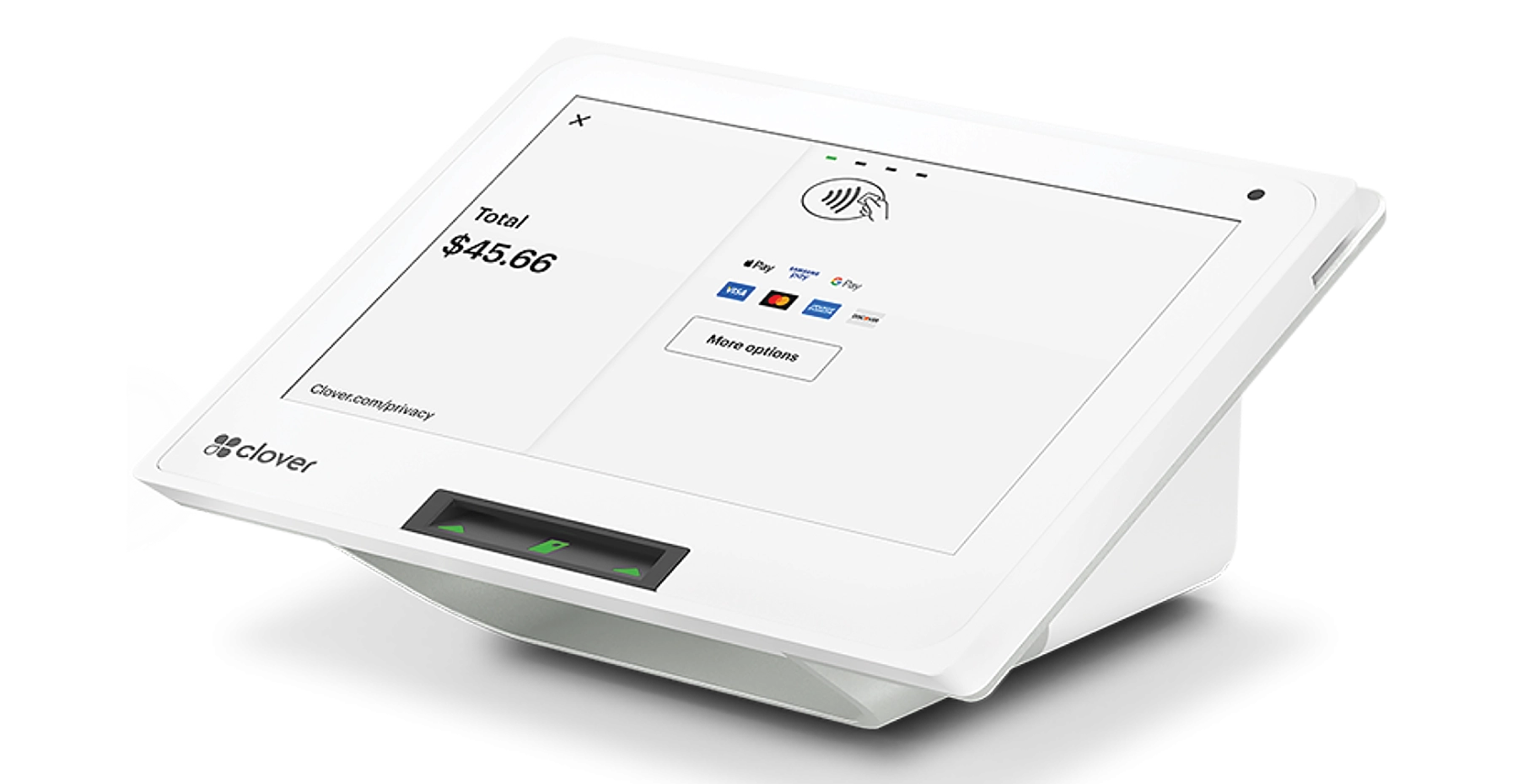
Accepting credit and debit card payments offline remains a fanciful wish for many. With industry-leading payment terminals like the Clover Duo, though, businesses like yours can cross offline transactions from their wish lists and make it an everyday reality. The Clover Duo enables taking payments securely even during connectivity issues, ensuring that transactions can be processed without an internet connection. The device supports offline processing to ensure business continuity, allowing you to keep accepting payments seamlessly in any environment and is part of Clover’s latest generation of POS devices designed for modern businesses.
1. What Is the Clover™ Station?
Clover is a payment terminal device that accepts credit and debit card payments without an active internet connection. It’s a dynamic point-of-purchase system designed to make sales easier, plain and simple. Using cloud-based technology, Clover accepts and manages offline transactions so you never have to worry about the viability of payments again, while its all-in-one Clover POS system can replace multiple standalone devices. Clover also features a complete range of business-critical apps and integrations, from inventory tracking to sales data analytics to an online help function, all of which vary depending on which Clover POS software plan you choose. We offer Clover devices in many product catalogs, including:
-
The Clover Duo: Clover Duos are our all-in-one hardware and software set-up reimaging what a point-of-purchase system can look like, feel like and do. Explore more about Clover Duo to see what they can bring to your business.
-
The Clover Mini: Think big sales in a small package. That’s what you get with the Clover Mini, our smallest, lightest and most portable card payment terminal that doesn’t skimp on the affordances.
2. Clover Duo Parameters
Offline transaction processing devices come with a handful of best practices to keep in mind.
-
Internet reconnection window: Many terminals will need to reconnect to the internet within a certain time frame to send authorization requests to merchant banks or credit card vendors. If the device doesn’t connect with the internet in that time frame, the charge may expire and you will not get compensated for the transaction. There is a risk of increased fraud or declined payments when operating offline, so it is important to manage this risk by reconnecting as soon as possible and following security best practices, and by preparing for Clover POS outages and backup procedures.
-
Transaction limits: For your own peace of mind, you can set a maximum transaction limit on your Clover device. For example, you can program the terminal to accept offline transactions of $25 or less. Anything larger than that sum will automatically be denied while you’re offline. Note: You are responsible for any declined transactions or losses that occur if a card is invalid or over the limit when processed offline.
-
Card expiration, disputes or declines: Offline credit card devices cannot prevent you from taking expired or over-the-limit credit cards. Ensure to check the name and expiration date on every credit and debit card you accept, whether on or offline.
Accept Credit Cards at Any Time, From Anywhere
Don’t be complacent with your business tools. See the convenience, customer support and business care you get from the all-in-one POS Clover system. We design our credit card terminals to do so much more than accept offline payments as part of our role as a leading merchant services provider for small businesses. See our industry-leading POS product line and explore the best POS devices for small businesses, then ask how we can get your new Clover Duo up and running in just 15 minutes.
Final Thoughts:
Offline credit card processing offers essential benefits such as uninterrupted sales during internet outages, increased reliability, and flexibility for businesses operating in areas with unstable connectivity. Consider implementing offline credit card processing if your business needs to ensure continuous payment acceptance or operates in environments where internet access is not always guaranteed.