

If the words “PCI compliance” make your eyes glaze over, you are in good company. For most owners, PCI compliance for small business feels like a tax on simply running a shop — a confusing annual questionnaire, a mysterious line item on your statement, and a vague threat of penalties if you get it wrong. Here is the part nobody tells you: it is not nearly as complicated as it sounds once someone explains it in plain English, and getting it right protects the two things you can least afford to lose — your customers’ trust and your hard-earned revenue.
Every business that accepts credit or debit cards has agreed to follow the Payment Card Industry Data Security Standard, better known as PCI DSS. It does not matter whether you run ten transactions a month or ten thousand. If a card touches your business, PCI applies to you. The good news is that for the vast majority of small businesses, compliance comes down to a handful of practical steps and the right payment partner quietly doing the heavy lifting behind the scenes.
This guide breaks down what PCI compliance for small business actually means, what it really costs you to ignore it, and how to make staying compliant close to effortless.
What PCI Compliance for Small Business Actually Means
PCI DSS is a security standard created by the major card brands — Visa, Mastercard, American Express, Discover, and JCB — and maintained by the PCI Security Standards Council. In plain terms, it is a set of rules for how any business that accepts cards must store, process, and transmit cardholder data so that information does not fall into the wrong hands.
One misconception worth clearing up immediately: PCI compliance is not a government law. It is a contractual requirement baked into the merchant agreement you signed when you started accepting cards. That distinction matters less than you might think, because the card brands enforce it through your processor — which means in practice it is mandatory if you want to keep taking cards.
PCI sorts businesses into four levels based on how many transactions they handle per year. Almost every small business falls into Level 4 — generally fewer than 20,000 e-commerce transactions or up to one million total transactions annually. Level 4 is by far the simplest tier. For most owners it means completing one annual Self-Assessment Questionnaire (SAQ) and, if you take payments through a website, running a quarterly network scan. That is a world away from the audits enterprise retailers endure.
Under the hood, PCI DSS is built on twelve core requirements that boil down to a few common-sense ideas: build and maintain a secure network, protect any cardholder data you touch, manage vulnerabilities, restrict who can access card data, monitor your systems, and keep a basic security policy. You do not need to memorize all twelve. You need to understand the goal — keep card data out of criminals’ hands — and set up your business so that meeting it is automatic.
What Ignoring PCI Compliance Really Costs
It is tempting to file PCI under “deal with it later,” especially when you are busy actually running the place. But ignoring it is one of the quietly expensive mistakes a small business can make, and the costs come at you from three directions.
Monthly non-compliance fees. This is the one that stings because it is pure waste. Most processors charge a non-compliance fee — commonly $20 to $50 a month — the entire time you have not completed your SAQ. Do nothing for a year and you have handed your processor $240 to $600 for literally no benefit. Plenty of owners pay this for years without realizing they could make it disappear with an afternoon of paperwork.
Breach penalties and liability. If your business suffers a data breach and you were not compliant, the financial exposure jumps dramatically. Fines can run from $5,000 to $100,000 or more, and that is before the forensic investigation, the cost of reissuing affected cards, and potential liability for fraudulent charges. For a small business on thin margins, a single serious incident can be existential.
Lost trust. Card data theft is not just a finance problem; it is a reputation problem. Customers who learn their card was compromised at your store do not tend to come back, and they tell their friends. And do not assume you are too small to be a target — quite the opposite. Industry breach research consistently shows that a large share of cyberattacks are aimed squarely at small businesses precisely because criminals expect their defenses to be weaker.

The throughline here is simple: PCI compliance is cheap insurance against expensive problems. The cost of staying compliant is trivial next to the cost of a single breach or a year of pointless non-compliance fees.
How Small Businesses Actually Become PCI Compliant
Here is the part that surprises people: for a typical Level 4 small business, becoming compliant is a short, repeatable routine, not a massive project. It comes down to four moves.
1. Identify your SAQ type. There are several versions of the Self-Assessment Questionnaire, and the one you need depends on how you take payments — card-present terminal, online checkout, virtual terminal, and so on. Your payment processor will tell you exactly which SAQ applies to your setup, so you are not guessing.
2. Complete the annual SAQ. This is a checklist-style questionnaire confirming you have the right safeguards in place. For most card-present small businesses using modern equipment, it is far shorter and more approachable than its reputation suggests.
3. Run quarterly scans if you sell online. If you accept payments through a website, you will need a quarterly vulnerability scan from an Approved Scanning Vendor. If you only take payments in person on a compliant terminal, you can usually skip this step.
4. Use compliant equipment and never store raw card numbers. This is the big one. The single most effective thing you can do is shrink your “scope” — the parts of your business that ever touch cardholder data. The less card data flows through your own systems, the fewer requirements apply to you and the simpler every future SAQ becomes.
That last point is where the right tools turn PCI from a chore into a non-event.
Want PCI compliance off your plate?
VMS sets you up with PCI-compliant vaulting and encrypted hardware and walks you through the SAQ — so you stay covered without the headache.
Or call our team: 888-902-6227
How the Right Processor Makes PCI Compliance Painless
The secret to painless PCI compliance for small business is never touching raw card data in the first place. If card numbers never live on your devices, in your spreadsheets, or in a drawer of paper slips, the bulk of the standard simply does not apply to you. Modern payment technology is built to make that happen.
Tokenization and secure vaulting. When you process a card with VMS, the actual card number is swapped for a meaningless “token” and stored in a PCI-DSS-compliant vault — not on your equipment. You can still charge repeat customers, run recurring billing, and issue refunds, but you are working with tokens, not real card numbers. That single design choice dramatically reduces your PCI scope.
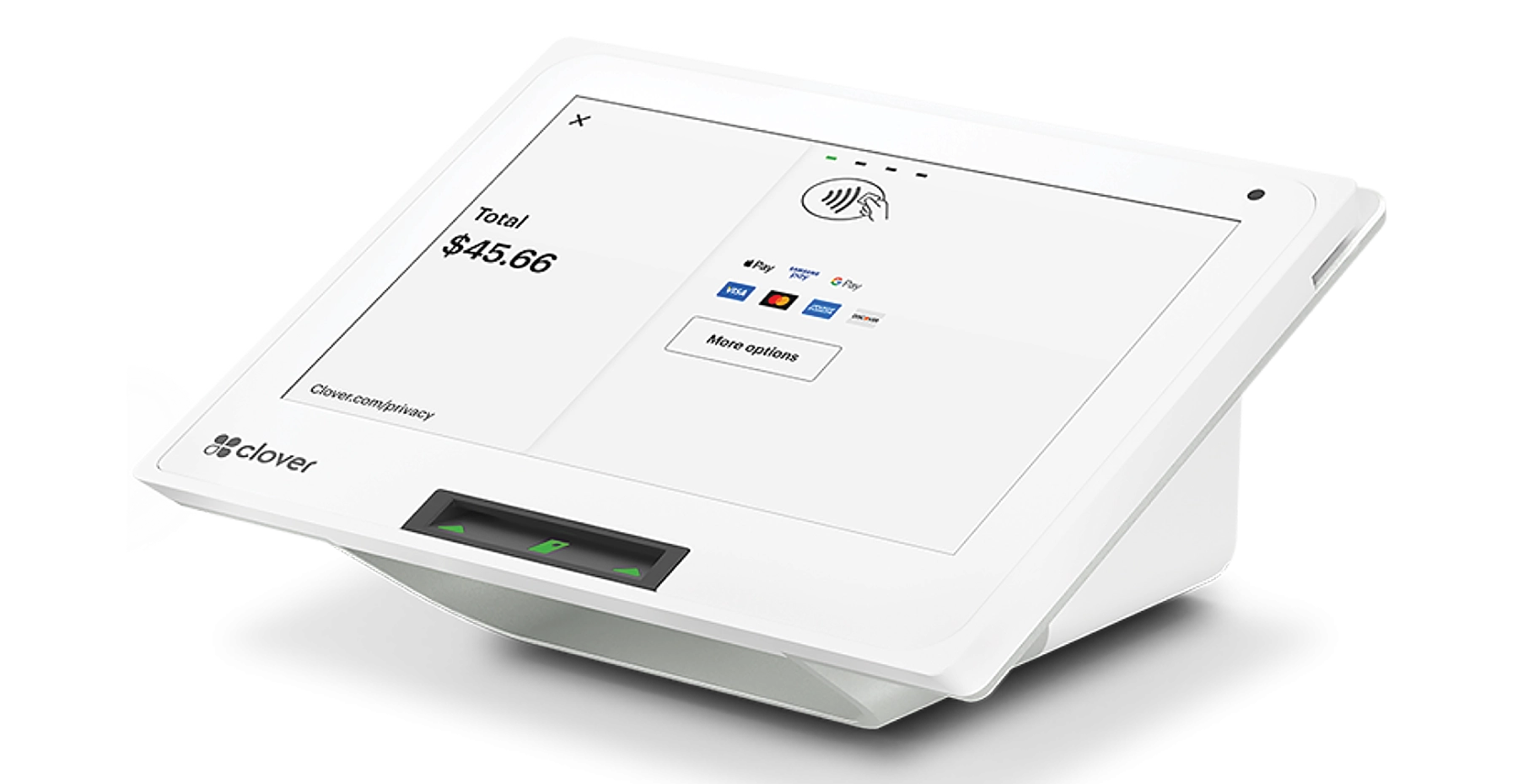
Encrypted, compliant hardware. Modern Clover POS devices encrypt card data the instant a card is dipped or tapped, so it is protected before it ever reaches your network. Using current, compliant equipment instead of an aging terminal does a surprising amount of the compliance work for you automatically.
Card-not-present tools that stay in scope-reduction mode. Taking payments over the phone or by invoice? A virtual terminal for small business keeps those transactions inside the same secure, compliant environment rather than scribbling card numbers on a sticky note. Same protection, far less risk.

Just as important as the technology is having a partner who walks you through it. VMS helps you identify the right SAQ, set up compliant hardware and vaulting, and complete the paperwork — so getting PCI compliant becomes a short conversation instead of a research project. And because we have been doing this for small businesses since 1998, we have seen every setup and can tell you the simplest compliant path for yours.
PCI Compliance Myths That Trip Up Small Businesses
A lot of the anxiety around PCI comes from bad information. Here are the four myths that cause the most trouble.
“I’m too small to be a target.” This is the most dangerous one. Small businesses are targeted constantly because attackers assume — often correctly — that the defenses are thinner than at a big retailer. Your size is not camouflage.
“My POS vendor handles all of it, so I’m covered.” Good equipment does a lot, but you are still the merchant of record. You still need to complete your SAQ each year and follow basic practices. Compliant hardware shrinks the work; it does not erase your responsibility.
“PCI is a one-and-done thing.” Compliance is annual and ongoing. Cards expire, staff changes, software updates, and the questionnaire renews every year. The trick is to build a setup where re-confirming compliance each year is quick, which is exactly what scope reduction buys you.
“Being compliant means I can’t be breached.” Compliance dramatically lowers your risk and your liability, but no system is magic. Think of PCI as locking the doors and setting the alarm — the responsible baseline that keeps you protected and keeps you off the hook for negligence.
Your Quick PCI Compliance Checklist
If you remember only one thing from this guide, make it this short list. Run through it once and you will already be ahead of most small businesses on payment security:
- Complete your annual SAQ. Ask your processor which version applies and knock it out — this is the step that stops those monthly non-compliance fees.
- Use current, encrypted hardware. Modern Clover terminals encrypt card data at the moment of payment; an aging terminal is a liability.
- Never store raw card numbers. No spreadsheets, no paper slips in a drawer, no card numbers saved in email. Let a compliant vault hold them as tokens instead.
- Lock down access. Give each employee their own login, use strong passwords, and remove access the day someone leaves.
- Keep software updated. Patch your POS, your devices, and any connected computers so known vulnerabilities get closed.
- Run quarterly scans if you sell online. Card-present-only businesses can usually skip this, but e-commerce sellers need an Approved Scanning Vendor scan four times a year.
None of these are heavy lifts on their own, and the right processor handles or automates most of them for you. If you are weighing the cost of getting this right against everything else on your plate, remember that staying compliant is far cheaper than a breach — and many owners fund upgrades like new compliant hardware through working capital that pays for itself quickly.
Conclusion: Make PCI Compliance a Non-Event
PCI compliance for small business really comes down to two goals: do not hand criminals an easy target, and do not hand your processor an easy fee. With the right setup, meeting both is a few simple steps a year — not the looming, complicated burden it is made out to be.
The fastest path is to pair good habits with a payment partner that keeps card data out of your hands entirely. VMS provides PCI-compliant vaulting, encrypted Clover hardware, virtual terminals, and hands-on help completing your SAQ — and if you want to see how it all fits together, our Merchant Services FAQs are a good place to start. While you are tightening up your payment operation, it is also worth reviewing what you pay to accept cards in the first place; our guide to credit card processing fees shows where most small businesses overpay.
Ready to make PCI compliance the easiest part of running your business? Fill out the form below and a VMS specialist will walk you through exactly what your business needs — no jargon, no pressure.
Have questions about PCI compliance for your business?
Fill out the form below and a VMS payment specialist will contact you shortly.