

If you run a gym, a lawn care route, a pet grooming shop, or any service business where customers come back on a schedule, you know the pain of chasing payments every month. Setting up recurring billing for small business changes that equation completely. Instead of sending reminders, making awkward phone calls, and waiting for checks that never seem to arrive on time, you get paid automatically on the day you choose. According to NACHA, automated recurring payments now represent the fastest-growing segment of business transactions in the United States — and small business owners who make the switch consistently report fewer late payments, lower administrative costs, and more predictable monthly revenue. That is the difference between a stressful month-end scramble and a business that practically runs itself.
VMS has been setting up recurring billing for small businesses across the country since 1998. Here are five proven ways to put it to work — and why getting started is simpler than most owners expect.

What Is Recurring Billing for Small Business, and Why Does It Matter?
Recurring billing is an automated payment model in which a fixed or variable amount is charged to a customer’s card or bank account on a predetermined schedule — weekly, monthly, quarterly, or annually. The customer authorizes the charge once. The system handles every subsequent payment without any action from either party.
For small business owners, this model solves three of the most persistent cash flow problems:
Late payments. Manual invoicing depends on the customer remembering to pay. Automated billing removes that variable entirely.
Administrative drag. U.S. small businesses collectively lose thousands of hours each year chasing overdue receivables. Every hour spent on collections is an hour not spent serving customers or growing the business.
Revenue predictability. When you know exactly what is coming in each month, you can plan inventory, staffing, and marketing with confidence. Predictable monthly recurring revenue (MRR) also makes your business more attractive to lenders and potential buyers.
Whether you call it a membership model, a retainer, a maintenance plan, or a subscription, the mechanism is the same: your customers pay automatically on schedule, and you focus on doing the work.
Way 1: Set Up Automatic Monthly Payments Through Your Clover POS
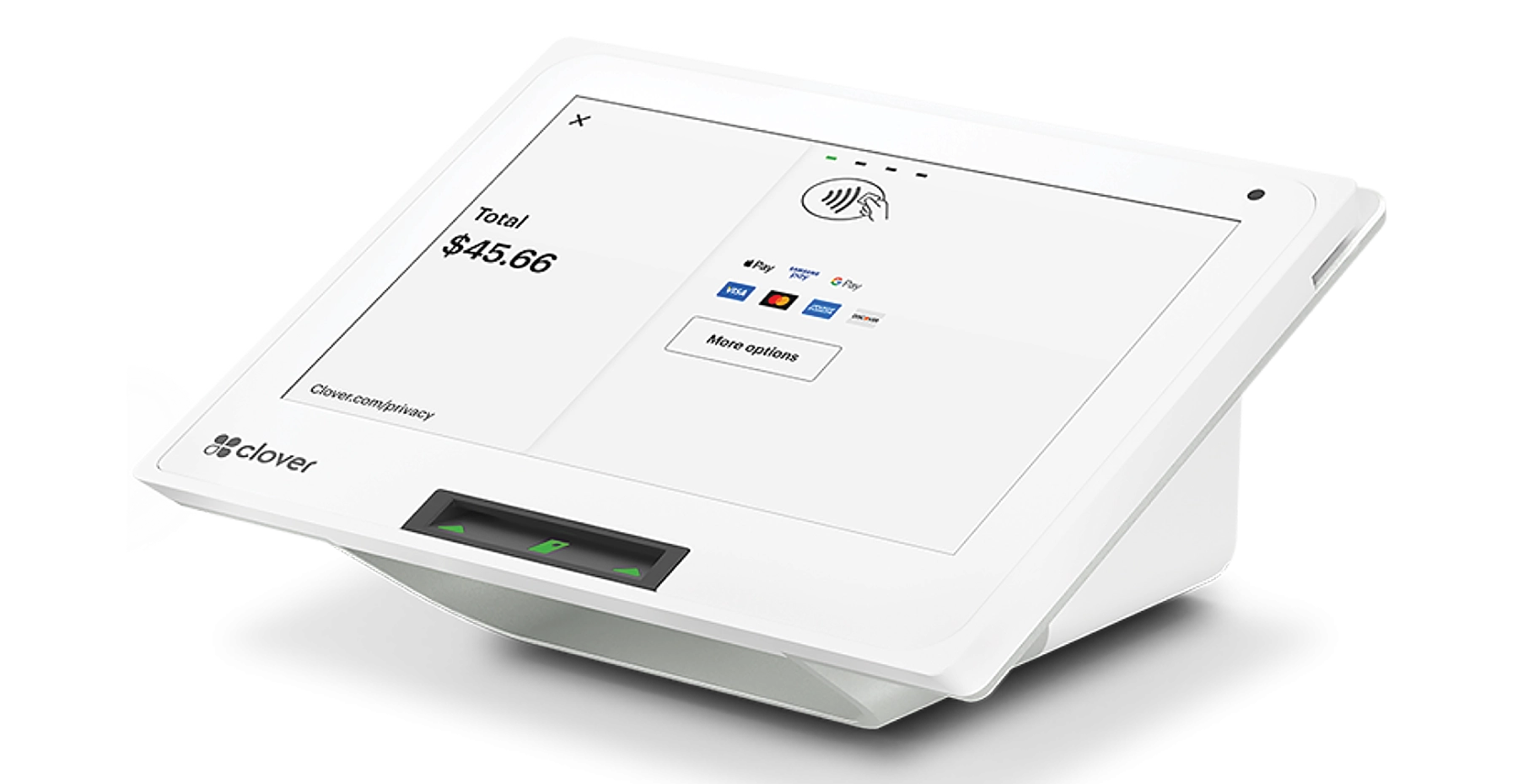
The fastest path to recurring billing for most brick-and-mortar small businesses is the Clover POS system. Clover includes a built-in subscription and recurring billing tool that lets you store a customer’s payment method in a PCI-compliant vault and charge it on any schedule you set.
Here is how it works in practice. A gym owner creates a $59-per-month membership plan in Clover. The customer swipes or taps once at signup. Clover charges the card on the first of every month from that point forward — no invoice, no reminder, no friction. When a card expires, Clover’s account updater service automatically pulls the new card details from the card networks, meaning fewer failed payments.
Clover works across the full device lineup. The Clover Flex is a popular choice for mobile service businesses — pet groomers, mobile mechanics, personal trainers — who need to capture the initial authorization in the field. Setup takes about ten minutes per customer profile.
Best for: Gyms, salons, pet services, wellness studios, childcare, cleaning services, lawn care, and any business with repeat monthly clients.
What to Set Up Before Your First Enrollment
Before enrolling your first customer in a recurring plan, have three things ready:
- A signed card-on-file authorization form — a one-page document the customer signs, giving you permission to charge their card on a recurring basis. This is required by Visa and Mastercard network rules.
- A clear, written cancellation policy communicated at signup.
- A plain-language description of exactly what the recurring charge covers.
VMS provides compliant authorization templates at no charge as part of every merchant account setup. Do not skip the authorization form — it is your protection if a customer disputes a recurring charge.
Way 2: Use ACH Recurring Billing to Cut Your Processing Costs
Credit card processing fees typically run 1.5% to 3.5% per transaction. On a $250 recurring monthly charge, that is $3.75 to $8.75 in fees per customer, per month. Multiply that across 80 recurring customers, and you are spending $3,600 to $8,400 per year just on processing fees for money already owed to you.
ACH (Automated Clearing House) transfers move money directly from your customer’s bank account to yours at a flat fee of $0.25 to $1.00 per transaction — regardless of the amount. For service businesses collecting larger recurring payments, this cost difference is substantial.
Our ACH payment processing for small business guide covers the full setup in detail, but the core process mirrors card-based recurring billing: the customer authorizes you once, you store their bank account and routing number in a secure vault, and the system debits their account on the agreed schedule.
ACH is ideal for:
- B2B recurring billing — monthly retainers, software maintenance contracts, service agreements
- Large-ticket service plans — HVAC maintenance, commercial pest control, commercial cleaning
- Any business where customers prefer direct bank payment over sharing card details
The main tradeoff is settlement speed. ACH typically settles in one to three business days versus same-day or next-day for cards. For monthly billing cycles, this is rarely a meaningful problem, and the cost savings more than offset the slight delay.
Ready to put your payments on autopilot?
VMS sets up recurring billing, card-on-file vaulting, and ACH for your business — usually in days, not weeks.
Or call our team: 888-902-6202
Way 3: Automate Billing with Online Invoicing and Pay Links
Not every recurring relationship fits a fixed monthly amount. Accountants, marketing consultants, tutors, photographers, and contractors often need to bill for variable hours or project milestones on a predictable schedule. For these situations, automated online invoicing is the right tool.
VMS’s online invoicing for small business lets you create a recurring invoice series — the same invoice goes out automatically on a set date — or send one-off invoices with a secure payment link the customer clicks to pay by card or bank transfer. The system tracks whether each invoice has been opened, paid, or ignored.
The critical advantage over manual invoicing is the embedded payment link. Instead of waiting for a check in the mail, the invoice includes a one-click pay button. Research from invoicing platforms consistently shows that invoices with online payment links are paid significantly faster than paper or PDF invoices — in many cases cutting the average collection time nearly in half.
Practical Tips for Invoice Automation
- Set invoice delivery to go out three to five days before the due date, giving customers time to pay before it is technically late.
- Use automated reminder sequences — a gentle nudge two days before the due date, a firmer reminder one day after. Most late payments are accidental.
- Match the payment link landing page to your brand so it looks professional, not like a generic third-party billing portal.
Way 4: Use a Virtual Terminal for Remote and Phone Customers
Some of your best recurring customers may never walk into your location. Contractors, consultants, and remote service providers often work with clients they never meet in person. A virtual terminal for small business solves this cleanly: you log into a secure browser portal, access the customer’s stored card or bank details, and process the recurring charge manually — or schedule it to run automatically each billing cycle.
The virtual terminal also doubles as a card-on-file tool. A customer calls in, provides their card details once, you store them securely, and every subsequent billing cycle is processed with a few keystrokes rather than another phone call.
Virtual terminals are particularly popular with:
- Property management companies billing monthly rent or HOA fees
- Professional services firms — legal, accounting, coaching — billing monthly retainers
- Delivery and logistics companies with recurring route customers
- Medical and dental practices billing insurance copays or payment plan installments
VMS’s virtual terminal integrates with your existing merchant account, so recurring charges appear in the same reporting dashboard as your in-person and online payments. No separate reconciliation, no siloed systems.
Way 5: Pair Recurring Billing with a Loyalty Program for Better Retention

Here is an approach most small business owners overlook: combining a recurring membership fee with a loyalty rewards program dramatically increases how long customers stay enrolled.
The logic is simple. A customer who pays $15 per month for a coffee shop membership gets bonus points, priority access, and exclusive member-only offers. They are not just a billing line item — they are a member. Canceling a membership feels like giving something up, not just stopping a payment. This is exactly why gym memberships retain far better than pay-per-visit models even when customers skip several weeks in a row.
VMS’s loyalty programs feature lets you tie points, digital stamps, or tier status directly to your recurring members, creating a retention engine built on top of your billing system. A salon charging $35 per month for a maintenance membership will retain far more customers than one that simply sends a monthly invoice.
Setup tip: Keep the entry-level membership tier simple. Complexity is the enemy of signup. One price. One clear benefit. One click to join.
How to Prevent Failed Recurring Payments
Even the best recurring billing system will occasionally hit a failed payment. Cards expire, banks flag unusual charges, and accounts run temporarily low. A few practices dramatically reduce the failure rate:
Account updater services. Visa, Mastercard, and American Express maintain databases of updated card numbers. Payment processors with account updater access — VMS is one of them — automatically refresh stored card details before charges fail.
Pre-charge notifications. Send a reminder email or text three to five days before the recurring charge. This gives customers time to update expired cards or add funds before the charge fails rather than after.
Smart retry logic. When a charge fails, do not immediately treat it as delinquent. Most failures are temporary. Retry after one day, then three days, then seven days. Many failed payments recover on the second or third attempt.
Clear, friendly communications. When a payment does fail, assume the best. A quick “here is a link to update your card” is far more effective than a stern collections notice, and keeps members from canceling outright.
What to Look for in a Recurring Billing Provider
Not every payment processor handles recurring billing equally well. Before committing, ask five questions:
- Is the card vault PCI-DSS compliant? VMS uses a fully certified vault — you never store raw card numbers yourself, which keeps your business out of PCI scope.
- Does the platform support ACH in addition to cards? Offering both reduces costs and serves customers who prefer not to share card details.
- What is the failed-payment retry logic? A smart retry sequence typically recovers 20% to 40% of initially failed transactions.
- Does it integrate with your existing POS or accounting software? VMS integrates with Clover, QuickBooks, and major e-commerce platforms.
- What support is available when something goes wrong? VMS provides live phone support from our Downers Grove, IL team seven days a week.
If you are thinking about funding the transition to automated billing, VMS’s working capital options can help. Many of our merchants use short-term working capital to invest in systems that pay back the full cost within the first two or three billing cycles.
For more answers to common billing and merchant services questions, visit our Merchant Services FAQs page.
Conclusion: Stop Chasing Payments and Start Building Predictable Revenue
Recurring billing for small business is not just a convenience feature — it is a genuine competitive advantage. Businesses that automate their billing collect faster, spend less time on administrative work, and build steady monthly revenue that makes everything else easier to plan.
Whether you start with Clover’s built-in subscription tool, set up ACH recurring transfers, automate your invoicing, use a virtual terminal for remote clients, or layer a loyalty program on top of a membership model — the result is the same: you set it up once, and the system works for you.
VMS has been helping small businesses set up recurring billing since 1998. Our team handles everything — merchant account setup, PCI-compliant card vaulting, ACH enrollment, Clover configuration, and ongoing support — so you can focus on what you actually opened your business to do.
Have questions about recurring billing for your business?
Fill out the form below and a VMS payment specialist will contact you shortly.