

Running a gym today is far more complex than simply offering weights and treadmills. Fitness centers must manage memberships, class bookings, access control, recurring billing, personal training sessions, retail sales, waivers, marketing automation, and more—all while delivering a seamless member experience.
That’s why choosing the right POS system for gyms is one of the most important business decisions a fitness owner can make. The right system doesn’t just ring up transactions—it becomes the operational backbone of your entire facility.
Whether you run a boutique studio, a large multi-location gym, a CrossFit box, yoga studio, pilates center, martial arts school, or HIIT training club, this guide will show you exactly what to look for in a POS system for gyms and how to avoid costly mistakes.
Why Gyms Need Specialized POS Systems
Gyms aren’t like retail stores. Your members aren’t just customers—they’re long-term subscribers whose relationship with your business depends on smooth billing, easy scheduling, and reliable access control.
A modern POS system for gyms solves challenges that traditional POS systems can’t, including:
-
Membership billing (weekly, monthly, annual)
-
Recurring payments with automatic retries
-
Access control syncing with door systems
-
Class and trainer scheduling
-
Attendance tracking
-
Integration with workout apps
-
Handling high-volume check-ins
-
Selling supplements, apparel, and merchandise
-
Managing multiple membership tiers
-
Waiver and liability form collection
This is why generic free POS systems like Square or PayPal Zettle often fall short for fitness centers—they simply weren’t built for the demands of running a gym.
For comparison on general hardware setups, you can reference POS hardware options.
Key Features Every POS System for Gyms Must Have
Choosing a POS system for gyms isn’t about finding the cheapest app—it’s about selecting a platform that will streamline operations and minimize member frustration.
Below are the must-have features.
1. Membership Management & Recurring Billing
Your revenue depends on consistent, accurate member billing.
A strong POS system for gyms should offer:
-
Automated recurring billing
-
Card-on-file storage
-
ACH/eCheck billing options
-
Automatic card updater (for expired cards)
-
“Smart retries” for failed payments
-
Real-time billing dashboards
-
Membership freezes and cancellations
-
Multi-tier membership support
This reduces manual admin work and prevents unnecessary membership churn.
If you need help comparing billing models, see VMS’s guide on credit card processing basics.
2. Access Control Integration
A good POS system for gyms connects directly to your entry hardware so members can check in with:
-
Key fobs
-
QR codes
-
Mobile apps
-
RFID cards
This ensures:
-
Only active members enter
-
Failed payments restrict access automatically
-
Staff can monitor check-in logs
No more awkward conversations at the front desk about overdue payments—your system handles it.
3. Class Scheduling & Trainer Booking
Boutique studios depend heavily on schedule-based attendance.
Your POS system for gyms should include:
-
Class booking calendars
-
Trainer appointment scheduling
-
Automated confirmations and reminders
-
Waitlist management
-
Attendance tracking
-
Penalties for no-shows (optional)
This keeps your schedule full and reduces the burden on front-desk staff.
4. Retail & Supplement Sales
Gyms often generate significant revenue from:
-
Protein powders
-
Energy drinks
-
Fitness apparel
-
Equipment (bands, mats, gloves)
-
Branded merchandise
A strong POS system for gyms must include:
-
Inventory tracking
-
Barcode scanning
-
Low-stock alerts
-
Multi-location inventory sync
-
Sales reports by product category
Retail sales can make up 10–20% of total gym revenue if managed effectively.
5. Waivers, Contracts & Digital Forms
For liability and compliance, your POS system for gyms needs built-in tools for:
-
Digital waivers
-
Contract signatures
-
Health questionnaires
-
Parental consent for minors
-
Personal training agreements
These should be stored securely and linked to the member’s account.
6. Mobile App for Members
Members expect everything accessible from their phone.
Your POS system for gyms should offer:
-
Account management
-
Booking + cancellation
-
Payment methods
-
Purchase history
-
Class schedules
-
Check-in QR codes
-
Push notifications
-
Rewards or loyalty points
The mobile experience is a major contributor to retention.
7. Reporting & Analytics
To grow your gym, you must know your numbers.
A modern POS system for gyms should provide reports for:
-
Monthly recurring revenue (MRR)
-
Active vs inactive members
-
Revenue by membership tier
-
Revenue by trainer or coach
-
Class attendance
-
Retail margins
-
Failed payment reports
-
Lead conversion rates
Better data leads to better decisions.
Top POS System Options for Gyms in 2026
Below are commonly used solutions across the fitness industry. Each has pros and cons depending on gym type.
Clover POS (Integrated With Gym Software Partners)
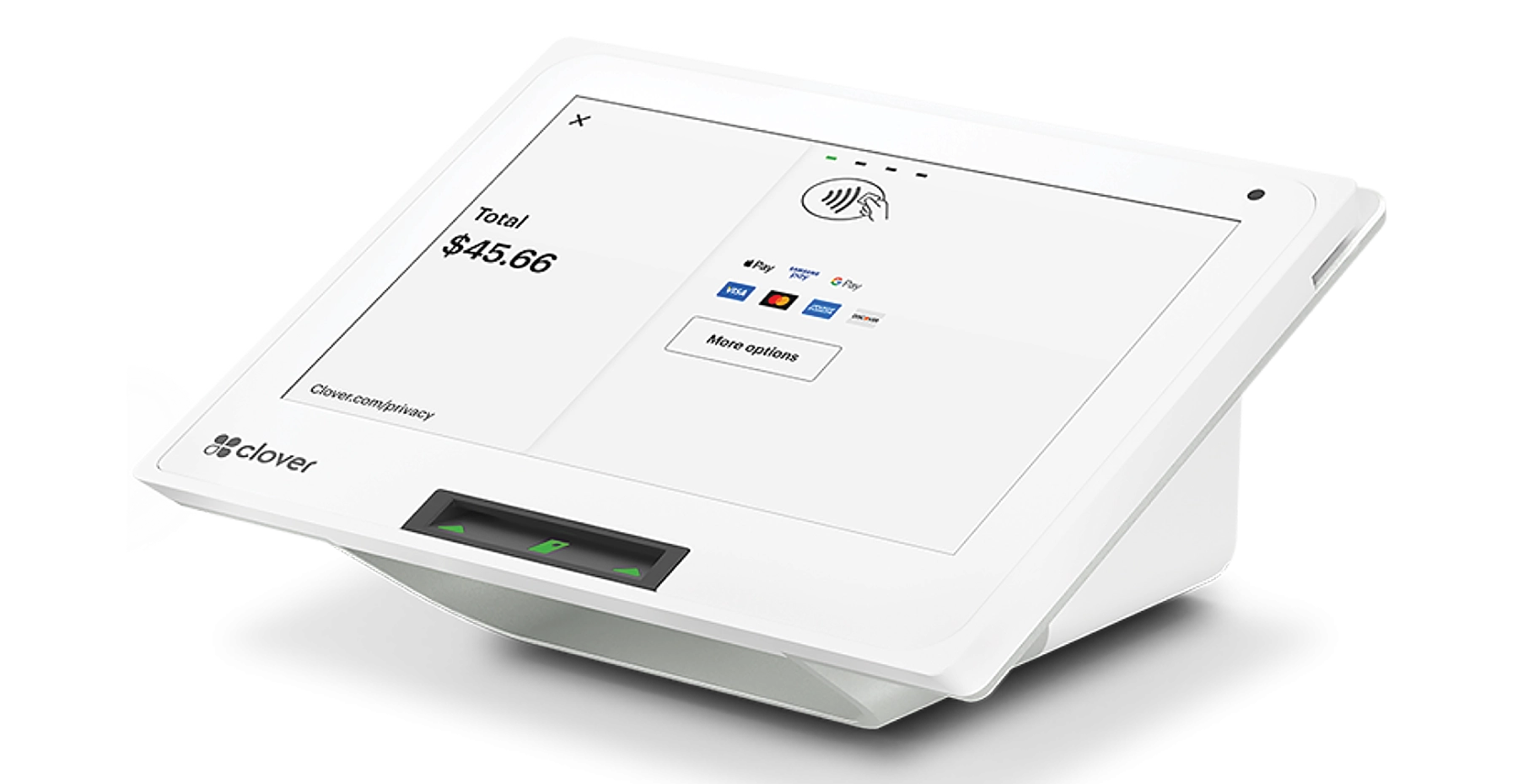
Clover isn’t a gym-specific system—but when paired with membership software (e.g., GymMaster, Zen Planner), it becomes a reliable and cost-effective POS.
Why gyms choose it:
-
Reliable hardware
-
Fast payment processing
-
Clean reporting
-
Integrates with many scheduling apps
-
Works for multi-location businesses
Learn more about its hardware flexibility here:
Clover POS hardware guide
Mindbody
Best for boutique studios (yoga, pilates, barre).
Pros:
-
Strong scheduling tools
-
Branded mobile apps
-
Marketing automation
Cons:
-
Higher processing fees
-
Steeper learning curve
Zen Planner
A classic POS system for gyms, especially CrossFit boxes and martial arts schools.
Pros:
-
Strong attendance tracking
-
Belt/skill-level progression tracking
-
Embedded website tools
Cons:
-
Interface feels outdated compared to newer systems
Vagaro
Popular with fitness studios and wellness businesses.
Pros:
-
Affordable
-
Great scheduling tools
-
Good marketing features
Cons:
-
Limited multi-location support at higher scale
Wodify
Built specifically for functional fitness gyms.
Pros:
-
Workout performance tracking
-
Athlete leaderboards
-
Integrated billing
Cons:
-
Higher monthly pricing than some competitors
The Cost of a POS System for Gyms
Costs vary widely depending on features, hardware, and billing needs.
Typical Monthly Pricing:
-
$99–$299 for software
-
2.3%–2.9% average processing rates
-
Extra for add-ons like access control or branded apps
While free POS systems may look appealing, they almost always lack the fitness-specific features needed for smooth gym operations.
See why free systems become costly here:
The Hidden Costs of Free POS Systems
Common Mistakes When Choosing a POS System for Gyms
Avoid these pitfalls:
1. Using a Retail POS for Gym Operations
Retail systems lack membership billing, access control, and scheduling tools.
2. Ignoring Contract Terms
Some POS systems require multi-year contracts with stiff cancellation fees.
3. Underestimating Processing Costs
A low monthly fee doesn’t always mean cheap processing.
4. Not Considering Future Growth
Multi-location support and scalability are critical for long-term success.
5. No Integration With Access Control
This creates manual work and awkward check-in conversations.
How to Choose the Right POS System for Gyms
Ask these core questions:
1. What is my business model?
-
Large gym?
-
Boutique fitness?
-
Martial arts?
-
Yoga or pilates studio?
Each has different needs.
2. How many members do I have today—and in two years?
Choose a system that grows with you.
3. Do I need advanced scheduling or simple check-ins?
Some gyms rely heavily on weekly classes; others do not.
4. How important is automation?
A good POS system for gyms should reduce admin work—not add to it.
5. What integrations do I require?
Think accounting, marketing, CRM, and access hardware.
Final Thoughts
Choosing the right POS system for gyms is not just a technical decision—it’s an operational strategy. The right platform will help you:
-
Reduce administrative workload
-
Increase membership retention
-
Improve your check-in experience
-
Collect payments reliably
-
Scale to multiple locations
-
Deliver a seamless member journey
A POS system for gyms should be stable, easy to use, integrated with key fitness tools, and built for recurring billing. If your current system can’t do that, it’s holding your gym back.
Still running an outdated register?
VMS sets up a modern Clover POS matched to how your business actually runs — installed, configured, and supported by a team that answers the phone.
Or call our team: 888-902-6227
What a Gym POS System Costs, and What Drives the Price
Gym POS pricing behaves differently from retail because most of the value sits in recurring billing rather than at the counter. Expect the quote to break into four parts.
- Software subscription, usually billed per location and tiered by member count. This is where gym platforms make their money, and where the jump between tiers can be steep once you cross a member threshold.
- Payment processing on both counter sales and recurring dues. Because dues run every month without fail, a small rate difference compounds harder here than in almost any other business type.
- Hardware for the front desk, plus any card readers at satellite points like a juice bar or pro shop.
- Integrations for access control, and sometimes a per-door charge.
The number that matters is not the monthly software fee. It is the blended cost per member per month across software and processing combined. A platform that looks cheap on subscription and expensive on processing will cost more at 400 members than one priced the other way around. Ask any prospective provider to model your actual member count and average dues, and see our processing fee breakdown for what sits underneath the rate.
The Failed Payment Problem Nobody Quotes You On
For a subscription business, involuntary churn is the quiet killer. Members do not cancel; their card expires, is reissued after a breach, or hits an insufficient balance, and the dues simply stop. Most gyms discover this months later in a reconciliation.
Three capabilities materially reduce it, and they are worth more than most feature-list items:
- Account updater. The card networks push updated card numbers and expiration dates to the processor automatically when a card is reissued. Without it, every reissued card becomes a manual chase.
- Intelligent retry logic. Retrying a declined charge on the same day at the same hour mostly fails again. Systems that retry on a schedule aligned with common pay cycles recover a meaningfully larger share.
- Dunning that reaches the member. An automated email and text sequence with a self-service link to update the card, before a human has to make the awkward call.
Ask each vendor directly whether account updater is included or costs extra, and what their recovery rate on failed recurring charges looks like. A platform that cannot answer that question has not measured it.
Switching Gym POS Systems Without Losing Members
Migration is where gyms get hurt, because the thing being moved is not inventory but stored payment credentials and active contracts.
Confirm card data is portable before you commit
Stored cards live in the processor’s vault, and moving them is a formal, PCI-governed vault-to-vault transfer between processors. It is routine when both sides cooperate and impossible when they do not. Get written confirmation that your current provider will release the vault, because the alternative is asking every member to re-enter a card, and you will not get all of them back.
Run parallel for one full billing cycle
Do not cut over mid-month. Complete one dues run on the old system, migrate, then watch the first run on the new one closely against the prior month’s member count and dollar total. Any gap is a failed migration, not a churn event.
Preserve contract terms and expiration dates
Committed-term agreements, promotional rates, and freeze status all have to carry across. These fields are frequently dropped in an import, and the errors surface as billing disputes weeks later.
Gym POS Questions We Get Most Often
Do I need gym-specific software, or will a general POS work?
If you sell memberships, you need recurring billing, contract management, and ideally access control, which general retail POS software does not do well. If you are a small studio billing through classes and packages rather than memberships, a strong general POS paired with a scheduling tool can be enough and costs considerably less.
Can I keep my current processor and just change software?
Sometimes. Several gym platforms require you to use their in-house payments and will not integrate an outside processor. That is a significant lock-in worth identifying before you evaluate features, because it removes your ability to renegotiate rates later.
How do I handle members who freeze or cancel?
The system should support a freeze that pauses billing without deleting the member record or their history, and a cancellation that respects any remaining committed term. Systems that only offer delete force staff into workarounds that corrupt your reporting.
What about selling supplements and merchandise?
Treat the pro shop as real retail. You want barcode scanning, per-SKU inventory, and reporting that separates retail margin from membership revenue, so you can tell whether the shop is actually profitable. Our POS device lineup covers the counter hardware for this.
Have questions about POS systems?
Fill out the form below and a VMS payment specialist will contact you shortly.