

On November 12, 2025, the United States Mint struck its final penny for general circulation, officially ending 232 years of production.
The reason was simple economics. Producing a one-cent coin had become financially irrational. Each penny cost more than its face value to manufacture, and the government finally pulled the plug. While pennies remain legal tender and billions are still in circulation, no new ones are entering the economy.
That change may sound symbolic. For small business owners, it’s operational.
If you run a retail store, restaurant, salon, auto shop, or convenience store, the end of penny production directly impacts how your POS system handles transactions and increases the importance of choosing the best POS system for retail in 2026.
This shift introduces the need for penny rounding, a method where cash transactions are rounded to the nearest nickel to simplify cash handling in the absence of pennies.
This is not about nostalgia. It’s about cash flow, rounding, pricing, and customer experience.
Cash Rounding Is Now a Practical Reality
As pennies gradually disappear from circulation, making exact change becomes more difficult. Even though they are still legal tender, supply will naturally shrink over time.
When customers pay with cash, totals may need to round to the nearest nickel when needed due to coin shortages. Digital payments, however, will continue to process exact cents.
That creates a split checkout environment:
Cash transactions may round. Card and digital payments will not. For example, a cash total of $10.02 would round down to $10.00, while $10.03 would round up to $10.05.
If your POS system cannot automatically manage this distinction, you risk slowing down checkout, creating drawer discrepancies, and confusing employees.
Modern systems can apply a default rounding rule only when “Cash” is selected as the tender type. Card payments remain exact. The adjustment happens automatically and is clearly reflected on the receipt. The rounding rules setting can typically be found in the POS interface under Sales > Options > Payment tab. POS systems often provide options to configure rounding preferences, allowing businesses to customize how rounding is handled.
Older countertop terminals were not designed for this level of flexibility. That gap will become more noticeable as penny circulation declines.
Pricing Strategy Will Shift
For decades, pricing psychology revolved around .99 and .95 endings. Without steady penny supply, those models may evolve.
Businesses now face a strategic decision. They can maintain traditional pricing and round cash totals at checkout, adjust shelf pricing to nickel-based endings, or lean further into digital payments to reduce reliance on small change.
The bigger trend is already clear. Consumers are increasingly using cards, mobile wallets, and contactless methods as card and digital payments become the dominant choice in 2026. The end of penny production accelerates a movement that was already underway.
Your POS system must support that shift seamlessly.
Tap-to-pay, digital wallets, online ordering integration, and synchronized reporting are no longer premium features. They are operational necessities.
Dual Pricing and Transparency Matter More Than Ever
For merchants operating cash discount or dual pricing programs, clarity is critical.
When rounding enters the equation, receipts must clearly display how totals are calculated. Customers need to understand the posted price, the tender type used, and any rounding adjustments. Businesses should also post a clear sign at checkout to inform customers about the rounding policy, ensuring transparency and consistency. Providing clear information about how rounding is applied and reflected on receipts helps customers interpret their transactions accurately.
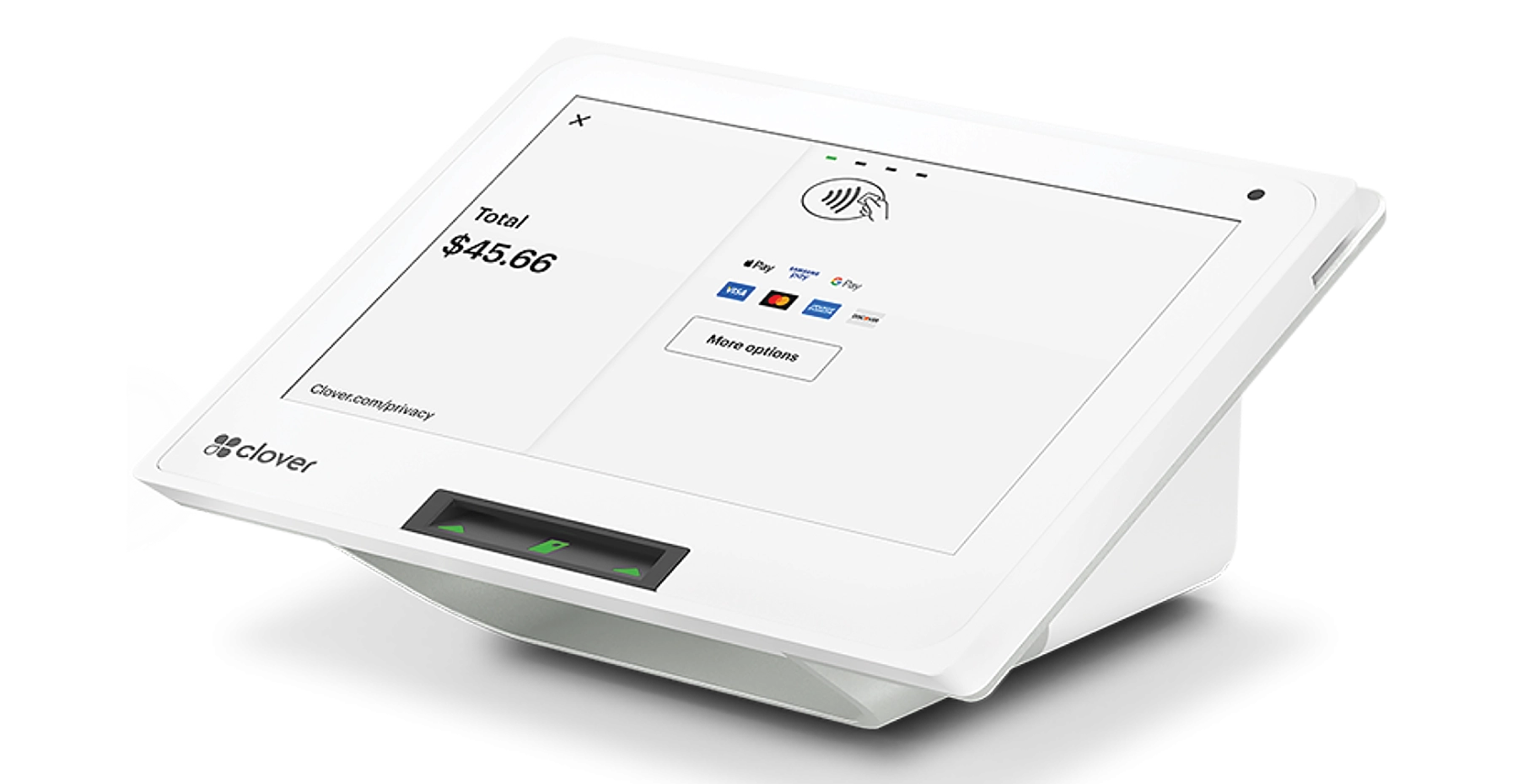
A modern POS platform like Clover POS automatically separates these components and prints them transparently. This protects merchants from confusion and ensures accurate reporting.
If your system requires manual explanation at checkout, you are introducing friction into the transaction. In today’s environment, friction costs loyalty.
Displaying Rounding Information at Checkout
When it comes to cash payments in a post-penny world, transparency at the point of sale is essential. Customers want to know exactly how their order total is calculated, especially when cash rounding or penny rounding is applied to bring the transaction to the nearest nickel. By clearly displaying rounding information at checkout, merchants can eliminate confusion, build trust, and ensure every transaction is understood.
A best practice is to have your POS system display three key pieces of information for every cash transaction: the original order total, the rounded amount (to the nearest nickel), and the rounding difference. For example, if a customer’s order total is $10.34 and the cash payment is rounded up to $10.35, the POS should show the original price ($10.34), the rounded value ($10.35), and the rounding adjustment (+$0.01). This level of detail helps customers see exactly how the cash rounding rule is applied, and it verifies that no hidden fees or unexpected changes are being made.
To set up this feature, merchants can usually access their POS settings by navigating to the Sales or Payment options menu. Look for a section labeled “Rounding” or “Cash Rounding.” Here, you can choose to enable the display of rounding details, such as the original amount, rounded amount, and rounding difference. Some systems, like Clover POS, even allow you to customize how this information appears on both the POS screen and printed receipts, so you can set the display format that works best for your business.
In addition to updating your POS, it’s a good idea to post a sign at the register or checkout area explaining your cash rounding policy. The sign should state that all cash payments will be rounded to the nearest nickel, and include a simple example—such as, “If your total is $10.32, your cash payment will be rounded down to $10.30.” This proactive communication helps customers understand the process and avoids questions at the register.
Remember, cash rounding only applies to cash transactions. Card, mobile, and digital payments are still processed to the exact cent, so your POS should be set to apply rounding only when “Cash” is selected as the payment method. By configuring your system this way, you avoid errors and ensure that all payments are handled according to the correct rules.
If you need help setting up or customizing these options, visit your POS provider’s support page or file a support ticket. Many providers, including Clover, offer step-by-step guides, FAQs, and real-world examples to help you learn how to apply and display cash rounding information. By taking these steps, you’ll provide a transparent, efficient, and customer-friendly checkout experience—no matter how small the change.
Reporting and Reconciliation Cannot Be Manual
One of the most overlooked impacts of penny elimination is accounting accuracy.
If rounding adjustments are not tracked correctly inside your POS, your daily sales totals and drawer counts may not align. Over time, small inconsistencies become reconciliation headaches.
Advanced POS systems log rounding adjustments as part of the transaction record, ensuring that all relevant information is accurately captured for reconciliation and reporting. For example, if a customer’s total comes to $10.02 and is rounded down to $10.00, the POS logs a -$0.02 rounding adjustment, which is then reflected in end-of-day reports and reconciled against cash drawer totals.
Efficiency at scale depends on clean data.
The Cashless Acceleration Is Real
The end of the penny signals something larger. Physical currency usage continues to decline. Businesses that modernize their payment infrastructure gain speed and operational clarity.
Faster checkout times reduce lines. Contactless payments improve customer satisfaction. Integrated POS systems connect in-store sales with online transactions, loyalty programs, and reporting dashboards, and alternative solutions like cashless ATM and point-of-banking technology can further expand payment options for certain business types.
When small inefficiencies are removed, throughput increases.
The government discontinued penny production because it no longer made economic sense. Small business owners should evaluate their technology with the same mindset.
If your payment system requires extra steps, manual adjustments, or outdated hardware, it may no longer make economic sense either.
What Business Owners Should Evaluate Now
You do not need to panic. Billions of pennies still circulate, and they remain legal tender. But this is a strategic moment to assess your infrastructure.
Ask yourself whether your POS can automatically apply rounding rules for cash transactions. Consider whether your hardware is more than four years old. Evaluate whether your reporting is fully integrated or partially manual.
The businesses that adapt early will operate more smoothly as circulation changes naturally.
Support and Resources for a Smooth Transition
Adapting to the end of penny production and the introduction of cash rounding may feel like a big change, but you don’t have to navigate it alone. At Velocity Merchant Services, we’re committed to making your transition as smooth as possible, especially when it comes to handling cash payments and applying the nearest nickel rounding rule.
Our dedicated support team is ready to answer your questions about cash transactions, cash rounding, and how to set up your POS system to automatically round to the nearest nickel. Whether you need a step-by-step guide to apply the rounding feature, want to learn how to calculate the order total for cash payments, or are looking for tips to avoid issues with receipts and payments, we’re here to help.
To make things even easier, we’ve created a comprehensive support page on our website. Simply visit our site and click on the “Support” tab to access a range of resources. You’ll find FAQs, tutorials, and real-world examples that show exactly how to apply the new rounding rule in your POS system. These resources are designed to help you set up your register, apply the correct rounding rule, and eliminate confusion for both your staff and your customers.
The Bigger Picture
The penny lasted 232 years. That is an extraordinary run.
But commerce evolves.
The elimination of new penny production is a reminder that systems, tools, and processes must evolve alongside it. Small changes in the monetary system ripple outward into retail operations, pricing strategies, compliance considerations, and technology upgrades.
When change disappears from the cash drawer, your POS system must step in and carry the weight.
If you are unsure whether your current system is prepared for a post-penny environment, this is the time to evaluate it. The businesses that modernize their payment experience will move faster, reconcile easier, and deliver a smoother checkout experience for customers.
History just shifted.
Make sure your technology shifts with it.