
If you are new to using a credit card processing service, you may find your credit card processing statement difficult to understand. Many businesses find merchant account statements confusing and may overlook important details that impact their costs and security, including issues that can lead to chargebacks, holds, and freezes on merchant accounts. If you’re confused about the difference between interchange fees and processing rates, read on to learn all you need to know to understand your processing statement in full.
Understanding Your Merchant Statement
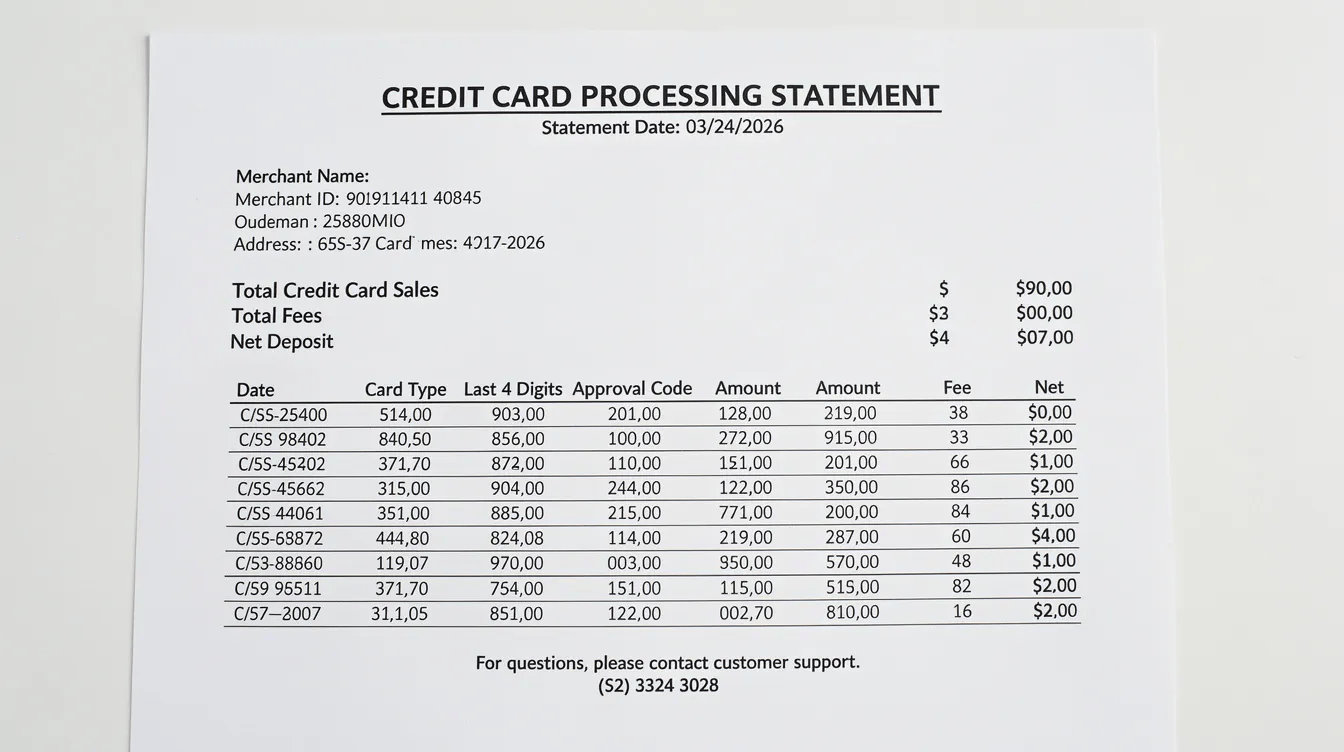
Understanding your merchant statement is essential for any business that accepts credit card payments. A merchant processing statement—sometimes called a credit card processing statement or card processing statement—is a monthly document provided by your payment processor. This statement gives you a detailed overview of your payment processing activity during the statement period, including all transactions, sales activity, and the various processing fees charged to your merchant account.
By carefully reviewing your merchant statement, you can see exactly how much you’re paying in payment processing fees, spot any unexpected charges, and ensure that your payment processor is billing you correctly. The statement typically lists each transaction processed, the types of cards used, and a summary section that breaks down all the fees and charges for the period. This high level overview helps you track your credit card processing costs, monitor your cash flow, and identify trends in your sales activity.
Regularly reviewing your merchant processing statement also allows you to catch errors, such as incorrect transaction amounts or unauthorized charges, and to better understand the pricing structure of your payment processor. By staying informed about your merchant processing, you can make smarter decisions about which payment service provider or pricing model is right for your business, ultimately helping you reduce unnecessary fees and improve your bottom line—much like the scrutiny recommended in analyses of what Shark Tank would say about your card processor.
Credit Card Interchange Fees
One of the main items on your credit card processing statement will be the interchange fees that you pay to the issuers of credit cards. These fees are paid to the issuing bank (or card issuing banks) and are set by card networks like Visa and MasterCard. They vary based on the type of card you accept and the industry you’re in. The merchant category code (MCC) assigned to your business and whether a transaction is card not present can also affect the interchange charges you see on your statement. For example, card-not-present transactions often incur higher fees due to increased risk and missing transaction details, and broader changes in the world of swipe and interchange fees can also influence what you ultimately pay.
When a transaction is processed, an authorization fee may be charged for each attempt, even if the card is declined, because information is exchanged with the issuing bank during the authorization process. These costs can differ depending on whether the payment runs as debit or credit, so it helps to understand debit vs. credit transaction fees when reviewing your statement.
On top of credit card interchange fees, you have to pay processing fees to your credit card processing service. Different processing companies charge different levels of fees, so it may be worth shopping around to find the best credit card processors to avoid hidden fees.
Pricing Models for Credit Card Processing
Credit card processing companies use a number of different pricing models to charge their clients for processing credit card payments. One of the most common pricing models is tiered or bundled pricing. If you can see the terms qualified, mid-qualified, or non-qualified listed somewhere on your credit card processing statement, it is likely that your processing company is using this pricing model. Under this model, credit card processing companies charge different levels of fees for different types of transactions. Some pricing models also include a fixed fee or monthly service fees, and may charge a statement fee for providing monthly transaction statements. This can be expensive as there’s no way to predict what type of card your customers will use – you can’t control your fees. Another common pricing model is pass-through or interchange plus pricing, which provides a discount rate for all card brands shown on your statement. Flat rate pricing, in which the fees charged are the same for all card types, is a similar pricing model that has recently been gaining in popularity; interchange plus vs flat rate comparisons can help you determine which option saves more for your business. If your credit card processing company uses flat rate pricing, your statement will look a lot simpler as it won’t include a breakdown of interchange and markup fees. When reviewing fee breakdowns, it’s important to understand the difference between monthly discounting and daily discounting—monthly discounting applies processing fees once per month, while daily discounting deducts fees each day, which can complicate reconciliation.
This pricing model can help some businesses to save money. Additionally, electronic payments and third party transactions may have unique fee structures that appear on your statement. To optimize your processing costs, it’s important to choose the right payment processor, lower your credit card processing fees, and understand how passing credit card processing fees to customers might fit into your pricing strategy.
Tired of unpredictable processing fees?
VMS offers cash discount and dual pricing programs that can bring your effective rate close to zero, plus a free statement review.
Or call our team: 888-902-6227
Conclusion
Knowing the basic categories of charges will allow you to speak knowledgeably to your credit card processor and help ensure you’re getting the best value for you money
Have questions about processing fees?
Fill out the form below and a VMS payment specialist will contact you shortly.