
If you’re a business owner trying to navigate the maze of credit card processing fees, chances are you’ve come across two main pricing models: interchange plus and flat rate. Both have their perks. Both have their drawbacks. And both can make or break your monthly margins if you’re not careful.
So, which one should you choose? The answer isn’t as simple as one being better than the other — it depends on how your business processes payments, your average transaction size, and how transparent you want your pricing to be. Let’s break it all down so you can make a smart, money-saving choice. We’ll look at the key differences and fee structures between interchange plus and flat rate pricing to help you understand which model fits your business best.
Introduction to Credit Card Processing
Credit card processing is an essential part of running a modern business, whether you’re accepting payments in-store, online, or on the go. As a business owner, understanding how you pay for credit card and debit card transactions can make a big difference in your bottom line. The way your payment processing fees are structured depends on the pricing model you choose. The two most common options are flat rate and interchange plus. Each pricing model has its own advantages and drawbacks, and the right choice can help you manage costs, improve cash flow, and simplify your monthly credit card statement. By learning the basics of credit card processing, you’ll be better equipped to choose the model that fits your business needs and helps you keep more of what you earn.
What Is Flat Rate Pricing?
Flat rate pricing is exactly what it sounds like: you pay one fixed rate per transaction, regardless of the type of card used or how it’s processed. Flat rate pricing is also known as a flat fee or flat rate model, offering a straightforward approach to payment processing. For example, you might be charged 2.75% per swipe, and that’s it. No guessing. No breakdowns.
This model is especially popular with companies like Square and PayPal, who built their services to be simple and appealing to startups, pop-up shops, and lower-volume businesses. It’s predictable, which means easy budgeting — and that’s a big deal when you’re wearing twelve different hats running your business. Flat rate processing is favored by flat rate processors for its simplicity.
But here’s the catch: you’re almost always overpaying. With a flat rate pricing model, all transactions fall under the same rate, regardless of whether they are card present transactions or card not present transactions.
Behind the scenes, every card transaction includes an interchange fee (what banks charge to move money between accounts) and a markup from the payment processor. With flat rate pricing, the processor takes the highest possible interchange rate into account — meaning they win when you process lower-cost debit or standard credit cards, and you lose the savings. Flat rate fees are designed to cover both card present and card not present transactions, making billing predictable.
What Is Interchange Plus Pricing?
Interchange plus pricing, also known as the interchange plus pricing model, is the more transparent model. It separates your fee into two parts:
-
The interchange fee, which is the non-negotiable percentage fee set by card networks like Visa, Mastercard, etc.
-
The processor’s markup, a distinguishable component of the overall processing rate, which is typically a small, consistent percentage fee plus a per transaction fee (a few cents per transaction).
For example, you might see pricing like “interchange + 0.3% + 10¢.” That means if the card being used has a 1.5% interchange fee, you’d pay 1.8% + 10¢ total, where the 0.3% is the processor’s percentage fee and the 10¢ is the per transaction fee.
The transaction fee is a fixed or variable cost added to each transaction, and the processing rate is the sum of the interchange fee, processor’s markup, and transaction fee.
The benefit? You see exactly what you’re paying and where your money’s going. You’re not subsidizing other merchants’ transactions or paying inflated rates to make things simple. And if your customers frequently use low-interchange cards (like debit cards), you save big time.
Interchange Fees and Card Networks
A major part of every credit card transaction is the interchange fee. This fee is set by card networks like Visa, Mastercard, Discover, and American Express, and it’s paid by the merchant to the card-issuing bank every time a customer uses their credit card. Interchange fees are not one-size-fits-all—they vary based on the type of card (credit or debit), how the transaction is processed (in-person or online), and even the industry your business is in. Typically, an interchange fee is made up of a percentage of the transaction amount plus a small fixed fee, such as 1.5% + $0.10 per transaction. These fees are a core component of your overall credit card processing fees, and understanding how they work is key to managing what you pay to accept credit card payments. By knowing how card networks set these rates, you can better navigate the complexities of credit card processing and make informed decisions for your business.
Processor Markups and Miscellaneous Fees
Beyond the interchange fee, payment processors add their own markup to cover the cost of handling your transactions and to generate profit. This processor markup can vary widely depending on the payment processor and the pricing model you select. Some processors charge a simple, transparent markup, while others may include additional fees for services like payment gateways, PCI compliance, or monthly statements. These miscellaneous fees can add up quickly and impact your overall credit card processing costs. That’s why it’s important to choose a payment processor that clearly discloses all fees upfront, so you know exactly what you’re paying for credit card processing and can avoid credit card processors with hidden fees. Understanding both the processor’s markup and any extra charges will help you avoid surprises and ensure you’re getting the best value from your payment processing provider.
Flat Rate Pricing Interchange
Flat rate pricing is a popular pricing model among small and medium-sized businesses because it offers simplicity and predictability. With flat rate pricing, you pay a single, fixed rate for every credit card transaction, regardless of whether your customer uses a credit card or a debit card, or whether the transaction is in-person or online. This makes it easy to estimate your payment processing fees each month, which is especially helpful for budgeting and cash flow management. However, while flat rate pricing is convenient, it may not always be the most cost-effective option—especially for businesses with high transaction volumes or a large number of debit card transactions, which typically have lower interchange costs. In contrast, interchange plus pricing passes the actual interchange fees directly to you and adds a fixed markup, often resulting in lower processing fees and greater cost savings for businesses that process a lot of payments. Understanding the differences between flat rate pricing and interchange plus pricing, as well as broader strategies for lowering credit card processing fees, can help you choose the most cost effective option for your business and avoid paying more than you need to in processing fees.
Interchange Plus vs Flat Rate: What’s the Real Difference?
Let’s say your business processes $20,000/month with an average transaction size of $40.
With flat rate pricing at 2.75%, you’d pay:
$20,000 x 2.75% = $550/month
With interchange plus pricing — assuming an average interchange of 1.7% and a markup of 0.3% + 10¢ — you’d pay:
$20,000 x 2.0% = $400, plus about 500 transactions x $0.10 = $50Total = $450/month
Processor charges and credit card fees can vary significantly depending on the pricing structure you choose, impacting your total monthly costs.
That’s a savings of $100/month, or $1,200/year — just by choosing the model that adjusts to the actual cost of each transaction.
And if you process higher volumes? That difference compounds fast. Higher fees can result from certain card types, like premium or American Express, or from less transparent pricing models.
Interchange plus and flat rate are two of the most popular pricing structures in credit card processing.
Which Businesses Benefit from Flat Rate Pricing?
Flat rate pricing does have its place. It’s best suited for:
-
Very small businesses processing less than $5,000/month
-
Businesses that want simple, predictable fees
-
Seasonal or pop-up shops where ease of setup matters more than razor-thin savings
While flat rate pricing is suitable for some, most businesses—especially high volume businesses or those with multiple locations—may benefit from other pricing models that offer more transparency and potential savings.
Accepting credit cards is essential for modern businesses to meet customer expectations and increase sales, but the right pricing model depends on your business size and structure.
If you’re just getting started, flat rate pricing may be helpful for a few months until you build volume — but beyond that, it starts to eat into your profits. A lot of business owners stick with flat rate models out of habit or fear of change, but the math almost never works in their favor.
Which Businesses Should Use Interchange Plus Pricing?
If your business is established and processing consistent volume, interchange plus is almost always the smarter choice. As your business grows, the interchange plus payment processing model can offer even greater cost savings due to lower markups on higher transaction volumes. It’s best for:
-
Restaurants, retailers, and service providers doing $10K+/month
-
Businesses with lots of debit card transactions
-
Merchants that want full transparency into fees
-
Business owners who are looking to reduce processing costs without compromising on quality
When evaluating payment processing models, it’s important to understand different transaction types, as fees can vary depending on whether the transaction is in-person, online, or keyed-in, and whether you’re using a dedicated merchant account or a payment aggregator.
It might look a bit more complex on paper, but with the right provider, your statements are clear, and you’ll be able to see what you’re paying for every card type. That kind of insight can change how you run your business.
Credit card processing companies offer a variety of models, so choosing the right one is crucial for long-term savings.
The Transparency Advantage of Interchange Plus
Transparency isn’t just a buzzword — it’s a major advantage. Flat rate pricing gives you convenience, but it hides where your money’s going. Interchange plus tells you exactly what you’re paying to the bank, and what you’re paying to your processor. Monthly fees can also be more transparent and predictable with interchange plus pricing, making it easier for medical practices to manage costs and anticipate expenses.
That might not seem like a big deal, but if your processor suddenly raises their markup or adds fees, you’ll notice right away. With flat rate, you could be paying more without even realizing it.
Plus, if you’re ever shopping for a new processor or negotiating a better deal, having clear interchange plus pricing gives you a better footing. It’s like knowing the wholesale price before you buy retail — now you’ve got leverage.
Avoiding Hidden Fees
Another key difference is the potential for hidden or padded fees. Flat rate models often include fees for PCI compliance, statement delivery, and random monthly “service” charges. They count on you not reading the fine print. With interchange plus pricing — especially from a transparent provider like VMS — these fees are easier to spot and avoid.
At Velocity Merchant Services, we believe in helping small businesses understand their payment processing, not confuse them with complicated jargon. If you’re using flat rate and don’t know what you’re actually paying? That’s a red flag.
Can You Switch from Flat Rate to Interchange Plus?
Absolutely — and it’s not as painful as you think.
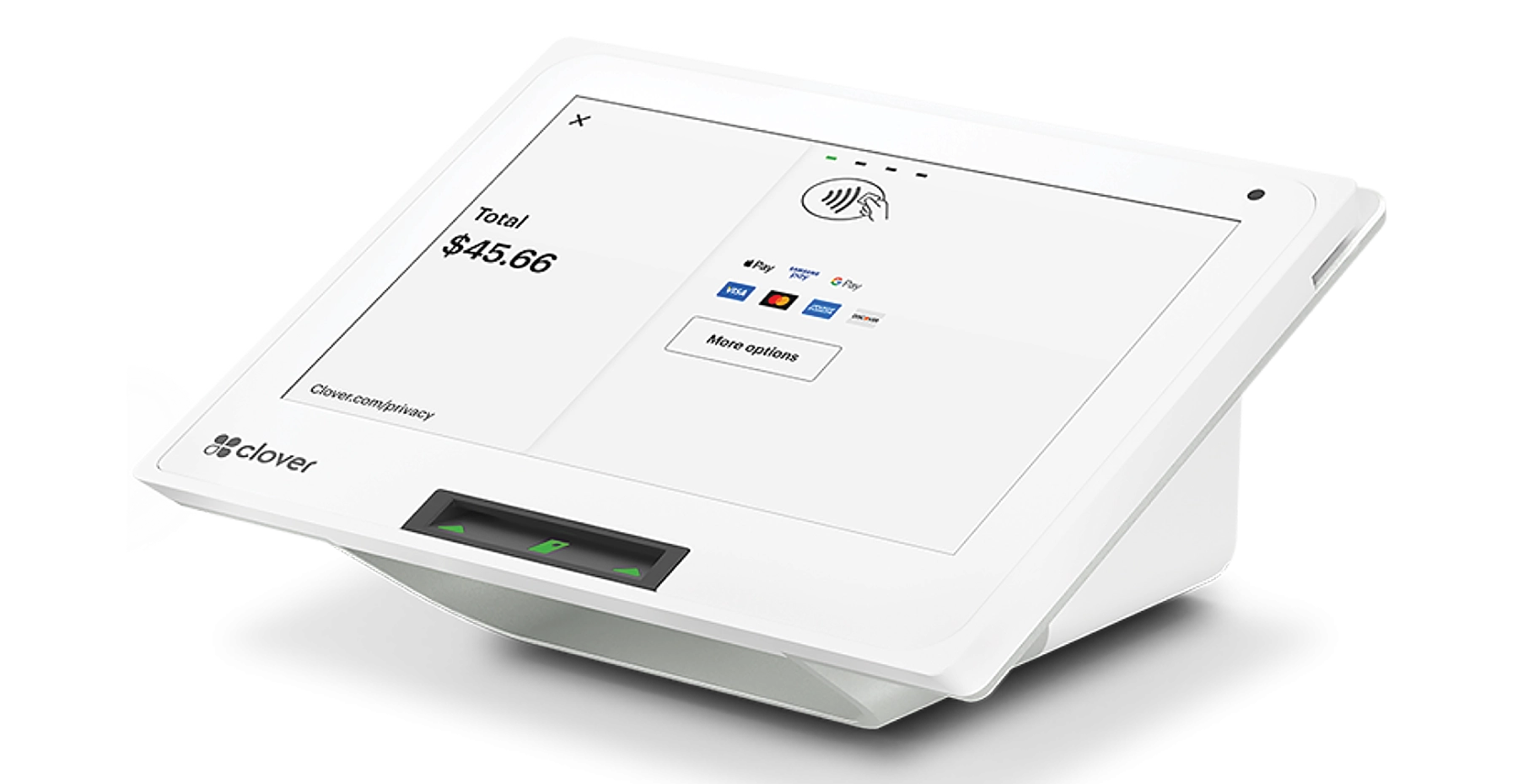
Many business owners are afraid to switch because they assume it means new hardware, contracts, or disruption. But most modern providers (like us!) make it seamless. If you’re already using a Clover device, for example, switching pricing models can happen on the backend with no disruption to your business, and you can avoid the kind of “free” POS systems with hidden costs that often lock you into higher processing fees.
And if you’re still using an old-school terminal? This might be the perfect time to upgrade to a smarter POS system, explore a compliant cash discount program to cut processing fees, and reduce costs in one move.
Final Verdict: Interchange Plus vs Flat Rate — Who Wins?
If we’re talking about simplicity, flat rate takes the cake.
But if we’re talking about savings, transparency, and scalability? Interchange plus is the clear winner.
At the end of the day, the best pricing model for your business is the one that aligns with your goals — and keeps more of your hard-earned money where it belongs: in your bank account.
If you’re not sure what you’re currently on or how much you could save, let our team at Velocity Merchant Services run a free statement analysis for you. You can start by checking our merchant services FAQs for small businesses and even look at your costs the way investors would by considering what Shark Tank would say about your card processor. If you’re stuck in a long-term contract, understanding how credit card processing cancellation fees work and when they can be waived can give you options, and staying on top of Visa’s latest surcharge rules ensures any changes you make to pass on fees are compliant. No pressure, no nonsense — just honest numbers.
Ready to compare what you’re paying now?
Schedule your free processing analysis.