

You just wrapped the busiest Saturday your dining room has seen all summer. Every table turned three times, the kitchen never stopped, and the register total looked beautiful. Then Monday arrives, you pay the produce invoice, payroll, rent, and the card processor – and somehow there is barely anything left. If that story feels familiar, you have met the defining math problem of this industry: the restaurant profit margin. It is famously thin, it leaks from a dozen small holes at once, and most owners only see the damage after the money is already gone.
Here is the good news. A thin margin is not a law of nature. It is a scoreboard, and once you know what the numbers mean – what is normal, what is good, and which line items are quietly eating your share – you can move it. You do not need an MBA or a consultant on retainer. You need benchmarks, a ten-minute monthly habit, and a short list of fixes that actually pay. In this guide, we will walk through all three, the same way we would across the table from you.
What Is the Average Restaurant Profit Margin?
Across the industry, the average restaurant profit margin lands between 3% and 5%. That is net margin – what is actually left after food, labor, rent, utilities, insurance, fees, and everything else has been paid. The National Restaurant Association’s research has long shown that the overwhelming majority of every sales dollar goes right back out the door to cover costs, which is why a restaurant doing $1 million a year in sales might take home $30,000 to $50,000 in profit. Not exactly the fortune your customers assume you are making on a $14 sandwich.
Benchmarks by restaurant type
That 3-5% figure is the industry-wide average, but averages flatten a lot of variety. Service model, ticket size, real estate, and how much of your volume rides on delivery apps all move the number. Here is roughly where each concept tends to land:
Full-service restaurants typically run 3-5%. Table service means more labor hours per plate, and that shows up directly in the bottom line. If you run a full-service house, the payment and POS setup you choose for full-service restaurants matters more than you would think – slow checkout stretches labor even further.
Quick-service and fast casual concepts usually land at 6-9%. Lower labor per transaction and faster turns do a lot of heavy lifting. A well-run quick-serve operation can push the high end of that range.
Bars and taverns often see 10-15% on beverage-heavy sales, since pour costs run far below food costs.
Pizzerias and ghost kitchens can reach 15% or better when delivery is direct – dough and cheese are forgiving ingredients – but the same shops fall back to single digits fast when third-party apps take their cut of every pie.
Food trucks and coffee shops typically fall in the 6-12% range. Lower occupancy costs help, though small average tickets mean every fixed fee takes a proportionally bigger bite.
What counts as a good margin?
A good restaurant profit margin is one that beats your concept’s benchmark and holds steady month over month. For a full-service spot, 6% is strong. For quick service, double digits is excellent. If you are brand new, give yourself grace: many restaurants run close to breakeven in year one while the customer base builds.
The number itself matters less than the trend: a margin that slides two points over a year is a fire alarm, even if you are still technically profitable. Watch seasonality too – a patio-driven concept might bank its whole year between May and September, so compare July to last July, not July to February, before you panic or celebrate.

Why Are Restaurant Profit Margins So Low?
Restaurants stack three heavy cost categories on top of each other, then sprinkle a layer of small fees over the whole thing. Understanding the stack is step one to shrinking it.
Prime cost: food and labor
Your prime cost – cost of goods sold plus total labor – is the big one. Food typically runs 28-35% of sales, labor another 30-35%. Operators aim to keep the two combined at or below 60-65% of revenue; drift past that and profit gets very hard to find. Prime cost is also where volatility lives: one bad month of protein prices or two extra shifts a week can quietly erase everything you planned to keep.
Occupancy and the fixed stack
Rent, utilities, insurance, and equipment costs usually claim another 6-10%. These are the costs that do not care how busy you were. They are hard to change quickly, which is exactly why the flexible costs deserve so much of your attention.
Waste, shrink, and the death of a thousand comps
Then there is the food that never becomes revenue at all. Over-prepped product that hits the bin on a slow Tuesday, generous “family meal” portions, the appetizer you comped because the kitchen buried a ticket, the pour that was more like a pour and a half. None of these show up as a line item, which is what makes them dangerous. In an industry where the whole prize is a few points, an unwatched waste habit can be the entire difference between profitable and not.
The quiet line items
Here is where margins go to die: the fees nobody watches. Card processing quietly takes 2-4% of every card sale – and card sales are most of your sales now. Third-party delivery apps take a 15-30% commission on every order that flows through them. Add chargebacks, no-shows, and software subscriptions you forgot you signed up for, and the “small stuff” can outweigh your entire net profit.
A single disputed $150 dinner does not just cost you the dinner – it costs the food, the labor, the fee on top, and the twenty minutes you spend fighting it. If you have never sat down and read your processing statement line by line, there is a very good chance you are paying more than you agreed to.
How to Calculate Your Restaurant Profit Margin
The formula is refreshingly simple:
Net profit margin = (Total revenue – Total costs) / Total revenue x 100
Say your restaurant brought in $80,000 last month. Food cost you $25,600, labor ran $26,400, occupancy and fixed costs took $8,000, and fees, supplies, and everything else added $16,000. That leaves $4,000 – a 5% margin. Right at benchmark, and one rough week away from breakeven.
One distinction worth keeping straight: gross margin versus net margin. Gross margin only subtracts the cost of the food itself, so it looks flattering – often 65-70%. Net margin subtracts everything, and it is the number that decides whether you can pay yourself. When someone brags about a 70% margin on cocktails, they are talking gross. When your accountant winces, they are talking net.
Run the net number monthly, not annually. Margins move fast in food service, and a monthly habit catches problems while they are still cheap to fix. Your POS can do most of the work here: sales, comps, voids, and labor reports are sitting in your dashboard already, waiting to be matched against your invoices. Ten minutes with last month’s numbers and a coffee is genuinely all it takes once the habit forms. It pairs naturally with a simple cash flow routine so you always know both what you earned and when the money actually lands.
Ready to widen your restaurant profit margin?
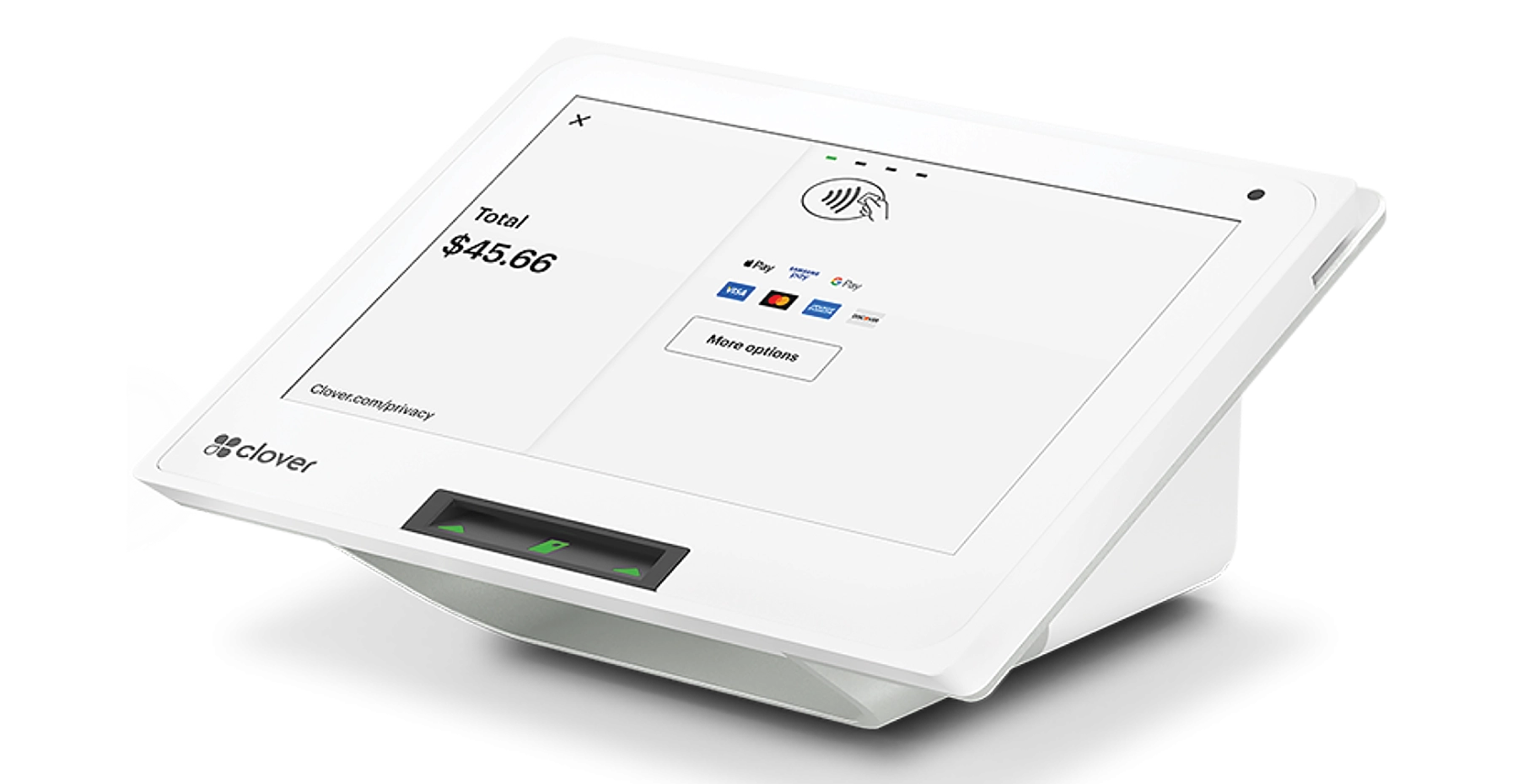
VMS helps restaurants keep the 2-4% that processing fees quietly take – with Zero Fee Processing and Clover POS built for food service. Most statement reviews take one phone call.
Or call our team: 888-902-6227
How to Widen a Thin Margin
Now the fun part. You do not need one heroic fix – you need several small ones that compound. These are the levers with the best return on effort.
Engineer the menu you already have
Your menu is a portfolio, and some items are carrying the others. Cost out every dish, find your high-margin stars, and give them the best real estate on the page. Our guide to menu engineering for profit walks through the full playbook. Most restaurants find 2-3 points of margin hiding in the menu alone – no new customers required.
Make every card payment cost less
Processing fees are one of the only costs you can cut without changing a single thing about your food, your staffing, or your service. With Zero Fee Processing, a small program discount structure means card-paying customers cover the processing cost, and the 2-4% you have been quietly losing on every ticket goes back into your pocket. On $800,000 a year in card sales, that is roughly $20,000-$30,000 – often the difference between a 4% year and a 7% year, from one decision.
Take back your online orders
Every order that moves from a third-party app to your own channel keeps 15-30% more revenue in the building. You do not have to abandon the apps – just give regulars a better path. A direct online ordering setup pays for itself quickly when even a handful of weekly orders migrate over.
Turn first-timers into regulars
Acquiring a new guest costs real marketing money; a returning guest walks in free. A simple points program through your POS – like the loyalty programs VMS sets up on Clover – nudges the second and third visit, and retention is where the real profit lives. Even a small lift in repeat visits shows up on the margin line fast.
Run a tighter, happier operation
Labor is your biggest controllable cost after food, and scheduling is where it slips. Modern employee management tools match staffing to your actual sales curve instead of a guess. In the kitchen, a Clover Kitchen Display System cuts ticket errors and comps – remakes are pure margin loss, and they usually trace back to a paper ticket someone could not read. And when an equipment upgrade would genuinely pay for itself, working capital lets you make the move without draining the account you run payroll from.
What a Healthy Margin Looks Like in Practice

Picture a neighborhood bistro doing $70,000 a month at a 3% margin – about $2,100 in profit. Solid food, loyal staff, and almost nothing to show for it at the end of the month. The owner makes three moves: she re-engineers the menu around her six most profitable dishes, switches to Zero Fee Processing, and starts steering delivery regulars to her own ordering page with a card tucked into every third-party bag.
Six months later, food cost is down two points, processing fees are effectively gone, and direct orders are growing every week. Same restaurant, same staff, same rent – and the margin sits at 7.5%, about $5,250 a month. That is an extra $37,000 a year without adding a single cover, raising a single price, or working a single extra Saturday.
The lesson: a restaurant profit margin is not one big problem. It is a stack of small ones, and each fix you make compounds with the last.
Keep More of Every Ticket
The restaurants that thrive are not always the busiest ones – they are the ones that plug the leaks. Know your benchmark, run the math monthly, and attack the costs that do not make the food better or the service warmer. Processing fees sit at the very top of that list, because cutting them changes nothing about the guest experience and everything about the deposit.
That is where VMS comes in. From our home base in Downers Grove, Illinois, we have spent more than 25 years helping restaurants and small businesses keep more of what they earn – with Zero Fee Processing, Clover POS systems built for food service, and real humans who answer the phone. We will read your current statement for free, show you exactly where your money is leaking, and tell you plainly what switching would save. No pressure, no jargon – just wider margins.
Ready to see what your restaurant profit margin could look like? Fill out the form below or call us at 888-902-6227, and a VMS payment specialist will run the numbers with you.
Have questions about your restaurant’s profit margin?
Fill out the form below and a VMS payment specialist will contact you shortly.