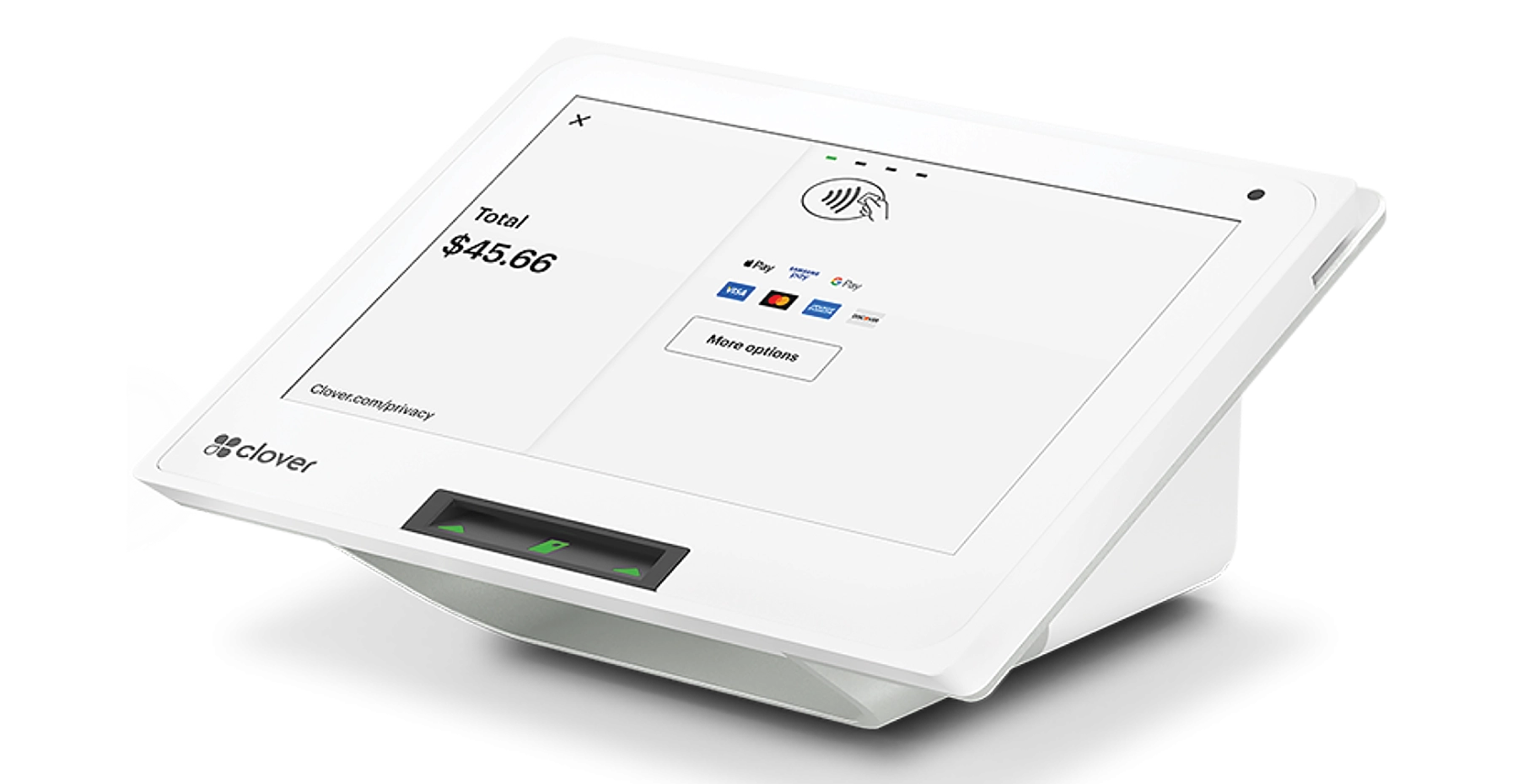


Your beer is good. That part you have handled. What quietly decides whether this is a strong year or a break-even one is the box sitting at the end of your bar — and most craft breweries are running a brewery POS system that was never built for a brewery at all. It was built for a restaurant, or a bar, or a coffee shop, and somebody bolted a tap list onto it.
That mismatch is expensive. A barrel of beer moved through distribution returns roughly $120 to $180 in revenue. The same barrel poured into pints across your own bar returns something closer to $480 to $720, at 65% to 75% gross margin instead of the 20% to 35% wholesale leaves you. Your taproom is not a gift shop attached to a brewhouse. For most small breweries it is the business now, and the point of sale you use to run it is either protecting that margin or draining it three dollars at a time.
The Brewers Association has been direct about where the survivors are. Craft beer’s retail dollar value landed at $28.0 billion in 2025 — down 2.8% — yet craft still held 24.8% of total beer retail dollars, because the money moved toward higher-priced on-site pours.
The split by business model is the part worth pinning to your office wall: taprooms slipped 3.9% and brewpubs just 1.7%, while microbreweries fell 8.9% and regional breweries 5.9%. The smallest breweries, those under 1,000 barrels a year, held up best of all — half of them grew while 43% contracted. The dividing line was rarely the beer. It was hospitality, throughput, and knowing your numbers — three things your brewery POS system either supports or silently undermines.
Why a Brewery POS System Isn’t Just a Bar POS System
Plenty of vendors will tell you a bar setup is close enough. It is not, and the gap shows up on your worst Friday, not your best Tuesday. A brewery sells in a way almost nothing else does: you are a manufacturer, a retailer, and a hospitality business inside the same building, and each of those wears a different hat at the register.
You sell the same beer in five different ways
One IPA leaves your building as a four-ounce taster, a ten-ounce pour, a full pint, a 32-ounce crowler, and a half-barrel keg on a distributor’s truck. Each has a different price, a different tax treatment, and a different effect on what is left in the tank. A restaurant register thinks in plates. A brewery POS system has to think in ounces and barrels at the same time, and it has to do the conversion without a spreadsheet and a lost Sunday afternoon.
Flights are where the wheels usually come off. If ringing up a four-beer flight takes six taps and a manual price override, your bartender will start guessing during a rush — and guessing always rounds in the customer’s favor. Multiply a two-dollar guess by forty flights a night and you have given away a keg by the end of the month. A brewery POS system that treats a flight as a single priced item removes the guess entirely.
Your inventory lives in kegs, not cases
Retail inventory counts units. Brewery inventory depletes continuously, in fractions, from a vessel nobody can see into. When a keg blows mid-shift and the tap list on the wall stays wrong for two hours, you are not just losing sales — you are training regulars to trust the app instead of the chalkboard. A proper brewery POS system ties pours back to keg levels so the floor knows what is running low before the customer does.
Your busiest hour is not a normal busy hour
Taproom traffic does not arrive evenly. It arrives at 6:40 on a Friday, all at once, usually with a food truck outside and a trivia host plugging in a microphone. Whatever your brewery POS system costs you in seconds per transaction gets multiplied by a few hundred during the only hours that really move the needle. Speed is not a nice-to-have here. Speed is the margin.
The Taproom Math That Turns Your POS Into a Profit Center
It helps to see the two revenue paths side by side, because the difference is not marginal — it is the whole argument for investing in the front of house at all.
| Per barrel | Through distribution | Poured in your taproom |
|---|---|---|
| Typical revenue | $120 – $180 | $480 – $720 |
| Typical gross margin | 20% – 35% | 65% – 75% |
| Who handles the sale | Distributor and retailer | Your team |
| Who owns the customer | Nobody you can name | You do |
That last row matters more than most owners expect. When a distributor sells your beer, you learn that a case moved. When your own bar sells it, you learn who bought it, what else they tried, and whether they came back. That data only exists if the register captures it, which is exactly why a brewery POS system deserves to be treated as equipment rather than overhead. It is the only thing standing between you and knowing your own business.
What to Look For in a Brewery POS System
Ignore the feature lists for a minute. Five things separate a system your staff will defend from one they will quietly work around.
Flights, tabs, and pre-authorizations that survive a rush
Flights need to be one button with a built-in price, not four line items. Tabs need to open on a card without a bartender babysitting a stack of plastic. And when a table of nine wants separate checks after four rounds, splitting should take one person about twenty seconds. If any of that requires a manager code, your throughput is capped by whoever has the code.

A tap list and keg-level inventory that update themselves
Every pour should draw down the keg it came from, and the tap list your staff sees should be the same one your customers see. The better systems also tell you which beers actually earn their handle — the seasonal everybody loves but that turns half as fast as the flagship is a decision you can only make with real numbers behind it. If you are already juggling stock across a bottle shop or a merch wall, the same logic that drives smart inventory management applies at the taps — the difference is that a brewery POS system has to count in ounces remaining, not cases sold.
Payments that leave the bar
Your patio, your beer garden, and the picnic tables out front are all revenue a fixed terminal cannot reach. A handheld unit like the Clover Flex lets a server close a tab at the table, turning a ten-minute walk to the bar into a thirty-second tap. Keep a countertop Clover Mini anchored at the main bar for volume, add a Clover Go for the festival cart, and you have covered every place a customer might hand you money. The full range of POS devices is worth walking through before you commit to a footprint.
Merch, growlers, food trucks, and everything that isn’t beer
T-shirts, glassware, crowler fills, a rotating food truck, gift cards at the holidays — a taproom sells a surprisingly long tail of things, and each one needs to ring up cleanly at the right tax rate. This is where a general restaurant register starts creaking, and where a purpose-built brewery POS system quietly earns back its cost. Adding a loyalty program on top is one of the cheapest ways to turn a first-time flight into a Thursday-night regular, and the same thinking behind lifting your average ticket size works just as well on a bar tab as it does in retail.
Staff tools that respect your labor budget
Tip pooling across bartenders and servers, clock-in on the same device, permissions that stop a new hire from voiding four rounds — none of it is glamorous, but it is where breweries lose hours every week. Handling employee management in the same system as sales means you stop reconciling two sets of numbers that never quite agree.
Processing Fees: The Line Item Most Breweries Never Read
Here is the part nobody enjoys. On a $7 pint the card fee looks trivial. On $40,000 a month in taproom sales it is not, and the gap between a fair rate and a lazy one can run into five figures a year on volume that never changes. Most owners have never actually read the statement, largely because the statements are engineered not to be read. Your brewery POS system and your processing rate are two separate decisions, and bundling them without asking is how a good taproom quietly funds somebody else’s margin.
Two things are worth doing this month. First, learn what you are being charged — our breakdown of credit card processing fees walks through the markup hiding behind a friendly-looking effective rate. Second, look hard at Zero Fee Processing. It is a compliant, clearly posted structure that moves the cost of card acceptance off your P&L, and in a business running on taproom margin it is one of the few levers that lifts profit without touching your prices or your recipe.
While you are in there, check your funding timing. Breweries buy grain, hops, cans, and CO2 on a schedule that does not care about a three-day settlement window, and next-day funding smooths out more cash-flow anxiety than most owners expect. If a tank needs replacing sooner than the budget allows, working capital is generally a cheaper conversation than a missed season.
Compliance, Age Checks, and the Paperwork Nobody Loves

You are federally licensed, which means your record-keeping is not really optional. The Alcohol and Tobacco Tax and Trade Bureau expects brewers to track what was produced, what was removed for consumption or sale, and what was destroyed — and to report it on schedule. Small brewers pay a reduced federal excise rate of $3.50 per barrel, but the reduced rate does not come with reduced paperwork.
The practical point is this: the closer your taproom sales data sits to your production records, the less of your Sunday disappears into reconciling them. A brewery POS system that exports clean removal and sales data is doing compliance work for you whether or not the vendor markets it that way.
Age verification is the other half. Prompting for date of birth at the register, on every relevant item, is a small friction that protects a license worth far more than the seconds it costs — the same discipline covered in our guide to age verification for regulated retailers. And because card-not-present sales creep in through online growler orders and event tickets, it is worth knowing how to prevent chargebacks before one lands.
Festivals, Pop-Ups, and Everywhere Your Taproom Isn’t
Some of your best margin days happen nowhere near your building. Beer festivals, farmers markets, a tent at the county fair, a collaboration night at a bar across town — high-volume, cash-heavy, and historically a mess to reconcile on Monday morning. A mobile reader that syncs to the same account means festival sales land in the same reporting as taproom sales, and you can finally answer whether that eight-hour Saturday was actually worth it. If your brewery POS system cannot follow you out the door, every off-site event becomes a spreadsheet you rebuild from memory.
The logistics look a lot like running a mobile kitchen, and the lessons transfer — the reasoning behind payment setups for food trucks applies neatly to a brewery cart. If you also run a kitchen or partner with one, the payment patterns from quick-service restaurants and full-service restaurants are worth a look, because a brewpub sits squarely between the two. And if you are watching food costs alongside beer costs, our piece on restaurant profit margin covers where those dollars usually vanish.
Online is the quiet one. Pre-sale allocations for a limited release, merch shipping, event tickets, gift cards — a taproom with online ordering in place captures demand at midnight when the can-release announcement drops, not at 11 a.m. when you unlock the door. Tie it back to the same brewery POS system and those pre-orders reconcile themselves instead of becoming a second set of books.
Choosing a Brewery POS System Without Regretting It Later
A few honest questions save a lot of pain. Who owns your data if you leave? What does the contract actually cost in year two, once the promotional rate lapses — our rundown of POS system cost and Clover POS pricing lays out the real numbers. And who answers the phone at 7 p.m. on a Saturday when the card reader stops reading? A brewery POS system is a five-year relationship, not a purchase. That last one is worth more than any feature on the sheet, which is why real support belongs in the comparison and not as an afterthought.
It is fair to look sideways at what nearby operators run, too. Our guides to a bar POS system and to POS for taverns cover the tab-and-inventory basics, and if you sell packaged beer to go, liquor store payment processing covers that side of the counter. A brewery needs all of it at once, which is precisely why the generic answer keeps falling short. If you still have questions, our merchant services FAQs are a decent place to start, and the rest of the VMS blog goes deeper on the individual pieces.
One more thing worth saying out loud: the goal is not the fanciest system. The goal is a brewery POS system your bartenders stop noticing. When the tech disappears into the shift, they are looking at customers instead of screens, and that is where repeat business actually comes from — the same logic behind customer retention in any small business.
Ready to put a real brewery POS system behind your bar?
VMS sets up taproom-ready Clover hardware, honest processing rates, and support that answers on a Friday night — usually in a matter of days.
Or call our team: 888-902-6227
Pour Better, Keep More
Every pint you sell across your own bar is worth roughly four times the same beer riding on a distributor’s truck. That is the whole game for a small brewery right now, and the register is where that advantage gets captured or quietly handed back. A brewery POS system that rings a flight in one tap, keeps the tap list honest, follows your staff onto the patio, and does not overcharge you for the privilege is not a luxury purchase. It is the cheapest margin you will find this year.
VMS has been setting up small businesses to take payments since 1998, and we are based in Downers Grove, not a call center three time zones away. We will read your current statement, tell you plainly what you are being charged, and put together a brewery POS system built around how your taproom actually runs — flights, kegs, patio, festival cart and all. Learn more about VMS, or fill in the form below and we will call you.
Have questions about brewery POS systems?
Fill out the form below and a VMS payment specialist will contact you shortly.