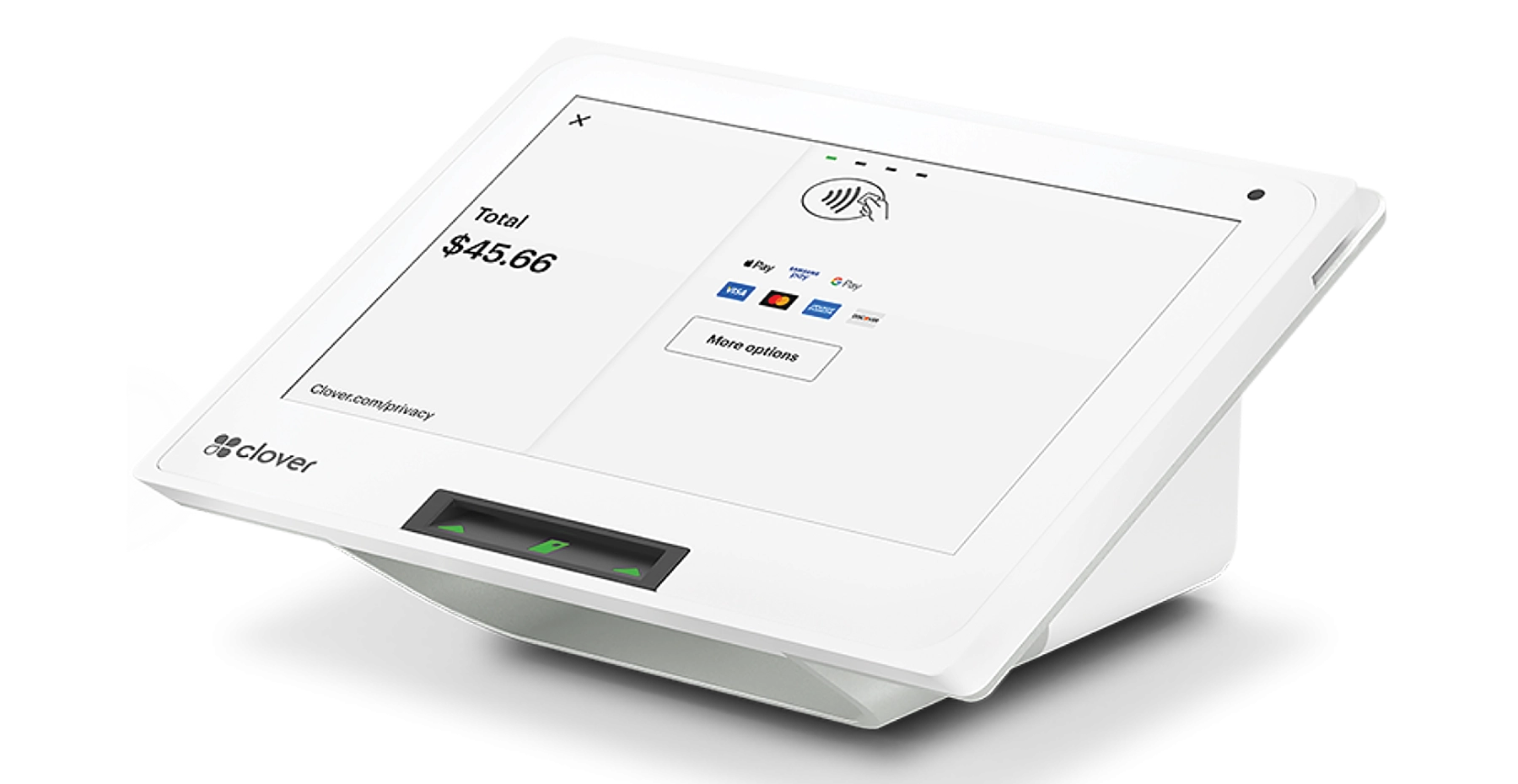


Every other counter in retail sells things that already have a price. A deli does not. Half of what is in that case is priced by the pound, changes weight every time someone asks for “a little more,” and has to be weighed, labeled, taxed and rung up before the next person in line loses patience. That is a genuinely harder job than ringing up a T-shirt, and it is why a deli POS system has to do things an ordinary register was never built to do.
It is also a job worth getting right. Deli and prepared foods have quietly become one of the best categories in food retail. FMI’s Power of Foodservice at Retail research puts the deli and retail foodservice category at $52.1 billion in annual sales, growing about 1.6% in both dollars and units, with prepared meals made in-store up 3.7% to $19.6 billion. Roughly 85% of shoppers say they are buying the same amount or more deli prepared food than they were a year ago.
The demand is there. The question is whether your counter can move it fast enough, and price it accurately enough, to keep the margin — and that comes down to the deli POS system sitting next to the slicer.
Why a Deli Counter Breaks an Ordinary Register
Walk through a single order. Three quarters of a pound of roast beef, a half pound of provolone, a pint of macaroni salad, a hot soup to go, a bag of chips. Five items on one ticket, and they do not behave the same way. Two are weighed. One is sold by the container. One is hot and, in most states, taxed differently from everything else on the ticket. One is a barcode. A register that treats all five as “enter price, hit total” is asking a nineteen-year-old to do arithmetic and tax law during a lunch rush.
That is the real argument for a purpose-built deli POS system. It is not about fancier screens. It is about the register knowing, before anyone touches it, that roast beef pulls a live weight from the scale, that the soup carries prepared-food tax, and that the chips scan. When that logic lives in the system, the person at the counter cannot get it wrong, and you stop discovering errors at close.
Speed matters for the same reason. Deli customers queue. They can see how long the line is before they commit, and a visible line is the single most effective way to send a lunch customer somewhere else. Shaving fifteen seconds off each order is not a vanity metric at a deli counter; over a two-hour rush it is several more tickets a day, every day. A deli POS system earns most of its keep in those two hours.

The Scale Is the Part Most Deli POS System Buyers Get Wrong
Here is the thing almost nobody asks about until it is too late: a scale that talks to your register is not the same as a scale that is legal to sell from. Those are two separate requirements, and you need both, and a deli POS system quote that mentions only one of them is incomplete.
What “Legal for Trade” Actually Means
Any device used to set the price of something sold by weight is a commercial weighing device, and it has to be verified as legal for trade. That means the model has passed type evaluation against NIST Handbook 44 and carries an NTEP Certificate of Conformance, and that the individual unit has been installed, inspected and sealed by your state or county weights-and-measures office. Grocery produce scales and deli counters are named applications. An inspector can and does walk in unannounced.
So when you evaluate a deli POS system, the scale question has two parts. Is the scale itself NTEP-certified and sealed? And does the register read the weight directly off it, or does someone read a number and type it in? Typed weights are where the money goes. A tenth of a pound mis-keyed on a $12-per-pound item is $1.20, and it lands in the customer’s favor about as often as yours — except the ones that favor you generate complaints, and the ones that favor them never do.
The Label Has to Match the Line Item
If you pre-pack anything — salads in the case, family packs of sliced turkey, sandwich platters made in the morning — the printed label needs a barcode the front register can actually read. That means the label printer and the checkout scanner are speaking the same language about weight-embedded barcodes. If they are not, someone keys the price by hand, and your deli POS system is back to the same problem one step further down the store. A good POS barcode scanner setup closes that loop for pennies compared to what the mis-keys cost.
Cold Cuts Yes, Hot Soup No: EBT at the Deli Counter
If you take SNAP, your deli case is the most rule-bound three feet in the building, because eligibility flips based on temperature. Cold deli-sliced items count as staple food — USDA’s own examples include fresh deli-sliced turkey and deli-sliced cheddar. Hot foods and food sold for immediate on-premises consumption are not eligible. Same customer, same visit, same counter: the half pound of turkey qualifies, the cup of soup does not, and your deli POS system has to know the difference.
A register that cannot split that ticket automatically will get it wrong, and the person it gets wrong in front of is a customer who is already having a harder day than you are. The fix is not training people to remember; it is flagging eligibility at the item level so the system splits the tender by itself. That is standard behavior in a properly configured deli POS system, and it is worth confirming before you sign anything. If you are not yet authorized, accepting EBT is more straightforward than most owners expect, and the EBT equipment setup is usually the easy part.
Two rules are worth knowing beyond the ticket itself. First, USDA treats a store as a restaurant — not a retailer — if more than half of total gross retail sales come from hot or cold prepared food meant for immediate consumption. If your hot bar keeps growing, that line is real, and crossing it changes your authorization.
Second, USDA published updated staple food stocking standards in May 2026 that retailers must comply with beginning November 4, 2026. If SNAP is meaningful revenue for you, that is a date to put on the calendar now rather than in October. There is a separate path for hot prepared meals in some states through the Restaurant Meal Program, and it is worth asking about if a real share of your counter is hot food.
What a Deli POS System Should Do Between the Slicer and the Door
Weighing and tendering are table stakes. The features that actually change your week are the ones that manage the gap between the order being taken and the customer leaving with it.
The Queue, Handled Honestly
Number tickets work because they convert an anxious line into a seat in a waiting room. A system that ties the ticket number to an open order lets one person start slicing while another rings, and it lets a customer wander off to grab bread without losing their place. A deli POS system that cannot hold two open orders at once will always be slower than the people using it. Put the total where the customer can read it on a customer facing display and you also cut the “wait, how much?” conversation that stalls the front of the line.
Catering, Trays, and Advance Orders
Catering is where deli margin hides, and it is almost always the worst-run part of the operation: orders on sticky notes, no deposit, a tray that walks out unpaid because whoever took the order is off that day. Your deli POS system should hold a future-dated order with a name, a pickup time, a deposit already charged to a stored card, and a balance that pops up automatically at pickup. Adding online ordering on top of that lets office managers place Friday’s platter order at 11pm Thursday, which is exactly when they remember to.
Shrink, Yield, and What the Case Is Really Costing
Everything in a deli case is on a clock. You lose product to trim, to end pieces, to over-portioning, and to items that simply time out. Most of that stays invisible unless the system tracks sold weight against received weight by item. When it does, you find out that one roast beef is costing you fifteen percent in yield and that the Thursday salad order is a third too big. Few owners ask a deli POS system vendor about yield reporting, and it is one of the most useful things to ask about. That is the same discipline behind controlling inventory shrink anywhere else in retail, just on a shorter fuse.
| The deli job | What to insist the system does |
|---|---|
| Selling by weight | Reads live weight from an NTEP-certified, sealed scale — never typed by hand |
| Hot vs. cold tax | Tax rule set per item, not per ticket, so prepared food is flagged automatically |
| SNAP / EBT | Item-level eligibility that splits the tender without staff judgment |
| The lunch line | Open orders tied to ticket numbers so slicing and ringing can happen in parallel |
| Catering | Future-dated orders, card on file for deposits, balance due surfaced at pickup |
| Perishable margin | Sold weight tracked against received weight, by item, by week |

Small Tickets, Big Percentages: The Fee Side of a Deli POS System
Deli tickets are small and there are a lot of them, which is the worst possible shape for a pricing model built on per-transaction fees. On a $9.40 sandwich-and-drink ticket, a flat 2.6% plus 10 cents costs about 34 cents — roughly 3.6% of the sale. The same pricing on a $240 catering order costs 2.64%. The percentage you actually pay moves with your average ticket, and a deli’s average ticket is at the painful end of that curve.
That is why the fee conversation belongs in the deli POS system conversation and not in a separate meeting six months later. Two things are worth pushing on. First, get interchange-plus pricing rather than a blended flat rate, so you can see what the networks charge and what your processor adds; our breakdown of credit card processing fees walks through how to read that. Second, ask about Zero Fee Processing, which shifts the card cost to the card-paying customer and is common enough in food retail now that it rarely raises an eyebrow.
Run the arithmetic on your own numbers rather than on an example, before you sign a deli POS system agreement. At 180 tickets a day averaging $11, a half-point difference in your effective rate is about $3,600 a year — real money in a business where labor is already the biggest line. If you have never checked, our notes on labor cost percentage and the retail metrics hiding in your receipts are a good place to start.
Choosing a Deli POS System Without Overbuying
Most delis do not need a full restaurant build. The right deli POS system is the smallest one that does all six jobs above. Match the hardware to the counter you actually have. A single service counter usually runs fine on one Clover Mini sitting flat next to the scale, with a cash drawer underneath and a label printer at the slicer. Add a second station only when two people are genuinely ringing at once.
If you also do sidewalk service, farmers markets or catering drop-offs, a Clover Flex travels with the order and takes payment at the door instead of “we’ll invoice you.” A deli inside a larger store, or one with a separate hot bar checkout, is usually better served by a Clover Duo at the front and a Mini at the counter. Heavy grab-and-go trade sometimes justifies a Clover Kiosk for packaged items, so the staffed counter is reserved for anything that has to be sliced. You can see the whole range on our POS devices page, and our guide to what a POS system really costs will keep a quote honest.
Two more things decide whether the rollout sticks. Budget real time for POS system training — a deli has more per-item rules than almost any other small retailer, and the system only pays off if the person at the slicer trusts it. And build the item file properly the first time, with the tax rule, EBT flag and price basis set on every single item — a deli POS system is only ever as accurate as the day you set it up. It is a dull afternoon that saves you a year of small, unexplained losses.
If your deli sits inside a grocery or market, it is worth reading our take on grocery store POS systems and convenience store POS devices alongside this, since the front-end and the service counter have to agree with each other.
Neighboring food businesses face versions of the same problem too — our notes on bakery payment processing and quick-service restaurants cover the overlap, and a loyalty program works unusually well on a counter people visit three times a week. Growing the case, adding a second slicer or building out catering are all things working capital can fund without touching your bank line.
Ready for a deli POS system that weighs, taxes and rings it right?
VMS sets up the scale integration, the EBT flags and the item file with you — and reviews your processing rate while we are at it. Most delis are up and running in days, not weeks.
Or call our team: 888-902-6227
Ring It Right, Every Time
A deli counter is a small business running at restaurant speed with grocery rules and perishable inventory. Nothing about that is simple, and no amount of hustle at the counter makes up for a register that cannot weigh, cannot tell hot from cold, and cannot remember Friday’s catering order. The right deli POS system is not an upgrade you treat as a luxury — it is the thing that makes the rest of your process trustworthy.
VMS has been setting up counters like yours since 1998, which means we have built a lot of item files and argued with a lot of scales. We will look at your case, your ticket sizes and your current statement, and tell you plainly what is worth changing and what is fine as it is. Start a conversation with our team, browse the FAQs, or reach support if you are already with us — and use the form below to get a straight answer on what a deli POS system would look like at your counter.
Have questions about a deli POS system?
Fill out the form below and a VMS payment specialist will contact you shortly.