

by Grace Barone
Prices, prices, prices! Why do things cost what they cost? Well, today we’re delving into the realm of pricing – an aspect of managing a successful business. Whether you’re selling items, in a shop or serving up meals in your restaurant, finding the right pricing strategy can be a game changer. Making sure you’re business is still making a profit but not overcharging your customers can be a little hard to manage. That’s why I’m here to help you find that sweet spot when you’re pricing your goods.
Getting Started
Before we dive into the specifics let’s begin with the basics. Pricing is not about assigning a number to your products or menu items; it involves balancing costs, staying on a budget, and maximizing profits.
Understanding Your Expenses
First and foremost it’s essential to have a grasp of your expenses. This includes not only the cost of materials or ingredients but also overhead costs. Overhead costs are things like rent, utilities, and employee wages. Once you know the production costs of your goods, you can establish a pricing model that ensures you’re not undervaluing your offerings.
Market Research
The next step is to do some market research. Check out what your competitors are charging for products or dishes. This information will give you a sense of the rates in your industry and help you assess where you stand compared to others. If you find that all your competitors are selling their items at a much lower price than what you were thinking about pricing it at, make sure you’re analyzing everything that is going into the product and if you can cut down some production costs.
Unique Selling Point
Think about what makes your products or menu items different from what others offer. Do you provide something different in terms of quality? If that’s the case don’t hesitate to set your prices higher than competitors. Customers are often willing to pay more for something they see as valuable. On the flip side, customers would also prefer paying less for items that are similar in quality and may be willing to forego certain qualities for a cheaper price. For example, I would be willing to pay a little more for a burger if the meat quality was better or the size of the patty was larger. But, I would probably go for the cheaper option if something like the packaging was a little less extravagant.

Setting Prices for Your Products
Now that we’ve gone over the basics let’s discuss setting prices for your product, in-store. Whether you’re selling grocery items, fashionable clothing, or the newest gadgets these suggestions will assist you in establishing prices that attract customers and maintain a profit margin.
Ensuring Profitability
When deciding on product pricing it’s crucial to take into account your desired profit margin. Think about what percentage of markup would enable you to cover expenses and generate a profit. While it may be tempting to competitors, don’t undervalue yourself – you should be fairly compensated for your effort and expertise. If you’re putting in a lot of effort in sourcing fine-grade ingredients or quality items make sure you’re accurately marketing that. It’s easier for customers to rationalize the price of something when they know that they’re getting the best quality. But nothing is worse than being overcharged for something that is awful quality. So be realistic with what your items are truly worth.
Harnessing Psychological Impact
Surprisingly, pricing involves as much psychology as it does mathematics. Customers often tend to be attracted to prices that end in 9 or 99 as they perceive them to be lower than they actually are. Experiment with price points to see what appeals to your target audience. Another great trick is price anchoring. This is when you have two items that are relatively the same, but you price one higher than the other. This works a little better with bigger ticket items. For example, if you were running a furniture store and had two couches, you would price the one that was a little better for $1,000 and the second one for $800. The customer would be more inclined to buy the $800 couch because it’s seen as a good deal for what seems to be very similar options. There is a higher chance that the customer will purchase the $800 couch since they saw the anchored price of the $1,000 option.
Offer Bundles and Save
Another pricing tactic is bundling products together at a slightly discounted price. This not only encourages customers to buy items but also gives them a sense of value and convenience leveraging the principle of perceived value. This not only encourages customers to buy items but also gives them a sense of value and convenience, as they perceive the bundled offering as a cost-effective and efficient solution for their needs. Additionally, bundling can help businesses increase average order value by enticing customers to purchase complementary items they may not have considered otherwise.

Pricing Your Menu Items
Navigating pricing strategies in the restaurant industry can indeed pose challenges. Factors such as ingredient costs, competition, and customer expectations all come into play. However, with a thoughtful approach to menu pricing, restaurateurs can strike a delicate balance between profitability and customer satisfaction. By conducting thorough market research and cost analysis, establishments can set prices that not only cover expenses but also align with perceived value. Moreover, incorporating dynamic pricing strategies, such as seasonal menu rotations or limited-time promotions, can help stimulate demand while maximizing revenue potential. Ultimately, by continuously monitoring and adjusting pricing strategies based on feedback and market trends, restaurants can optimize their pricing structures to enhance both financial viability and the diner’s experience.
Factor in Food Costs
Just like with products, it’s crucial to consider ingredient costs when setting prices for your menu items. Keep an eye, on fluctuating food costs. Make adjustments to maintain a healthy profit margin. See if there are any areas to lower costs, try to buy from local farms, buy in bulk, and make sure you’re keeping track of inventory correctly so nothing goes to waste.
Strategic Menu Design
Have you ever noticed how certain menu items stand out while others seem overlooked? This is no coincidence – it’s the result of menu design strategies. By highlighting high-profit items or using cues you can subtly influence customer’s choices. Increase overall profitability. Keep in mind that pricing requires attention and fine-tuning. Stay vigilant, about monitoring your sales performance and listening to customer feedback ready to make adjustments as necessary. Being adaptable is crucial for success in the restaurant industry.
Tired of unpredictable processing fees?
VMS offers cash discount and dual pricing programs that can bring your effective rate close to zero, plus a free statement review.
Or call our team: 888-902-6227
Four Pricing Models and When Each One Fits
Most pricing advice stops at “cover your costs and add a margin.” That is cost-plus, and it is only one of four approaches. Choosing the wrong one for your category is a more expensive mistake than getting the arithmetic slightly off.
Cost-plus pricing
Add a fixed markup to your unit cost. Simple, defensible, and the right default for commodity goods where customers can compare directly. Its weakness is that it ignores what the customer is willing to pay, so it leaves money on the table for anything differentiated.
Value-based pricing
Price against the outcome the customer gets rather than what the item cost you. This is where service businesses and specialty retailers make their margin. It requires you to actually know what the customer is comparing you against, which means talking to them rather than guessing.
Competitive pricing
Anchor to the market rate. Necessary when customers can check a competitor in ten seconds on a phone, which today is most categories. The trap is treating it as the only input and ending up in a race you cannot win against a larger buyer with better cost of goods.
Psychological pricing
Charm pricing ending in 9, bundling, decoy options, and good-better-best tiers. These are real effects, not gimmicks, but they modify a price you arrived at another way. They are the finish, not the foundation.
In practice most businesses should set a floor with cost-plus, a ceiling with value and competitive data, and then choose a presentation within that band.
The Costs Owners Consistently Leave Out
An underpriced product is usually the result of an incomplete cost, not a pricing philosophy. Five items get missed most often.
- Payment processing. A percentage of every card sale that never reaches your bank account. On thin-margin goods this can be a meaningful share of your profit per unit, and it belongs in your cost of goods rather than filed away as overhead. See our breakdown of processing fees.
- Shrink and waste. Spoilage, breakage, and theft are a real cost of selling. If you lose a small percentage of units, the ones you do sell have to carry it.
- Returns and refunds. A returned item costs you the processing fee, the handling, and often the resale value.
- Your own labor. Owner hours are the most commonly zero-rated input in small business pricing, and pricing that only works because you are unpaid is not a business model.
- Carrying cost of inventory. Capital sitting on a shelf is capital not doing anything else, and slow-moving stock costs more than its purchase price.
How to Raise Prices Without Losing Customers
The hardest part of pricing is not setting it the first time but changing it later. A few practices make increases hold.
Raise in small, regular increments
An annual adjustment of a few percent is absorbed. A single large correction after five years of holding steady is a shock that prompts customers to re-evaluate you entirely. Regular small moves are both easier to accept and easier to explain.
Change something visible at the same time
A new price landing alongside better packaging, an added service, or a genuine improvement reads as a change. The same price landing alone reads as a takeaway.
Give notice to your regulars
Customers who feel informed rarely leave. Customers who feel ambushed at the register sometimes do, and they tell people. A short sign a couple of weeks ahead costs nothing.
Do not apologise for it
Staff who explain the increase confidently and briefly get almost no pushback. Staff who apologise invite negotiation and signal the price is soft.
Watch units, not just complaints
Complaints are loud and unrepresentative. The number that tells you whether an increase worked is units sold and total margin over the following month. A small drop in units with a larger rise in margin is a success, however it sounded at the counter.
Pricing Questions We Get Most Often
Should I match a competitor who is cheaper than me?
Usually not, unless your costs genuinely allow it. Matching a larger competitor’s price on their terms means fighting on the one dimension where they are strongest. Compete on the things they cannot easily copy instead.
How do I price a product nobody else sells?
Find the alternative your customer would use if you did not exist, including doing nothing, and price against the value of the difference. Then test. A genuinely novel product is the strongest case for starting higher than feels comfortable, because you can always come down.
Do discounts and promotions hurt my pricing?
Predictable, recurring discounts do, because customers learn to wait for them. Occasional, time-bounded promotions with a clear reason attached generally do not.
How often should I review prices?
At least annually, and immediately whenever a major input cost moves. Businesses that review once and then leave prices alone for years are the ones forced into the painful large correction later.
In Conclusion
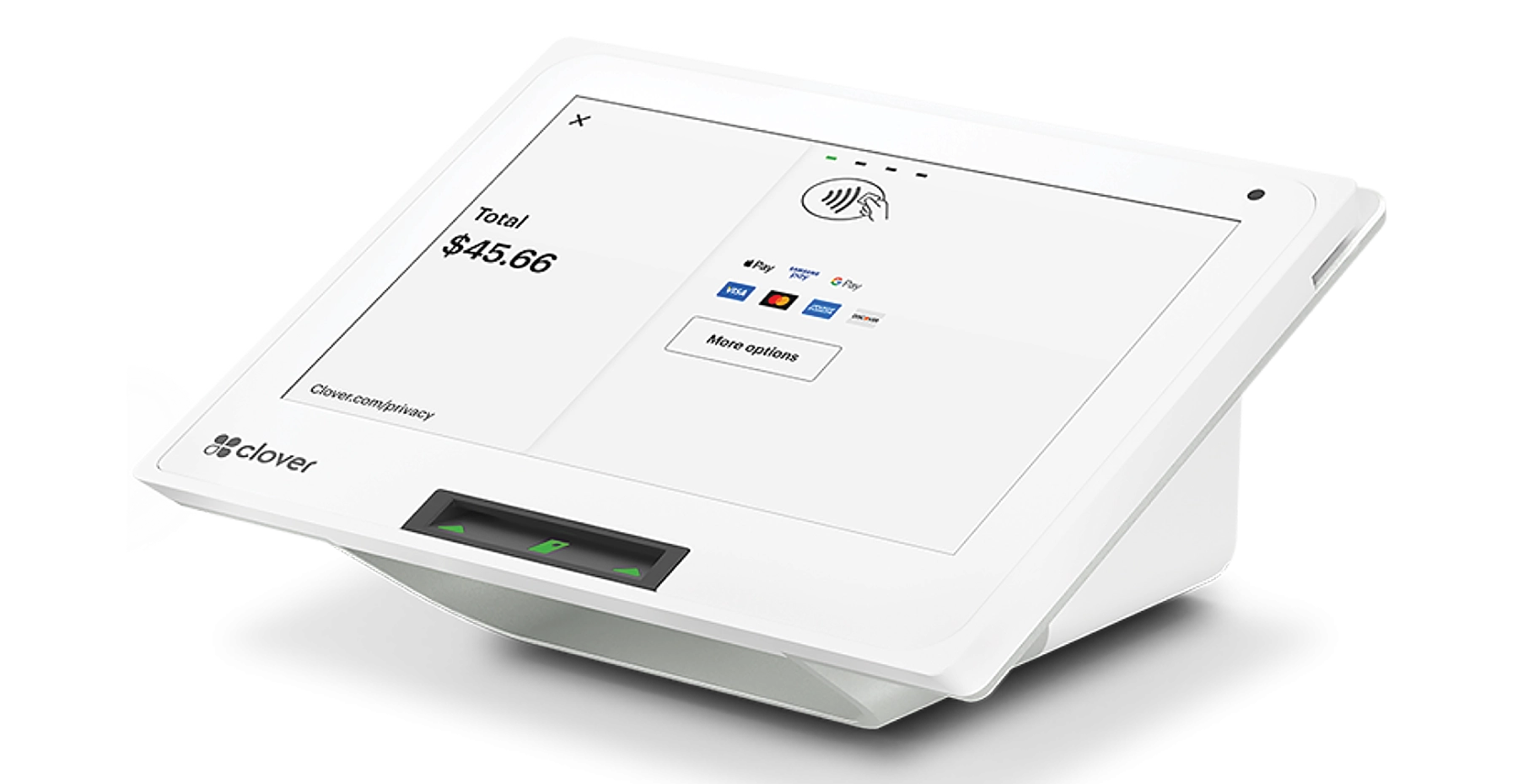
Although setting prices can feel overwhelming initially conducting research and trying approaches will help you discover the balance that boosts profits while satisfying your customers. Clover’s in-depth software has tons of solutions for every business that can help you price your products accurately. If you’re interested in learning more about pricing or getting yourself a modern-day POS system visit www.getvms.com and get in contact with one of our small business specialists!
Have questions about processing fees?
Fill out the form below and a VMS payment specialist will contact you shortly.