

Somewhere in your processor’s system, there is a four-digit number that describes your entire business. You probably did not choose it, you have likely never seen it, and it may be wrong. That number is your merchant category code, and it quietly decides which interchange rates your sales qualify for, how risky the card networks think you are, whether some corporate cards will even work at your counter, and how your transactions show up on your customers’ statements.
Most owners only discover their merchant category code when something goes sideways: a statement that suddenly costs more, a business customer whose company card gets declined, or a processor asking odd questions during underwriting. This guide explains what the code is, who assigns it, why it matters so much to your fees, and how to check yours in about ten minutes.
What a Merchant Category Code Actually Is
A merchant category code (MCC) is a four-digit number that the payment networks use to classify a business by what it primarily sells. A grocery store is 5411. A sit-down restaurant is 5812, while a fast-food counter is 5814. A barber or beauty shop is 7230, an auto repair shop is 7538, a dentist is 8021, and a liquor store is 5921. There are hundreds of codes, built on an international standard called ISO 18245, and Visa, Mastercard, American Express and Discover each keep their own version of the master list with small differences.
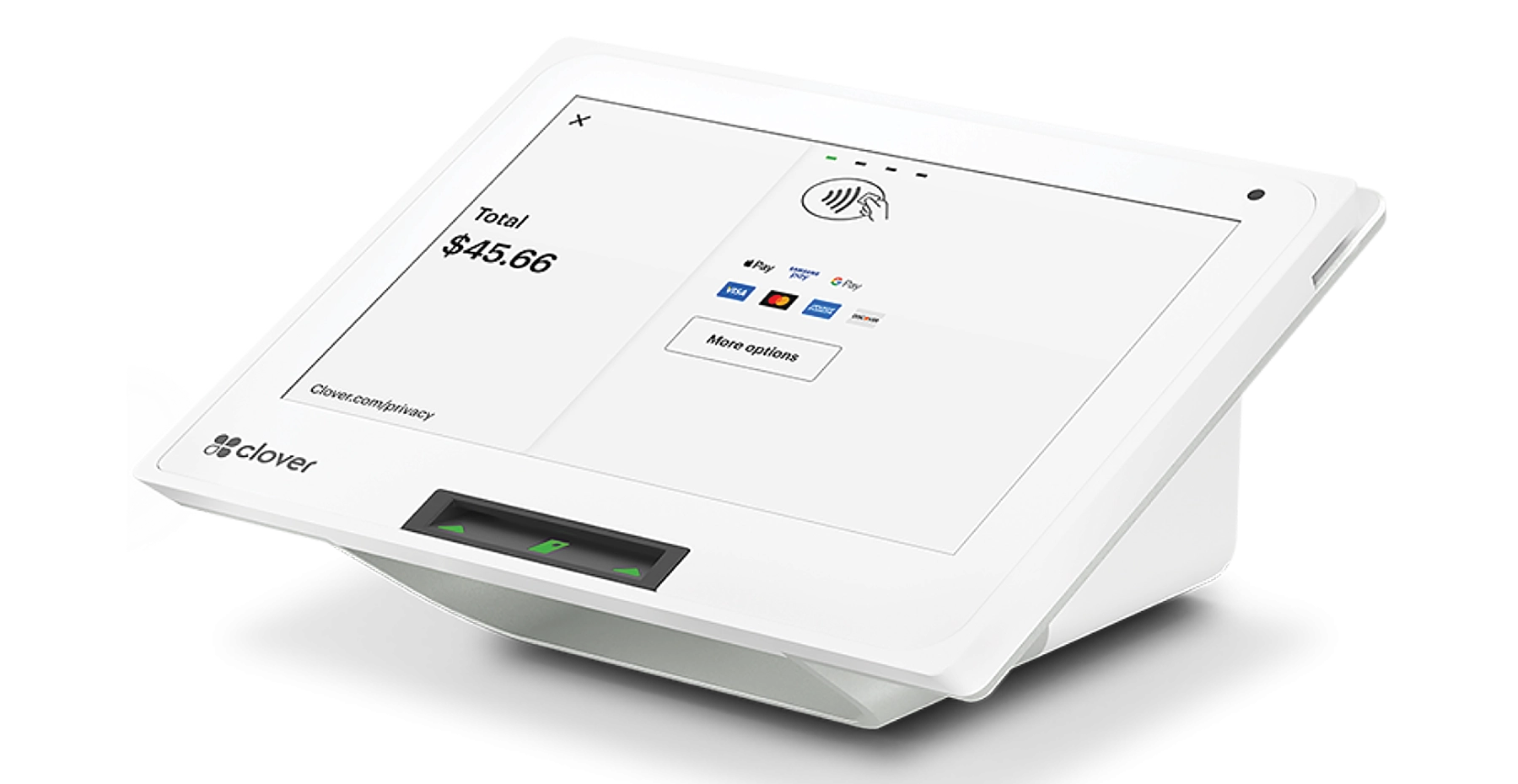
Every card transaction you run carries that code along with it. When a cardholder taps at your Clover Mini, the authorization request tells the card network your merchant name, your location and your MCC. The network uses it to decide which rules apply, which pricing table your sale falls into and which fraud models to run. The issuing bank uses it to sort the purchase on the cardholder’s statement and decide whether it earns “dining” or “grocery” rewards.
In other words, the MCC is your business’s identity in the card world. Your sign can say anything you want; to Visa and Mastercard, you are whatever those four digits say you are.
Who assigns your MCC
You do not pick your code. Your acquiring bank, through the processor or ISO that set up your merchant account, assigns it during underwriting based on the application you filled out. Visa’s rules require acquirers to assign the code that most accurately describes the merchant’s business, and its Visa Merchant Data Standards Manual lays out how name, location and category data must be formatted. When a business does several things, the code is generally supposed to follow the line of business that brings in the most sales volume.
That sounds tidy. In practice, the code often gets chosen in a hurry by someone reading a one-line business description, and it rarely gets revisited after the account goes live.

How Your Merchant Category Code Changes What You Pay
Here is the part that matters to your bottom line. Interchange, the largest slice of every processing fee, is not one rate. Visa and Mastercard publish long schedules with different rates for different card types and different kinds of merchants, and your merchant category code is one of the main keys that decides which row of that table you land in.
Take groceries as an example. In Visa’s published U.S. interchange schedule, many standard credit cards at qualifying supermarkets carry rates of roughly 1.2% plus 5 cents, while comparable cards at general retail merchants run closer to 1.5% plus 10 cents. Only merchants coded as supermarkets, and meeting Visa’s volume thresholds, are eligible for that supermarket table. If a real grocery store gets coded as a generic retailer, it can pay the higher rate on every single sale.
Run the math on a store processing $60,000 a month in credit cards. A 0.3 percentage-point difference is about $180 a month, or more than $2,100 a year, before you even count the extra nickel on each transaction. Nothing about the store changed. The only difference is four digits in a database.
It works in other directions too. Restaurants, quick-service counters, utilities, charities, education, government payments and service businesses all have their own special programs or rate categories in various network schedules. Some favor certain codes; others carry higher rates because the networks see more risk. If you want the full picture of how these rates stack up, our guide to understanding interchange walks through the layers.
Why your processor may not mention it
On a flat-rate or tiered pricing plan, you may never see interchange at all. The processor pays the network rate and charges you a fixed bundle, so a lower interchange rate from a better code mostly turns into extra margin for them, not savings for you. On interchange-plus pricing, the savings flow straight through to your statement. That is one more reason the pricing model matters as much as the code itself, a point we cover in interchange-plus vs tiered pricing.
Five Ways the Wrong Code Costs You Beyond Fees
Fees get the attention, but a mismatched merchant category code causes plenty of other headaches. These are the ones we see most often.
- Declined business cards. Companies often restrict employee purchasing cards by MCC, allowing office supply or restaurant codes and blocking others. If your shop is miscoded, a corporate customer’s card may decline for reasons that have nothing to do with their credit limit, and they will simply buy somewhere else.
- Confused customers and more disputes. Cardholders see your category on their statement and in their banking app. A florist that shows up as “miscellaneous services” or a cafe that looks like a liquor store invites “I don’t recognize this charge” calls, and some of those turn into chargebacks.
- Missed rewards for your regulars. Many cards offer bonus points for dining, groceries or gas, and the bonus is triggered by the merchant category code. Customers who chase rewards notice when your purchases never earn the category they expected.
- Higher risk ratings. Some codes are classified as high-risk by the networks and carry extra registration, monitoring and reserve requirements. Coding a low-risk business into one of those categories can mean holds, extra paperwork, or a harder time getting approved. You can read more in our explainer on high-risk merchant accounts.
- Network compliance trouble. The networks can require acquirers to correct merchant data that is inaccurate or misleading, and deliberate miscoding to dodge rules can lead to fines or termination. Ending up on the MATCH list over a data problem is a far bigger problem than a slightly higher rate.
Notice that several of these hurt your customers before they hurt you. A shopper whose card declines, or whose purchase looks strange on their statement, does not blame your processor. They blame your store.
Why the Merchant Category Code Keeps Making Headlines
For decades, merchant category codes were back-office plumbing that only processors cared about. That changed when lawmakers realized the code is also a data point about what people buy.
The clearest example is the firearms code. In 2022, the standards body behind ISO 18245 approved a dedicated code, 5723, for gun and ammunition retailers, which previously sat under general sporting goods or miscellaneous retail. What followed was a patchwork. Visa paused its rollout in 2023, citing legal uncertainty, as states such as Texas, Kentucky, Idaho, Mississippi, North Dakota and West Virginia passed laws barring the use of a firearms-specific code. California went the opposite direction and required the code, and Visa’s merchant data manual lists 5723 as effective July 1, 2024 to comply with that law. According to Payments Dive, Georgia, Iowa, Tennessee and Wyoming also passed laws blocking it.
Whatever you think of that debate, the takeaway for every small business is the same: your merchant category code is no longer invisible. It can be regulated, it can vary by state, and the networks revise their lists regularly. A code that was right when you opened your account may not be the best fit today, especially if your business has grown into something new.
When a growing business outgrows its code
The most common reason a code goes stale is not regulation, it is success. A coffee shop adds a full lunch menu and suddenly does more food than drinks. A gift shop starts selling wine. A salon builds a retail line that outsells the chair. An auto shop adds a used-car lot. Each of those shifts can change which merchant category code best describes the business, and in some cases a second merchant account with a separate code is the cleaner answer.
How to Check and Fix Your Merchant Category Code
The good news is that checking your merchant category code is easy, and fixing it is usually a request, not a battle.
Step 1: Find the code you have now
Look at your monthly processing statement first. Many statements print the MCC near your merchant ID or account details. If it is not there, your processor’s online portal often lists it under account settings, or you can simply call support and ask. If you need help reading the rest of the statement while you are in there, our walk-through on how to read your credit card processing statement covers each section, and our list of merchant statement red flags shows what else to look for.
Step 2: Compare it to what you really sell
Look up the code’s description and ask a simple question: does this describe where most of my sales come from? Not your favorite product, not the line on your business card, but the category that brings in the most dollars. If you run a market that is 80% groceries and 20% prepared food, a grocery code fits better than a restaurant code, and the reverse is also true.
Step 3: Ask for a review, in writing
If the code looks off, ask your processor for a review and include a short description of your business and your rough sales mix. Legitimate changes are routine, though the acquirer may ask for documentation or a quick underwriting review. Ask them to confirm the new code and its effective date in writing, then check your next two statements to make sure it took.
Step 4: Never shop for a code
One warning: the goal is the accurate code, not the cheapest one. Asking a processor to code you as something you are not to get a lower rate is a network rule violation, and it can cost you the account. A good processor will help you find the right fit and explain the trade-offs honestly.

Pair the Right Code With the Right Pricing
An accurate merchant category code makes sure you qualify for the right interchange rates. The pricing model decides whether you actually keep those savings. The two work together.
If you are on a flat-rate plan, a better code may change nothing on your statement. If you are on interchange-plus, you see every rate category and benefit directly. And if card fees are eating into thin margins no matter how you are coded, Zero Fee Processing lets you offset most of that cost with a compliant dual-pricing setup that is clearly disclosed to customers, so you are not just shaving tenths of a percent.
Businesses that take large commercial card payments should also look at Level 3 processing, which passes extra invoice data to qualify for lower B2B rates. Like the MCC, it is a data detail that most owners never hear about until someone checks.
If you have been with the same provider for years and nobody has ever reviewed your setup, that alone is a good reason to ask questions. Our guide on how to switch payment processors covers what to look for if the answers you get are not good enough.
Not sure your merchant category code is right?
VMS reviews your MCC, pricing model and statement for free, then shows you exactly where the money goes — most reviews are done within a day or two.
Or call our team: 888-902-6227
Four Digits Worth Ten Minutes of Your Time
Your merchant category code is one of the smallest details in your merchant account and one of the most consequential. It shapes your interchange rates, your risk profile, the cards your customers can use and how your business shows up on their statements. Most owners never look at it, which is exactly why a mismatch can sit there for years, costing money a few cents at a time.
Pull up your latest statement, find those four digits, and ask whether they still describe your business. If you would like a second set of eyes, the VMS team will review your code, your pricing model and your statement for free and show you exactly where the money is going. You can also browse our merchant services FAQs for quick answers, or fill out the form below and a VMS payment specialist will reach out.
Have questions about your merchant category code?
Fill out the form below and a VMS payment specialist will contact you shortly.