

Hardware stores operate differently than most retail businesses. Unlike apparel or gift shops, hardware and paint stores manage thousands of SKUs, mixed pricing models, bulk items, special orders, contractor accounts, and frequent returns. A generic retail POS often breaks down under this complexity. Generic POS systems are not equipped to handle the unique challenges faced by hardware and paint stores, such as complex inventory management and contractor sales, making specialized solutions essential.
Choosing the right POS systems for hardware stores is not about flashy features — it’s about accuracy, speed, inventory control, and long-term scalability. Hardware and paint stores face unique challenges that require specialized POS solutions tailored to their industry-specific needs.
This guide outlines what hardware store owners should expect from a POS system, the specific operational challenges hardware retailers face, and how modern POS platforms like Clover are designed to support those needs.
(For a general foundation on POS technology, read our blog post on pos systems.
Introduction and Benefits of POS Systems for Hardware Stores
A reliable point of sale (POS) system is the backbone of any successful hardware store. With thousands of SKUs, fluctuating inventory levels, and a diverse customer base, hardware retailers need more than just a cash register—they need a comprehensive solution that streamlines operations from the sales floor to the stockroom. The right hardware store POS system simplifies inventory management, making it easier to track stock, reorder products, and avoid costly shortages or overstock situations. By automating sales tracking and capturing customer data, POS systems provide valuable insights into sales trends and buying patterns, empowering owners to make smarter business decisions. This not only helps optimize inventory but also enables tailored promotions that boost customer satisfaction and loyalty. Ultimately, a modern POS system allows hardware stores to serve customers faster, reduce errors, and focus on growing the business with the right hardware and tools in place.
Why Hardware Stores Have Unique POS Requirements
Hardware stores are operationally complex for several reasons:
-
Large SKU counts (often 10,000+ items)
-
Mix of barcoded and non-barcoded items
-
Bulk pricing (by weight, length, or quantity)
-
Contractor and house accounts
-
Special orders and backorders
-
Returns without receipts
-
Seasonal demand spikes
-
Tax-exempt sales
-
Cash, card, and account-based payments
-
Complex transactions such as special orders, rentals, and job costing
Because of this, hardware stores, as a type of retail business, require POS systems that can handle product variations (such as different sizes, colors, or measurements) and complex transactions. POS systems for hardware stores must do far more than ring up items. They must act as inventory managers, customer databases, and reporting tools — all at once. Key features of effective POS systems for hardware stores include robust inventory matrixing for thousands of SKUs, special order processing, supplier integration, and support for product variations and bulk measurement calculations.
Core Features POS Systems for Hardware Stores Must Have
Not all POS systems are built for hardware retail. It’s crucial to select a POS system with the right features tailored to your hardware store’s specific needs, ensuring efficiency and scalability. Ideally, the system should function as a single platform, integrating sales, inventory, and customer management for streamlined operations. At a minimum, the system should include the following capabilities.
1. Advanced Inventory Management
Inventory is the backbone of a hardware store. Managing inventory and efficiently managing stock are crucial for hardware stores to ensure product availability, reduce excess, and optimize operations.
A proper hardware POS system should support:
-
Large SKU libraries
-
Category and subcategory organization
-
UPC and non-UPC items
-
Case, unit, and bulk tracking
-
Reorder thresholds
-
Vendor-level reporting
-
Special order tracking
-
Seasonal item flagging
-
Real time tracking of stock levels
-
Real time data access for inventory updates
Hardware stores often sell items by:
-
the piece
-
the pound
-
the foot
-
the box
POS systems must handle variable units without workarounds.
Effective inventory management in hardware stores requires real-time tracking of stock levels to prevent stockouts and overstocking. Automated inventory management systems streamline the reordering process by analyzing sales trends and suggesting when to restock popular items. Low-stock alerts notify staff when inventory is running low, helping to prevent shortages of critical items. Advanced POS systems with integrated inventory management can handle large inventory counts, product variations, and bulk items, ensuring precise control over tens of thousands of SKUs.
2. Barcode Scanning + Manual Item Lookup
While many items are barcoded, hardware stores still sell:
-
Nuts and bolts
-
Washers and screws
-
Lumber cut to size
-
Rope and chain
-
Miscellaneous parts
POS systems for hardware stores must support:
-
Fast barcode scanning
-
Manual item lookup
-
SKU search by name or category
-
Custom buttons for frequently sold items
Speed matters — especially during contractor rush hours. Barcode scanning enables faster checkouts, improving the overall customer experience.
3. Contractor Accounts & House Charging
Many hardware stores serve contractors who expect:
-
Net terms
-
Monthly statements
-
Purchase tracking
-
Project-level billing
A strong POS system should allow:
-
Customer profiles with credit limits
-
On-account purchases
-
Itemized statements
-
Payment application to balances
-
Contractor pricing tiers
-
Custom pricing options for high-volume or contractor accounts
Efficient customer management through POS systems can streamline the purchasing process for contractors by managing accounts with specific pricing tiers and detailed purchase histories.
Without this functionality, stores end up relying on spreadsheets or external accounting software, increasing error risk.
4. Tax-Exempt and Resale Sales
Hardware stores frequently process:
-
Tax-exempt purchases
-
Resale transactions
-
Government or nonprofit sales
POS systems for hardware stores must support:
-
Tax-exempt customer profiles
-
On-demand tax overrides
-
Proper receipt notation
-
Audit-ready reporting
Improper handling of tax-exempt sales can lead to compliance issues during audits.
5. Returns, Exchanges, and No-Receipt Handling
Returns are common in hardware retail.
A capable POS system allows:
-
Receipt-based returns
-
No-receipt returns with restrictions
-
Restocking fee rules
-
Return-to-store-credit workflows
-
Return tracking by employee
This protects against abuse while maintaining customer goodwill.
POS Devices and Hardware
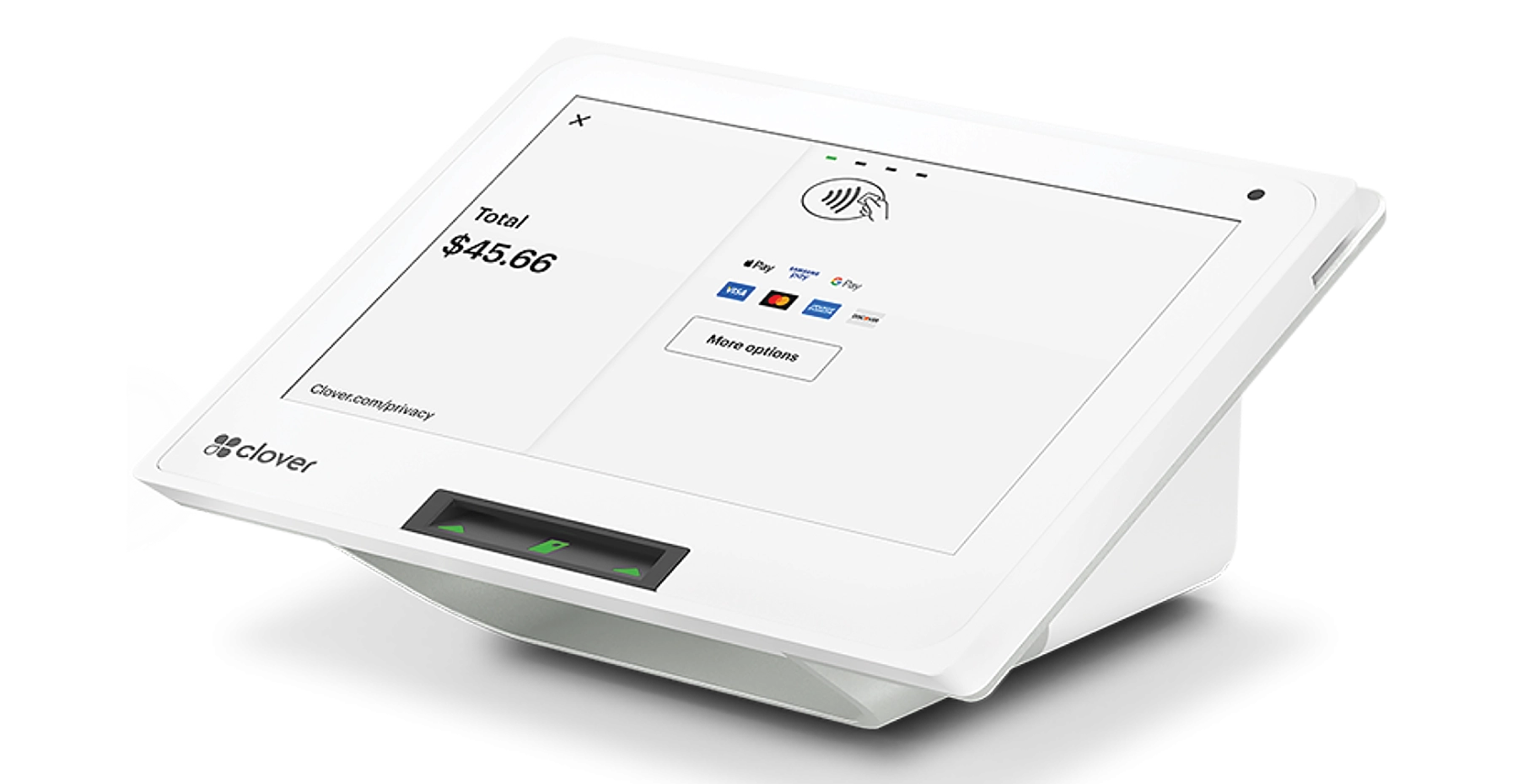
The effectiveness of a hardware store POS system depends heavily on the quality and compatibility of its devices and hardware. Essential components like barcode scanners, receipt printers, and cash drawers work seamlessly with POS software to ensure smooth transactions and accurate inventory tracking. Modern POS systems often support mobile devices, enabling staff to process sales and manage inventory from anywhere in the store—ideal for busy aisles or during peak hours. When choosing POS hardware, hardware retailers should prioritize durability and ease of use, as these devices must withstand the demands of a bustling retail environment. Many providers offer bundled solutions that include all necessary hardware, such as dual-screen Clover Duo checkout terminals, making setup straightforward for new or expanding stores. Additionally, support for contactless payments and debit cards enhances the checkout experience, allowing customers to pay quickly and securely. By investing in the right POS devices, hardware stores can streamline operations, process sales efficiently, and deliver a superior customer experience.
Multi-Location and Franchise Considerations
Many hardware businesses operate:
-
multiple stores
-
franchise models
-
regional clusters
For these multi location operations, robust multi-store management capabilities are essential. Effective multi-store management systems allow businesses to centralize control over inventory, pricing, and sales data across all locations, providing real-time visibility into stock levels and performance. Managing multiple locations from a single platform streamlines operations and reduces the complexity of handling separate systems for each store. Additionally, robust multi-store management systems provide detailed reporting features to analyze sales trends and inventory levels across different locations, aiding in informed decision-making.
In these cases, POS systems for hardware stores must support the same foundational capabilities outlined in our broader guide to what a POS system is and how it works, while adding hardware-specific tools like centralized inventory and pricing.
-
Centralized reporting
-
Shared item catalogs
-
Location-specific pricing
-
Inventory transfers
-
Unified gift cards
-
Corporate-level access controls
For businesses scaling beyond one location, centralized POS infrastructure is critical.
Employee Permissions and Loss Prevention
Shrinkage is a major concern in hardware retail due to high-value items and small, easily concealed products.
POS systems should support:
-
Role-based permissions
-
Restricted refunds and voids
-
Manager approval workflows
-
Cash drawer tracking
-
Employee-level activity logs
These controls reduce theft and provide accountability without slowing operations. Hardware Store POS Reporting That Actually Matters
Reports should be actionable, not decorative. Actionable reporting should include detailed reports and sales reports that provide comprehensive insights into store operations.
Hardware store owners need visibility into:
-
Fast-moving vs slow-moving inventory
-
Dead stock
-
Margin by category
-
Vendor performance
-
Seasonal demand patterns
-
Contractor purchase volume
-
Returns by employee
-
Discount usage
A robust POS system for hardware stores should allow owners to track sales and analyze sales data in real time, supporting informed decision-making. Detailed sales reporting helps identify best-selling and slow-moving products, optimizing inventory purchasing and ensuring efficient stock management.
POS systems for hardware stores should allow owners to make inventory and staffing decisions based on real data — not intuition.
Integrated Payment Processing for Hardware Stores
Hardware stores process a wide mix of payments:
-
Credit cards
-
Debit cards
-
Cash
-
House accounts
-
Gift cards
A modern sale solution enables hardware stores to accept payments of all types, including contactless and offline methods, seamlessly integrated into their POS system. An integrated POS system simplifies this by:
-
Synchronizing payments with inventory
-
Reducing reconciliation errors
-
Supporting pricing programs like dual pricing
-
Offering fast EMV and contactless checkout
Modern POS systems typically include features such as payment processing, sales tracking, and reporting, which help streamline operations and improve business insights for hardware stores. While these systems are designed for reliability, technical issues can occasionally arise during payment processing, so having dependable support is important.
For an overview of hardware-compatible payment processing, see: ➡️ https://www.getvms.com/payment-processing/
Dual Pricing and Cost Control in Hardware Stores
Because margins can be tight, many hardware stores adopt dual pricing (cash discount) models to offset card processing costs.
A POS system must be able to:
-
Display cash and card prices clearly
-
Apply correct pricing automatically
-
Calculate tax accurately
-
Separate cash vs card reporting
Improper configuration can cause compliance issues, so POS systems must support this natively.
Customer Management and Loyalty
Building strong customer relationships is key to long-term success in hardware retail, and a robust POS system makes this easier than ever. Integrated loyalty programs within the POS system allow hardware retailers to track customer purchase history, segment customers, and offer tailored promotions that drive repeat business. By analyzing customer data and sales trends, stores can gain insights into what products and services resonate most with their clientele, enabling more effective marketing and inventory decisions. For hardware retailers with multiple locations, modern POS systems support centralized customer management and loyalty programs, ensuring a consistent experience across all stores. This unified approach not only improves customer satisfaction but also helps stores identify and reward their most loyal customers, fostering lasting relationships and encouraging business growth.
Why Clover Works Well for Hardware Stores
Clover is often associated with restaurants, but it is also well-suited for hardware and paint stores, including paint stores with specialized inventory needs, when configured correctly. Paint stores benefit from features like inventory tracking for different paint colors and multi-location support, making Clover a strong choice for these specialized retailers. As an all-in-one platform, Clover POS can replace multiple separate devices and systems, simplifying setup and day-to-day management. Clover’s cloud-based features require a stable internet connection for real-time data access and remote management; however, on-premise options are available for stores in areas with unreliable internet, ensuring security and stability.
Clover supports:
-
Large inventory catalogs
-
Variable pricing units
-
Contractor and customer profiles
-
Tax-exempt transactions
-
Multi-location reporting
-
Barcode scanning
-
Custom quick-access buttons
-
App integrations for inventory and loyalty
-
Flexible payment processing
Clover’s App Market allows hardware and paint stores to extend functionality without replacing the entire system, and new Clover POS devices released for 2026 give retailers more options for tailoring their checkout setup.
Learn more about Clover’s POS capabilities here:
What to Avoid When Choosing POS Systems for Hardware Stores
Hardware store owners should be cautious of POS systems that don’t deliver the core capabilities described in our general complete guide to POS systems and that also:
-
Cap SKU counts
-
Require manual inventory adjustments
-
Do not support bulk or unit pricing
-
Lack tax-exempt handling
-
Have limited reporting
-
Are built only for restaurants or boutiques
-
Are generic POS systems lacking the specialized features needed for hardware stores, such as advanced inventory management and contractor sales support
A POS that works for a café may fail completely in a hardware environment.
Implementation Tips for Hardware Store Owners
To ensure a smooth transition:
-
Audit your inventory before setup
-
Standardize item naming and categories
-
Import SKUs in batches
-
Train staff on search and lookup tools
-
Configure permissions carefully
-
Test returns and tax-exempt workflows
-
Review reports weekly during the first 60 days
Proper implementation matters as much as the POS itself.
Costs, Pricing, and Plan Comparison
When selecting a POS system for a hardware store, understanding the full cost is crucial. Pricing can vary widely based on the provider, the features included, and the number of locations or registers needed. Hardware retailers should compare monthly subscription fees, upfront hardware costs, and any additional charges for support, add-ons, or advanced features. Many POS systems offer tiered plans, with basic options tailored for small businesses and more comprehensive packages for larger operations. Looking at how other verticals evaluate options, such as guides to the best POS systems for furniture stores like Clover, can help hardware retailers benchmark features and pricing. It’s important to choose a provider with transparent pricing—look for clear terms, no hidden fees, and the option for a free demo or trial period to test the system before committing. By carefully evaluating costs and comparing plans, hardware stores can find a POS solution that fits their budget, supports inventory management, and scales with their business, ultimately driving sales and supporting long-term growth.
External Standards and Best Practices
For compliance and retail standards, hardware stores should reference:
-
PCI Security Standards Council ➡️ https://www.pcisecuritystandards.org/
-
IRS guidance on resale certificates and tax exemption ➡️ https://www.irs.gov/businesses/small-businesses-self-employed
Need a POS built for your type of business?
VMS configures your system around how your industry actually operates — menus, inventory, appointments, whatever you run on.
Or call our team: 888-902-6227
Final Thoughts: POS Systems for Hardware Stores Are Operational Tools, Not Just Registers
A hardware store POS system is not just a checkout terminal — it is a core operational system that impacts inventory accuracy, cash flow, compliance, and customer satisfaction. Solutions like RMH POS (Retail Management Hero) are designed specifically for hardware stores, offering robust inventory management and seamless integration with third-party add-ons.
The best POS systems for hardware stores are:
-
inventory-first
-
scalable
-
payment-integrated
-
compliance-aware
-
built for high SKU environments
Integrated loyalty programs within these systems help build customer loyalty by tracking purchase history and offering tailored promotions to regular customers. Additionally, CRM features allow businesses to build detailed customer profiles, enabling personalized service and targeted marketing efforts.
Choosing the right sale solution is essential for reducing friction, preventing errors, and supporting long-term operational success.
If you want help evaluating or implementing a POS system designed specifically for hardware retail, VMS can assist with system selection, inventory setup, payment integration, and long-term support, drawing on experience configuring specialized POS systems for furniture and other complex retail stores.
Have questions about a POS for your business?
Fill out the form below and a VMS payment specialist will contact you shortly.