

In a world where time is of the essence and technology reigns supreme, there’s one versatile little box of squares that’s transforming the way we interact with businesses, products, and payments – the mighty QR code. From scanning our way through bustling city streets to breezing through contactless payments, QR codes have become the ubiquitous link between our digital lives and the real world. Digital payments are now a key driver in modernizing restaurant payments, streamlining operations, and enhancing the customer experience.
Join us as we delve into the mesmerizing world of QR codes. What are these futuristic almost hypnotic squares? How do they work, and how are QR code payments revolutionizing restaurant payments? QR code payments are not just a trend—they represent a lasting advancement in restaurant technology, transforming payment processes and delivering real benefits to both operators and guests. In fact, about 70% of diners say they’re looking for quick, contactless ways to pay the bill, highlighting the growing demand for convenient digital payment solutions in restaurants.
What are QR Codes?
These magical codes are sort of hard to comprehend. It may just be because of their chaotic arrangements of squares and lines that make them hard to understand. They are similar to barcodes in many ways. In a grocery store setting, each item has a barcode. The barcode is specific to that item and allows for easy tracking for inventory and sales purposes. A QR (quick response) code is basically a type of barcode for websites and other digital pages, instead of bananas and cereal. The first QR code system was invented in 1994 by the Japanese company Denso Wave, a Toyota subsidiary. They needed a more accurate way to track vehicles and parts during the manufacturing process. To achieve this, they developed a type of barcode that could encode kanji, kana, and alphanumeric characters.
Today, qr code generation is a key step for restaurants implementing qr code restaurant payment solutions. Restaurants use a qr code for each table, generating unique QR codes to ensure accurate order processing and prevent mix-ups in payments. This allows customers to use a qr code to access an online menu, place orders, and pay directly from their table, streamlining operations and reducing errors.
In 2020, Denso Wave continued to improve on its original design. The company saw what was happening during the pandemic, and used the opportunity to make its codes a saving grace within a world that was searching for every possible way to convert to complete contactless interactions. Their new QR codes include traceability, brand protection, and anti-forgery measures. We see how the fad of QR codes didn’t fizzle out with the pandemic. People recognized their convenience and have continued to implement them whenever possible. There are many new uses for the QR code, from transferring payments to determining objects’ positions within augmented reality. In the restaurant industry, a restaurant qr code serves as a digital and contactless solution for accessing menus, placing orders, and streamlining operations. The online menu, accessed via QR codes, offers a digital alternative to paper menus, allowing for real-time updates, cost savings, and valuable analytics on customer behavior.
Difference between QR Codes and Barcodes
So these two seem incredibly similar. Why do they need to look so complex and what’s the hype around them? Well, their chaotic look actually has a lot to do with it. Stores can only read typical barcodes one way, from top to bottom, and they can only encode alphanumeric characters. Because of this, barcodes can only hold a small amount of data. QR codes can be read from top to bottom and right to left. Meaning they can house a much larger amount of data. Allowing them to link to things like:
-
Website URLs; including youtube pages, company sites, restaurant menus (essentially any website!)
-
Phone numbers
-
Up to 4,000 characters of text
-
Apple Store or Google Play Store to download apps
-
Wi-Fi access (ability to store SSID, password, and encryption type.)
-
Sent and received payment information
Scanning a QR code with a smartphone’s camera gives customers instant access to digital menus and payment options, making transactions easy and contactless. To ensure a smooth experience, restaurants should provide simple instructions on how to scan and use QR codes. The typical process of paying with a QR code in a restaurant involves locating and scanning the code, accessing a payment page, reviewing the bill, selecting a payment method, and confirming the payment. Additionally, QR codes can provide valuable data to restaurant owners through scan analytics and customer behavior tracking, helping optimize operations and increase profits.
How QR Code Payments Work
QR code payments are transforming the way restaurants handle transactions, offering a fast, secure, and contactless payment experience that today’s customers expect. The process is refreshingly simple: when it’s time to pay, customers just use their mobile device—often their smartphone’s camera—to scan a unique QR code displayed at their table, on their receipt, or on a digital menu. This instantly connects them to the restaurant’s payment system, where they can choose their preferred payment method, such as Google Pay, Apple Pay, or a traditional credit or debit card.
What makes QR code payments stand out is their seamless integration into the dining experience. There’s no need for additional hardware like card readers or payment terminals—everything happens on the customer’s own device. This not only streamlines the payment process but also supports contactless payments, which have become a top priority for both safety and convenience in recent years.
Implementing QR code payments is straightforward for restaurant owners. By partnering with a QR code payment system provider or a comprehensive point-of-sale credit card processing platform, restaurants can quickly generate unique QR codes for each table or transaction. These codes are linked directly to the restaurant’s POS system, ensuring that orders and payments are accurately tracked and processed. The entire process is encrypted and tokenized, protecting sensitive data and reducing the risk of fraud.
Beyond convenience, QR code payments offer restaurant owners valuable insights into customer behavior and transaction data. With detailed analytics, restaurants can identify peak hours, track popular menu items, and monitor average order value. This data-driven approach helps optimize inventory management, staffing, and marketing strategies, ultimately improving restaurant operations and boosting revenue.
Another major advantage is the reduction in labor costs. By automating the payment process, staff can focus more on delivering excellent service rather than handling transactions. This not only increases staff efficiency but also enhances the overall customer experience, as guests can pay at their own pace without waiting for a server.
In short, QR code payments are a game changer for the restaurant industry. They offer a secure, efficient, and modern payment solution that aligns with evolving customer expectations. By implementing QR code payments, restaurant owners can streamline operations, gain valuable insights, and deliver a superior payment experience that keeps customers coming back.
How Business Owners are Using QR Codes
Small businesses have seen the adaptability of QR codes and have been integrating them into their businesses in many different ways. They really are an amazing development that makes navigating a digital world simple. By simply pointing the camera of a smartphone at a QR code, it will instantly redirect the user to a website or important digital information. With everything quickly moving to online only, this feature is incredibly helpful for inputting long and difficult URLs into browsers.
Business owners have found the unique power of QR codes to battle short staffing, maximize payment efficiency, and complement their restaurant online ordering software to help marketing efforts. Adopting QR code restaurant payment solutions leads to improved efficiency and operational efficiency by streamlining transactions, reducing cash handling, and speeding up the payment process. QR code systems support a wide variety of payment methods, including mobile payments and digital wallets, allowing customers to select their preferred option such as credit/debit cards or mobile wallets. QR payments often have lower transaction fees than traditional card payments, providing cost savings per transaction and reducing reliance on costly POS hardware and paper checks.
Additionally, QR code payment systems can be integrated into a comprehensive POS device and ordering system, supporting order management and enabling restaurants to process payments in real time. These systems provide real-time transaction tracking, giving restaurants valuable insights into peak dining hours and popular menu items for better inventory and staff management. Security is enhanced through encryption and tokenization, with PCI-compliant transaction handling ensuring sensitive data like credit card numbers is never left unprotected, especially when backed by dedicated 24/7 Clover POS support. The reduction of physical contact points further improves security, which is especially important in health-conscious environments.
QR Code Ordering and Payments
Many restaurants are facing short-staffing issues. This is why many business owners are looking for ways to remain successful despite not having enough staff. Implementing self-service kiosks, altering hours, and adding QR code ordering have all been helpful decisions to stay afloat during the staffing issue.
QR ordering and digital ordering systems streamline the ordering process, reduce wait times, and enhance the overall customer experience. By allowing guests to scan a QR code on the table or menu, customers can access digital menus, place orders, and pay directly from their own phone, which is both convenient and secure. This all-in-one solution integrates ordering, payment, and menu access, reducing human error in payment processing and minimizing mistakes with orders or bills. Faster payment processing also allows servers to focus more on customer service and handle more tables, which is crucial in a high-volume restaurant environment.
QR code payments help increase table turnover by letting customers pay from their own device without waiting for a server, especially when paired with a fast, dual-screen Clover Duo POS system, enabling restaurants to serve more guests during peak hours. Many QR systems also allow tables to split the bill by item or evenly, simplifying the payment process. Restaurants can use digital menus to offer special promotions and customizable options, such as add-ons or premium ingredients, which can lead to higher average order values. Customers prefer quick, contactless payment options, and using the customer’s phone for payment is becoming the norm.
Implementing a loyalty program alongside QR code payments encourages repeat usage and customer retention, especially when run through an all-in-one Clover POS system that centralizes rewards and payments. Restaurants adopting QR code payments often see a significant increase in tips (ranging from 10% to 40%) and can gather valuable customer data for marketing. For successful implementation, staff training is crucial so employees can assist customers effectively, and clear communication with customers about how to use the QR code payment system is important.
Creating Quick and Easy Ordering
This is an incredible tool for any restaurant. Allowing guests to order and pay when they’re ready. This will decrease or even eliminate the need for a server to stop by. This can be very helpful to a restaurant that doesn’t have enough staff. As well as a restaurant that’s smaller and doesn’t necessarily have the need for a ton of employees.
I recently went to a QR code ordering-only sit-down restaurant. At first, it was a little weird, just because everyone is used to sitting down at a table and being greeted by a waiter. But it was actually really nice, we were able to sit down, get situated, browse the menu, and order without being rushed. A server did bring out our drinks and our food, and they gave us a receipt with another QR code that had our bill. So we paid when we were done and were able to leave right away. After payment confirmation, guests typically receive a digital receipt via email or text, making the process even more seamless. It was the most peaceful and convenient experience ever.
QR code restaurant payment systems also provide valuable data on customer behavior, such as peak hours and popular menu items, which helps restaurants optimize operations and improve order management. Collecting customer feedback after implementing QR code payments is important for identifying issues and enhancing the dining experience. Regular monitoring and optimization of the QR code payment system can help restaurants track performance metrics and improve customer adoption rates.
People have started to prefer self-service much more in recent years. It has increased customer satisfaction and everyday operation efficiency. As well as saving business owners money and stress with staffing costs and issues. Not to mention, when a business owner implements QR code ordering, their average order value can increase by as much as 30%.
Paying too much to accept cards?
VMS reviews your current statement free and shows you exactly what you are being charged — most merchants are surprised by what they find.
Or call our team: 888-902-6227
Integrating QR Codes at Your Business
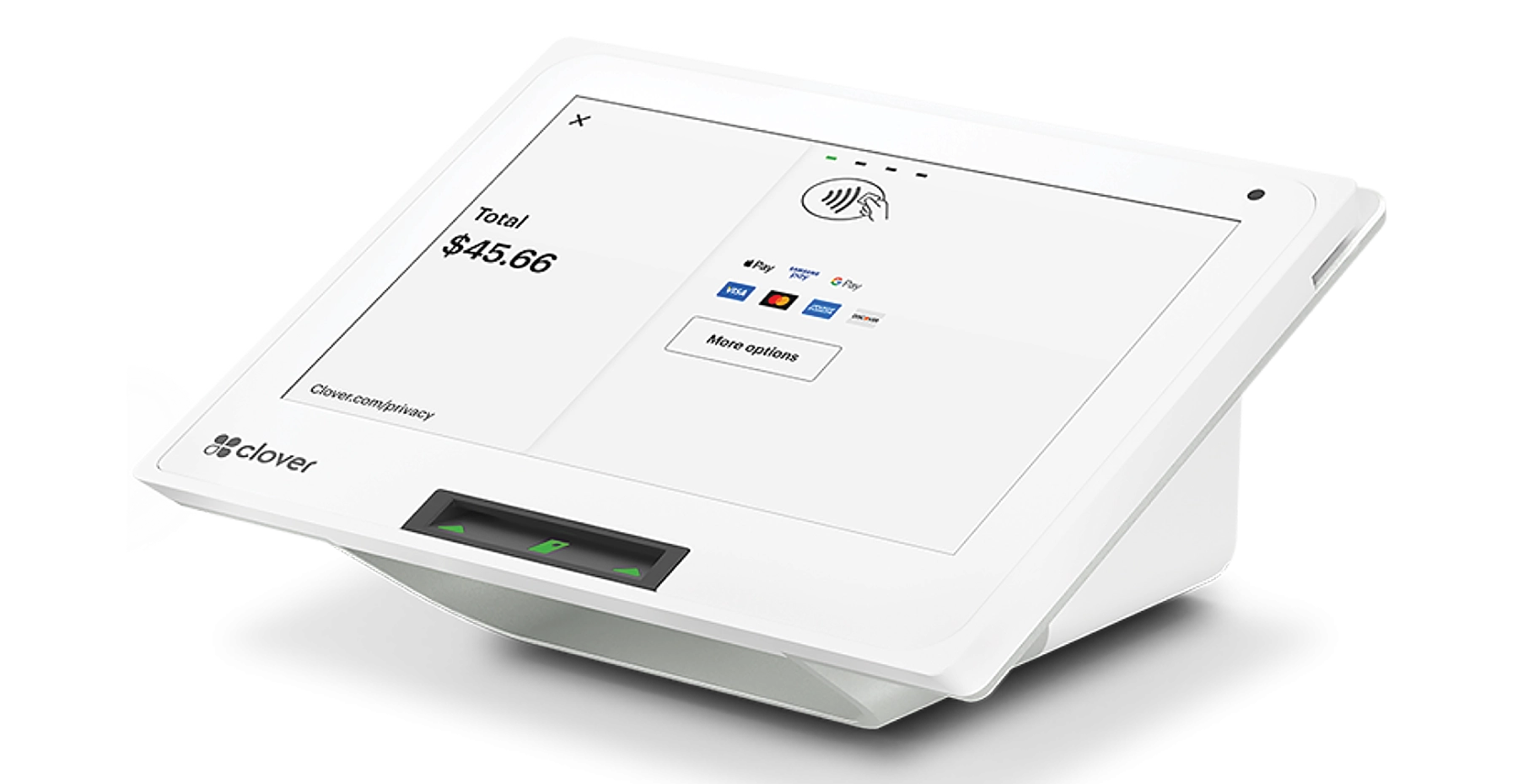
If you’re interested in implementing QR codes at your business, visit getvms.com or fill out the form below. By working with VMS, you’ll get access to state-of-the-art POS machines. Our machines will not only allow you to accept every form of payment but also make the process of integrating QR codes simple! Our Clover devices have options to download software for QR code ordering and options to print QR codes at the bottom of your receipts for easy QR code payments, turning every slip into a receipt marketing opportunity. Contact us to get set up with the best devices and software customized to your small business needs, whether you run a full-service restaurant or a niche retailer like a smoke shop POS system environment.
Have questions about payment processing?
Fill out the form below and a VMS payment specialist will contact you shortly.