

Your best barista gives two weeks’ notice on a Tuesday. By Friday you are covering her shifts yourself, the new hire is still learning where the lids go, and two regulars have asked, a little too pointedly, “Where’s Maya?” If that scene feels familiar, you already know why learning to reduce employee turnover matters. Every exit costs you money, time, and a piece of the customer experience you worked so hard to build.
The good news: most turnover in a small business is not random, and it is not just about pay. It follows patterns you can spot and fix. In this guide we will walk through what turnover really costs, the quiet reasons good people leave, and practical, low-cost ways to reduce employee turnover in a shop, restaurant, salon, or service business, without blowing up your labor budget.
Why It Is So Hard to Reduce Employee Turnover in a Small Business
Big companies have HR departments, retention budgets, and a bench of people to cover a sudden vacancy. You have a schedule taped to the back wall and a group chat. When one person leaves a five-person team, that is 20% of your staff walking out the door, and everyone left behind feels it on the very next shift.
The numbers show how steep the climb is. According to the U.S. Bureau of Labor Statistics JOLTS report, the quits rate in accommodation and food services was 3.5% in August 2026, and retail trade was 3.0%, compared with 1.9% across all nonfarm jobs. Those are monthly figures. Stack twelve months of 3.5% together and a restaurant can lose the equivalent of roughly four in ten workers in a single year.
Small businesses also feel turnover in a way that never shows up on a spreadsheet. Your staff are the people who remember a regular’s order, upsell the seasonal special without being asked, and know which supplier always shorts the delivery. When they leave, that knowledge leaves with them.

What Employee Turnover Really Costs Your Shop
Most owners underestimate the bill because it arrives in small pieces. Gallup estimates that replacing an employee can cost one-half to two times that person’s annual salary, and Gallup calls that a conservative estimate. Even at the low end, losing a $32,000-a-year shift lead can easily cost you $16,000.
Here is where that money actually goes:
- Hiring time. Writing the ad, screening applicants, interviewing, and chasing no-shows, usually done by you, after close.
- Overtime and owner hours. Someone has to cover the empty shifts, and it is usually your most loyal people or you.
- Training. A new hire is paid full wage for partial productivity for weeks while learning the menu, the products, and the POS.
- Mistakes and comps. Wrong orders, voided tickets, drawer shortages, and the occasional refund add up during the learning curve.
- Lost sales. Slower lines, fewer upsells, and regulars who quietly drift to the place down the street.
If you want to see how this hits your margins, compare your numbers against our guide to labor cost percentage. Turnover is one of the most common hidden reasons labor costs creep up even when hourly rates have not changed, which is why owners who reduce employee turnover often see their labor percentage improve without cutting a single shift.
The Real Reasons Good People Quit
When someone leaves, it is tempting to blame money or “kids these days.” The data tells a more useful story. In the same Gallup research, 52% of employees who voluntarily left said their manager or organization could have done something to keep them, and 51% said no manager or leader talked with them about their job satisfaction or future in the three months before they left.
In other words, about half of the people walking out the door were persuadable, and nobody asked. In small businesses the most common reasons we hear from owners and their teams are:
- Unpredictable schedules. Shifts posted late, changed by text at the last minute, or handed out unevenly.
- Feeling thrown in. No real training, just “shadow Jess for a shift” and then you are on your own during the rush.
- Slow or confusing pay. Tips that take a week to show up, payroll errors, or no clear view of hours worked.
- Tools that fight them. A frozen register, a card reader that drops connections, or a checkout that makes them look bad in front of customers.
- No path forward. Nobody explains what it takes to become a shift lead or earn a raise.
- Feeling invisible. Hard work during a brutal Saturday that nobody ever mentions.
Almost every item on that list is fixable without a giant raise. That is the core idea behind a plan to reduce employee turnover in a small business: fix the daily friction first, then build loyalty on top of it.
Practical Ways to Reduce Employee Turnover Starting This Month
You do not need a corporate retention program. You need a handful of consistent habits. Pick two or three of these to start, and add more once they stick. The goal is not perfection; it is to reduce employee turnover a little every quarter until the revolving door stops spinning.
1. Make the schedule predictable and fair
Post schedules at least a week ahead, honor availability, and rotate the dreaded shifts so the same two people are not always closing on Saturday. A digital time clock for small business makes this easier, because staff can see their hours, request swaps, and clock in from the same system you use to run payroll. Predictability is one of the cheapest ways to reduce employee turnover, and hourly workers notice it immediately.
2. Fix the first 30 days
Turnover is heavily front-loaded: people decide early whether a job is worth keeping. Give every new hire a simple written checklist, a named buddy for the first two weeks, and dedicated practice time on the register before their first rush. Our guide to POS system training lays out a step-by-step plan you can copy. If you are still building your team, pair this with the advice in how to hire employees for a small business so you hire for fit in the first place.
3. Pay accurately and get tips out fast
Nothing kills trust faster than a short paycheck. Use a system that tracks hours and tips automatically and shows staff exactly what they earned each shift. If your team shares gratuities, a clear and transparent tip pooling policy prevents the quiet resentment that drives servers and baristas out the door. For many hourly workers, getting tips quickly matters almost as much as the rate itself.
4. Give them tools that make them look good
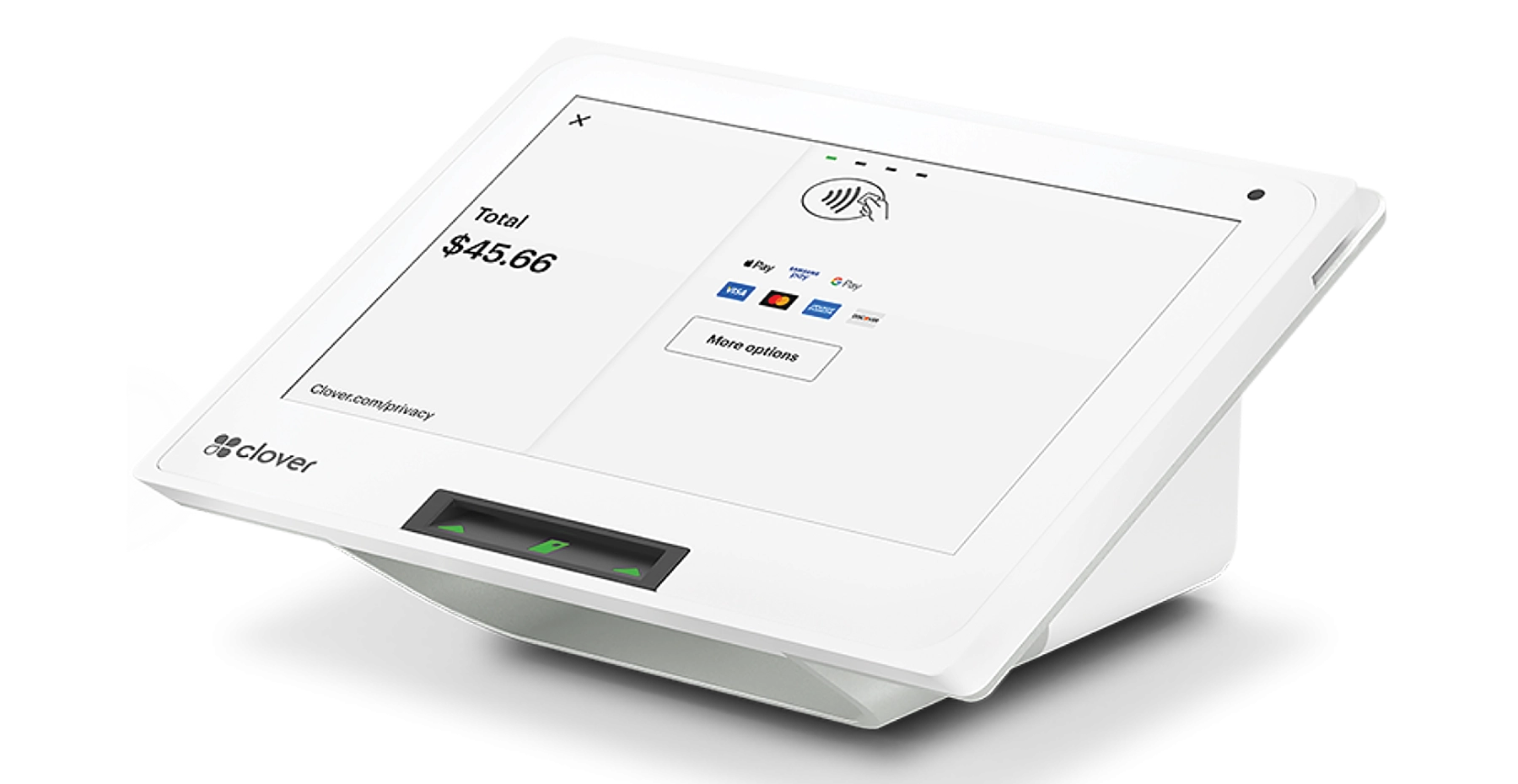
Your staff are the ones standing in front of an impatient line when the card reader freezes. Reliable, modern equipment is a retention tool. A handheld like the Clover Flex lets servers take payment at the table or line-bust during a rush, and built-in employee management tools handle permissions, shifts, and sales tracking without a separate app. When the tech just works, every shift is less stressful.

5. Hold short stay interviews
Do not wait for an exit interview to learn what went wrong. Every quarter, spend ten minutes with each team member and ask three questions: What do you like most about working here? What is one thing that makes your job harder than it should be? What would make you think about leaving? Then actually fix one thing they mention. This one habit directly targets the 51% who said no one ever asked.
6. Show a path forward
Even in a ten-person shop you can create steps: trainee, team member, trainer, shift lead, key holder. Write down what each step requires and what it pays. People stay longer when they can see where they are going, and a trainer role turns your best employees into the people who help reduce employee turnover for everyone else.
7. Recognize the work out loud
Thank people by name for specific things: “You handled that refund perfectly” beats “good job, team” every time. Use your POS sales data to celebrate wins, like the server with the best upsell week or the cashier with zero drawer variance. Recognition is free, and it is one of the most underused tools small businesses have to reduce employee turnover.
8. Protect your margins so you can invest in people
It is hard to offer raises or bonuses when card processing fees eat a few percent of every sale. Programs like Zero Fee Processing can dramatically lower what you pay to accept cards, and many owners put part of those savings straight into wages, shift bonuses, or a better break room. Money saved on fees is money you can spend keeping your best people.
Common Mistakes That Make Turnover Worse
Some well-meaning moves actually push people out faster. Watch out for these:
- Fixing everything with a one-time raise. Pay matters, but a raise will not keep someone who dreads chaotic schedules or a manager who never listens.
- Leaning hardest on your best people. Giving every extra shift to your most reliable worker is the fastest way to burn them out.
- Hiring in a panic. Filling a slot with the first warm body usually means hiring again in six weeks.
- Ignoring small complaints. A broken card reader or a confusing tip-out seems minor until it becomes the reason someone says yes to another offer.
If you want to reduce employee turnover for good, treat each of these as a warning light, not an annoyance.
A Real-World Example: The Cafe That Stopped the Revolving Door
Picture a busy neighborhood cafe with eleven employees. Last year it replaced seven of them. The owner spent most Sunday nights writing job posts and most Monday mornings training someone new. Drawer counts were off, regulars complained about slow lines, and the two veteran baristas were burning out covering every gap.
Instead of a big raise across the board, the owner made four changes. Schedules went out two weeks ahead through the POS. Every new hire got a written checklist and a buddy. Tips were tracked per shift and paid out on a predictable schedule. And every quarter, each employee got a ten-minute check-in over coffee.
Within six months the cafe had replaced only one person. Overtime dropped, the drawer stopped coming up short, and the veteran baristas stopped talking about leaving. The owner later admitted the fixes cost less than a single month of constant rehiring. That is what it looks like when you reduce employee turnover by removing friction instead of throwing money at the problem.
How to Measure Whether Your Retention Plan Is Working
You cannot reduce employee turnover if you do not track it. The basic turnover formula is simple: divide the number of employees who left during a period by your average headcount, then multiply by 100. If you averaged 10 employees and 4 left this year, your annual turnover rate is 40%.
Track a few supporting numbers alongside it:
- 90-day survival rate. What share of new hires are still with you after three months? This tells you whether onboarding is working.
- Overtime hours per week. Rising overtime is often the first warning sign that people are leaving or about to.
- Schedule changes per week. Lots of last-minute swaps can signal burnout.
- Sales per labor hour. Experienced teams usually sell more per hour, so this number should improve as turnover falls.
Most modern POS systems, including Clover, can report hours, sales by employee, and labor costs in one place, so these numbers are a few taps away instead of buried in spreadsheets. If you are not sure what your current system can show you, our merchant services FAQs are a good starting point, or you can browse all of our POS devices for small businesses.
Want tools your team actually likes using?
VMS sets you up with Clover POS, built-in scheduling, time clock and tip tracking, plus Zero Fee Processing to free up money for your people — most businesses are up and running within days.
Or call our team: 888-902-6227
Keep Your Best People, Keep Your Best Customers
Turnover is not just an HR problem. It is a customer experience problem, a margin problem, and a quality-of-life problem for you as the owner. The businesses that reduce employee turnover do not usually pay dramatically more. They schedule fairly, train well, pay accurately, give their teams reliable tools, and actually talk to their people.
At Velocity Merchant Services, we have helped small businesses since 1998 with Clover POS systems that make shifts smoother, employee management tools that keep scheduling and tips simple, and Zero Fee Processing that frees up money you can reinvest in your team. If you are ready to give your staff better tools and keep more of every sale, let’s talk.
Have questions about keeping your best employees?
Fill out the form below and a VMS payment specialist will contact you shortly.