

Ask any server what they think about tip pooling and you will get an opinion, fast. Ask the line cook and you will get a different one. Ask the owner, and you usually get a sigh. Tips are the most emotionally charged dollars in your building, and how you split them decides whether your best people stay or start quietly interviewing across town.
Here is the part nobody says out loud: most tip pooling problems are not about greed. They are about math nobody can see. When the split happens on a clipboard at midnight, everyone assumes they got the short end. When the split happens automatically from your POS, with every card tip and cash tip recorded to the shift, the arguments mostly stop. This guide walks through what tip pooling is, what the law actually allows, how to pick a fair formula, and how to make the whole thing run itself.
What Tip Pooling Is, and What It Is Not
Tip pooling means the tips earned during a shift go into one pot and get divided among eligible staff by a set formula, usually by hours worked or by role. A pool can be voluntary, where staff agree to share, or mandatory, where you require it as a condition of the job. Both are legal at the federal level as long as you follow the rules below.
Tip sharing, sometimes called a tip-out, is the cousin. The server keeps most of what they earned and hands a fixed percentage, often of sales rather than tips, to bussers, runners, or the bar. Plenty of restaurants run a hybrid: servers tip out support staff, and the bartenders pool among themselves. The difference matters because the rules for who can receive a tip-out are the same as the rules for who can join a pool.
One thing tip pooling is not: a way for the house to keep a cut. Owners, managers, and supervisors may never take from the pool, and a service charge you add to the bill is not a tip at all. It is revenue, and you can distribute it however you want, but it does not belong to the tip pool and it does not get the tax treatment tips get.
The Federal Tip Pooling Rules That Trip Up Good Owners
The Fair Labor Standards Act sets the floor, and the U.S. Department of Labor spells it out in Fact Sheet #15 on tipped employees. State law can be stricter, and in several states it is, so treat this as the minimum and check your state before you write a policy. Four federal points cover most of the mistakes we see.
Managers and supervisors are always out
Since the 2018 amendment to the FLSA, anyone who meets the executive duties test, meaning they direct the work of two or more employees and have real say in hiring and firing, cannot receive a share of a mandatory tip pooling arrangement. A working shift lead can keep tips a customer hands them directly for service they personally provided. They cannot dip into the pot. The Department of Labor reiterated this in January 2025, and it is the single most common violation in small restaurants because the person running the pool is often the one who should not be in it.
The tip credit decides who else can join
Federal law lets you pay tipped staff a cash wage as low as $2.13 an hour and count up to $5.12 in tips toward the $7.25 minimum. That is the tip credit. If you take it, your tip pooling arrangement may only include employees who customarily and regularly receive tips: servers, bartenders, bussers, runners. If you pay everyone the full minimum wage in cash and take no tip credit, you may run a nontraditional pool that includes cooks and dishwashers. Many operators moved to this model after the 2021 rule change, and it is the reason back-of-house pools are now common in cities with high minimum wages.
Card fees can come out of tips, sometimes
Federal rules allow you to deduct the processing cost on a credit card tip before paying it out, so a $10 tip on a card that costs you 3 percent can be paid as $9.70. Several states, California among them, ban this outright. Even where it is legal, the deduction cannot take an employee below minimum wage and cannot exceed what the transaction actually cost you. If you are on Zero Fee Processing, the question mostly goes away, because the fee is no longer sitting between the customer and your staff.
Tips must be paid out on time and recorded
Pooled tips have to reach employees no later than the regular payday for the period in which they were earned. You also need a record of what each person received, because tips are wages for tax purposes. If you have not read our piece on credit card tip reporting, it covers how the IRS matches card tips against what your team reports, and why a clean POS record protects you as much as it protects them.

Choosing a Tip Pooling Formula Your Team Will Trust
There is no single right formula, but there is a wrong process: deciding in secret. Whatever tip pooling method you pick, write it down, share it before anyone works a shift under it, and post it where staff can see it. A policy people helped shape is one they defend to new hires. Here are the four models that hold up in the real world.
Hours-based pooling
Total the tips, divide by total hours worked by eligible staff, and pay each person their hours times that rate. It is transparent, it rewards people who pick up shifts, and it works well for counter-service concepts where the whole team touches every order. Its weakness is that a slow lunch and a slammed dinner pay the same hourly rate if you pool the whole day, so most operators pool by shift instead.
Points-based pooling
Each role gets a point value: servers 10, bartenders 10, runners 6, bussers 5, hosts 3. Add up the points on the shift, divide the tips by that total, and multiply by each person’s points times hours. This is the most common tip pooling structure in full-service dining because it respects that a server carrying six tables is doing more tip-generating work than the host, without pretending the host did nothing.
Percentage tip-outs
Servers keep their own tips and pay a percentage to support staff, typically 2 to 3 percent of sales to the bar and 1 to 2 percent to bussers or runners. It preserves the incentive to sell, which is why high-check restaurants like it. Watch the math, though: a tip-out set as a percentage of sales can wipe out a server on a night of low tippers, which is a morale problem waiting to happen.
Hybrid pools
Bartenders pool among themselves, servers tip out the bar and support, and kitchen gets a fixed share only if you have dropped the tip credit. Hybrids are flexible and, frankly, harder to explain. If you go this way, the reporting has to be automatic or people will not trust it.
| Model | Best for | Watch out for |
|---|---|---|
| Hours-based | Counter service, cafes, food trucks | Pool by shift, not by day, or busy shifts subsidize slow ones |
| Points-based | Full-service dining with several roles | Post the point values; revisit them when you add a role |
| Percentage tip-out | High-check restaurants that want a sales incentive | Tip-outs on sales can bury a server on a bad-tipping night |
| Hybrid | Bars plus dining rooms, or venues with a kitchen share | Only workable when the POS does the reporting |
Why the Midnight Clipboard Split Costs More Than You Think
Picture the close. Card tips live in the POS, cash tips live in a jar, hours live in the scheduling app, and someone is doing the tip pooling split on the back of a ticket with a phone calculator. That person is tired, the numbers are rounded, and tomorrow two people will ask why their share was $4 less than last Friday. Multiply that by 300 nights a year.
The cost shows up in three places. First, labor: a manager spending 25 minutes a night on the split is spending 125 hours a year on arithmetic, which is real money when you are already watching your labor cost percentage. Second, errors: every hand-keyed number is a chance to overpay one person and underpay another, and underpayments are wage claims. Third, turnover. The Bureau of Labor Statistics reported a 4.2 percent quits rate in accommodation and food services in June 2026, the highest of any broad industry. Staff rarely quit over the tip pool itself. They quit over the feeling that the tip pool is unfair and nobody can prove otherwise.
There is a fourth cost that is easy to miss. When tips are split off the books, your records do not match your card statements, and that gap is exactly what the IRS looks for. A tip pooling system that lives inside the POS closes it automatically.

How a Clover POS Makes Tip Pooling Automatic
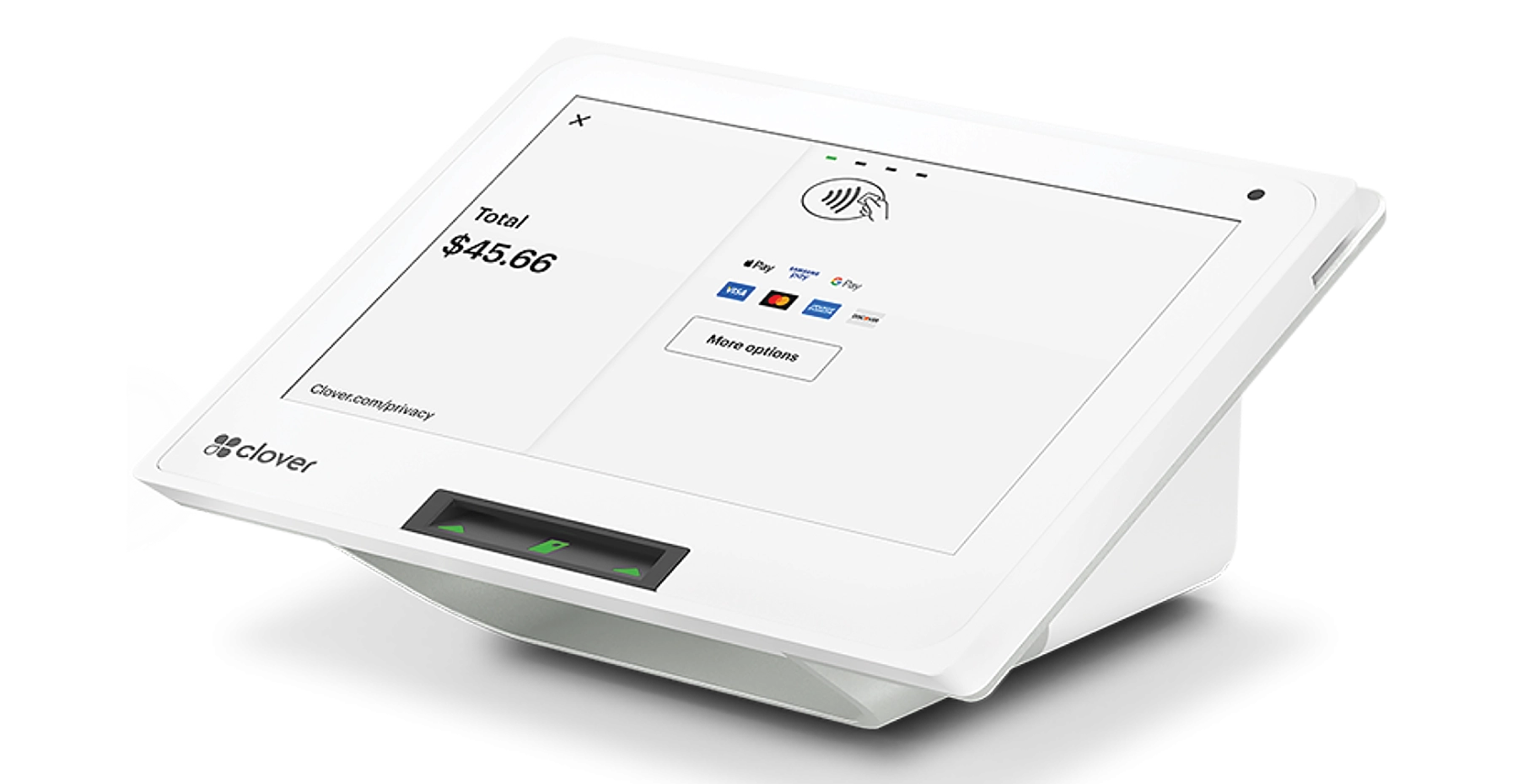
This is where the register earns its keep. On a Clover Mini or a Clover Duo at the counter, and a Clover Flex at the table, every tip a customer adds is tied to the employee who was logged in, the shift, and the payment. Tap-to-pay tipping prompts also raise the pot in the first place; we covered the numbers in our post on why people tip more on a touchscreen.
From there, tip pooling becomes a setting rather than a chore. Clover’s employee tools let you define the pool by shift, choose hours-based or points-based distribution, and generate a tip report at close that shows each person’s share. Cash tips can be declared at clock-out on the same screen so they land in the same report. Because the time clock, the roles, and the payments all live in one system, the split is done before the last table leaves. If you use the employee management tools VMS sets up with every Clover, the same report feeds your payroll so pooled tips hit paychecks on time, which is the federal requirement you least want to miss.
Two practical wins follow. Your staff can pull up their own tip totals instead of asking a manager, which ends most disputes before they start. And your books show card tips, cash tips, and distributions in one place, so when the accountant or an auditor asks how tips are split at your business, the answer is a report, not a story.
The New No Tax on Tips Deduction Changes the Math
Since the 2025 tax law, tipped workers can deduct up to $25,000 a year in qualified tips from their federal taxable income for tax years 2025 through 2028, as the IRS explains. Two details matter for anyone running a pool. Qualified tips include amounts received through tip sharing, so a busser paid from the pool gets the deduction just like the server. And qualified tips must be voluntary: mandatory service charges do not count, and neither does anything that never showed up on a W-2.
That second point is the quiet argument for automating tip pooling. Your team can only deduct tips that were reported, and tips reported through the POS and paid through payroll are the ones that will survive a second look. An employee who wants the full benefit of the deduction now has a personal reason to want every dollar of the pool documented, which puts you and your staff on the same side of the compliance conversation for once. We broke down the politics of the bill when it passed in our post on no tax on tips.
A One-Page Policy You Can Write This Week
You do not need a lawyer to draft page one, though you should have one review it if you take a tip credit or operate in a state with its own tip rules. A workable tip pooling policy fits on a single sheet and answers six questions.
- Who is in the pool, by job title, and who is explicitly out (every manager and supervisor, by name if needed).
- Whether the business takes a tip credit, and therefore whether kitchen staff can participate.
- The formula: hours, points, or percentage, with the actual numbers written out.
- When the pool is calculated and when it is paid, which must be no later than the regular payday.
- How cash tips are declared and whether card processing fees are deducted, if your state allows it.
- Where each employee can see their own tip record, ideally on the POS itself.
Have every employee sign it at hiring, and add it to your onboarding packet next to the I-9 and W-4 if you followed our guide on how to hire employees. Then let the register enforce it. A policy people can check for themselves is the difference between a tip pooling arrangement that builds a team and one that slowly empties the schedule.
If you are opening a second concept, whether a quick-service spot, a food truck, or a salon where stylists pool with assistants, set the tip pooling rules on day one. It is far easier to launch fair than to fix unfair.
Tired of doing the tip split by hand every night?
VMS sets up Clover tip pooling, employee time clocks, and payroll-ready tip reports, usually within a few days.
Or call our team: 888-902-6227
Let the Register Do the Splitting
Tip pooling was never really a math problem. It is a trust problem that looks like a math problem, and the fix is to make the math visible to everyone. Keep managers out, know whether your tip credit limits the pool, pick one formula and publish it, and pay it out on payday. Then move the calculation off the clipboard and into the system that already knows every tip, every hour, and every role.
VMS has helped small businesses accept payments since 1998, and tip-heavy businesses are a big part of that. Whether you run a full-service restaurant, a bar, a cafe, or a salon, we will set up the right Clover devices, configure tip pooling and employee management the way your policy reads, and connect it to payroll. Pair it with Zero Fee Processing and the card-fee-on-tips question disappears too. Have questions first? Browse our merchant services FAQs, reach our support team, or fill out the form below and a VMS payment specialist will walk you through it.
Have questions about tip pooling on your POS?
Fill out the form below and a VMS payment specialist will contact you shortly.