

Your best regular just walked out with a latte and a wave, and you have no idea when you will see them again. Maybe Thursday. Maybe not until next month. That gap between visits is where small businesses quietly leak revenue, and closing it is exactly what SMS marketing for small business is good at. A text lands in the same place your customers already look a hundred times a day, right between a message from their sister and a reminder from their kid’s school.
That is also the part that makes owners nervous. Nobody wants to be the shop that pesters people. The good news is that the line between welcome and annoying is not mysterious, and staying on the right side of it is mostly a matter of asking properly and having something worth saying. Get those two right and SMS marketing for small business becomes the cheapest tool you own for filling a slow Tuesday.
Why SMS Marketing for Small Business Cuts Through the Noise
Start with the raw behavior. Americans exchanged nearly 2.2 trillion text messages in 2024, roughly 42 billion more than the year before, according to CTIA’s annual wireless industry survey. Texting is not a channel that is quietly dying off while everyone moves somewhere else. It is the default way most of your customers talk to the people they actually care about, which is precisely why SMS marketing for small business lands when other channels bounce.
That is the whole advantage, and it is also the whole responsibility. Email is patient. A promotional email can sit unopened for three days and nobody is offended. A text is different: it interrupts. When you send one, you are borrowing a slot normally reserved for family, and people notice the difference immediately. Email marketing still earns its keep for longer stories, newsletters and anything with pictures. Texting is for the short, time-sensitive nudge that needs to land today.
The constraint is a feature. You get about 160 characters, so there is no room for a mission statement or three paragraphs of throat-clearing. One offer, one deadline, one link. Owners who struggle with marketing copy often find that SMS marketing for small business is the easiest writing they do all month, precisely because the format refuses to let them ramble.
It suits some businesses more than others. If your customers come back on a rhythm, texting fits naturally. That means salons and spas, barbers, quick-service restaurants, coffee shops, pet groomers, nail studios and retail shops with regulars. If you sell something people buy once a decade, put your energy elsewhere.
The Permission Rules Behind SMS Marketing for Small Business
Here is the part most guides skip until the end, and it belongs up front. SMS marketing for small business is not the wild west. Business texting in the United States is governed by the Telephone Consumer Protection Act, and it has real teeth. Statutory damages run roughly $500 to $1,500 per message, which is not a typo and not per campaign. Send an unwanted promotional blast to two thousand numbers you scraped from old invoices and you have manufactured a very expensive afternoon.
None of that should scare you off. It should just push you toward doing SMS marketing for small business the honest way, which happens to also be the way that works better.
What a real opt-in looks like
You need express written consent before a marketing text goes out. In practice that means the customer actively agreed to receive promotional messages from your business by name, and it was obvious at the time that this is what they were agreeing to. A phone number someone gave you to confirm an appointment is not consent to send them a Friday happy hour promo. A number on a two-year-old delivery slip is definitely not. This is the single most common way SMS marketing for small business goes wrong.
Practical version: no pre-checked boxes, no burying the permission in terms nobody reads, no bundling it into something unrelated, and absolutely no purchased lists. Tell them what they will get and roughly how often, then keep that promise. Keep a record of when and how each person opted in, because if anyone ever asks, the burden of proof sits with you.
Opting out is no longer just the word STOP
This is the rule that catches established businesses off guard. Since April 11, 2025, the FCC requires that customers be able to revoke consent through any reasonable means that clearly signals they want the messages to end. You cannot insist they reply with one specific keyword. “Quit,” “cancel,” “unsubscribe,” “end,” a note through your website or a word to a staff member all count.
Two more details worth writing on a sticky note. You have ten business days to process an opt-out request. And an opt-out expressed on one channel generally carries across your other channels from the same sender, so someone who asks to stop getting texts should not start getting marketing calls instead. The FCC has continued to adjust the timeline on the broader revoke-all requirement, currently pushed to January 31, 2027, so it is worth checking the FCC’s guidance on unwanted calls and texts once a year rather than assuming last year’s setup still passes.
The realistic takeaway for a busy owner: do not hand-manage this in a spreadsheet. Use a texting platform that timestamps consent, honors opt-outs automatically across channels, and keeps the audit trail for you. That single decision removes most of the compliance risk from SMS marketing for small business.
Build Your List at the Counter, Not From a File You Bought

The best subscriber list in the world is the one that assembles itself while you ring up sales. Every transaction is a moment when a customer is already standing in front of you, already happy with what they bought, and already looking at a screen. That is the cheapest opt-in you will ever get, and it is how durable SMS marketing for small business lists get built.
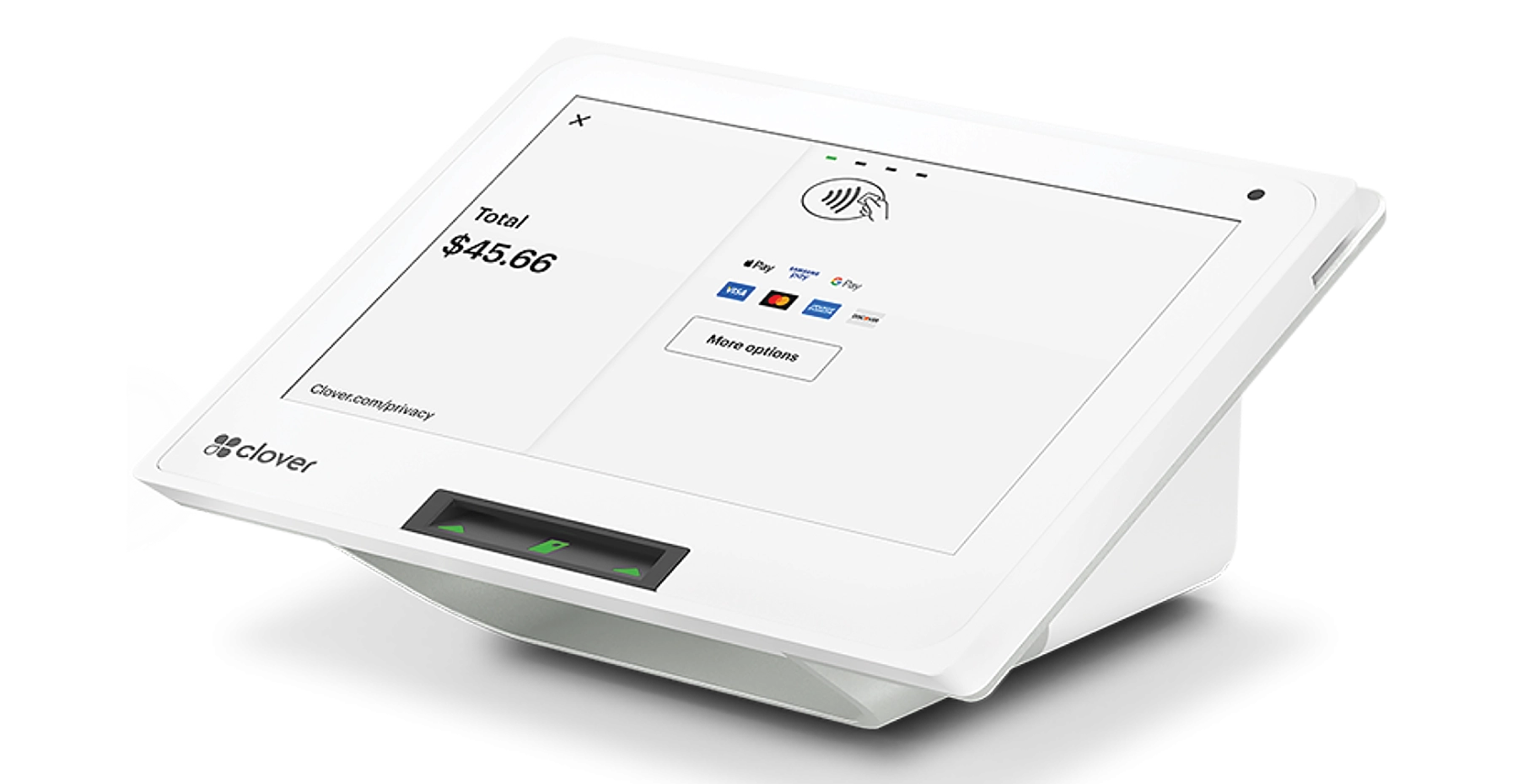
Modern point-of-sale hardware does most of the work here. When a customer chooses a digital receipt on a Clover Mini and taps to agree to hear about specials, that permission is captured cleanly at the moment of purchase with a timestamp attached. Do the same on a handheld Clover Flex at the table or the chair, or anywhere else in your shop where you take payments. If you are still deciding what fits your counter, our overview of POS devices for small businesses is a good place to start.
Layer it onto things customers already want to join. A loyalty program gives people a reason to hand over a number that has nothing to do with marketing permission slips. So does a gift card program, and so does a printed line on the receipt itself, which our piece on receipt marketing digs into further.
Resist the urge to chase list size. Two hundred people who genuinely want to hear from your bakery will out-earn two thousand names you dredged out of an old CRM export, and they will not report you. Sustainable SMS marketing for small business is built on people who said yes on purpose, which is the same principle behind good customer retention generally.
What to Send, and How Often to Send It
Once you have a list, the failure mode in SMS marketing for small business is not sending too little. It is sending nothing for five months and then panic-blasting a 20% off coupon on the slowest week of the year, which reads exactly like what it is.
Texts that earn their place
The messages that perform share one quality: the customer would have been mildly annoyed to miss them. A slow-day offer that fills a dead hour. A heads-up that the thing they always order is back. An appointment reminder that saves them from an awkward phone call. A loyalty reward that just unlocked. A holiday deadline that genuinely matters to their planning.
| What you send | When to send it | What it should do |
|---|---|---|
| Slow-day offer | Tue–Thu, late morning | Fill a known dead hour |
| New arrival or special | Thursday or Friday afternoon | Pull weekend traffic |
| Appointment reminder | 24 hours ahead | Cut no-shows |
| Loyalty reward unlocked | Within a day of earning it | Trigger the next visit |
| Seasonal or holiday deadline | Three to five days ahead | Capture planned spending |
Give every text somewhere to go. A link to order online, a link to book an appointment, or a simple reply instruction. A message that ends without a next step is a message that gets read and forgotten inside ten seconds.
Finding a cadence people tolerate
Two to four messages a month suits most small businesses. Weekly can work for a lunch spot with a rotating special. Daily is how you get unsubscribed, reported and eventually blocked by carriers. Watch your opt-out rate after every send: a small trickle is normal and healthy, but a spike right after a particular message is your customers telling you something specific about that message.
Timing matters as much as frequency. Nothing before 9am or after 8pm, ever. Good SMS marketing for small business sends when the customer can act, which usually means an hour or two ahead of the decision rather than the moment you thought of it. A lunch offer at 10:45am works. The same offer at 2pm is just noise. And keep your team in the loop, because staff who know a promo went out can actually mention it at the register, which is why employee scheduling and management and marketing belong on the same calendar.
Making SMS Marketing for Small Business Pay for Itself

The math is refreshingly blunt. Most texting platforms charge somewhere around a cent or two per message, plus a modest monthly fee. Send to 500 subscribers and the campaign costs you roughly the price of a couple of sandwiches. If your average ticket is $18, you need about two extra customers to break even. Two. That is a bar most offers clear comfortably, which is why SMS marketing for small business tends to look good on a spreadsheet even when the creative is mediocre.
Measure it properly anyway. Use a distinct code or a dedicated link for each send so you can tie sales back to the message, then check your POS reporting for that day against a normal one. Look at the honest number, which is incremental revenue, not total revenue during a promo window. Some of those people were coming in regardless.
Then watch what it does to your costs. Filling slow hours with customers you already have is dramatically cheaper than buying new ones, and it smooths out the week in a way that helps everything downstream, from staffing to working capital planning. If processing fees are eating the margin on those extra sales, ask us about Zero Fee Processing, which shifts the card fee off your side of the ledger entirely.
One more thing worth doing: reply to replies. Texting is two-way by nature, and a customer who answers a promo with a question is worth ten who silently ignore it. Businesses that treat it as a conversation rather than a broadcast get more from SMS marketing for small business than businesses that fire and forget. If you have questions about how any of this connects to your payment setup, our merchant services FAQs cover a lot of the ground, and our support team is a phone call away.
Want your POS to build the list for you?
VMS sets up Clover so customer opt-ins, loyalty and digital receipts are captured right at checkout — usually live within days, not weeks.
Or call our team: 888-902-6227
Your Best Marketing Channel Is Already in Their Pocket
You do not need a marketing department to do this well. You need permission you collected honestly, a short list of things worth saying, a sensible calendar and the discipline to stop when people ask you to. That is genuinely the whole playbook, and it is why SMS marketing for small business remains one of the few channels a two-person shop can run as well as a national chain.
The piece most owners are missing is not the texting app. It is the connection between the register and the list, so that opt-ins, loyalty and sales data all live in one place instead of three. That is where we come in. VMS has been setting up payment systems for small businesses since 1998, and we will happily walk you through what your current setup can already do before anyone suggests you buy anything new.
Tell us what kind of shop you run and what a slow day looks like, and we will show you how the pieces fit together. You can browse more ideas on the VMS blog in the meantime.
Have questions about SMS marketing for small business?
Fill out the form below and a VMS payment specialist will contact you shortly.