

Picture closing a sale in the middle of a farmers market, on a customer’s front porch, or at a busy pop-up booth — without lugging around a card reader, a dongle, or a clunky terminal. That’s the everyday reality of Tap to Pay on iPhone, and it’s quietly reshaping how small businesses get paid. If you already carry an iPhone in your pocket, you may be one quick setup away from accepting contactless cards and digital wallets anywhere you do business.
For years, taking card payments meant buying or leasing hardware, waiting for it to ship, and praying it didn’t die mid-shift. This feature flips that script entirely: your phone becomes the payment terminal. No extra device, no tangle of cables, no checkout counter required. For service businesses, mobile vendors, and anyone who sells on the move, that shift is a genuine game-changer — and it’s worth understanding before your competitors get there first.
In this guide, we’ll break down exactly what the technology is, walk through six smart wins it delivers for your business, compare it to traditional terminals, and show you how to start taking taps the right way. Let’s get into it.
What Is Tap to Pay on iPhone?
Tap to Pay on iPhone is a feature that turns a compatible iPhone into a contactless payment terminal. Instead of plugging in a separate card reader, you open a supported payment app, enter the sale amount, and your customer taps their contactless credit or debit card, Apple Pay, or another digital wallet against the back of your phone. The transaction processes in seconds — no signature pad, no dongle, no second device to keep charged.
It’s a deceptively big deal. A capability that used to require dedicated, certified hardware now lives inside a phone hundreds of millions of people already own. That collapses the distance between “I want to accept cards” and “I’m accepting cards” from weeks down to an afternoon.
How It Actually Works
Under the hood, the feature uses the phone’s built-in NFC (near-field communication) chip — the same technology that powers Apple Pay — to read the customer’s card or wallet. Apple designed it with security front and center: card data is encrypted by the iPhone’s secure hardware and is never stored on the device or shared with Apple. You can read the technical specifics straight from Apple’s official Tap to Pay on iPhone documentation if you’d like to go deeper.
From your customer’s point of view, it feels identical to tapping at any modern checkout. From your point of view, the terminal is something you already own and already carry everywhere you go.
What You Need to Get Started
The requirements are refreshingly short:
- A compatible iPhone (generally iPhone XS or later, running a current version of iOS)
- A payment app from a supported provider, set up through your merchant account
- An active merchant services account to settle the funds into your bank
That last point matters more than people realize. The phone handles acceptance, but every transaction still runs on a payment processor behind the scenes. Your processing partner is what determines your rates, your funding speed, and the quality of support you get when something goes sideways — which is exactly where a provider like VMS earns its keep.
6 Smart Wins of Tap to Pay on iPhone for Your Business
So why are so many small businesses switching on phone-based contactless acceptance? Here are six concrete wins worth weighing.
1. Zero Extra Hardware to Buy
The most obvious win: there’s no terminal to purchase, lease, or replace. If you’ve ever priced out a fleet of card readers, you know how fast that adds up. Using the device you already own means lower upfront costs, no leasing contracts, and one less thing to charge, track, and troubleshoot. For a brand-new business watching every dollar, that’s the difference between accepting cards on day one and putting it off for months.
2. Accept Payments Literally Anywhere
Because the terminal lives in your pocket, you can take payment wherever your customer happens to be — tableside, curbside, at a trade show, or on a house call. Mobile and service businesses no longer have to herd customers toward a fixed register or, worse, turn away a sale because the card reader is back at the shop. You meet customers where they are and close the sale before second thoughts creep in.
3. Faster, Friendlier Checkout
Contactless payments are simply quicker than dipping a chip card and waiting for it to process. A tap takes a second or two, the line keeps moving, and customers walk away happy. Speed at checkout isn’t just a nicety — it directly affects how many transactions you can handle during a rush and how customers remember the experience. A smooth, modern checkout quietly builds the kind of loyalty that brings people back.
4. Built-In Security and Privacy
Card data is encrypted using the iPhone’s secure element, and sensitive details never touch your business’s own systems. That shrinks your exposure and simplifies your security footprint compared with jotting down card numbers or keying them in manually. Fewer places for data to live means fewer places for it to leak — fewer headaches for you, and more peace of mind for the customer handing over their card.
5. A Natural On-Ramp to Digital Wallets
Switching on contactless acceptance means you automatically take Apple Pay, Google Pay, and tap-enabled cards — the payment methods younger customers increasingly expect by default. Businesses that lean into contactless and cashless options tend to capture sales that cash-only operations miss entirely. We explored that shift in our look at how technology is helping cashless businesses serve everyone, and the same logic applies here: meet the payment preference, win the sale.
6. Lower Overhead, Clearer Costs
No hardware leases means fewer recurring line items quietly draining your statement each month. Pair phone-based acceptance with the right pricing model and your effective cost of acceptance can drop meaningfully. It pays to understand your credit card processing fees line by line, and to explore whether a Zero Fee Processing program could offset card costs on eligible transactions altogether. The hardware savings are nice; structural savings on every swipe are even better.
How to Start Accepting Tap to Pay on iPhone
Getting set up is refreshingly straightforward once you know the steps. Here’s the path from “interested” to “taking taps.”
Step 1: Confirm Your iPhone Is Compatible
Check that your device is an iPhone XS or newer and updated to a current version of iOS. Most phones from the last several years qualify, but it’s worth confirming before you build a workflow around a device that won’t support the feature. If your team shares devices, verify each one a staffer might use to ring up a sale.
Step 2: Set Up a Merchant Account
This is the step that quietly determines everything else. The feature needs a payment processor behind it, and your processor sets your rates, your funding times, and the support you’ll lean on when a question comes up at 5 p.m. on a Friday. If you don’t already have a merchant account — or you’re not thrilled with your current one — choose carefully. Our guide to choosing a credit card processor lays out the ten questions worth asking before you sign anything.
Step 3: Install and Activate the Payment App
Your provider will point you to a supported app that switches the feature on. You’ll log in with your merchant credentials, accept the terms, and run a quick activation that usually takes just a few minutes. Many providers let you sync the same account across other hardware too, so your reporting stays unified whether a sale happens on your phone or at a full POS system for your small business. One dashboard, every sale — no reconciling two sets of numbers at the end of the night.
Step 4: Run a Test Transaction
Before your first real customer, run a small test sale and refund it. Confirm the tap registers cleanly, the receipt sends, and the funds land in your batch. Thirty seconds of testing now saves an awkward fumble in front of a paying customer later — and gives you the confidence to ring up that first sale without hesitation.
Tap to Pay on iPhone vs. Traditional Card Terminals
Phone-based acceptance is fantastic — but it isn’t the only tool, and it isn’t always the complete answer. Here’s how it stacks up against dedicated hardware so you can build the right mix for your business.
Where Phone-Based Acceptance Shines
For solo operators, mobile vendors, service pros, and businesses that sell in unpredictable places, accepting payments on a phone is hard to beat. It’s instant to deploy, costs nothing extra in hardware, and scales beautifully when you add staff — every team member with a compatible iPhone instantly becomes a checkout. During a sudden rush, that elasticity is worth its weight in gold.
Where Dedicated Hardware Still Wins
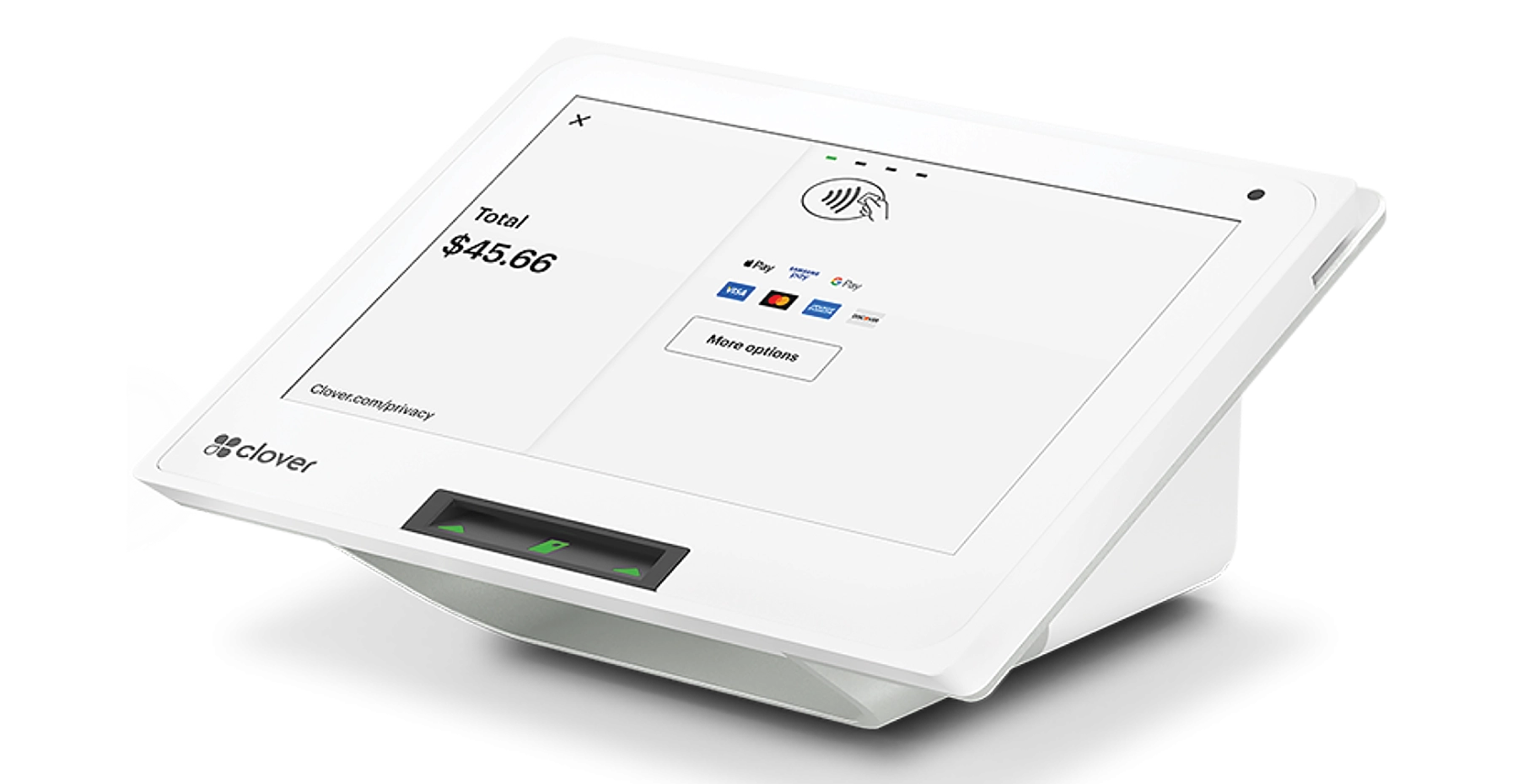
Higher-volume retailers and restaurants often want a true point-of-sale setup with a cash drawer, receipt printer, barcode scanner, and built-in inventory tracking. Devices like the Clover family pair contactless acceptance with full business management that a phone alone can’t replicate. For many owners the smartest move is a hybrid: a fixed POS at the counter plus Tap to Pay on iPhone for line-busting, the patio, and off-site sales. You can browse the full lineup of POS devices for small businesses to see how the pieces fit together.
The Bottom Line on Choosing
You don’t have to pick a single tool and live with it forever. Start with whatever removes friction today — for many businesses that’s tapping on a phone — and layer in dedicated hardware as your volume and complexity grow. The key is choosing a processor that supports both on one account, so adding a terminal later never means starting over or juggling two relationships.
Is Tap to Pay on iPhone Right for Your Business?
If you sell in person and you (or your staff) carry compatible iPhones, the answer is very likely yes. The barrier to entry is low, the customer experience is excellent, and the flexibility is genuinely useful. A few quick gut-checks to confirm the fit:
- Do you sell on the move? Markets, events, deliveries, in-home services — phone-based acceptance was practically built for you.
- Are you just getting started? Skipping hardware costs lets you accept cards from your very first sale without a capital outlay.
- Do you face seasonal or daily rushes? Turning every staff iPhone into a register on busy days clears lines without buying more terminals.
- Do your customers expect contactless? If they’re already reaching for their phone or tapping their card elsewhere, matching that expectation keeps you competitive.
The one thing to get right is the partner behind the technology. The feature is only as good as the merchant account powering it — and that’s a decision worth making deliberately rather than defaulting into whatever was easiest to sign up for.
Common Questions About Getting Started
Does it cost anything to turn on?
There’s typically no extra hardware cost, since you’re using a phone you already own. You’ll still pay standard processing fees on each transaction through your merchant account, just as you would with any card acceptance method. The right pricing structure — and programs that offset card fees — can keep those costs low.
Is it secure enough for my customers?
Yes. Payments are encrypted by the iPhone’s secure hardware, card data isn’t stored on the phone, and the experience meets the same contactless security standards customers already trust at major retailers. For many small businesses, it’s actually more secure than older habits like writing down card numbers.
Can I use it alongside my Clover system?
Absolutely — and that’s often the ideal setup. A fixed POS handles the counter while your phone handles everything beyond it, all reporting back to one account. Ask your provider to set both up together so your sales data stays in one place.
Paying too much to accept cards?
VMS reviews your current statement free and shows you exactly what you are being charged — most merchants are surprised by what they find.
Or call our team: 888-902-6227
Ready to Start Tapping? VMS Can Set You Up.
Tap to Pay on iPhone is one of the easiest, lowest-cost ways for a modern small business to start accepting contactless and digital wallet payments — no hardware, no waiting, no fuss. But the feature is just the front door. What actually determines your costs, your cash flow, and your peace of mind is the processing partner standing behind it.
VMS has been helping small businesses accept payments since 1998, and we make it simple to get up and running with contactless and mobile acceptance — whether you want to tap on your iPhone, run a full Clover setup, or do both on one unified account. Our team handles the merchant account, the rates, and the support, so you can focus on serving customers and getting paid faster. Have questions first? Our merchant services FAQs are a great place to start.
Contact VMS today to learn how we can help your business start accepting Tap to Pay on iPhone — and turn the device already in your pocket into your next register.
Have questions about payment processing?
Fill out the form below and a VMS payment specialist will contact you shortly.