
If you’re running a business in 2025 and still ringing up customers on a calculator, we need to talk. Whether you’re slinging lattes, selling sneakers, or managing a mobile food truck empire, you need a system that can handle your sales, inventory, employees, and reports all in one place. Enter the POS system. The optimal POS system depends on your industry, budget, and operational needs, and different business types may require specific features tailored to their unique requirements.
A POS system, short for “point of sale,” is more than just a fancy cash register. It’s the technology backbone of your business—the tool that turns every transaction into a treasure trove of data, insight, and opportunity.
In this blog, we’re going to break it all down in plain language. What is a POS system? How does it work? And how can you choose one that fits your business like your favorite hoodie? Let’s dig in.
A POS (Point of Sale) system is the combination of hardware and software that allows businesses to process transactions, manage sales, track inventory, and analyze performance in one place. It’s the moment and the mechanism where money is exchanged for goods or services.
But modern POS systems do a lot more than just ring up purchases. Essential POS features, such as inventory management, sales tracking, and customer data access, are crucial for seamless business operations and provide a comprehensive, easy-to-use system that supports both sales processing and business insights. They handle inventory management, employee scheduling, loyalty programs, sales analytics, online orders, tips, taxes—you name it.
In simple terms, your POS system is where your business meets your customers—and it’s where a lot of the magic happens behind the scenes, too.
How a POS System Works
At its core, a POS system is where a sale is finalized. A customer selects an item, the cashier scans it or enters it into the system, and the customer pays—usually by cash, card, tap, or mobile payment. The POS records the transaction, updates your inventory, calculates taxes, and issues a receipt.
The main function of a POS system is to process payments and manage sales.
Today’s cloud-based systems sync everything in real time. This means you can check your sales from your phone while you’re on vacation in Miami or while waiting in line at the DMV.
Here’s a quick example: A customer walks into your coffee shop and orders a latte. Your barista enters the order into the POS tablet, and it prints in the back for the barista while updating inventory to reflect that you’re down one cup, one shot of espresso, and a splash of almond milk. A user-friendly interface makes it easy for staff to learn the system quickly and reduces onboarding errors, which is especially helpful for businesses with high staff turnover or seasonal employees. The customer pays with their phone, and the system stores the sale in your dashboard. Boom. Done.
The Core Components of a POS System
There are two sides to a POS system: the hardware and the software. You can mix and match, depending on your business type and budget. For restaurants, a complete POS setup may also include a kitchen display system, which streamlines kitchen communication and order management by integrating with other POS hardware.
POS Hardware
-
Terminal or tablet – This is the screen your employees use to enter orders and complete transactions.
-
Cash drawer – If you accept cash, you’ll need a secure drawer that opens with each sale.
-
Receipt printer – Useful for physical receipts (though many systems now support digital ones).
-
Barcode scanner – Essential for efficiently managing high transaction volumes, inventory tracking, and streamlining checkout processes, especially in retail and grocery stores, by quickly adding items to the ticket.
-
Credit card reader – Accepts chip cards, magnetic stripes, contactless payments (like Apple Pay), and even EBT depending on your setup.
-
Customer display – Allows customers to review their order or payment total before finalizing.
Some POS systems also offer advanced inventory management features, supporting real-time stock tracking, automated reordering, and complex pricing structures for businesses with large-scale inventory needs.
POS Software
The software is what runs the system. This is where you enter items, track inventory, pull reports, create discounts, manage employees, and handle payments. Many POS systems now include customer management tools that help build customer profiles, track purchase history, and encourage repeat business through tailored offers and loyalty programs. Cloud-based POS systems allow you to log in from anywhere and usually come with app marketplaces for extra features like scheduling, loyalty programs, or delivery integrations.
For restaurants, menu management features allow for multilocation menu handling, category modifiers, and automatic updates based on inventory changes, making it easier to keep menus current and efficient. Table management is also a key feature for restaurant POS systems, helping manage seating arrangements, orders, and service flow. Integrated payment processing enables seamless transaction management alongside inventory tracking and customer insights, streamlining operations. Additionally, marketing tools support business growth by facilitating customer retention, targeted promotions, and analytics integration to enhance engagement and strategy.
Types of POS Systems
Traditional POS Systems
These are legacy systems that run on local servers and are common in large retailers or restaurants. They’re usually expensive to install and maintain. If the server goes down, the system crashes, and you’re out of luck. These days, most small businesses choose cloud-based or mobile POS systems instead.
Cloud-Based POS Systems
This is the most popular setup for modern small businesses. It stores your data online (in the cloud), letting you access it from any device. Updates happen in real time, and providers handle security, backups, and software upgrades in a cloud-based POS system for small businesses.
Mobile POS Systems
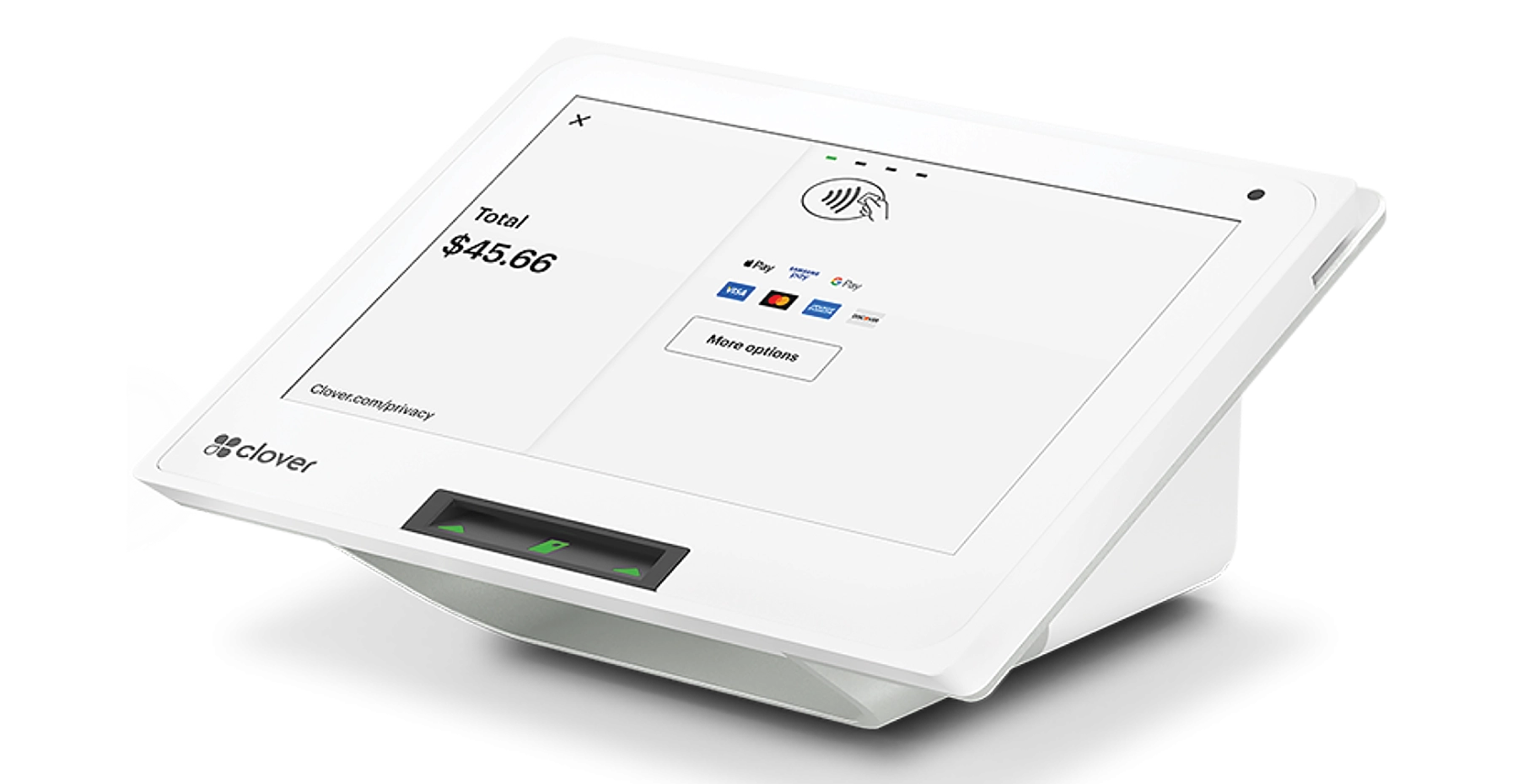
These are portable setups that can be used via smartphone or tablet. They’re ideal for pop-ups, festivals, delivery businesses, and food trucks. They’re cost-effective, flexible, and easy to set up. Mobile POS systems like the Clover Flex are essentially mini powerhouses you can carry in your apron, and there are several Clover POS devices designed for small businesses in 2025 that fit different layouts and workflows.
Self-Serve Kiosks
These allow customers to browse, order, and pay without interacting with a staff member. Popular in fast food and quick-service restaurants, kiosks can speed up ordering, reduce staffing needs, and improve order accuracy.
What Does a POS System Actually Do?
So yes, it processes payments—but that’s just the start. A good POS system can handle everything from sales tracking to inventory management and even customer insights, supporting your daily operations and business growth. Here’s a look at what modern POS systems can do for your business.
Sales and Payment Processing
Every transaction is recorded automatically, including taxes, tips, and discounts. Many of the best POS systems for small business offer built-in payment processing options, providing seamless and secure transaction capabilities directly within the platform. Flexible payment processing options are also available, supporting multiple payment processors and mobile payment capabilities to meet diverse business needs. Payment flexibility in a POS system supports credit/debit cards, contactless payments, and mobile wallets. Integrated point-of-sale credit card processing also ensures secure, seamless transactions. In addition to processing transactions, POS systems help manage sales by tracking sales data, creating discounts, and providing sales analytics to improve business performance. They also streamline sales processes, inventory control, and customer management for various types of businesses. Whether a customer is paying by card, cash, or contactless, the POS keeps it all organized and secure.
Good POS systems update inventory in real-time. Advanced inventory management features in an integrated POS system, such as real-time stock tracking, automated reordering, and complex pricing structures, are available in many modern POS solutions. When an item is sold, it’s subtracted from stock, and the system helps manage inventory by centralizing inventory management and synchronizing stock levels across all sales channels. You can receive low stock alerts and set alerts for low inventory, allowing you to proactively restock and avoid running out of key items. Inventory management features in a POS system help track stock levels, receive alerts, and ensure you never miss out on sales due to stockouts. You can also automate reorders and track what products are selling best.
Employee Management
Track clock-ins and clock-outs, manage shift schedules, and monitor employee performance. Many POS systems also allow you to track sales and monitor sales performance for each employee, providing valuable insights into individual sales volume and efficiency. Some systems let you assign roles and permissions so that only managers can access sensitive data.
Customer Relationship Management (CRM)
Capture customer names, emails, purchase history, and preferences to create loyalty programs, send offers, or personalize service. POS systems can also collect customer contact information during transactions, enabling targeted promotions and personalized engagement. POS systems with built-in CRM tools help turn casual shoppers into repeat customers, improve customer satisfaction by enhancing the customer experience and supporting loyalty programs, and provide valuable customer insights with real-time data and business insights to help you understand sales and customer behavior.
Reporting and Analytics
POS systems give you real-time insight into your business. Want to know your busiest time of day? Your best-selling product? Your slowest employee? It’s all there—accessible from your dashboard.
Many of the best POS systems for small business offer advanced reporting features that generate detailed insights into sales, customer behavior, and inventory management, supporting data-driven decision making. These systems can help you identify sales trends and gross sales, providing a comprehensive overview of your sales performance. Sales reporting and analytics features also help businesses understand their best-selling products, peak hours, and customer trends.
Integrations and Add-ons
Many POS systems integrate with accounting tools like QuickBooks, delivery platforms like DoorDash, and eCommerce platforms like Shopify and WooCommerce, making it easy to connect with other business software. Modern POS systems also allow you to manage online sales and your online store, so you can process transactions and manage inventory across both in-person and online channels. Integration capabilities are important for streamlining operations with existing software tools, helping you create a unified system for managing sales, inventory, and customer data. You can also add apps for things like marketing automation, gift cards, or online ordering.
POS System Security and Compliance
When it comes to running a small business, keeping your customers’ information safe is non-negotiable. The best POS systems for small businesses are designed with security and compliance at their core, ensuring that every transaction is protected from start to finish. Modern POS systems, like Square POS, use advanced security features such as end-to-end encryption and tokenization to safeguard sensitive customer data during payment processing.
Compliance with industry standards like PCI-DSS (Payment Card Industry Data Security Standard) and GDPR (General Data Protection Regulation) is essential for any system handling payment information. These standards help protect both your business and your customers from data breaches and fraud. Look for POS systems that offer regular software updates, secure payment processing, and clear compliance certifications. By prioritizing security and compliance, you not only protect customer data but also build trust and credibility for your small business.
POS System Backup and Recovery
No matter how reliable your technology, unexpected issues can happen. That’s why a robust backup and recovery plan is a must-have feature in any POS system. Cloud-based POS solutions, such as Shopify POS, automatically back up your sales data, inventory records, and customer information in real time. This means that even if your hardware fails or you experience a technical glitch, your critical business data is safe and easily recoverable.
A good POS system should allow you to quickly restore your information and get back to business with minimal downtime. For small business owners, this peace of mind is invaluable—especially during busy periods. When evaluating POS systems, look for automated backup and recovery features, as well as 24/7 customer support, to ensure your business can weather any storm and keep serving your customers without missing a beat.
POS System User Permissions and Access Control
Managing who can access what within your POS system is key to protecting your business and customer data. The best POS systems for small businesses, like Square POS, offer customizable user permissions and access control. This means you can assign specific roles to your employees—such as cashier, manager, or admin—and decide exactly which features and data each person can access.
With robust access control, you can limit sensitive areas like sales reports and inventory management to trusted staff, reducing the risk of internal theft and unauthorized changes. Protecting customer data and your business operations becomes much easier when you have clear boundaries in place. When choosing a POS system, make sure it offers flexible user permissions so you can confidently manage your team and keep your business secure.
POS System Scalability and Growth
As your small business grows, your POS system should be able to grow with you. Scalability is a crucial factor when choosing the right POS system, especially if you plan to expand to new locations, add more employees, or increase your product offerings. Cloud-based POS platforms like Lightspeed POS are designed with flexibility in mind, making it easy to add new sales channels, sync inventory across multiple locations, and manage a growing team—all from one platform.
When evaluating POS systems, consider your long-term business goals. The right POS system will adapt to your evolving needs, supporting your growth every step of the way. Investing in a scalable solution now means you won’t have to switch systems later, saving you time, money, and headaches as your business flourishes.
POS System Customer Loyalty and Rewards Programs
Building customer loyalty is one of the smartest ways to boost repeat business and grow your revenue. A modern POS system should make it easy to implement loyalty and rewards programs that keep your customers coming back. Systems like Toast POS offer built-in loyalty features, allowing you to track customer purchases, reward frequent shoppers, and create personalized promotions—all from your POS dashboard.
With the ability to manage loyalty programs directly through your POS system, you can offer points, discounts, or special offers that encourage customers to choose your business again and again. Not only does this foster stronger relationships, but it also provides valuable insights into customer behavior and preferences. For small business owners, leveraging loyalty programs through your POS system is a powerful way to drive sales and build a loyal customer base.
Who Uses a POS System?
Short answer: just about everyone.
However, the best POS system for small business depends on your business model and industry, as different industries have unique operational requirements and challenges that a POS system should address to be effective. When choosing a POS system, consider the specific needs of your business.
Restaurants and Bars
POS systems manage table orders, kitchen printing, tips, tabs, and even delivery. Full-service restaurants often require more comprehensive POS solutions than quick-service or retail environments. SkyTab POS is designed to serve all types of restaurants, including full-service and quick-service, and is the most cost-effective option for restaurants. TouchBistro is best for restaurant staff support and excels at managing dining room and kitchen operations. Lavu is best for personalized restaurant setup support, offering flexible and responsive menu management for various types of restaurants. Rezku is best for delivery and is tailored for restaurants that rely on delivery services. Bartenders can quickly split bills, pre-authorize cards, and keep things flowing during a Saturday night rush.
Retail Stores
Retail businesses, especially those operating both online and in physical locations, benefit greatly from POS systems tailored to their unique needs. Scan barcodes to efficiently manage high transaction volumes, track inventory, and streamline checkout processes. POS systems help manage inventory by centralizing stock management and synchronizing inventory across all sales channels. Update stock levels, apply discounts, and manage returns. POS systems are critical for inventory-heavy businesses like clothing boutiques, pet shops, and book stores. Shopify POS is ideal for retail businesses that also have an online store.
Salons and Spas
Handle appointments, process payments, manage product inventory, and track stylist performance—all from one device.
Food Trucks and Pop-Ups
Mobile POS systems make it easy to sell on the move. With a tablet or handheld device, you can take orders, swipe cards, and email receipts from anywhere.
Service-Based Businesses
From contractors to cleaning crews, POS systems help track jobs, accept deposits, and invoice clients on the spot.
Why Your Small Business Needs a POS System
Still not convinced? Here’s what happens when you don’t use a proper POS system:
-
You waste time tracking inventory by hand
-
You miss out on data that could help you grow
-
You’re vulnerable to theft, errors, and fraud
-
You’re stuck with clunky processes that frustrate customers and employees
A POS system makes your life easier. It helps you work smarter, serve faster, and grow bigger. And in today’s competitive market, that’s not a luxury—it’s a necessity.
How to Choose the Right POS System
Choosing a POS system isn’t a one-size-fits-all decision. The best system for a boutique is probably not the best fit for a nightclub or food truck.
Here are a few things to consider:
-
What industry are you in?
-
Do you sell online, in-person, or both?
-
How many employees do you have?
-
Do you need inventory tracking or employee scheduling?
-
What’s your budget?
-
What is the overall POS system cost, including hardware, monthly subscription fees, and transaction fees?
-
Are there any hidden fees or extra charges that could impact your total expenses?
-
Is the POS system scalable and able to support your business as it grows?
POS systems typically have monthly subscription fees that can range from $0 to over $100 depending on the provider and features. Transaction fees usually vary, with common rates being around 2.5% to 3.5% plus a fixed fee per transaction. Hardware costs can range from $300 to $1500 depending on the type and number of devices needed. Some POS systems offer no monthly fees but charge higher transaction fees, which may be suitable for businesses with lower sales volumes. Many POS systems require you to purchase hardware separately, which can add to the overall cost of implementation, so it’s important to compare the different Clover POS software plans to find the best fit for your budget and needs.
Always check for hidden fees and ensure transparent pricing before making a decision. Scalability is also important—choosing a POS system that aligns with your growth plans can save you from needing to switch systems later. If you do need to switch to a new POS system, look for providers that offer onboarding support and data migration to minimize disruption. Customer support is crucial when selecting a POS system, as it can significantly impact your experience.
If you’re a small business that needs flexibility, subscription-based cloud POS systems like Clover are a great starting point. They’re affordable, user-friendly, and loaded with features you can grow into.
Why We Recommend Clover POS
At Velocity Merchant Services, we’ve helped thousands of small businesses upgrade to modern, reliable POS systems. Clover is one of the most versatile platforms out there, offering everything from simple card readers to full-service restaurant terminals and kiosks.
Whether you need a sleek mobile device like the Clover Flex or a complete bar setup with the Clover Duo, there’s a solution for you. Clover’s all-in-one POS platform can replace multiple separate devices. Clover systems come with pre-installed apps, support for cash discounting, tip management, employee tracking, and more.
Plus, you don’t have to set it up alone. We configure it, train your staff, and support you every step of the way.
Final Thoughts
A POS system is more than a tool—it’s your digital command center. It helps you serve your customers, manage your operations, and make smarter business decisions. If you’re still using outdated equipment or piecing together spreadsheets, now is the time to level up.
When choosing the best POS system, small business owners should consider their unique needs. The top POS systems for 2026 offer a range of features tailored to different industries and business sizes, so the best POS system for your business depends on your specific requirements.
Here’s a quick summary of the leading options: Shopify POS is best for combined online and in-store selling, making it ideal for retail businesses with an online presence. Payanywhere POS excels at inventory management and is suitable for quick-service restaurants and retail operations. SkyTab POS is the most cost-effective option for restaurants. Square vs Clover is a key comparison when evaluating POS systems: Square POS stands out as the most comprehensive business solution and is flexible for various business types, including retail and service providers, while Clover offers deep customization and hardware variety. Lightspeed is best for building customer loyalty and is particularly beneficial for retailers and quick-service restaurants. PayPal POS is the best cost-effective, simple option, ideal for small-scale operations and businesses that prioritize simplicity. Korona POS is best for analytics and sales insights, and is praised for its reliability and flexibility, especially for high-risk merchants like liquor stores.
Brick-and-mortar stores benefit from reliable POS systems for in-person payment processing, inventory management, and sales tracking, ensuring seamless operations without disruptions. For any small business owner, selecting the best POS system is a crucial step toward growth and efficiency.
Want to learn which POS system is right for you? Visit getvms.com or fill out the form below and we’ll match you with the perfect solution for your business.