

Picture your regular Tuesday-morning customer walking up to the counter, holding an open palm over a small reader, and walking out with their coffee — no wallet, no phone, no card in sight. It sounds like a scene from a movie, but it is already happening at grocery stores, stadiums, and airports across the country. And it raises a fair question for anyone running a shop: are biometric payments for small business a real thing you need to plan for, or just another shiny gadget you can safely ignore for now?
The honest answer sits somewhere in between, and that is exactly why it is worth ten minutes of your time. Biometric payments — paying with a fingerprint, palm, or face instead of a physical card — are growing fast and backed by the biggest names in the industry. But the road is bumpier than the breathless headlines suggest. This guide breaks down what these payments actually are, why they are gaining ground, where the hype outruns reality, and the simple, no-cost steps that get your business ready without spending a dollar on technology you do not need yet.
What Are Biometric Payments, Exactly?
A biometric payment lets a customer approve a purchase using a physical trait — a fingerprint, the vein pattern in their palm, or their face — instead of swiping, dipping, or tapping a card. Behind the scenes, the customer enrolls once. They link a debit or credit card to a scan of their palm or face, usually through an app or at a kiosk. After that, the biometric becomes the card. Hold your hand over the reader, look at the camera, and the payment runs against the card already on file. No hunting for a wallet, no dead phone battery to worry about.
Here is the part that surprises most owners: you are already living in this world. Every time a customer unlocks Apple Pay with Face ID or approves Google Pay with a fingerprint, a biometric is quietly authorizing that payment. The phone just does the scanning and hides the step. What is genuinely new is moving that scan off the customer’s phone and onto a reader at your counter, so they do not need a device or a card in their hand at all. The technology is the same idea you already trust dozens of times a day — it is just changing where it lives. That familiarity is a big reason biometric payments for small business feel inevitable once you look closely.
The three flavors you will keep hearing about
Face, palm, and fingerprint are the big three, and each does the same job in a different way. Facial recognition is the most talked-about and the most widely deployed globally, especially across Asia and Latin America. Palm scanning — reading the unique network of veins beneath your skin — got its highest-profile push from Amazon One, the flat reader you may have waved your hand over at Whole Foods. Fingerprint is the oldest and most familiar; it now shows up in “biometric cards” that carry a tiny sensor built right into the plastic, so you authorize a tap by resting your thumb on the card itself. Whatever the method, the promise is identical: prove you are you, then charge the right account, in under a second.
Why Biometric Payments for Small Business Are Gaining Steam
The momentum is real, and the numbers back it up. Industry researchers valued the biometric in-store payments market at roughly $9.7 billion in 2025 and expect it to grow at about 24% a year for the rest of the decade. Juniper Research projects that around 1.4 billion people will use facial recognition for payments worldwide by 2026 — more than double the total from 2020. For context, contactless already accounts for roughly half of in-person card transactions, and biometrics are widely viewed as the next step beyond tap-to-pay rather than a detour from it.
Three forces are pushing it forward. Speed: a scan is faster than fishing a phone out of a pocket or a card out of a wallet, which matters when there is a line out the door. Security: your face and the veins in your palm are far harder to steal, guess, or clone than a sixteen-digit card number sitting in a data breach somewhere. Convenience: forgetting your wallet stops being a problem when you are the wallet. Those three benefits map neatly onto the exact headaches small business owners complain about most — slow checkouts, fraud, and abandoned sales. In other words, biometric payments for small business solve real problems rather than hypothetical ones.
The card networks have noticed, and their investment is the clearest signal that this is not a passing fad. Mastercard’s Biometric Checkout Program is running palm and face payment pilots around the world, and J.P. Morgan has announced plans for a national rollout of palm-based payments at retailers. When the biggest players commit budgets this large, the technology tends to trickle down to Main Street eventually. If you have already been reading up on contactless payments, think of biometrics as simply the next chapter of the same story: removing one more piece of friction between a customer’s decision to buy and the money landing in your account.

The Honest Reality Check
Here is where a good colleague tells you the truth instead of the sales pitch. Biometric payments for small business are coming, but they are not here yet for most shops — and chasing them too early is a genuine way to waste money you would rather keep.
The clearest cautionary tale is Amazon One. Despite installing palm readers in every U.S. Whole Foods location, Amazon announced it is winding down Amazon One for retail payments in mid-2026, citing limited customer adoption. Over a full year, the system handled about 36.7 million items — an impressive number on a slide, but not nearly enough to justify keeping the retail service running. If the company with the deepest pockets and the most doorways on earth could not get shoppers to adopt palm payments at scale, a neighborhood cafe should not expect a stampede either. Adoption is a chicken-and-egg problem: customers will not enroll until the readers are everywhere, and merchants will not install readers until customers enroll.
There are other speed bumps worth naming plainly. Dedicated biometric readers cost noticeably more than a standard card terminal, and there is no single universal standard yet, so hardware you buy today may not talk to the winning network tomorrow. Payment habits also change slowly; plenty of your customers still like the ritual of tapping a card. None of this means biometrics will fail — it means the smart posture is patience, not panic.
Privacy and trust are not optional
The single biggest hurdle is privacy, and it deserves its own paragraph. A stolen card number can be canceled and reissued by Friday. Your face and your palm cannot. Customers understand this instinctively, and a meaningful share of them are uneasy about handing a small shop something so permanent. Several states now regulate how businesses may collect and store biometric information, and those laws carry real financial penalties for getting it wrong. The takeaway is not “avoid biometrics forever.” It is “let the card networks and their compliance teams carry that burden for you.” When biometric payments for small business finally go mainstream, they will almost certainly run through the major networks and your payment processor — not through some customer database you are personally responsible for locking down. For a small operator, that is very good news.
Is your checkout ready for what comes next?
VMS gets you on modern, upgrade-ready hardware today, so tomorrow’s payment types arrive as a software update instead of a costly overhaul.
Or call our team: 888-902-6227
Which Businesses Will Feel It First?
Biometric payments for small business will not arrive everywhere at the same pace, and knowing where you sit helps you plan. High-volume, speed-obsessed operations will lead. Think quick-service restaurants, coffee shops, and stadium concession stands, where shaving five seconds off every transaction adds up to shorter lines and more sales during the lunch rush. Convenience stores and grocery — Amazon’s original testing ground — sit in the same camp.
Retail shops with loyal, repeat customers are another natural fit, because biometrics pair beautifully with loyalty programs: one scan can identify the shopper, apply their rewards, and take the payment in a single motion. Membership-based businesses — gyms, salons, clubs — could fold payment right into the same face or fingerprint scan they might already use for check-in. On the other end, businesses built around large, occasional, or high-consideration purchases will feel far less pressure, because speed at the register is not their bottleneck.
The point is not to predict the exact year biometrics reach your category. It is to notice that the same modern setup that makes tap-to-pay, mobile wallets, and loyalty work smoothly today is the same setup that will make biometrics easy whenever your customers start asking for it. Getting the foundation right pays off long before the futuristic part arrives.
How to Get Your Business Ready Without Overspending
You do not need a palm scanner in 2026. What you need is to be positioned so that when biometric payments for small business become genuinely plug-and-play, you flip a switch instead of ripping out your entire setup. Here is the practical, no-hype checklist.
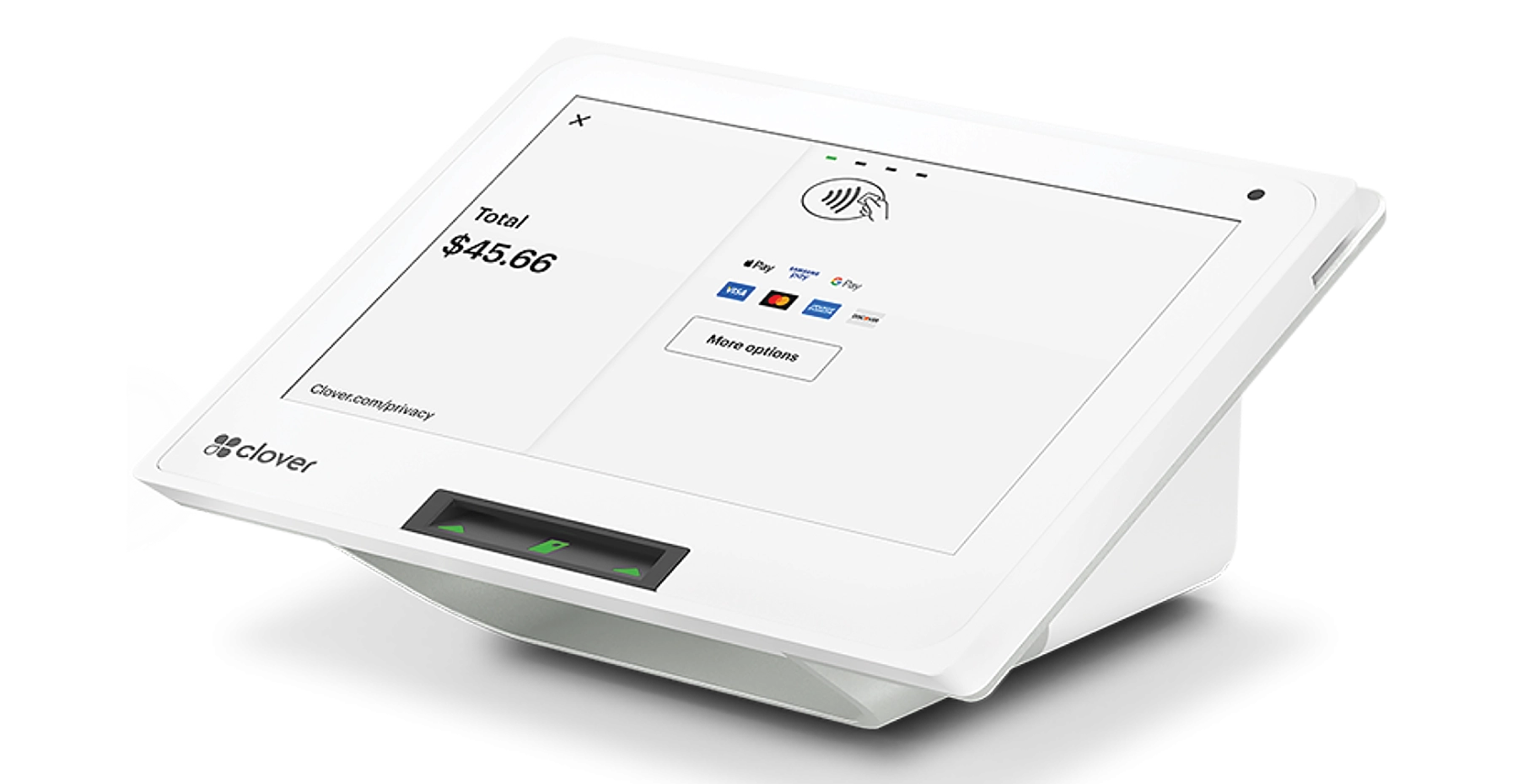
Start with modern, contactless-ready hardware. The single best move you can make is running a current point-of-sale system that already accepts tap-to-pay and NFC, because that is the on-ramp biometrics will almost certainly ride in on. A Clover Flex or another device from our full POS lineup is built to update over the air, which means new payment types can arrive as a software update rather than a forklift replacement. The businesses that get left behind are the ones stuck on aging, locked-down terminals that cannot accept anything new.

Lean into the biometrics your customers already carry. If you accept Apple Pay and Google Pay, you are already taking biometric-approved payments today, because Face ID and fingerprint are quietly doing the authorizing. For an easy win, make sure your checkout welcomes mobile wallets prominently instead of burying them. It costs nothing, speeds up your line right now, and builds the tap-and-go habit that biometrics will extend later.
Keep your data house in order. Whatever comes next, strong payment security and clean PCI practices will matter more, not less, as payments get more personal. And protect your margins today, because the businesses that stay open long enough to adopt the next big thing are the ones that kept their costs under control — which is exactly what Zero Fee Processing is designed to do by offsetting card fees you would otherwise eat.
Talk to a human who watches this space. The payment world shifts quickly, and a five-minute conversation with a specialist beats a week of guessing on your own. Our merchant services team and FAQ library exist for precisely that reason — no jargon, no pressure, just a straight answer about what biometric payments for small business mean for you, and what is worth doing now versus later.
The Bottom Line
Biometric payments for small business are not science fiction, and they are not a fad — they are a slow, steady wave that has already reached the biggest retailers and is working its way toward everyone else. The mistake is treating the whole thing as all-or-nothing. You do not have to be first, and you definitely should not gamble your budget on unproven hardware before your customers are asking for it. You simply have to avoid getting stranded on equipment that cannot come along for the ride.
Get on a modern, upgradable POS, welcome the mobile wallets your customers already use, guard your data, and keep your processing fees lean. Do those four things and biometric payments for small business become a painless upgrade whenever the moment is right — not an expensive, last-minute scramble. At VMS, we have helped small businesses stay a step ahead of every payment shift since 1998, from the chip card to tap-to-pay, and we are already watching what comes next so you do not have to. When you are ready to make sure your setup is built for whatever the future brings, our team is here to help.
Have questions about future-proofing your payments?
Fill out the form below and a VMS payment specialist will contact you shortly.