

Here is a number that should bother every owner who has ever signed a loan document. In the Federal Reserve’s most recent Small Business Credit Survey, 59% of small employer firms carrying debt had backed it with a personal guarantee. Not company assets. Not business credit. The owner’s own name, house, and savings, sitting behind the company like a co-signer who never gets to leave.
That happens for one reason: most small businesses never learn how to establish business credit in the first place. They incorporate, they open a checking account, they start selling, and the credit file that lenders will eventually pull sits empty for years. Then the walk-in cooler dies, or a big wholesale order lands, and the bank has nothing to look at except the owner personally.
The good news is that this is one of the few business problems you can fix in advance, cheaply, on a slow Tuesday. Building business credit is not complicated. It is just unglamorous, and it rewards people who start early. Below is the practical version: what business credit actually is, why timing matters more than tactics, and the exact sequence to follow.
What Business Credit Actually Is (and Why Yours Might Not Exist Yet)
Personal credit follows your Social Security number. Business credit follows your company’s identifiers: the legal entity, the EIN, the address, and a handful of numbers assigned by commercial bureaus. They are separate systems that look similar, which is exactly why so many owners assume the second one builds itself. It does not. Nothing happens until vendors and lenders start reporting your payment behavior, and many of them never report at all.
So before you can establish business credit, you need to know who is keeping score.
The three commercial bureaus that matter
Dun & Bradstreet, Experian Business, and Equifax Business each maintain their own file on your company, and they do not share data with each other. A spotless record at one bureau tells you nothing about the other two, which is why pulling your credit reports from all three matters. This is the single most common surprise owners hit when they finally go looking.
- Dun & Bradstreet issues the D-U-N-S Number and the PAYDEX score, which runs 1 to 100 and is driven almost entirely by whether you pay early, on time, or late.
- Experian Business publishes the Intelliscore Plus, a 1 to 100 risk score that blends payment history with company age, size, and public records.
- Equifax Business reports a payment index plus separate business credit risk and failure scores.
A PAYDEX of 80 is the number people quote, and it is worth understanding why. Eighty means you pay on the due date. Paying early is what pushes you above it. That quirk is why business credit strategy looks different from personal credit, where paying on time is the whole game.
The score lenders actually pull
When you apply for a bank loan or an SBA-backed loan, there is often a fourth score in the room: the FICO Small Business Scoring Service, or SBSS. It runs 0 to 300 and it is a blend, pulling the personal credit of every owner with a 20% or greater stake, the business credit file, and company financials into one number.
The SBA had been requiring lenders to prescreen 7(a) Small Loan applications at an SBSS of 165, a bar it raised from 155 in mid-2025. As of March 2026 the agency stopped mandating that prescreen and told lenders to use their own commercial credit policies instead. Read that carefully: the government stepped back, the lenders did not. The underwriting still happens, it just happens behind a curtain. Which makes the case to establish business credit early stronger, not weaker.
Why You Should Establish Business Credit Before You Need Money
Business credit rewards patience in a way almost nothing else in small business does. Age of the oldest account, length of payment history, and number of reporting trade lines are all inputs you cannot buy or rush. A file opened three years ago beats an identical file opened last month, permanently.
The Fed’s survey makes the cost of waiting concrete. Among small employer firms that applied for financing, 42% received the full amount they asked for, 36% got only some or most of it, and 22% received nothing at all. Nearly six in ten applicants walked away short. A seasoned business credit file will not rescue a struggling company, but it moves you toward the group that gets funded in full.
There is a second benefit that shows up long before you borrow anything. Suppliers use commercial credit data to set your terms. So do equipment lessors, commercial landlords, and insurers. When you establish business credit, the payoff often arrives as net-60 terms instead of cash on delivery, or a waived deposit, months before a bank is anywhere in the picture. That is working capital you did not have to borrow.
And then there is separation. Every personal guarantee you sign ties your household to your company’s worst quarter. A business that borrows on its own name puts distance between the two. You will not eliminate personal guarantees entirely, especially early on, but each year of solid business credit gives you more room to negotiate them down.

How to Establish Business Credit in Seven Steps
None of this requires a consultant. Work through it in order, because several steps depend on the one before them.
1. Make the business a real, separate legal entity
An LLC or corporation with its own name, registered with your state. Sole proprietors and general partnerships are legally indistinguishable from their owners, so there is no separate entity for a bureau to build a business credit file on. Skipping this makes every step below cosmetic.
2. Get an EIN and a dedicated business bank account
The EIN is free and takes about ten minutes on the IRS website. The bank account matters just as much: it creates a banking history in the company’s name, and it anchors your business credit file. Run every dollar of revenue and expense through it. Mixing personal and business spending is the fastest way to convince a lender your entity is decorative.
3. Register for a D-U-N-S Number
Free from Dun & Bradstreet, and required before a PAYDEX score can exist. Standard processing can take a few weeks. Do this early, since it is a prerequisite rather than a shortcut, and nothing at D&B accumulates until the number is issued.
4. Open accounts with vendors that actually report
This is where most attempts to establish business credit stall out. Paying suppliers beautifully does nothing if none of them report to a bureau, and plenty do not. Ask each vendor directly which bureaus they report to before you open an account. Office suppliers, packaging distributors, fuel cards, and shipping accounts are common starting points because they extend net terms to young companies.
Three to five reporting trade lines is the usual threshold for a business credit file that looks real. A card from a bank that reports to commercial bureaus is another route, though check first, because many small business cards report only to the owner’s personal credit.
5. Pay early, not just on time
Because of how PAYDEX is calculated, paying a net-30 invoice on day 30 gets you an 80. Paying it on day 20 moves you higher. Set your accounts payable to fire a week or two before the due date and you get the better score for free. It is the highest-return habit on this entire list.
6. Keep utilization reasonable and your public record clean
Commercial scores watch how much of your available credit you are using, the same way personal scores do. Running every line to the ceiling reads as distress even when you are paying perfectly. Liens, judgments, and collections land on business files too, and they carry real weight, so resolve disputes rather than letting them mature into public records.
7. Monitor all three bureaus and correct errors
Business credit reports contain errors at a rate that would be a scandal in the consumer world, and unlike consumer files there is no federal dispute framework with hard deadlines behind them. Check each bureau at least twice a year. Wrong addresses, a merged file from a similarly named company, and missing trade lines are all common, and all fixable if you catch them.
| Step | Typical cost | How long before it helps |
|---|---|---|
| Form the entity | $50-$500 state fee | Immediate prerequisite |
| EIN + business bank account | Free | 3-6 months of history |
| D-U-N-S Number | Free | Required before any PAYDEX |
| 3-5 reporting trade lines | Free to open | 60-90 days after first payments |
| Paying early, consistently | Free | 6-12 months to move a score |
The Mistakes That Quietly Wreck a Young Business Credit File
Most damage is not dramatic. It is administrative, and it compounds quietly for a year before anyone notices.
- Inconsistent business details. “Main St” on one application and “Main Street” on another can fragment your history across two partial files. Pick one exact legal name, address, and phone number and use it everywhere.
- Paying with a personal card for convenience. Every purchase routed around the business is a trade line that never reports.
- Assuming your bank reports. Many business credit cards report only to personal credit unless you are delinquent. Ask before you apply.
- Chasing shortcuts. Anyone selling “seasoned trade lines” or a fast-track credit file is selling something that ranges from useless to fraudulent. There is no version of this that works.
- Closing your oldest account. Age is an input you cannot rebuild. Keep the first vendor account open even if you barely use it.
If you are still in the first year, the setup checklist every new owner should work through covers the entity and banking groundwork these steps depend on.

Where Your Payment Processing Fits Into Your Business Credit
This part gets overlooked, and it should not. How you take money in shapes both the numbers a lender sees and your ability to pay vendors early enough for it to count.
Deposit speed is a credit strategy
Paying early only works if the cash is actually in the account. If your processor holds funds for two or three business days, your payables calendar is permanently running behind your receivables. Moving to next-day funding shortens that gap, and for some businesses instant funding shortens it further. That is not a small operational nicety when your PAYDEX depends on paying twenty days early. Steady cash flow management is what makes the habit sustainable.
Clean records make underwriting easier
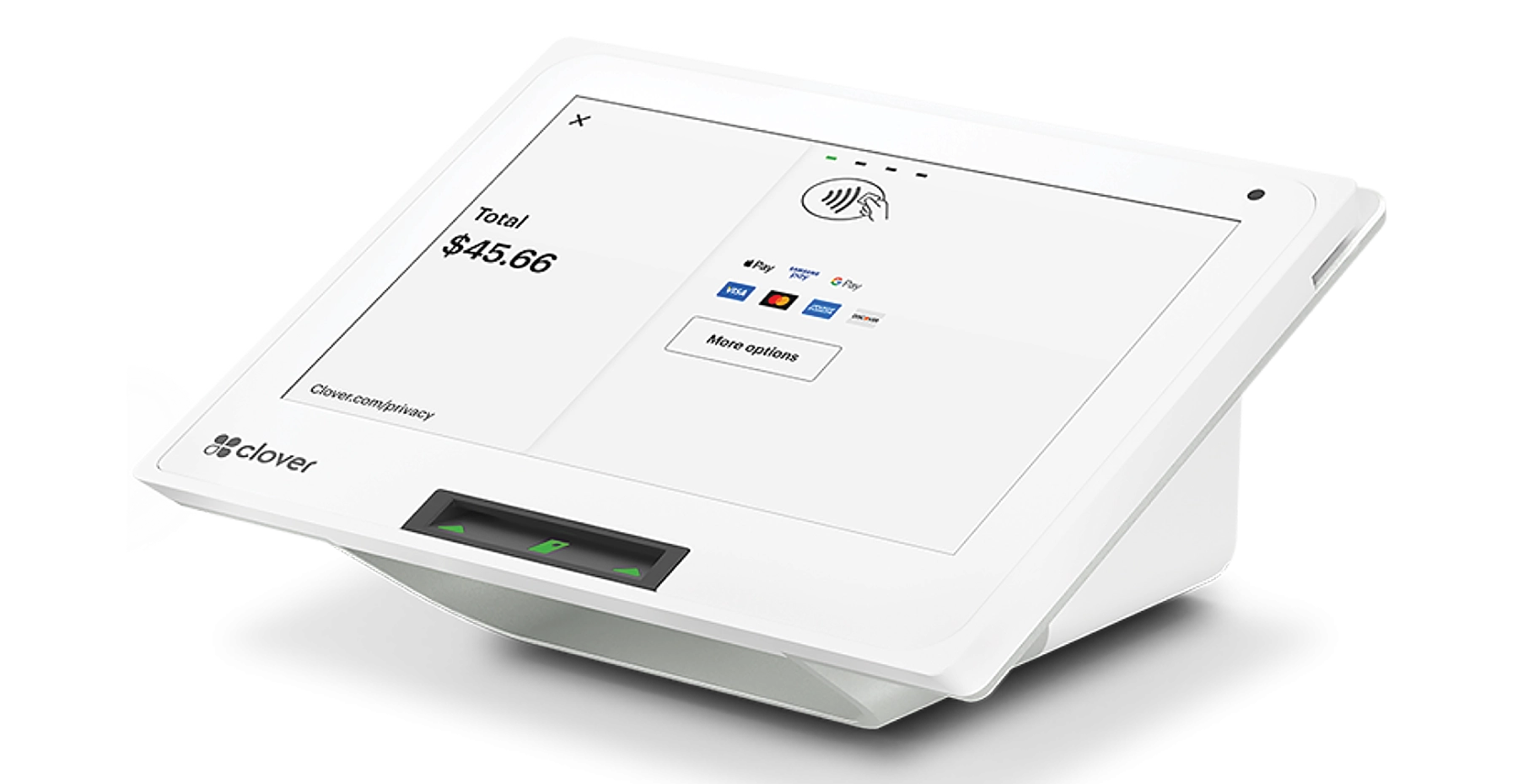
When a lender or leasing company evaluates you, they want deposit history and revenue consistency. A Clover Mini on the counter or a Clover Flex in hand turns that request into a five-minute export instead of a shoebox. Browse the full range of POS devices if you are still running a standalone terminal that reports nothing back to you.
Processing costs are the cheapest capital you will ever find
Every dollar you stop losing to fees is a dollar available to pay a vendor early, which is a business credit move disguised as a cost cut. Owners are often startled by what a statement review turns up, which is why it is worth reading your processing statement line by line and understanding what drives credit card processing fees. For many merchants, Zero Fee Processing removes that cost from the equation almost entirely. If your customers are other businesses, B2B payment processing and online invoicing also shorten the distance between an order and deposited cash.
And when your business credit file finally opens a door, merchant working capital is often the fastest way through it, because it is underwritten against processing volume you already have. Our overview of what working capital really means is a good primer, and veterans should review the loan programs open to them. If you are still mostly cash-only, a thin deposit record is its own kind of empty file.
Want faster funding while you build your credit file?
VMS gets your card deposits moving next day and shows you exactly what your processing is costing — usually in one short statement review.
Or call our team: 888-902-6227
Start Building Before Anyone Asks to See It
The frustrating truth about business credit is that the best day to start was the day you registered the entity. The second-best day is today, because building business credit is slow, and slow things only get done if you begin them before they are urgent.
Pick two steps you can finish this week. Request the D-U-N-S Number. Call your three biggest suppliers and ask which bureaus they report to. That is one afternoon, and it starts a clock you will be grateful for in eighteen months, when a lender pulls your business credit file and finds something there.
On the payments side, VMS has been helping small businesses since 1998, and the two things that help most here are the same two things that help your margins: get paid faster, and stop overpaying to get paid. We will review your current statement, show you what Zero Fee Processing would change, and get funding into your account on a schedule that lets you pay vendors early enough to matter. Questions first? The merchant services FAQ and our support team can both help. However you handle the rest, establish business credit now, while it is a chore instead of an emergency.
Have questions about building business credit?
Fill out the form below and a VMS payment specialist will contact you shortly.