

If you’ve ever tried to set up online payments and found yourself drowning in a sea of jargon — gateway, processor, merchant account, API, tokenization — you are in very good company. For most owners, the payment gateway for small business is the single most misunderstood piece of the whole payments puzzle. It sounds technical, vaguely intimidating, and like something you’d need an IT department to handle.
Here’s the reassuring truth: a payment gateway is a simple idea wearing a complicated costume. Once you see what it actually does, choosing the right one becomes a quick, confident decision instead of a week of squinting at comparison charts. And getting it right matters more than ever — e-commerce now makes up 16.9% of all U.S. retail sales as of early 2026, and it’s growing faster than in-store sales. The way you accept card-not-present payments is no longer a side project. It’s the front door to a growing slice of your revenue. You don’t need to be technical to get this right — you just need a clear map. Let’s draw one.
What a Payment Gateway for Small Business Actually Does
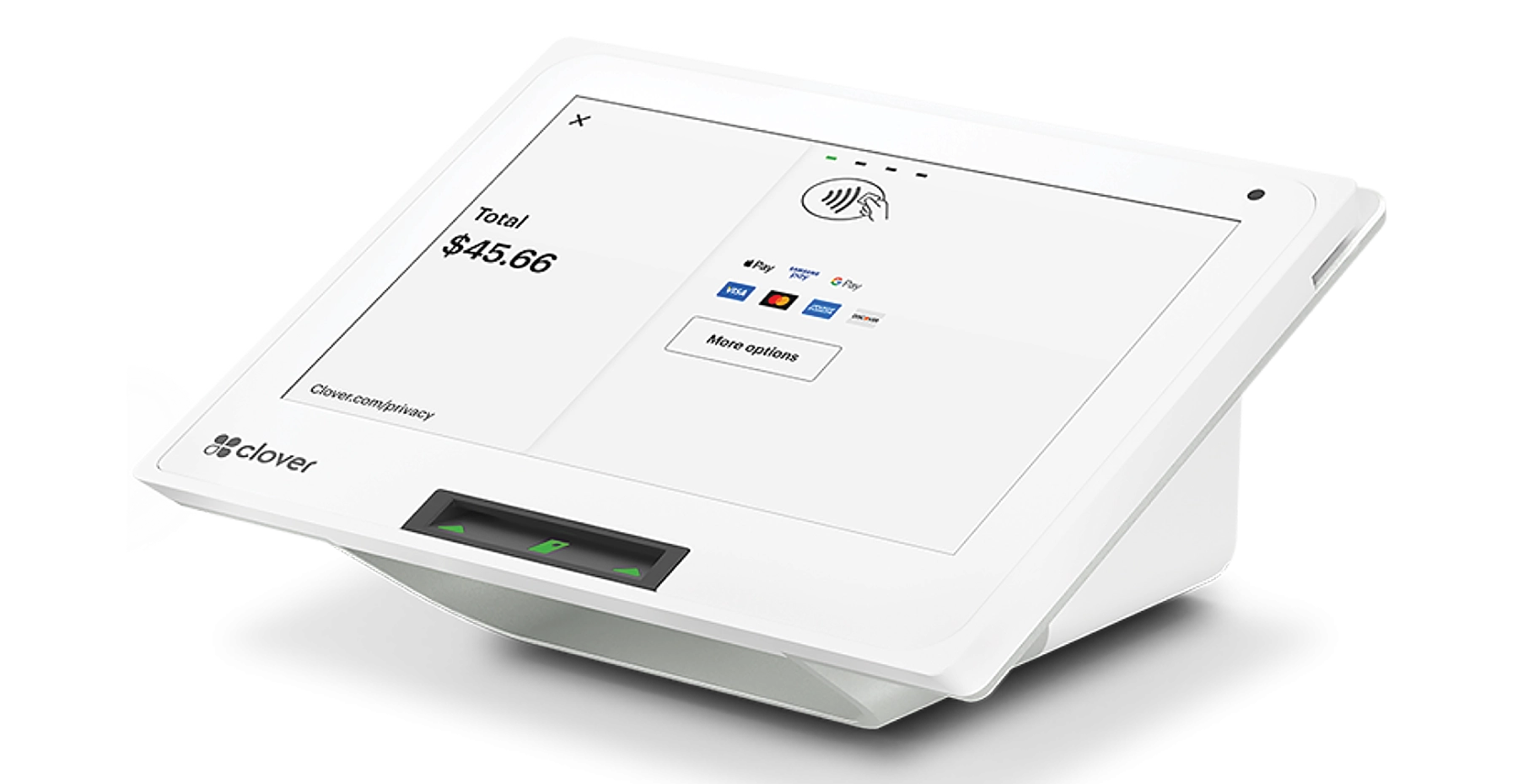
Think of a payment gateway as the online version of the card terminal sitting on your checkout counter. When a customer hands you a card in person, the terminal reads it, encrypts the data, and asks the bank for a yes or no. A payment gateway does the exact same job for every payment where the card isn’t physically present — your website checkout, a phone order, an emailed invoice, a recurring subscription.
The gateway’s main job is security and translation. It captures your customer’s card details, immediately encrypts and tokenizes them so the raw numbers are never floating around in the open, and then ferries that protected information between your customer, your payment processor, and the banks. All of this happens in about two seconds, quietly, behind a checkout button.
Gateway vs. processor vs. merchant account
This trio trips up almost everyone, so let’s untangle it once and for all. The gateway is the secure doorway and messenger — it captures and protects the card data and passes it along. The processor is the workhorse that actually moves the money, communicating with the card networks and banks to approve the sale and deposit your funds. The merchant account is the specialized bank account where those funds land before heading to your regular business checking. They’re three different roles, and understanding how credit card processing works end to end makes the whole flow click into place. The good news for you: a strong provider bundles all three so you’re not stitching together three vendors and three bills.
Where it fits in a single transaction
Picture the two-second journey. Your customer types their card number into your checkout and hits pay. The gateway encrypts and tokenizes that data and hands it to the processor. The processor routes it to the card network, which asks the customer’s bank for approval. The bank checks funds and fraud signals and fires back an approve or decline. That answer travels back through the same chain to your screen — “Payment approved” — and the gateway has done its job. Multiply that by every online order, and you can see why a reliable, secure gateway isn’t a luxury. It’s plumbing you can’t afford to have leak.
More than a simple “buy button”
You might wonder whether you can skip all this with a one-tap button from a big-name app. You can — but those one-size-fits-all tools often come with higher per-transaction costs, funds that get held for days, and very little room to grow. A dedicated gateway paired with your own merchant account gives you better rates as your volume rises, faster access to your money, and an actual human to call when something goes sideways. For a weekend hobby, the simple button is fine. For a business you intend to grow, the difference compounds quickly — in both dollars and headaches avoided.

Does Your Small Business Even Need One?
Short answer: if you accept any payment where the card isn’t swiped or tapped in person, yes. And these days, that’s most businesses. You need a payment gateway for small business the moment you want to sell on a website, take orders over the phone or by email, send digital invoices, or bill customers on a recurring schedule.
The numbers make the case louder than any sales pitch. With e-commerce climbing toward 17% of retail and outpacing overall retail growth, card-not-present payments are where the expansion is happening. Even brick-and-mortar shops are discovering that a slice of their sales now want to live online — through a proper e-commerce setup, a pickup-and-pay link, or a “text me an invoice” request. A boutique adding online orders, a plumber emailing invoices, a gym billing monthly memberships, a consultant taking deposits over the phone — all of them need a gateway. If you’ve ever lost a sale because you could only take cash or an in-person card, you’ve already felt the cost of not having one.
Signs you’ve outgrown “just a card reader”
A few telltale signals: customers asking if they can pay online, a growing pile of phone and email orders you’re keying in awkwardly, invoices that drag on because there’s no easy “pay now” button, or a subscription idea you can’t launch because billing is manual. If any of those sound familiar, a gateway paired with tools like a virtual terminal for phone and mail orders or online invoicing turns those headaches into a few clicks.
What to Look for in a Payment Gateway
Not all options for a payment gateway for small business are created equal, and the differences are exactly where small businesses either save money or quietly bleed it. Here’s what actually matters when you’re comparing your options.
Security that’s genuinely built in
This is non-negotiable. Your gateway should offer end-to-end encryption, tokenization, and full PCI DSS compliance as standard, not as a pricey add-on. Why obsess over this? Because card-not-present fraud now accounts for roughly 65% of all card fraud losses in the U.S. — the online channel is where criminals concentrate. A gateway with strong fraud tools, address verification, and CVV checks protects both your customers and your bottom line from chargebacks. If a provider treats security as an upsell, walk away.
The payment methods your customers expect
A checkout that only takes basic cards is a checkout that loses sales. Today’s customers expect to pay with credit and debit cards, digital wallets like Apple Pay and Google Pay, and increasingly with bank transfers and ACH. The more friction-free options you offer, the fewer abandoned carts you’ll see. Your gateway should support the methods your specific customers actually use — and make adding new ones painless as habits shift.
Transparent, predictable pricing
Here’s where the fine print earns its reputation. Some gateways advertise a tidy flat rate, then quietly pad the margin on every transaction, while others tack on monthly gateway fees, statement fees, and gateway “access” charges. Before you commit, get the full picture — and know that pricing models genuinely differ. Our breakdown of interchange-plus versus flat-rate pricing shows how the same sales volume can cost wildly different amounts depending on the structure. And if processing fees are eating your margins, ask about Zero Fee Processing, which can offset most of that cost entirely.
Reporting and reconciliation that save you hours
A great gateway doesn’t just take payments — it hands you back your time. Look for clean, real-time reporting that shows you sales, refunds, fees, and deposits in one place, and that exports neatly into your accounting software. When your online orders, in-store sales, and invoices all report through one dashboard, month-end reconciliation goes from a dreaded afternoon to a five-minute glance. That single source of truth also makes tax season dramatically less painful and helps you spot trends — your best-selling items, your slow days — while there’s still time to act on them.
Built to scale with you
The right gateway should fit the business you’re becoming, not just the one you are today. As you add a location, launch a second sales channel, or roll out a subscription, your payment setup should expand without forcing a painful migration. Ask whether the gateway supports recurring billing, multiple users with their own logins, and higher volumes without renegotiating from scratch. A provider that grows with you spares you the disruption of ripping out and replacing your payment stack at every new milestone. Switching processors mid-stride is a hassle most owners only want to endure once — so pick a gateway that won’t make you do it again next year.
Integrations, support, and uptime
For any payment gateway for small business, integrations matter: your gateway has to play nicely with whatever you already use — your website platform, your POS, your accounting software. It should connect cleanly so you’re not double-entering orders. Just as important: when something breaks at 7 p.m. on a Friday, can you reach a human? Downtime means lost sales, full stop, so reliability and responsive support belong at the top of your checklist, not the bottom.
Ready to start accepting payments online?
VMS bundles your gateway, processing, and hardware into one setup — most merchants are approved and taking payments fast.
Or call our team: 888-902-6227
Red Flags That Quietly Cost Small Businesses
Once you know what good looks like, the warning signs jump out. Watch for surprise monthly minimums and “gateway access” fees that weren’t in the headline price. Be wary of long lock-in contracts with steep early termination fees — a confident provider earns your business monthly instead of trapping you. A clunky, slow, or untrustworthy-looking checkout is another silent killer; every extra step or security worry sends a shopper toward abandoning the cart.
Then there’s the all-in-one question. If your gateway, processor, in-store POS hardware, and reporting all come from different vendors, you’ll spend more time reconciling bills and finger-pointing than running your business. Owners who’ve compared the patchwork approach to a unified provider — the kind of head-to-head you’ll find in our VMS vs. Square comparison — almost always prefer one partner, one statement, and one support line. Still have questions about how it all fits? The merchant services FAQ covers the ones owners ask us most.
What this looks like in practice

Picture a small home-goods shop that started with a single counter terminal. Online orders trickle in through a clunky third-party button that charges a premium and holds funds for a week, so cash flow is always a guessing game. They switch to a single payment gateway for small business that ties their website, their counter, and their emailed invoices into one account. Suddenly funds land next business day, every sale shows up in one dashboard, and the owner stops re-keying phone orders by hand. Nothing about their products changed — only the plumbing behind the checkout. Within a season, fewer carts are abandoned, the books reconcile themselves, and the owner has their Sunday afternoons back. That’s the quiet power of getting the gateway right.
Making the Payment Gateway for Small Business the Easy Part
Here’s the bottom line: a payment gateway for small business isn’t a cryptic piece of technology you need to fear. It’s a secure, fast doorway for every payment that doesn’t happen face to face — and choosing the right one comes down to security, the payment methods your customers want, honest pricing, clear reporting, and a partner who answers the phone.
That’s the role VMS has played for small businesses since 1998. We bring the gateway, the processing, the in-store hardware, and the support together under one roof, fully PCI-compliant, with transparent pricing and real people who pick up when you call. Whether you’re selling online for the first time, adding phone and invoice payments, or finally launching that subscription, we make accepting payments the simple part of your day — so you can get back to the part of your business you actually love.
Ready to make online payments effortless? Let’s set up a gateway that fits your business and your customers — and start turning more browsers into paid orders today.
Have questions about choosing a payment gateway?
Fill out the form below and a VMS payment specialist will contact you shortly.