

Every shop owner has had the moment. A customer sets a bag on the counter, slides over a receipt, and something feels a little off. The tags are gone. The receipt is for a different size. The box is suspiciously light. You want to be gracious, the line is growing, and so you process the refund and move on. That small hesitation is where return fraud lives, and in 2026 it is costing retailers more than most of them realize.
Here is the number that should get your attention. According to the National Retail Federation and Happy Returns, retailers expect 15.8% of annual sales to come back as returns, a total of $849.9 billion, and 9% of those returns are fraudulent. Roughly one refund in eleven is not what it appears to be. For a big-box chain that is a budget line. For a boutique, a gift shop or a hardware store running on thin margins, return fraud is money walking straight out of the register.
The good news is that you do not need a loss-prevention department to fight it. Most return fraud at small businesses is opportunistic, and it collapses the moment a shop shows it keeps good records. This guide walks through what return fraud actually looks like at a small shop, what the data says about who is doing it, and how a modern POS system turns the return counter from your softest target into a controlled, friendly process.
What Return Fraud Looks Like at a Small Shop
Big retailers talk about return fraud in terms of organized rings and stolen merchandise. At a small business it is usually simpler and quieter. It is a regular customer who has learned your policy is loose, or a stranger who has noticed you never look up the original sale. The most common patterns fall into a handful of buckets, and once you can name them you will start spotting them.
Receipt fraud and price switching
Receipt fraud is the oldest trick at the counter. Someone returns an item with a receipt that belongs to a different purchase, a receipt they found or were given, or a printed copy of a receipt already used for a refund. Price switching is its cousin: a shopper buys the $12 version, swaps the tag from the $40 version, and returns the cheaper item for the higher refund. Both work only when the person at the register cannot match the item on the counter to a specific line on a specific sale.
Wardrobing and the ‘one-night’ return
Wardrobing is buying something with the intention of using it once and bringing it back. The dress for the wedding, the speaker for the party, the tent for one camping weekend. NRF found that close to two-thirds of consumers admit to at least one costly returns behavior, from wardrobing to sending back a different item, and 45% believe ‘bending the truth’ is acceptable when making a return. That is not a fringe problem. That is nearly half your customer base giving itself permission.
Empty boxes, decoys and the stolen-goods refund
Retailers that track incidents told NRF they are seeing more overstated return quantities (71%), more empty-box or ‘box of rocks’ returns (65%) and more decoy returns such as counterfeit items (64%). The last category matters for shops that sell anything with resale value: a shoplifted item brought back for cash or store credit is return fraud layered on top of inventory shrink, and it hits you twice.

The Numbers Every Owner Should Know
It helps to see the scale before deciding how much effort return fraud deserves. NRF’s 2025 Retail Returns Landscape is built on two surveys, one of 2,006 consumers who returned an online purchase in the past year and one of 358 e-commerce professionals at large merchants, so the headline figures skew toward big retail. The behaviors they describe, though, happen at every counter.
- Retailers expect 15.8% of 2025 sales to be returned, about $849.9 billion, down slightly from 16.9% and $890 billion the year before.
- Online purchases are returned at a higher rate, an estimated 19.3%.
- 9% of all returns are fraudulent. Applied to the total, that is roughly $76 billion a year lost to return fraud.
- 82% of shoppers say free returns are a major consideration when buying, up from 76% a year earlier, so tightening your policy too far has a real cost.
- 71% of consumers say a poor returns experience makes them less likely to shop with a retailer again, and four in five will tell friends and family about it.
Read those last two bullets carefully, because they are the whole puzzle. Customers expect easy returns and will punish you for a bad experience. The answer to return fraud cannot be a suspicious clerk interrogating every honest shopper. It has to be a process that is quick and pleasant for the 91% and quietly airtight for the 9%. That is a records problem, not a people problem, and records are exactly what a good POS is for.
A Return Policy That Stops Return Fraud Without Losing Customers
Your policy is the first line of defense, and it only works if it is written down, posted and applied the same way by everyone. A friendly policy with clear edges does more to prevent return fraud than a strict one that changes depending on who is behind the counter. A few pieces belong in every small-business return policy.
Set a window and print it on the receipt
Thirty days is common for general retail, fourteen for seasonal or clearance goods, and many shops shorten it around the holidays for a reason: NRF found retailers expect about 17% of holiday sales to come back. Print the window on the bottom of every receipt so no one can claim they did not know. If you offer digital receipts, the policy travels with the customer’s phone and cannot be lost.
Refund to the original tender, always
This is the single rule that shuts down the most return fraud. A refund goes back to the card, cash or gift card that paid for the item, never to a different card and never as cash for a card purchase. Card network rules already expect credits to go back to the same account, and the Visa small-business merchant guidance spells out how credits and refunds should be handled. Following the rule protects you twice: the fraudster who used a stolen card gets nothing, and the honest customer gets their money exactly where they expect it.
Receipt required, with a fallback that still needs proof
Ask for a receipt, but do not stop there. Because your POS can look up a sale by the last four digits of the card, the date or the item, you can offer a no-receipt return that still ties the refund to a real transaction. That is far more useful than a blanket ‘no receipt, no refund’ sign, which mostly punishes the loyal customer who tossed the slip in the parking lot.
Inspect before you refund
Tags attached, packaging intact, item matches the receipt line, no signs of use. It takes fifteen seconds and it is not rude. Train your team to do it for every return, every time, so it is a routine and not an accusation. A short script helps: ‘Let me just check this in for you.’ Nobody objects to that.
How Your POS Quietly Fights Return Fraud
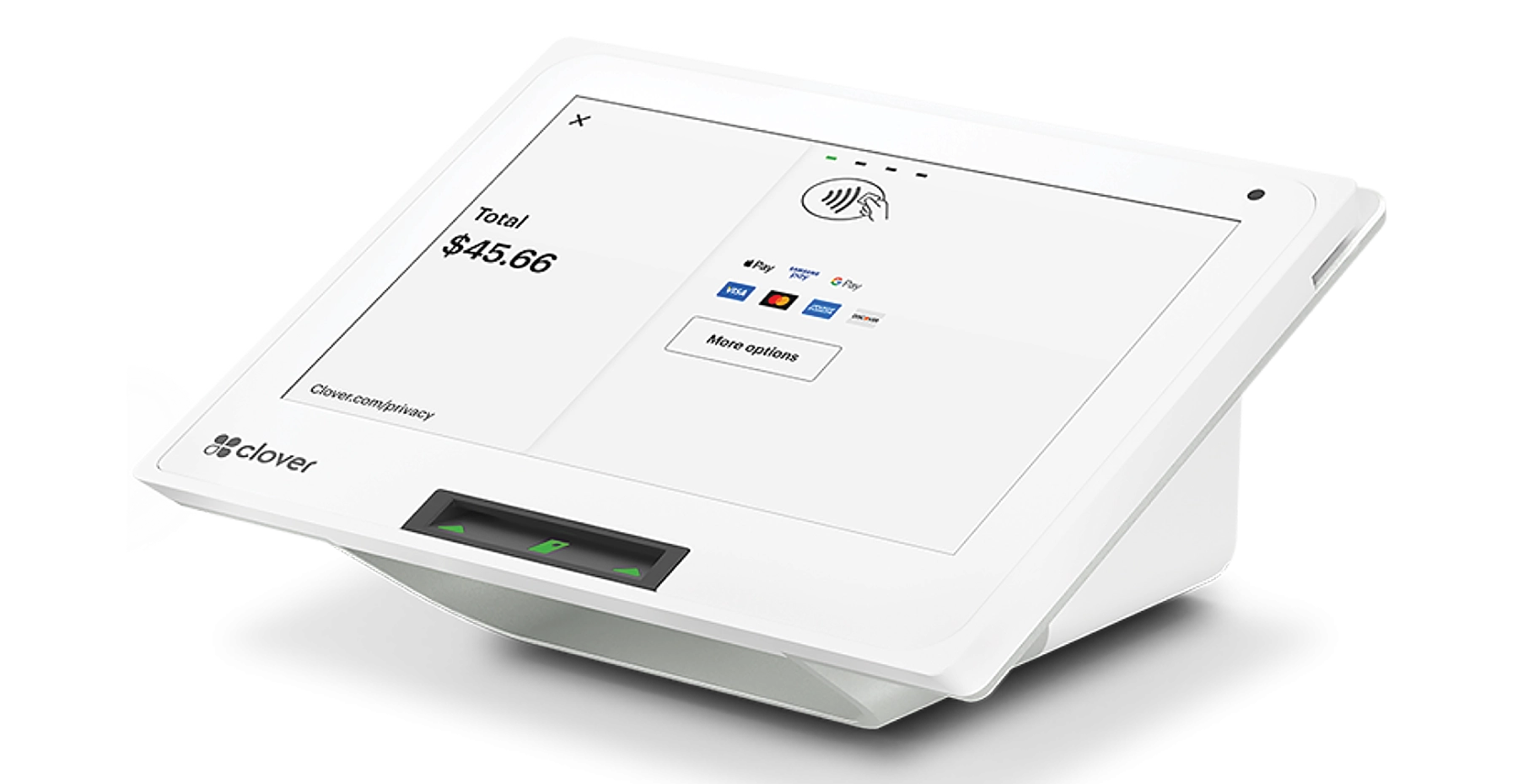
Policy sets the rules. Your point of sale enforces them without anyone having to be the bad guy. This is where shops still running a cash register or a basic card terminal fall behind, because a receipt-only refund process is exactly what return fraud depends on. A modern system such as the Clover Mini or the handheld Clover Flex changes the math in five specific ways.

Find the original sale in seconds
Every card transaction is searchable by card, date, amount or item. When someone hands you a receipt, you pull up the actual sale and see what was bought, at what price, and whether it has already been refunded. Duplicate-receipt tricks die right there. It also means you can process a legitimate no-receipt return for a good customer without guessing.
Refund to the same card automatically
Once you have the original sale on screen, the refund goes back to that card with one tap. There is no way to accidentally hand out cash for a card purchase, and no way for a customer to steer the money onto a different card. That protects your bank account and your chargeback ratio, because a refund done correctly rarely turns into a dispute.
Item-level returns that fix your inventory
When a return is processed against a specific item, your stock count updates and the item goes back on the shelf, or into a damaged bin, the right way. That is how you catch price switching: the $40 version scanned by a barcode scanner does not match the $12 item on the receipt. It is also how you notice that a particular SKU is coming back far more often than it should.
Permissions and a paper trail for your team
Not every return fraud case starts with a customer. Some starts with an employee processing refunds to their own card after hours. Employee permissions let you decide who can issue a refund, whether a manager code is required above a certain amount, and every refund is logged with the user who ran it. That is standard employee management on a modern POS, and it removes temptation quietly.
Reports that show you the pattern
A monthly refund report by employee, by item and by customer is the best return fraud detector a small shop can own. Three refunds to the same card in a month, a clerk whose refund total is triple everyone else’s, or a product with a 30% return rate all jump off the page. Pair that with the customer history in your customer database and you can tell the difference between a loyal regular with bad luck and a serial returner.
A Weekly Checklist for Small Shops
You do not need new software to start. Most of this works with the retail POS setup you already have, and the rest is habit. Here is what a low-effort routine looks like in practice.
| Red flag at the counter | What to do, right then |
|---|---|
| Receipt from weeks ago, tags missing, item looks worn | Look up the original sale, inspect the item, offer exchange or store credit under your posted policy |
| Receipt does not match the item or price on the counter | Match the SKU to the sale line before refunding anything; refund only the amount actually paid |
| Customer asks for cash or a different card | Refund to the original tender only, every time, no exceptions |
| No receipt at all | Search by last four digits of the card or the date; no matching sale means store credit at the lowest recent price, or no refund |
| Same customer or card returning frequently | Check refund history in your POS reports and customer notes before approving |
Then, once a week, spend ten minutes on the refund report. Sort by employee and by item. Anything that looks odd gets a note, not an accusation, and after a month you will know your shop’s real return rate and where the return fraud is hiding. If you are unsure how to pull that report, a little POS training for you and your team pays for itself the first time it catches a bad refund.
One more thing worth saying plainly: the goal is not zero returns. Returns are part of selling, and the shops that handle them gracefully earn loyalty that outlasts any single sale. The goal is that every refund you hand out goes to a real customer, for a real purchase, back to the way they paid. That is what closes the door on return fraud while keeping it wide open for everyone else.
Ready to shut the door on return fraud at your counter?
VMS sets up your Clover POS with receipt lookup, same-card refunds and refund reporting, usually within a few days.
Or call our team: 888-902-6227
Make Every Refund an Honest One With VMS
Return fraud is not going away. NRF found 85% of large retailers are now using artificial intelligence to detect it, which tells you how seriously the big players take a 9% problem. You do not need their budget. You need a clear policy, a POS that ties every refund to a real sale, and a team that inspects before it refunds. Do those three things and the opportunistic fraud that drains small shops simply moves on to an easier target.
VMS has been helping small businesses accept payments since 1998, and we set up every Clover system with returns in mind: card lookup, refund to original tender, item-level returns, employee permissions and the reports that show you where the money is going. Add Zero Fee Processing and the card fees on your sales go away too, which makes the occasional legitimate refund a lot less painful.
Have questions first? Our merchant services FAQs cover the basics, our support team is a phone call away, and if the returns season is squeezing your cash, working capital from VMS can smooth it out. Fill out the form below and a VMS payment specialist will help you build a return process that customers love and fraudsters avoid.
Have questions about stopping return fraud?
Fill out the form below and a VMS payment specialist will contact you shortly.