
Key Takeaways
-
Understanding credit card processing terms directly impacts your fees, approval rates, and cash flow. Merchants who know the terminology negotiate better contracts and avoid hidden costs.
-
Core concepts include how transactions move through authorization, batching, and settlement, who gets paid through interchange, assessments, and processor markups, and what risks exist around fraud, chargebacks, and PCI compliance.
-
Grasping terms like interchange fees, chargebacks, PCI DSS, and pricing models helps you compare processor quotes accurately and spot misleading offers.
-
This glossary is written for business owners and finance teams operating online, in-store, or omnichannel in 2026 and beyond.
-
A FAQ section at the end answers practical questions not fully covered in the main glossary definitions.
Introduction to Credit Card Processing Terms
Payment industry jargon can feel like a foreign language. When you’re evaluating credit card processing companies or comparing monthly statements, unclear terminology makes it nearly impossible to know if you’re getting a fair deal. In 2026, with real-time payments expanding and embedded finance becoming standard, understanding these terms matters more than ever.
This glossary focuses on real-world merchant concerns: fees, approvals, security, disputes, hardware, software, and regional nuances across the U.S., Canada, and online versus in-person channels. Definitions are grouped by theme so you can scan, bookmark, and return when you need clarity on a specific topic.
Knowing these credit card processing terms every business must know helps when comparing statements, speaking with sales reps from an independent sales organization, or integrating payment processing services with your POS, ERP, or eCommerce platforms. Consider this your reference guide whenever payment transactions raise questions.
General Credit Card Processing Terms
Before diving into fees and technology, every merchant should understand these foundational terms that form the backbone of how credit card transactions work.
Acquiring Bank (Acquirer) The acquiring bank, also called the merchant bank, is the financial institution that processes payment card transactions on your behalf. This bank or financial institution settles funds into your merchant’s bank account after deducting applicable fees. The acquirer enters into a merchant processing agreement with you that outlines responsibilities, warranties, and termination clauses.
Issuing Bank (Issuer) The issuing bank is the cardholder’s bank that approves or declines transactions by verifying available credit or funds against the customer’s credit limit. This card issuing bank ultimately bills the customer on their credit card bill and receives the bulk of interchange fees from each transaction.
Card Networks Visa, Mastercard, American Express, and Discover operate as card networks that set interchange rates, assessment fees, and dispute procedures between acquirers and issuers. These networks process over 200 billion transactions annually in the U.S., with Visa and Mastercard commanding 80-90% market share.
Merchant Account A merchant account is a specialized deposit account where card transaction funds are routed post-settlement before transfer to your regular bank account. This is distinct from your operating account and may include rolling reserves of 5-10% held for 6-12 months in high-risk scenarios.
Payment Processor A payment processor is the company that routes transaction data between your business, the acquiring bank, the customer’s bank, and card networks. Processors handle front-end functions like network connections and authorizations, plus back-end tasks like fund transfers.
Payment Gateway A payment gateway secures online or app-based transactions by encrypting the primary account number and credit card data during transmission. Essential for card not present transactions, the gateway performs fraud checks using the address verification system and card verification value before forwarding data to the processor.
Card-Present vs. Card-Not-Present Card-present transactions involve physical card reads via chip, swipe, or tap, carrying lower fraud liability with interchange around 1.5-2.2%. Card not present sales, including eCommerce and mail order/telephone order, carry higher rates (up to 3.5%) and require additional security measures.
Authorization vs. Settlement Authorization is the real-time check confirming card validity and available funds. Settlement is when money actually moves to your bank account, typically within 1-2 business days after you batch your transactions.
Fees & Pricing Models
Fees represent the biggest confusion point for merchants. Understanding each cost type helps you spot a good deal on credit card fees, evaluate offers accurately, and accept credit card payments without overpaying.
Fee Types
|
Fee Type |
Description |
Typical Range |
|---|---|---|
|
Interchange Fee |
Non-negotiable fee paid to the cardholder’s bank |
1.51% + $0.10 to 2.95% + $0.10 |
|
Assessment Fee |
Network-level charge from Visa, Mastercard, etc. |
0.13% – 0.15% of volume |
|
Processor Markup |
Negotiable portion added by processor or ISO |
0.2% – 0.5% + $0.05 – $0.15 |
|
Monthly Account Fee |
Recurring charge for account maintenance |
$10 – $25 |
|
PCI Compliance Fees |
Charge for maintaining security compliance |
Varies; non-compliance fines $5K – $100K |
|
Authorization Fee |
Per-attempt charge for running transactions |
$0.10 – $0.25 |
|
Chargeback Fee |
Fixed amount when customer disputes a transaction |
$15 – $100 |
|
Batch Fee |
Charge when closing daily transaction batches |
~$0.25 per batch |
|
The interchange fee is the largest component of credit card processing fees, representing about 70% of total costs. This fee paid goes to the customer’s card issuer and varies by card brand, card type, transaction method, and data quality. |
|
|
Assessment fees are the fee charged by networks based on your monthly volume. These are non-negotiable and relatively small compared to interchange.
Pricing Models
Flat-Rate Pricing A single blended percentage plus per-transaction fee (e.g., 2.9% + $0.30). This model offers simplicity and predictability, making it popular with small merchants processing under $100K monthly. However, it’s often 20-50% costlier for high-volume businesses.
Interchange-Plus Pricing You pay true interchange plus a transparent markup (e.g., interchange + 0.2% + $0.08). This model provides the most transparency and typically saves 0.3-1% for merchants processing $1M+ annually, though statements are more complex to read.
Tiered Pricing Transactions fall into qualified, mid-qualified, or non-qualified tiers (e.g., 1.55% + $0.10, 2.2% + $0.10, 3.5% + $0.20). This model obscures actual costs because 20-40% of transactions may downgrade to expensive tiers due to missing CVV, AVS data, or card type.
Always request full fee disclosure before signing. Hidden fees like early termination penalties, gateway fees, and minimum monthly volume penalties can add hundreds or thousands to your annual costs.
Payment Flow: Authorization, Batching & Settlement
Understanding the life cycle of a card transaction helps you troubleshoot issues and optimize your cash flow, and a complete guide to how credit card processing works can provide additional context beyond basic terminology.
Authorization When a customer presents their payment card, your POS or payment gateway sends an authorization request to the issuing bank via the processor and network. This real-time process takes 1-3 seconds and confirms card validity, sufficient funds or credit, and generates an authorization code. Even declined authorizations incur an authorization fee of $0.10-$0.25 per attempt.
Batch Processing Rather than settling each transaction individually, merchants group approved transactions at end-of-day or multiple times daily. This batching process is key to managing cash flow effectively because it optimizes efficiency and reduces costs. Unbatched authorizations typically expire within 3-7 days.
Settlement Settlement occurs 1-2 business days after batching. During this stage, the issuer transfers funds via automated clearing house or electronic funds transfer to the acquirer, minus interchange, assessments, and processor markup. The net proceeds then deposit into your merchant’s bank account. High-risk merchants may experience delays of 3-5 days.
Capture Capture finalizes an authorized transaction. This is particularly important for businesses that preauthorize, like hotels or car rentals, where holds are placed initially and adjusted amounts captured later.
Void vs. Refund A void cancels a transaction before settlement with no fees. A refund sends money back after settlement, usually taking several business days to appear in the cardholder’s bank account. Refunds still incur full processing fees, and if disputed, additional chargeback fees apply.
Integrated payment processing with your POS, ERP, or eCommerce platform can automate batching, settlement reporting, and reconciliation, reducing manual errors significantly.
Security, Compliance & Fraud Prevention
Card security is governed by global standards and reinforced by multiple protective tools. Strong security practices protect both your customers’ sensitive data and your bottom line.
PCI DSS The Payment Card Industry Data Security Standard is a mandatory set of 12 security requirements for any organization that stores, processes, or transmits cardholder data. PCI compliance and what every business owner must know extends beyond terminology, and PCI compliance is tiered by annual transaction volume, with Level 1 merchants (6M+ transactions/year) requiring quarterly audits.
PCI Compliance Levels Non-compliance can result in fines ranging from $5,000 to $100,000 monthly, plus 0.1-1% surcharges on transactions. Breaches have affected over 1,800 companies since 2005, costing an average of $4.45M per incident.
Encryption Data encryption converts credit card information into unreadable code during transmission using protocols like TLS 1.3+. Only authorized parties can decrypt this sensitive authentication data.
Tokenization Tokenization substitutes a random token for the primary account number, so merchants never store actual sensitive data. If breached, tokens are useless to thieves.
Address Verification System (AVS) AVS checks the billing address provided during checkout against issuer records. This is especially important for card not present transactions and can reduce fraud by 60-80%.
Card Verification Value (CVV/CVC) The three or four-digit security code on the card helps verify possession during online payments and keyed transactions. CVV is never stored and can cut keyed fraud by half.
Payment Gateways and Virtual Terminals Payment gateways encrypt, tokenize, and route online transaction data while helping merchants meet PCI requirements. A virtual payment terminal provides a secure web-based interface for mail, phone, or back-office debit card payments without physical hardware.
Strong security measures, accurate AVS and CVV data, proper descriptors, and EMV acceptance can lower fraud, prevent customer disputes, and sometimes qualify you for better interchange categories.
Hardware, Software & Payment Methods
The tools you use to accept payments affect your costs, security, and customer experience.
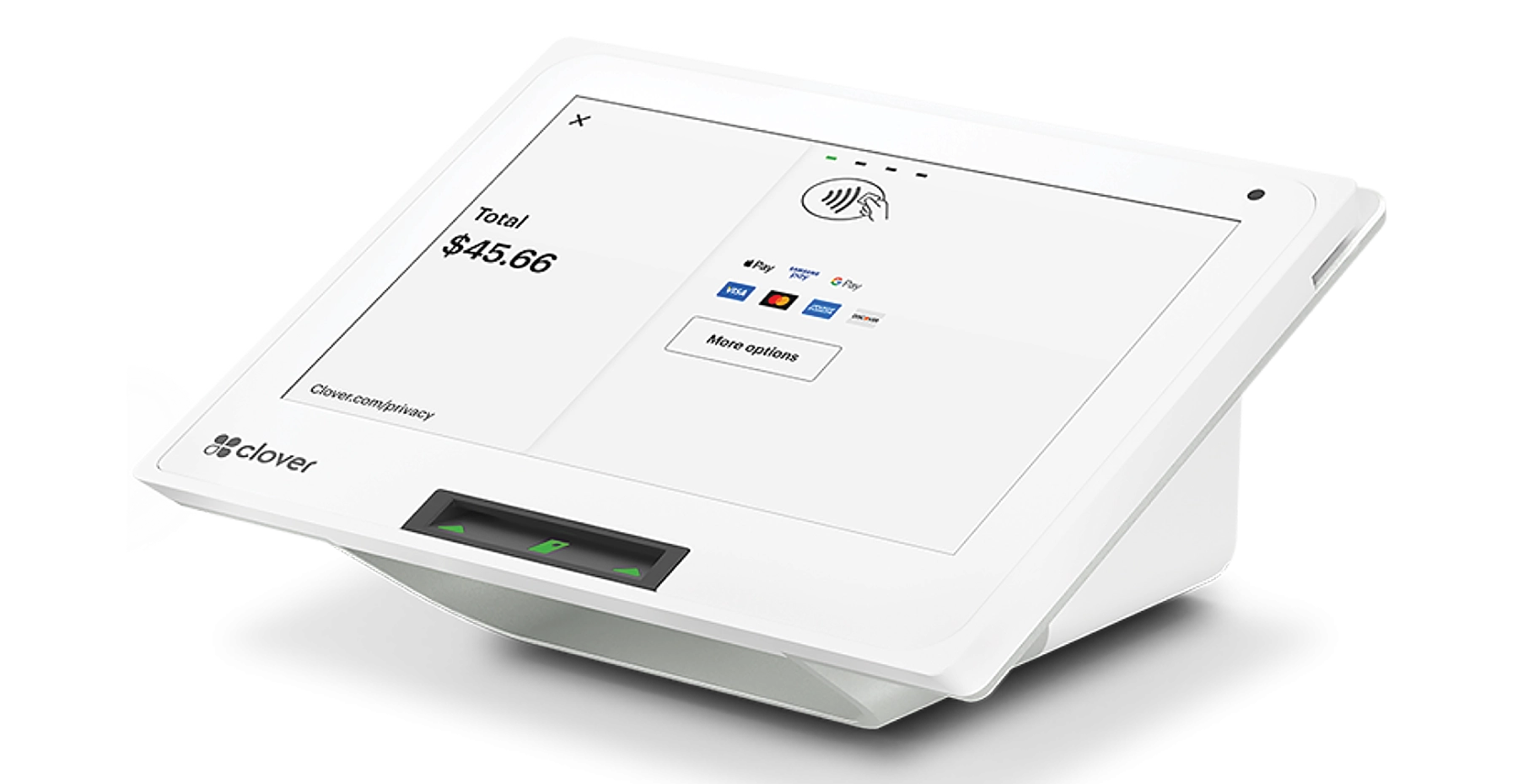
POS Terminal A point-of-sale terminal is dedicated hardware that reads credit or debit cards via chip, swipe, or contactless tap and sends data to the processor. Options range from basic countertop units ($300) to smart terminals with inventory features ($2,000+).
mPOS (Mobile Point-of-Sale) Mobile card readers connect to smartphones or tablets for on-the-go acceptance at markets, events, and field services. These typically cost $49 and up, with flat-rate processing fees around 2.6%.
EMV Chip Cards EMV chip technology generates dynamic cryptograms versus static magstripe data. Since the 2015 liability shift, merchants who don’t support chip transactions bear counterfeit fraud liability. EMV adoption reduced U.S. counterfeit fraud by 87% by 2020.
Card Swipe (Magstripe) Magstripe is an older, less secure payment method gradually being phased out. Many processors discourage swipe-only acceptance due to higher fraud risk.
Digital Wallets Apple Pay, Google Pay, and similar digital wallets use tokenized card credentials for tap-to-pay or in-app purchases. Processing over $1 trillion globally in 2025, these payment methods show fraud rates below 0.1%.
ACH/EFT Transfers ACH and electronic funds transfer methods enable bank transfer between accounts. These typically have lower fees than card payments but slower settlement and different dispute rules through the automated clearing house network, and they function alongside credit card processing and how it works as alternative payment rails.
Integrated software solutions, including eCommerce platforms, booking systems, and invoicing tools, can embed payment acceptance flows to reduce manual entry and reconciliation errors.
Chargebacks, Risk & High-Risk Categories
Chargebacks and risk management are central to card processing. Understanding these terms helps you protect your revenue and maintain good standing with your processor, and a broader glossary of credit card processing terms can reinforce this risk-focused vocabulary.
Chargeback A chargeback is a forced reversal of a transaction initiated by the cardholder through their card issuer. Common causes include credit card fraud (36% of cases), non-delivery (24%), and customer dissatisfaction. Each chargeback costs the merchant the transaction amount plus fees of $15-$100.
Chargeback Ratio Your chargeback ratio compares chargebacks to total transactions. Ratios above 1% trigger monitoring programs, and ratios exceeding 2.5% can result in fines, higher fees, or account termination.
Representment When you dispute a chargeback, you submit evidence (receipts, shipping proof, customer communication) through your acquirer. This representment process has roughly a 40% win rate when documentation is thorough.
Rolling Reserve and Holds Processors may retain 5-10% of your funds for 6-12 months to protect against future chargebacks and refunds. High-risk merchants typically face the most significant reserve requirements.
High-Risk Merchant Category Businesses with above-average fraud, refund, or regulatory exposure face high-risk classification. This includes travel, subscription boxes, nutraceuticals, adult content, and gaming. These merchants often pay higher fees and face stricter reserve requirements.
MATCH List The Member Alert to Control High-Risk Merchants (formerly TMF) is an industry blacklist. Merchants with severe issues like excessive chargebacks or fraud can be placed on this list, making it extremely difficult to obtain new processing relationships.
Robust fraud tools, clear refund policies, accurate billing descriptors, and responsive customer service help lower chargebacks and reduce the need for reserves.
Online & Recurring Payments
eCommerce and subscription models have exploded since the early 2020s. These terms are essential for any business accepting online payments.
eCommerce Payments These card not present transactions are initiated through online checkouts, marketplaces, or apps. CNP transactions carry higher interchange rates (0.5-1.5% more) due to increased fraud risk.
Card-on-File Securely storing a customer’s credit card credentials using tokens enables faster repeat purchases and one-click checkouts. This practice requires proper consent and PCI-compliant storage.
Recurring Billing Automatically charging customers on a schedule (monthly, annually, or usage-based) powers subscriptions, memberships, and service contracts. Proper setup includes obtaining explicit consent and storing the card expiration date for updates.
Retry Logic / Dunning When a recurring payment fails due to declined cards or insufficient funds, dunning systems automatically reattempt the charge and send reminders to update payment information. Effective dunning can boost recovery rates by 20-30%.
Using proper recurring billing indicators and obtaining clear customer consent can improve interchange qualification and reduce disputes for subscription merchants.
Reporting, Analytics & Optimization
Good reporting helps you understand true payment costs, identify dispute trends, and find optimization opportunities, especially when you know what your credit card processing statement really means.
Monthly Statements These summaries detail transaction volumes, chargebacks, fees (interchange, assessments, markups), and adjustments for each billing cycle. Learning to read statements is essential for cost control.
Settlement Reports Detailed records showing which financial transactions funded each deposit allow finance teams to reconcile processor payouts with internal sales data.
Reconciliation This accounting process matches card sales, settlements, fees, and bank deposits to identify discrepancies or missing funds. Without automation, error rates run 1-2%.
Interchange Optimization Deliberately sending complete, accurate transaction data helps qualify for lower interchange categories. This includes proper authorization timing, complete customer information, and correct merchant category codes.
Level 2 and Level 3 Data For B2B payments, providing enhanced invoice details (tax amounts, customer code for Level 2; line-item details for Level 3) can reduce interchange by 0.5-1.5% on corporate and purchasing cards, which represent about 20% of volume for many businesses.
Downgrades When transactions fail to meet specific criteria, such as timing, data fields, or card type, they fall into more expensive interchange buckets. Downgrades can add 20-30% to transaction costs.
Working with knowledgeable providers or consultants can help you interpret reports, identify downgrade patterns, and reduce effective processing costs over time.
Frequently Asked Questions
How can I quickly estimate what I’m really paying in credit card processing fees?
Calculate your effective rate by dividing total processing fees on your statement by total card volume for that period. For example, if you processed $50,000 and paid $1,250 in fees, your effective rate is 2.5%.
Compare this effective rate across multiple months and against offers from other payment processors. Large differences between quoted rates and your calculated effective rate often indicate hidden fees, downgrades, or costly pricing structures that weren’t clearly disclosed.
Do I need a separate merchant account if I use a payment aggregator like Stripe or PayPal?
No. Aggregators, which are often a third party payments company, pool many merchants under a single master merchant identification number. Small businesses don’t receive an individual MID, which simplifies onboarding significantly.
However, this model means less control over reserves, dispute handling, and account holds compared with a dedicated merchant account. Growing businesses processing significant volume may eventually benefit from comparing merchant accounts vs payment aggregators and traditional merchant accounts through a bank or credit union for better rates and tailored support.
What’s the difference between a payment processor and a payment gateway?
The payment gateway securely collects and encrypts payment data, primarily for online transactions. It acts as a payment service provider that handles sensitive credit card data before sending it onward. The payment processor, in contrast, routes and settles transactions between banks and networks.
Some providers bundle gateway and processing into one platform, while others require merchants to connect separate services. Check your contracts to see whether gateway fees are billed separately from processing fees.
How long does it typically take to receive funds from card transactions?
Most merchants in North America see deposits within one to two business days after batch processing. Some payment processors offer same-day or instant funding for additional fees, which can help businesses with tight cash flow manage debit card transactions and credit card payments more effectively.
Funding timelines vary by provider and risk profile. Confirm these timelines and any related costs before signing a processing agreement.
Can better security actually lower my processing costs?
Yes. Stronger security measures and cleaner data, including proper AVS, CVV, EMV chip acceptance, tokenization, and accurate billing descriptors, reduce fraud and chargebacks. This can protect your pricing tiers and keep you out of high-risk categories.
Some interchange categories and network programs specifically reward merchants who adopt advanced security tools and data quality standards. Ask your processor which fraud prevention features may qualify you for lower risk classifications and better interchange rates on debit card payments and credit card transactions, and consider how PCI compliance affects your business in terms of both security and cost.