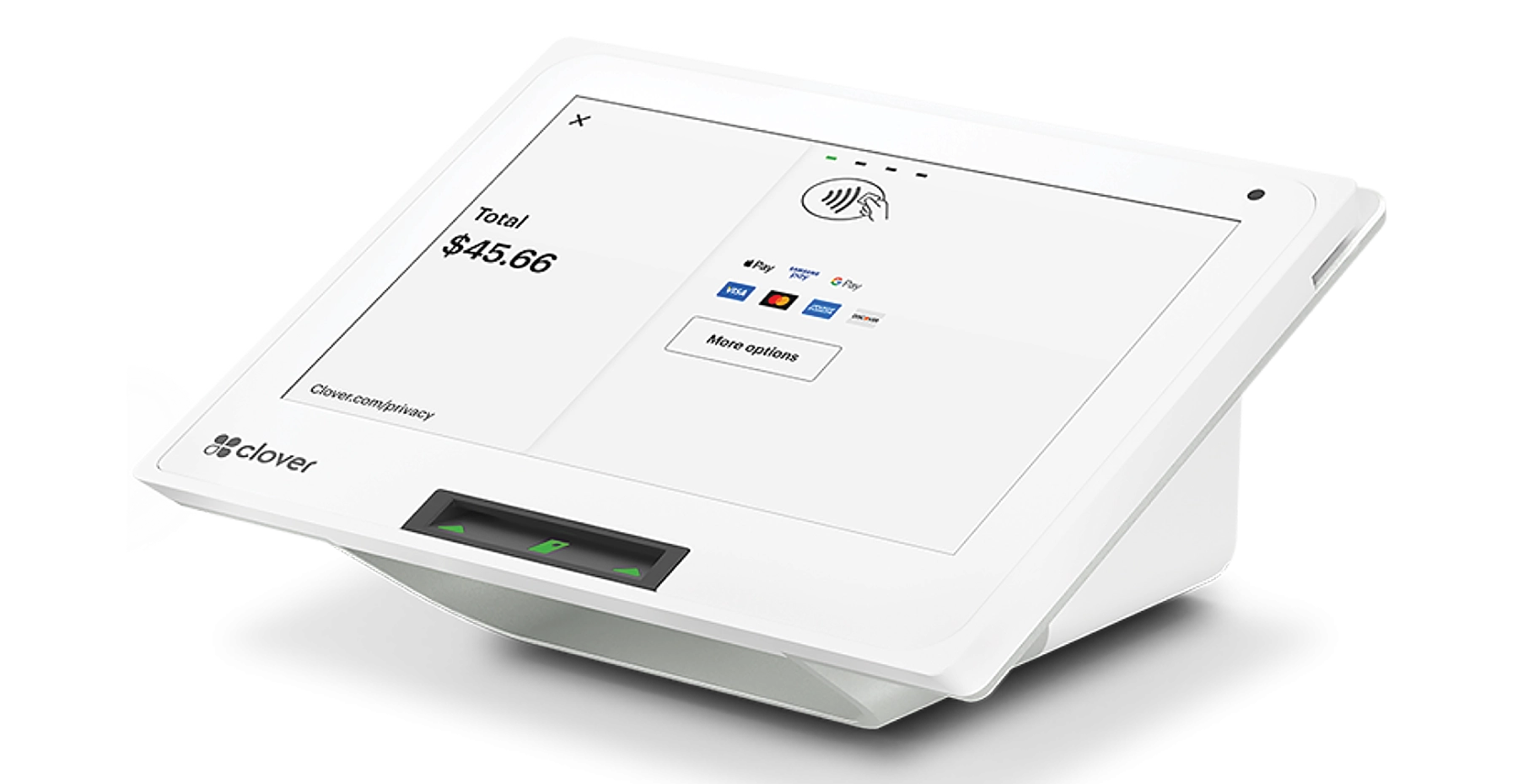


In 2026, accepting credit card payments isn’t optional for most small businesses—it’s essential. With debit and credit cards accounting for approximately 52% of all US consumer transactions and digital wallets adding another 15-20% in urban areas, customers expect to pay with plastic or their phones almost everywhere they shop.
The good news? Any small business can start accepting card payments within 1-5 business days using modern payment service providers. This guide walks you through everything from choosing your setup to processing your first transaction.
Key Takeaways
-
Most US consumers now pay with credit or debit cards, and digital wallets like Apple Pay and Google Pay continue gaining ground. Any business can start accepting credit card payments in under a week in 2026.
-
To accept payments, you need four core components: a business bank account, a payment processor or PSP, optionally a dedicated merchant account for high volumes, and hardware or software to capture card data securely.
-
You can accept credit card payments in four main ways: in person using terminals or POS systems, on mobile devices, online through websites and payment links, and remotely via phone orders or recurring billing.
-
Understanding pricing models—flat-rate, interchange-plus, and subscription—plus the difference between card-present and card-not-present fees is crucial to protecting your margins.
-
Following PCI DSS rules, enabling fraud tools like address verification service and 3D Secure, and testing your setup before going live are mandatory steps, not optional extras.
What You Need to Start Accepting Credit Card Payments
Credit card acceptance in 2026 leverages innovations that integrate gateways, fraud detection, reporting, and aggregated merchant accounts into single platforms. Most small businesses in the US, UK, EU, Canada, and Australia can complete setup within 1-5 business days.
Core components you’ll need:
-
Payment processor or PSP: Handles transaction routing, authorization, and settlement (Square, Stripe, PayPal)
-
Merchant account: Either aggregated under a PSP’s master account or individual through a bank or financial institution
-
Payment gateway: Routes encrypted card data for online payment processing
-
Hardware/software: Terminals, card readers, POS systems, or virtual terminals
-
Business checking account: Linked via ACH for fund deposits
Most PSPs launched after 2010 bundle these services together. Traditional processors and acquiring banks often separate them, requiring more setup but offering negotiable terms for higher volumes.
PCI DSS compliance is mandatory whenever cardholder data is stored, processed, or transmitted. Even merchants using hosted solutions must complete simplified Self-Assessment Questionnaires.
Pre-setup checklist:
-
Verify your legal business entity (LLC, sole proprietorship with EIN)
-
Open a business bank account if you don’t have one
-
Estimate monthly transaction volume and average ticket size
-
Decide which sales channels you’ll support from day one (in store, online, mobile, phone)
How to Accept Credit Card Payments: Step‑by‑Step
This section walks through a practical sequence from planning to going live with your first card payments. The process works whether you’re a new business launching in 2026 or an existing cash-only operation adding card acceptance.
The standard flow:
-
Assess requirements
-
Choose setup type
-
Compare and select providers
-
Apply and open your account
-
Configure hardware and software
-
Enable security and fraud tools
-
Test and launch
We’ll use realistic examples throughout—a local café, a mobile contractor, and a small e-commerce brand—to show how each follows the same sequence with minor variations.
Assess Your Credit Card Processing Requirements
This diagnostic step influences every later decision, from fees to equipment to contract terms. Get it right, and you’ll avoid overpaying or under-serving your customers.
Estimate these key metrics:
-
Monthly card volume in dollars ($5,000 vs. $50,000 vs. $250,000+)
-
Average ticket size ($30 café transaction vs. $300 B2B invoice)
-
Split between in-person and online payments (aim for 60%+ card-present for lower fees)
Categorize your business type:
-
Low-volume startup
-
Seasonal retailer
-
Established brick-and-mortar store
-
Recurring-billing/subscription service
-
Primarily online seller
Three broad provider types:
|
Provider Type |
Best For |
Setup Speed |
|---|---|---|
|
All-in-one PSP/Aggregator |
<$100k/year, simple needs |
Same day |
|
Traditional merchant account |
$100k+/year, negotiable rates |
3-7 days |
|
Hybrid (POS + processing) |
Multi-channel retail |
1-5 days |
|
Special considerations checklist: |
|
|
-
High-risk industries (travel, supplements) face 3.5%+ rates
-
International customers require multi-currency support (1-2% FX markup)
-
Recurring billing needs token vault and scheduling features
Choose Your Payment Acceptance Setup
Three main setup models exist in 2026:
-
All-in-one PSP: No separate merchant account needed (Square, Stripe, PayPal)
-
Traditional setup: Merchant account + payment gateway + POS from different vendors
-
Platform-based: Integrated into marketplaces or booking systems
Which model fits your business:
-
Freelancers, pop-ups, micro-retailers → All-in-one PSP
-
Multi-location retail, B2B wholesalers → Traditional merchant account
-
Online coaches, marketplace sellers → Platform-integrated
|
Factor |
PSP |
Traditional |
Platform |
|---|---|---|---|
|
Setup speed |
Same day |
3-7 days |
Varies |
|
Fee predictability |
High (flat-rate) |
Medium |
Medium |
|
Negotiation room |
Low |
High |
None |
|
Contract length |
Month-to-month |
12-36 months |
Platform terms |
Many businesses end up with a hybrid approach—low-risk retail on a PSP plus a separate gateway for international B2B invoicing. Plan for flexibility.
Compare Payment Processors, Merchant Services, and Pricing Models
Small differences in percentage rates can cost or save thousands annually. A 0.3% difference on $250,000 in annual sales equals $750.
Three dominant pricing models (including how cost-plus vs. tiered pricing structures impact what you actually pay):
-
Flat-rate: Simple (e.g., 2.6% + $0.10), but often higher effective rate
-
Interchange-plus: Transparent, negotiable (base interchange + 0.3-0.5% markup + $0.10)
-
Subscription: Monthly fee ($10-50) plus lower per-transaction markup
Quick cost comparison ($20,000/month, $40 average ticket):
|
Model |
Calculation |
Monthly Cost |
|---|---|---|
|
Flat-rate 2.6% + $0.10 |
500 transactions |
~$560 |
|
Interchange-plus (avg 1.9% + 0.4% + $0.10) |
500 transactions |
~$510 |
|
Subscription $25/month + 1.5% + $0.05 |
500 transactions |
~$350 |
|
Other costs to verify: |
|
|
-
Monthly account fees ($10-25 minimums)
-
PCI compliance or non-compliance fees ($15-95)
-
Chargeback fees ($15-100 per dispute)
-
Terminal rental vs. purchase
-
Early termination penalties
Request a sample statement from providers and use your actual last three months of sales data if available. Target a blended effective rate under 2.5%.
Choose a Credit Card Processor and Open an Account
Applying is typically done online today. Many PSPs approve accounts the same day, while a traditional merchant account can take 2-7 business days due to underwriting.
Common application data required:
-
Legal business name and EIN/tax ID
-
Ownership details and business address
-
Website URL or sales description
-
Estimated monthly card sales volume
-
Highest single transaction size expected
-
Linked business bank account (routing and account number)
Instant-approval facilitators vs. underwritten accounts:
PSPs offer fast approval but may place holds during disputes. Fully underwritten accounts take longer but provide stability for high-volume merchants.
Don’t exaggerate industry type or volume on applications. Misrepresentation can trigger funding holds and surprise account closures later.
Example timeline: A US café applying in April 2026 can submit a PSP application in 10-15 minutes, send their first payment link that afternoon, and receive card funds by Wednesday or Thursday.
Configure Your Hardware, Software, and Integrations
Configuration looks different for in-person retail, mobile professionals, and e-commerce businesses. Keep it practical.
In-person setups:
-
Countertop EMV/NFC terminals (Square Terminal ~$299) and other credit card machine options for small businesses
-
Smart POS devices with customer-facing screens
-
Wireless handheld terminals for curbside or tableside service
-
All must support EMV chip and contactless payments in 2026
Mobile setups:
-
Smartphone or tablet running provider’s payment app
-
Tap-to-pay using built-in NFC (iPhone 8+, modern Android)
-
Optional Bluetooth readers for chip and swipe fallback
-
Simple workflows for pop-ups and market stalls
Online sales:
-
Hosted checkout pages for simple integration
-
Plug-ins for popular e-commerce platforms (WooCommerce, Shopify)
-
Payment links and invoices for service businesses without a full online store
Testing is critical:
-
Run a $1-$5 live test transaction on each sales channel
-
Verify receipts and settlement to your bank account (1-2 days)
-
Confirm tax calculations, discounts, and inventory tracking work correctly
Activate Fraud Prevention and Compliance Tools
Card-not-present transactions are 7x riskier than card-present, according to LexisNexis 2025 data. Processors price them higher because of fraud and chargeback exposure.
Essential built-in tools:
-
Address verification service (AVS) – blocks 85% of fraud
-
CVV verification
-
3D Secure 2.0 (reduces unauthorized transactions by 70%)
-
Velocity limits on transaction frequency
-
Automatic fraud screening rules
PCI DSS compliance basics:
Providers assist with pre-filled questionnaires, tokenization, and hosted payment pages where you never see raw card numbers.
Compliance checklist:
-
Use only approved devices and software
-
Never write down full card numbers
-
Keep systems and firmware updated
-
Restrict staff access to payment information
-
Review processor security updates quarterly
Ignoring compliance can lead to fines from card networks, higher processing fees, and potentially losing the ability to accept credit cards after a breach.
How Long Does It Take to Start Accepting Credit Card Payments?
Many small businesses can start taking card payments within 1-5 business days, and sometimes the same day depending on provider type.
Timeline comparison:
|
Setup Type |
Account Approval |
Hardware Arrival |
First Live Payment |
|---|---|---|---|
|
PSP (instant) |
Same day |
1-3 days shipping |
Same day via links |
|
Traditional |
3-7 business days |
3-5 days |
After approval |
|
Factors that can slow approval: |
|
|
|
-
High-risk industries (travel, supplements, adult content)
-
Cross-border transaction requirements
-
Unusually high ticket sizes ($5,000+)
-
Incomplete application documentation
Real scenario: A home services contractor in April 2026 signs up with a PSP on Monday, sends their first payment link that afternoon, and receives funds in their bank account by Wednesday.
Factor in time for staff training on the POS system or online payment processing so your team is ready when hardware arrives.
Best Ways to Accept Card Payments for Small Businesses
The “best” method depends on where your sales happen most. Many small businesses in 2026 use two or three methods together for maximum flexibility.
Consumer behavior has shifted dramatically: cards and digital wallets together represent the majority of non-cash transactions in developed markets, showing how cash is no longer king and card payments rule in 2026. Customers expect to pay their preferred payment method wherever they shop.
Key acceptance methods:
-
In-person with POS or terminal
-
Mobile with smartphone or tablet
-
Online via website or checkout link
-
Phone/mail orders using virtual terminals
-
Recurring billing for subscriptions and memberships
Offering at least one card-present and one card-not-present option gives most small businesses enough flexibility to serve customers anywhere.
Process In‑Person Payments
In-person card-present transactions have lower fees and fraud risk because the customer and card are physically present. EMV chip and NFC contactless verify authenticity.
Typical hardware:
-
Integrated POS systems with customer-facing screens
-
Standalone chip-and-PIN/contactless terminals
-
Wireless handheld readers for tableside checkout
Normal transaction flow:
-
Staff enters items, system calculates tax
-
Customer taps, inserts, or (rarely) swipes
-
Terminal shows approved/declined (<3 seconds)
-
Receipt printed, emailed, or texted
EMV chip and NFC support is now standard. Magstripe-only readers are outdated and create higher risk. Contactless payments speed up queues, improving customer satisfaction in busy retail and quick-serve environments.
Use Your Mobile Device to Take Payments
Mobile payments are ideal for freelancers, trades, pop-ups, food trucks, and event vendors without fixed counters.
Two main approaches:
-
Tap-to-pay directly on modern smartphones (no extra hardware)
-
Pair a small Bluetooth card reader for chip, swipe, and tap
Simple setup process:
-
Download the provider’s payment app
-
Log in with merchant credentials
-
Connect or enable the reader
-
Run a test sale
-
Customize digital receipts and tipping options
Mobile transactions with certified readers are treated as standard card-present payments with comparable rates. Consider offline mode availability and battery management for outdoor markets.
Accept a Credit Card Payment Online (With or Without a Website)
Online payments include full e-commerce stores, booking systems, pay-by-link invoices, and embedded checkout forms.
A payment gateway serves as the secure bridge between your website, processor, and banks, handling encryption, tokenization, and transaction routing.
Practical options:
-
Platform plug-ins for shopping carts
-
Hosted checkout pages requiring no coding
-
Payment links sent via email, SMS, or chat for service businesses
Online and other card-not-present transactions carry higher transaction fees—often 0.3-1.0 percentage points more. A digital course creator can use payment links and recurring billing instead of building a full online store.
Take Payments Over the Phone
Phone payments (MOTO) work well for B2B orders, professional services, and customers who prefer calling.
Virtual terminals are secure browser-based dashboards where staff key in customer card details during the call without storing them locally. Keyed-in transactions cost more due to higher fraud risk and require AVS and CVV verification.
Workflow basics:
-
Use a script for collecting card details
-
Enter information in the virtual terminal
-
Confirm amount and billing address
-
Issue digital receipts immediately
Establish internal policies about who can process transactions, call handling for privacy, and managing disputes and refunds.
Collect Recurring Payments
Recurring billing is essential for gyms, SaaS tools, subscription boxes, professional retainers, and membership organizations.
Processors store card data as secure tokens and run scheduled charges automatically—monthly, quarterly, or annually—sending automatic invoices or receipts.
Valuable features to look for:
-
Dunning (automatic retries on failed payments with 40% recovery)
-
Card updater tools that refresh expired card details
-
Customer self-service portals
Recurring card-not-present payments carry higher fees but dramatically stabilize cash flow. Clear customer authorization and transparent cancellation policies help reduce chargebacks.
Card‑Present vs. Card‑Not‑Present Transactions
Card-present means the card or mobile device is physically at checkout (chip, tap, or swipe). Card-not-present covers online payments, phone orders, mail order, and recurring billing.
Card-present transactions benefit from lower interchange and processor markups because fraud risk is minimal with EMV and contactless technology.
Card-not-present transactions rely on data checks, device fingerprinting, and identity verification, increasing both risk management costs and pricing.
Fee comparison example:
|
Transaction Type |
$100 Sale |
Typical Fee |
Net to Merchant |
|---|---|---|---|
|
In-store chip |
Card-present |
~2.0% |
$98.00 |
|
Online checkout |
Card-not-present |
~3.2% |
$96.80 |
|
Route as many purchases as practical through card-present methods for lower costs while maintaining online and remote options for customer convenience. |
|
|
|
Credit Card Processing Fees and Costs for Small Businesses
Credit card processing fees combine several layers: interchange (paid to card issuers), scheme fees (paid to networks like Visa and Mastercard), and processor markups.
Common fee ranges in 2026:
-
1.5%–3.5% plus $0.10-$0.30 per transaction
-
Exact costs depend on card type, region, pricing model, and risk profile
Typical extra costs:
|
Cost Type |
Typical Range |
|---|---|
|
Chargeback fees |
$15-100 each |
|
Monthly account fees |
$10-25 |
|
PCI non-compliance |
$15-95/month |
|
Gateway fees |
$10-25/month |
|
Terminal rental |
$10-50/month |
|
Example calculation: |
|
-
$50 in-person chip at 2.6% + $0.10 = $1.40 fee
-
$50 online keyed at 3.2% + $0.30 = $1.90 fee
Review statements quarterly, monitor your effective blended rate (total fees ÷ total processed), and renegotiate when volume grows.
Comparing Payment Processors and Merchant Account Providers
Beyond price, reliability, support quality, and integration options matter over the relationship’s life.
Core comparison criteria:
-
Supported channels (in-store, online, mobile, recurring)
-
Contract terms and cancellation policies
-
Settlement speed (next-day vs. multi-day funding)
-
Dispute and chargeback handling
-
Built-in tools: invoicing, inventory tracking, analytics dashboards
A mid-sized retailer moving from flat-rate to interchange-plus in 2025-2026 saved over $3,000 annually after crossing $150,000 in volume.
Best for E‑Commerce
Online-first businesses need strong fraud tools, seamless integrations, and support for digital wallets and international payments.
Look for gateways and APIs that plug into major shopping carts with minimal development. Support for Apple Pay, Google Pay, and Samsung Pay reduces cart abandonment on mobile. Multi-currency support and chargeback management become critical for international customers.
Best for In‑Person Retail
In-person retailers need robust POS features, reliable hardware, and offline/online synchronization for inventory and reporting.
All-in-one POS suites integrate customer payments, inventory, employee permissions, loyalty programs, and customer profiles. Consider store layout, Wi-Fi stability, and whether centralized reporting works across multiple locations.
Best for Recurring Billing
Subscription-heavy businesses include gyms, online memberships, SaaS products, co-working spaces, and professional service retainers.
Features to prioritize:
-
Automated schedules with proration
-
Tax handling
-
Dunning workflows
-
Card updater services
Processors with built-in subscription management eliminate separate billing platforms. A membership business consolidating manual invoicing into a payment platform’s recurring billing module can recover significant lost revenue from missed payments.
Types of Credit Card Payments and How They Work
While “paying by card” feels simple to customers, multiple technical methods exist: swipe, chip, tap, digital wallets, and online transactions. Each has different security levels, customer experiences, and equipment requirements.
As of 2026, magnetic stripe usage has declined significantly. EMV chip and contactless are default because of better security and speed. Digital wallets are mainstream, with tokenization protecting cardholder data.
Swiped Transactions (Magnetic Stripe)
Swiping reads static data from the card’s back, making it easier to clone and more vulnerable to fraud. Many regions have phased out magstripe requirements, with swiping now mostly a fallback method.
Processors may charge higher fees or impose liability shifts on magstripe transactions. Upgrade remaining magstripe-only hardware to EMV/NFC devices.
Dipped Transactions (EMV Chip Cards)
EMV chips generate unique cryptographic codes for each transaction, significantly more secure than magnetic stripes. Insert card, chip is read, customer enters PIN or signs, terminal communicates with the card issuer for approval.
Card brands reward proper EMV usage with lower fraud losses and favorable liability allocation. Chip transactions are slightly slower than contactless but remain standard for many purchases.
Tapped Transactions (Contactless)
Contactless payments using NFC are widely accepted and preferred for speed in transit, quick-serve, and high-throughput environments.
Each tap uses a dynamic cryptogram similar to EMV chip, providing strong security. Device types include contactless cards, smartphones with digital wallets, and wearables. Local contactless limits have increased since 2020.
Digital Wallet Transactions
Digital wallets such as Apple Pay, Google Pay, and regional apps store encrypted card versions using tokens instead of real card numbers.
Wallets work in person via NFC and online via one-click buttons. Security features include tokenization, biometric authentication, and device-level secure elements. Supporting wallets reduces fraud and cart abandonment, particularly on mobile devices.
Online and Other Card‑Not‑Present (CNP) Transactions
Online checkouts, invoices, and keyed phone orders fall into the CNP category—the merchant never sees the card physically.
CNP transactions rely on encryption, secure connections, fraud scoring, and additional authentication. Card networks require stronger customer authentication in many regions. CNP transactions have higher interchange and processing costs, making fraud prevention essential.
How Credit Card Processing Works Behind the Scenes
Three main stages—authorization in real time, clearing in batches, and settlement with funding to your bank account—mirror the broader flow described in a complete guide to how credit card processing works.
Main parties involved:
-
Cardholder (customer)
-
Merchant (you)
-
Acquiring bank or processor
-
Card network (Visa, Mastercard)
-
Issuing bank (customer’s financial institution)
Basic flow:
-
Transaction request from terminal or gateway
-
Processor routes to card network
-
Network contacts issuing bank
-
Approval/decline returns to terminal
-
Batch settlement processes end-of-day
-
Funds deposited 1-3 business days later
Same-day or instant payouts may be available for an extra fee from some processors, but the underlying credit card processing flow from authorization to settlement remains the same.
Chargebacks: When customers dispute transactions via their issuing bank, funds can be reversed. Good documentation, clear refund policies, and prompt responses protect revenue. Maintain signed agreements, delivery confirmation, and communication logs.
Paying too much to accept cards?
VMS reviews your current statement free and shows you exactly what you are being charged — most merchants are surprised by what they find.
Or call our team: 888-902-6227
FAQ
These questions address practical concerns small business owners often have after understanding the basics of accepting credit card payments.
Do I need a separate merchant account to accept credit cards in 2026?
Many small businesses no longer need individual merchant account providers because modern PSPs use aggregated accounts, allowing quick setup and simpler onboarding. Higher-volume or specialized businesses may still choose dedicated accounts for more control and slightly lower costs at scale. The decision depends on monthly volume, risk profile, and whether you need customized pricing.
Can I accept credit card payments without a website?
Yes. Businesses can accept cards without a website using in-person POS terminals, mobile card readers, virtual terminals for phone orders, and payment links sent via email or SMS. Many PSP dashboards let merchants generate secure links in seconds. A basic online presence helps with customer trust and discovery but isn’t technically required to process payments.
How much does it really cost to accept credit card payments?
Costs typically range from 1.5% to over 3.5% per transaction plus a fixed cents amount, with online and keyed-in sales at the higher end. The true cost is your effective blended rate—all variable fees plus monthly charges divided by total volume. Calculate this periodically and compare with other providers, especially as your sales volume grows.
How soon will I get my money after a customer pays by card?
Standard funding times are 1-3 business days after settlement for most providers. Some offer same-day or instant payouts to linked bank accounts for an extra fee. Check batch settlement cutoff times—evening batches versus late-night—as this affects whether a sale appears in the next day’s deposit.
What happens if a customer disputes a credit card charge?
When a customer disputes a charge, their bank initiates a chargeback, temporarily reversing funds. You can respond with documentation—receipts, delivery confirmation, signed agreements—within a set timeframe. If the issuer rules for the customer, you lose funds and pay a chargeback fee ($15-100). Use clear receipts, transparent refund policies, and fraud tools to minimize disputes.
Have questions about payment processing?
Fill out the form below and a VMS payment specialist will contact you shortly.